Hello,
My name is Nicho,
And this talk is Kindred to Creation,
An eco-theology rooted in dust and divinity.
The sixth extinction is unfolding,
And the cosmos is silent.
To the stars we are no more than an asteroid striking earth,
A momentous force of nature playing itself out.
Life will shift,
Adapt,
And go on without us,
But we are not indifferent to the pain of earth.
We grieve because we are the earth,
Made of dust and breath,
Spirit and soil.
God too is not indifferent.
Through humanity and incarnation,
The Creator joins creation,
Enters the elements,
And suffers with us.
This is not just the story of extinction,
It is the story of sacred kinship.
We are living in a time of rupture.
The earth is changing rapidly and violently.
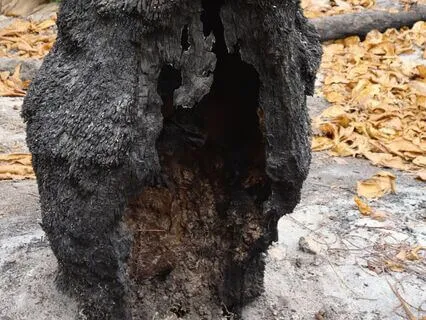
Forests are burning,
Oceans are rising,
Species are vanishing,
And beneath it all a deeper fracture is exposed.
The perceived separation between humanity and earth.
For centuries,
Western thought has told a story of dominance.
Rooted in a philosophical dualism that fueled colonial mentalities,
It separated spirit from matter,
Soul from body,
And humanity from nature.
It painted a picture of the earth as a backdrop,
A resource,
A problem to be solved,
Or a possession to be managed,
And now that story is unraveling.
This is an invitation to another way of seeing,
One that does not ask us to escape the earth or simply steward it from above,
But to recognize our elemental kinship with it,
To remember that we are not visitors to the world,
We are the world,
Animated for a time by breath.
As David Hinton writes in Wild Mind Wild Earth,
Ancient traditions like the Taoist Chan philosophy remind us that humankind belongs to the cosmos,
Conceived as a living and self-generating tissue,
And it reveals Wild Earth's 10,
000 things as a part of us.
To aspire to leave behind this imperfect material world in favor of the soul's ascension into a perfect spiritual realm,
Heaven,
Upon death,
Is indeed Platonism in Christian terms.
Nevertheless,
Such a vision cannot be reconciled with Jesus' prayer,
Thy kingdom come,
Thy will be done,
On earth as it is in heaven,
Which points to creation's transformation rather than our transcendental escapism.
Earth was once eaten,
And humanity's salvation implies a re-establishment of heaven on earth.
Heaven comes to earth when humanity returns to a life in harmony with spirit.
Much of Christian theology,
Especially in the West,
Has been shaped by Platonism,
The ancient Greek philosophy that privileged the eternal over the temporal and spirit over matter.
According to this view,
The material world was seen as an imperfect shadow of the divine,
And the soul's purpose was to transcend earth and the body for a perfect eternal dimension.
This dualistic thinking shaped not only Christian metaphysics but also colonial ethics.
It permitted the exploitation of land,
Animals,
And people deemed less spiritual or less human.
The earth,
Seen as lesser or fallen,
Became something to be subdued,
And this man-over-nature logic continues to dominate modern society in economics,
Politics,
And even climate policy.
And yet,
The biblical witness resists this separation.
In Genesis,
Humanity is not created in opposition to the earth but from it.
God formed man of the dust off the ground,
It says.
This is a fundamentally non-dual image.
It is not a soul injected into matter,
It is spirit and earth braided together inseparably.
This is more than theology,
This is an ontology,
A vision of being that sees the human person not as split between body and soul but as a psychophysical whole.
In Genesis 2-7 we read,
Then the Lord God formed man of the dust of the ground and breathed into his nostrils the breath of life,
And man became a living soul.
This union of dust and breath is not a temporary state.
It is our condition,
Our origin,
Our nature.
Eastern Orthodox Christianity in particular has preserved this understanding through the idea that the body and soul are one.
As Archbishop Lazar Puhalo writes,
While essentially Christian,
The non-dualism of this thought comes across as foreign to many embedded in the Western tradition.
In the Christian paradigm,
No hierarchy of intellect and soul exists over matter.
The goal is to transfigure creation,
Not transcend it.
Thus,
The soul cannot receive its reward of theosis without the body.
Christianity must escape its captivity to Western philosophical traditions and its interactive bonds with the technological worldview.
Elemental kinship,
While scientifically sound,
We are quite literally composed of the elements,
Speaks to Adam's formation from the dust of this earth.
While Adam was gifted existential awareness,
The freedom to contemplate himself and God,
He was formed from the same dust upon which he walked,
And composed of the same elements as all life around him.
In this non-duality,
Christianity has the doctrinal grounds to share in the Taoist Chan worldview,
Ushering forth a new possibility to foster an undifferentiated kinship between humanity and earth.
This kinship is encoded in the fabric of human beings.
We are called to see ourselves in the other,
Throughout the biotic community,
Down to the soils that sparkle with the spirit of God's generative creativity.
To truly respond to the ecological crisis,
We must stop thinking of ourselves as separate.
We must stop trying to fix nature as though it is broken and we are whole.
We are not transcendent saviors of this planet.
We are the planet.
The Taoist Chan traditions of China offer a vision in which all things arise from the same source,
What the Taoists call the Ten Thousand Things.
In this view,
There is no essential divide between human and non-human life.
Everything is interconnected.
Everything belongs.
As David Hinton writes,
This is the Paleolithic worldview carried forward,
The sacred understanding that everything is woven together in elemental kinship.
This kinship is not just poetic,
It is physical.
The carbon in our breath,
The iron in our blood,
The calcium in our bones,
All of it comes from the earth.
And it will return there.
In the words of Genesis 3.
19,
Rather than a warning,
This verse can be read as a sacred reminder.
A call to humility,
A call to reverence.
Human beings are not above the earth,
We are expressions of it.
If humanity is earth,
If we are elemental,
Then the current wave of extinction can be seen not as a moral anomaly,
But as a cosmic unfolding.
Hinton puts it plainly,
Taoist Chan philosophy suggests that the cosmos are wholly indifferent to human valuation.
And as a part of the cosmos,
Humanity too can adopt a kind of quiet detachment.
The Book of Job offers a startling image of this divine indifference.
When Job demands justification for his suffering from God,
He is met not with explanations,
But with poetry.
A litany of creation,
Storms,
Wild animals,
And constellations.
God reminds Job of his smallness,
Not to humiliate him,
But to place him within the vast and beautiful whole.
This indifference is not nihilistic,
It is peace.
It tells us that everything belongs,
Even hurt,
Even death.
It tells us that we too are unfolding exactly as we are meant to.
If we are not separate from nature,
Then we are a force of nature playing out exactly as the cosmos allows.
And when the world becomes unlivable for us,
It will shift,
And life will continue in another form.
The cosmos is indifferent,
And that is its blessing.
Nevertheless,
It is not quite that simple.
The prospect of Earth's sixth mass extinction reveals in no uncertain terms how deeply kindred we are with the wild Earth.
Seen through the emotional intensity of our planetary love and grief in the face of vast destruction,
Suffering,
And death,
A single story of a mother polar bear struggling to feed her starving cubs can pierce the heart.
We mourn the suffering of Earth,
Not because we are outside of it,
But because we are part of it.
When species vanish and landscapes are desecrated,
Something in our body remembers,
Remembers its origin,
Its kin.
Ecological grief is not merely a reaction,
It is the soul's way of saying,
I know I belong.
This grief is deeply spiritual.
It is an ache born of love,
And love arises from connection.
We do not mourn what we do not care for,
And we do not care for what we do not feel ourselves part of.
Intellectually,
We may rationalize an indifference to our role in the planet's unraveling,
But emotionally we know otherwise.
We feel implicated,
Not just in our own end,
But in the wounding of something we love,
Something that is,
In truth,
A part of ourselves.
Beyond the indications of our emotional sentiments,
Christianity offers a uniquely human perspective that maybe God,
The face of the cosmos,
Does care.
This is especially potent when we understand the incarnation of the divine through Jesus,
Krishna,
Buddha,
Etc.
,
Is the convergence of God,
Humanity,
And Earth.
God is indispensably married to the human experience.
Hinton writes,
This human intelligence allows us to co-suffer with the world as it groans in the pain of destruction.
Romans 8,
22-23 reads,
For we know that the whole creation groaneth and travaileth in pain together until now,
And not only they but ourselves also,
Which have the firstfruits of the Spirit,
Even we ourselves groan within ourselves.
This groaning is the touch of God within us,
The Creator who imbued Earth's dust with His own Spirit.
By taking birth as man,
God imbues Himself with humanity's emotional kinship to the Earth and one another.
While the cosmos may be indifferent,
God has chosen kinship through humanity.
Humanity sees itself in its Creator.
The Creator sees itself in humanity.
Christ intimately unifies Heaven,
Earth,
And humanity when the elemental cosmos itself takes human form and co-suffers with creation.
God is both Creator and kindred to this world,
And acts of environmental destruction matter because they obliterate this cosmic intimacy.
What would it mean to build a spirituality rooted in elemental kinship?
It would mean rethinking our language about salvation,
Not as an escape from the world,
But as the transfiguration of it,
Ushering forth the Kingdom of Heaven right here,
Right now.
It would mean letting go of the idea that progress means more control,
More technology,
More domination.
Instead,
It would mean simplicity,
Reverence,
A return to the body,
To the breath,
To the Earth.
It would also mean reclaiming the mystical heart of Christianity,
The Christ who walked dusty roads,
Who spoke to trees,
Who fed multitudes with fish and bread,
Who wept over Jerusalem,
Who died with the sun darkened and the earth trembling beneath him.
Realizing that we ourselves are Christ,
Sitting in the divine intersection as humans,
A woven tapestry of God and Earth.
It would mean a liturgy of compost,
A sacrament of seeds.
It would mean making space for the grief of the Earth in our prayers.
It would mean seeing our own resurrection not as a flight from matter,
But as the full renewal of our belonging in it.
The ecological crisis is not just a material crisis,
It is a spiritual one.
It reveals that we have forgotten who we are and where we came from.
We are not separate,
We are not superior,
We are not sovereign.
We are dust and breath,
We are earth and spirit,
We are kindred to so much.
To remember this is not to lose our identity,
It is to find it again in something larger,
Older,
And infinitely more beautiful than the illusion of human exceptionalism.
This remembering is the first step towards healing.
We will not save the world by conquering it,
We will not save ourselves by transcending it.
We will heal when we come home,
When we touch the ground and say,
I am you.
May we walk forward not as conquerors of the Earth,
But as her children.
Not as her masters,
But as her kin.
Not in fear of returning to dust,
But in awe that we rose from it at all.
Live like dust lit by fire.
Nicho