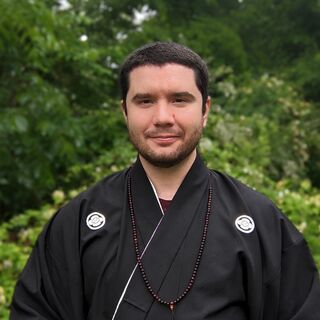
Hello and welcome to this quick Buddhist lecture on the three marks of existence.
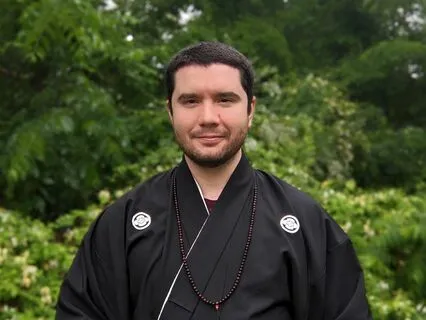
I'm Silas Day.
The Buddha said,
To conquer oneself is a greater task than conquering others.
The three marks of existence,
Or the three characteristics of existence,
Form the cornerstone of the Buddhist teaching on the nature of reality.
These marks,
Which are impermanence,
Suffering,
And non-self,
Serve as the foundation for understanding the world,
Our experiences,
And the path to liberation from suffering.
In this lecture,
We will explore the significance of the three marks of existence,
Their role in Buddhist practice,
And how they can benefit meditation practitioners in our spiritual journey.
The three marks of existence provide a framework for understanding the nature of all phenomena,
Both physical and mental.
By contemplating these characteristics,
Practitioners can develop insight into the impermanent,
Unsatisfactory,
And selfless nature of existence,
Ultimately leading to the cessation of suffering and the attainment of awakening.
The three marks of existence are impermanence,
And impermanence is the understanding that all conditioned phenomena are subject to change and decay.
By contemplating impermanence,
Practitioners can develop a sense of urgency and diligence in their spiritual practice and learn to let go of attachments and aversions.
The next mark is unsatisfactoriness or suffering,
Often called dukkha.
Dukkha refers to the inherent unsatisfactoriness and suffering present in all conditioned existence.
By recognizing and understanding dukkha,
We as practitioners can cultivate compassion for ourselves and for others,
And aspire to attain a greater state of awakening and perhaps even liberation from suffering.
And the third mark is non-self or anatta.
Anatta is the understanding that there is no permanent,
Unchanging self or essence within any phenomena.
By contemplating non-self,
Practitioners can loosen their attachment to the notion of a fixed identity,
Fostering the development of wisdom and the dissolution of the ego.
Understanding the three marks of existence have several benefits for Buddhist practitioners.
By contemplating the three marks of existence,
You can really deepen your understanding of the nature of reality in the Buddhist perspective,
Leading to the development of wisdom and insight,
As well as some help in our concentration meditation.
They help to develop equanimity.
By understanding the impermanent,
Unsatisfactory,
And selfless nature of existence,
Practitioners can cultivate equanimity,
Which helps to maintain mental balance and stability amidst the ever-changing circumstances of our lives.
They help us to foster the aspect of letting go of something.
By recognizing the three marks of existence,
We can learn to let go of our attachments and aversions,
Ultimately reducing our suffering,
Understanding the nature of the universe around us,
And promoting inner peace.
They of course as well support our path towards awakening.
A deep understanding of the three marks of existence is a classical and essential aspect for the progress on the path towards awakening,
As it provides a foundation for the development of mindfulness,
Concentration,
And wisdom.
The three marks of existence offer a profound understanding of the nature of reality as the Buddha and Buddhists present it,
Guiding practitioners on their path to liberation from suffering and the attainment of awakened states.
By contemplating these characteristics,
Practitioners can develop insight,
Equanimity,
And the capacity for letting go,
Fostering spiritual growth and inner peace.
Ultimately,
The teachings on the three marks of existence provide a solid foundation for the cultivation of wisdom and realization,
As well as an understanding of the Buddhist perspective on the nature of reality.
I'm Silas Day,
And this has been a quick Buddhist lecture on what the three marks of existence are.
Thank you so much.