Hello everyone,
And welcome to another edition of Quick Buddhist Lectures for Learning.
Today,
We will be exploring an aspect of the Buddhist practice that often goes overlooked,
Yet is integral to our practice itself.
This is the four postures of meditation as taught by the Buddha.
In the Satipatthana Sutta,
The Buddha taught mindfulness in four postures.
Sitting,
Standing,
Walking,
And reclining.
Although sitting meditation is often the most recognized form of Buddhist meditation,
The Buddha emphasized that mindfulness should be maintained in all physical postures.
Each posture provides a unique opportunity to cultivate mindfulness and investigate our experience.
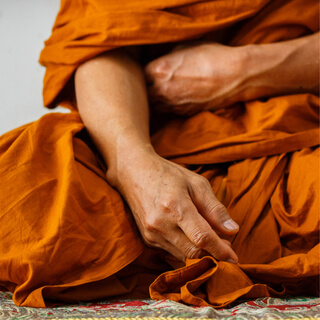
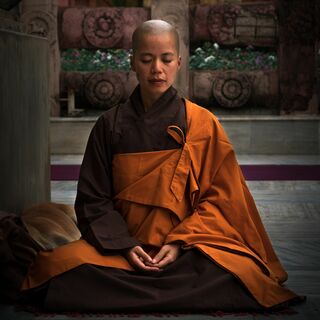
Starting with sitting,
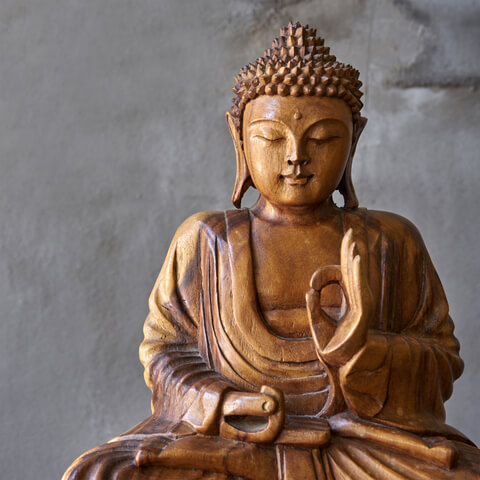
Sitting is of course the most common posture for meditation.
It provides a balance between relaxation and alertness,
Facilitating concentration and the development of deep states of meditation.
Sitting meditation can be practiced on a cushion,
Bench,
Or a chair with the aim of maintaining an upright and relaxed posture.
The next posture is standing.
Standing meditation is a wonderful practice that can bring a heightened sense of wakefulness and vitality.
It can be particularly beneficial when feeling drowsy during sitting meditation.
It's usually practiced by standing comfortably,
Often with eyes open,
And maintaining mindfulness of body.
The most important aspect of standing meditation is not to lock your knees though.
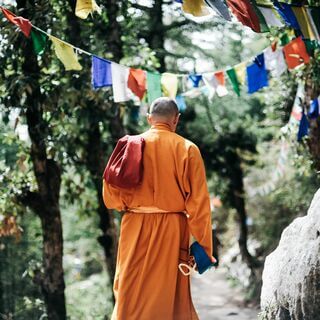
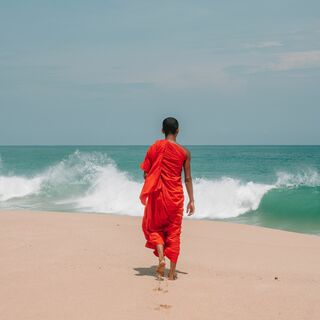
The next is walking meditation.
Walking meditation is a practice that brings mindfulness into movement.
It involves being mindful of each step,
Each movement,
And each motion.
The pace can vary from very,
Very slow to a normal walking speed,
Depending on the practitioner's preference and level of concentration.
And the final of the four is reclining or lying down meditation,
Which is traditionally practiced either laying on your back or in the lion's pose of laying on your right side with the right hand under the head and the left hand resting on the left thigh.
This posture is conducive to relaxation and can be really helpful for those unable to sit due to physical discomfort.
However,
Of all of the meditation postures,
This one is the one most prone to falling asleep or laziness in a way.
So it's very important to maintain alertness in this posture.
The Buddha taught the four postures within the context of the Satipatthana Sutta,
The foundational discourse on mindfulness.
He urged his disciples to maintain mindfulness in all postures and all activities,
Encouraging in his teaching to us to extend our practice beyond the formal sitting meditation and attempt to incorporate our mindful practice into our everyday aspects of our lives.
To cultivate mindfulness in the four postures,
One can begin with formal meditation practice,
Alternating between sitting,
Standing,
Reclining,
And walking,
Each posture offering a unique perspective and can be used to counterbalance certain states of mind or bodily discomforts.
For instance,
Standing or walking meditation can energize the mind when drowsy,
While lying down or reclining meditation can help soothe breathlessness or body aches.
In daily life,
One can also practice mindfulness of the four postures,
Being aware of your body as you sit at work,
Stand in line,
Walk to the store,
Or lie down to rest,
Noticing the sensations,
Movements,
And feelings associated with each of these postures.
In conclusion,
The four postures of meditation really do provide a practical framework for the cultivation of meditation and mindfulness.
And it's a good thing to remember that meditation is not limited to sitting on a cushion,
But has many different,
Varied ways of doing it,
Techniques,
And perspectives.
These four postures can help us a ton.
I know me individually,
I love to do reclining meditation because after sitting for a long time my back does start to hurt,
And to maintain concentration,
I like it to often recline.
So if you are a meditator out there,
Or if you're just a curious dharma student,
Why don't you try a different kind of meditation posture in your next sitting period?
See how it does!
This has been another edition of Quick Buddhist Lectures for Learning.
I'm Silas Day,
And I hope you're enjoying these little bits of knowledge and information.
Thank you so much.