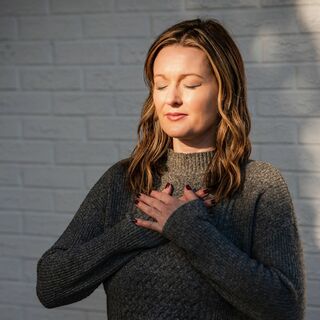
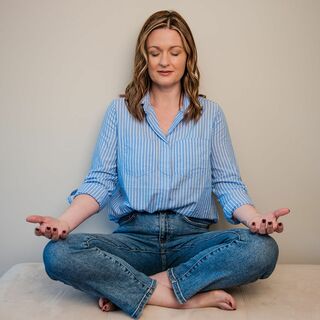
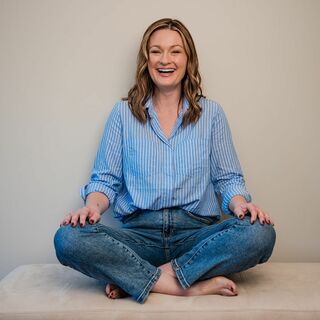
Let's begin with a deep breath in through your nose and gently let it go.
Let's do that one more time.
Deep breath in and let it go.
As you begin to feel your body relaxing,
You can gently close your eyes or soften your gaze.
With your attention on your breath,
Watch as it returns to its natural rhythm.
It's remarkable that breathing is an automatic function,
It doesn't require our attention.
Yet when we place our attention on our breath,
We begin to notice that we can control the speed and depth in which we breathe.
With control of the breath,
We have control over stress and anxiety.
By signaling the nervous system with long,
Slow and deep breaths,
We can learn to regulate it.
In return for this stability,
It slows the production of stress hormones and increases the better feeling ones like dopamine and serotonin.
As you continue to watch your breath,
Notice how the air is entering and exiting your body.
If your breathing feels shallow,
You can take a longer breath on your next inhale.
Each time your attention floats away from your breath,
As it will inevitably do,
Drift it back to your breath and notice how you're breathing.
As parts of your body begin to relax,
You may find tension increases in other parts.
You may have been storing stress.
If this is the case,
Bring your attention to that area of your body on your next inhale.
And when you exhale,
Invite that part of your body to relax even more deeply.
If you repeat this process,
You can even let out a sigh or a groan as you exhale to help release the tension.
Let's finish with one deep breath in and gently let that go.
And when you're ready,
You can gently open your eyes and return to your day.