The brain is constantly being shaped wittingly or unwittingly.
Most of the time it's being shaped unwittingly.
Most of the time we have no idea of the forces that are shaping our brain.
And the invitation in the work that we do collectively is that we can actually take more responsibility for the shaping of our own brains because the field has discovered that cultivating healthy habits of mind actually changes the brain and changes the brain in ways that we think are beneficial for mental,
Physical,
And neural health.
Welcome to Mind and Life.
I'm Wendy Hasenkamp.
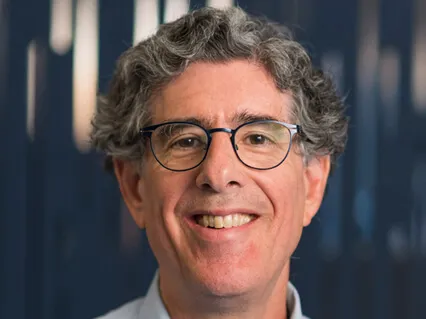
This week I'm speaking with emotion researcher and contemplative neuroscientist Richard Davidson,
Known to the field as Richie.
When we first conceived the idea for a podcast,
A few names immediately jumped to mind for must-have guests,
And Richie was definitely one of them.
He's truly one of the founders of contemplative science,
And his research over the last two decades has been pivotal for our understanding of meditation's impact on our minds,
Bodies,
And lives.
Richie's the founder of the Center for Healthy Minds at the University of Wisconsin-Madison,
As well as the affiliated nonprofit Healthy Minds Innovations.
He's also one of our founding stewards here at the Mind and Life Institute,
And he currently serves as our chief scientific advisor.
In our conversation today,
We discuss how his interest in the mind and meditation began in the 1970s,
And how eventually a challenge from the Dalai Lama inspired him to shift his career to use the modern tools of science to study meditation and positive mental states.
We also dig into current challenges in contemplative science,
Including the overemphasis on mindfulness and the importance of publishing research that finds no effect of meditation.
Richie also reflects on what we know and don't know about how meditation changes the brain,
How investigating the nature of self can build resilience,
Promises and pitfalls of research on psychedelics as a way of understanding consciousness,
And the critical importance of training well-being.
I caught up with Richie over Zoom this past January,
And I was so glad to be able to speak with him about his perspective on the past,
Present,
And future of contemplative science.
And with that,
It's my great pleasure to share with you Richie Davidson.
Well,
Richie Davidson,
Thanks so much for joining us.
Welcome.
Thank you.
Very happy to be here,
Wendy.
So I'd love to start by hearing how you originally got interested in studying the mind and then eventually meditation.
Well,
My interest really began very,
Very early.
And I was interested in the study of the mind beginning,
Believe it or not,
This is really true in high school.
I knew that my life would have something to do with the mind.
I didn't,
Of course,
Know what external form it would take.
But I actually volunteered as a high school student at a local sleep laboratory at Maimonides Hospital in Brooklyn,
New York,
And would go every Friday afternoon and clean the electrodes.
And then occasionally,
I got to participate in overnight sleep recordings and remember very distinctly the thrill of being in the room when a participant was awakened from a dream and having them report mental content and seeing physiological changes on the polygraph.
In those days,
It was ink.
And just the fact of seeing some kind of physiological correlate of mental activity was absolutely thrilling to me.
And that was really the first inkling that I had that this was really a path that I wanted to pursue.
And my passion for it was kindled at that point and really has never diminished since.
Wow.
And then how did it end up coming into the meditation space?
Well,
Beginning also quite early,
I would trace this to college.
And then certainly at the beginning of graduate school,
I was lucky to meet people who were involved in spiritual activities.
And there was a demeanor that was kind of infectious to me.
They were warm-hearted people.
And they were the kind of people I wanted to spend more time around.
And I learned that many of them had a practice of meditation.
And one of the very first people that I had the luck to encounter was Ram Dass.
And I met him,
I think,
My second day of graduate school in 1972 at Harvard.
I mean,
He wasn't at Harvard then.
He had been fired before then.
Right.
So yeah,
Ram Dass,
Who unfortunately passed away recently,
He was associated with Timothy Leary in the 60s.
Can you share a little bit about his history for listeners who might not be familiar?
Yes.
So Ram Dass was on the faculty at Harvard and then was dismissed for his psychedelic experimentation.
He went to India.
He found a spiritual teacher there.
And I met him after he came back from his initial visit to India.
And he was living in Cambridge for a good part of that time.
And I used to attend a group that he led once a week in the evenings.
And that was my alternative spiritual education.
And it was really from Ram Dass and Jon Kabat-Zinn.
They were my first two meditation teachers.
And I met Jon before he started MBSR.
I met him just after he got his PhD at MIT.
He was around Cambridge then and he was trying to figure out what he wanted to do with the rest of his life.
And Dan Goleman was there too.
Wow,
Yeah.
So it seems like there were a lot of pretty central figures gathered there in Cambridge back in the early 70s.
Dan Goleman,
Of course,
A longtime friend and colleague of yours,
Who's also been involved in the development of contemplative science.
And I didn't realize you also knew Jon Kabat-Zinn back then.
Yeah,
We met in 1972.
So yeah,
Jon taught me mindfulness meditation on my living room floor in Cambridge,
Massachusetts.
So that's when it all began.
So was that your first experience with meditation?
I know you had some kind of retreat experiences in India.
Well that was the retreat experience was after that.
So you know,
It was both Ram Dass and Jon Kabat-Zinn who taught me meditation.
And Ram Dass was actually the one that urged me to go to India.
And so I went in 1974 after my second year of graduate school.
And that was the first time I went on a meditation retreat.
What was that like for you?
It was intense.
You know,
This was a Goenka retreat with Goenka in person.
And it was kind of like meditation boot camp.
You know,
We were under very,
Very primitive conditions.
We were staying in tents.
There was no running water,
No hot water at all.
You know,
We had to pump the water from a well each morning.
And we were practicing 16 hours a day.
And it was at the same Goenka style that continues today of a 10 day fully silent,
Very intense.
Yeah.
Yep.
Wow.
That's quite a jump in.
Yeah,
That was my jump in.
And so these experiences and the people you're getting to know in the 70s,
These were the early seeds of you wanting to study meditation and the possible changes that could come from it.
Yeah,
I came back from the visit to India.
I was in India in Sri Lanka for three months at the end of my second year of graduate school.
And I came back with a fervent aspiration to do research on meditation.
And I was thoroughly convinced that this was something real and important and Western science needed to get their arms around it.
But the reception I received was not a very welcoming reception.
Can you say a little more about what you think might have been underneath that?
Yeah,
I mean,
Most of the faculty at Harvard thought I was really going off the deep end.
Many of them thought I would never return from India when I went.
I was actively discouraged from going,
But I went anyway.
And when I returned,
It was made very clear to me that if I wanted a successful career in science,
This was not a good area for me to be focusing on.
And I better find some alternative subject matter to invest in.
And it was a challenging reception.
I began to study emotion in the brain,
Which of course still is an important piece of what we do.
And a lot of the contemplative stuff is really part of that now.
But I very much became a closet meditator for a long time.
I think it's fair to say that most of my professional colleagues had no idea for a long time that I was interested in meditation.
I really kept it under the radar.
And why do you think there was such hesitancy in the academic community to accept the idea of studying meditation scientifically?
Well,
I think that people were just skeptical that it was important,
First of all.
And what,
From your perspective up until that time,
Made you convinced that it was important?
Well,
Really my own experience,
My own practice,
And also being around people who had my own much more practice experience than I have.
And just to see what those people were like.
I mean,
They were warm hearted.
They're very different than the rest of the academy.
They were the kind of people I wanted to spend time around,
Not my professors.
So for me,
It was very clear.
It was very straightforward.
And were you already starting to see changes for yourself?
You said that your personal experience was a powerful motivator.
Yeah,
I mean,
I think that one of the things that we learn as practitioners is patience,
And also learn that genuine transformation does occur,
But it also,
You know,
It's not instantaneous,
At least for most people.
And so you have to be patient.
And as I look back over my life now,
I certainly see dramatic differences from when I began my career compared to now.
But you know,
They've been slow and incremental.
But I used to be a much more volatile person at work.
And I'm not that way anymore.
I mean,
That's been a big change,
Although it's been a gradual change.
So from that time when you felt you know,
You had to kind of be a closeted meditator,
When was the shift?
And what do you think contributed to the shift that made it possible?
Well,
Really,
His Holiness the Dalai Lama was the pivotal catalyst for the transformation and coming out of the closet.
And I first met him in 1992.
And he was very challenging in a certain way.
I mean,
He said,
You know,
To me,
Why can't you use the same tools of modern neuroscience that you've been using to study stress,
And anxiety and depression,
And fear?
Why can't you use those same tools to study kindness and to study compassion?
And I didn't have a very good answer.
And you know,
In those days,
The idea of studying kindness and compassion was crazy,
You know,
Absolute lunacy.
And if you look at any textbook of psychology,
You know,
It's quite amazing.
But if you go back to the 19th,
The beginning 1990s,
And look at a textbook of psychology,
You won't find the word kindness or the word compassion in the index.
And now,
You know,
You can do a PubMed search and find a gazillion articles.
Yeah,
Yeah,
It's amazing to see how how things have shifted.
So you had this challenge or motivation from the Dalai Lama that you began to start integrating into your own work.
And then were there other factors like I know,
Jon Kabat-Zinn was beginning to publish around that time on the work he was doing with mindfulness based stress reduction,
The program that he developed.
Do you think that was also part of all of this becoming a little more acceptable in the medical and scientific community?
Absolutely.
So there are a number of converging factors.
And then in the late 1990s,
We did the first randomized controlled trial of MBSR that had ever been done.
And that was a study that Jon Kabat-Zinn collaborated on.
And actually,
It was done here in Madison.
But Jon taught the class and he flew out to Madison every week for 10 consecutive weeks,
During which time we did this study,
It was quite an ambitious undertaking.
And what were the outcomes of that study?
Well,
That was published in 2003.
It's my most highly cited paper,
And not my best paper by any means.
Although it happened to land at the right point in time to get really noticed.
In that paper,
We looked at changes in brain electrical activity.
This was really before fMRI had matured,
Just when fMRI was coming online.
And we also looked at antibody titers to influenza vaccine.
Antibody titers being a way to measure your immune response when you're exposed to something like the flu shot?
Yes,
Absolutely.
And we found shifts in brain activity,
And also enhancements in antibody titers to influenza vaccine.
And we found that the magnitude of change as a consequence of MBSR was correlated in the brain and in the antibody titer measure.
And so,
You know,
This got a lot of attention for,
I think,
Many different reasons,
And I think helped to legitimize the whole area.
And if you look at a graph of scientific publications on mindfulness,
You'll see an inflection point around 2004.
Right.
And also at that same time,
You were really instrumental in launching some new programs through the Mind and Life Institute,
Right?
Yeah.
So the first Mind and Life public meeting was held in the fall of 2003 at MIT.
And that following summer was our first summer research institute with many of the speakers who participated in the 2003 MIT meeting.
And the summer research institute was hatched at my kitchen table in Madison.
And it's just been amazing to see how it has unfolded and flourished.
I'd be curious about your perspective now,
Looking back.
Did you have an idea in those early days,
Like a vision for what this field could become?
And if so,
How has it unfolded compared to that?
Well,
In the early days,
I don't think that I certainly didn't anticipate the magnitude of growth and the extent to which this work would penetrate so many different sectors,
Not only of science.
And so many disciplines within the scientific community,
But also beyond science,
Sectors of our culture,
Like education,
Like healthcare.
Those are two big sectors where there has been very significant penetration.
Also the workplace.
And so I would never have imagined that things would have been so embraced by such a large diversity of sectors.
And that's been just so heartening to see.
I mean,
It has come with some challenges as well.
But on the whole,
I think it's been very positive.
Yeah.
I'd love to dig into some of those challenges.
Can you explain a few that you think are important for the field to be grappling with right now?
Yeah.
So a few that are particularly salient for me are,
One is a kind of contraction around mindfulness.
For those of us in this area,
We realize that there are literally hundreds of contemplative practices.
And in certain traditions,
The kind of mindfulness practice,
Which is so heavily privileged in scientific research,
Is hardly done in the actual Asian traditions.
Most Tibetan Buddhist monks in certain lineages,
They would have to really have explained to them what mindfulness,
What we're talking about when we mean mindfulness here in the West.
They don't do these kinds of practices.
Certainly the Dalai Lama doesn't meditate in the way that we think about when we think about mindfulness meditation.
And the way I liken it is you would never go to the gym to improve your physical health and just work out on your upper body and neglect everything else.
That's what mindfulness is.
It's just taking a single teeny piece of human flourishing and nurturing that.
I mean,
It's great to do that,
But if you do that to the exclusion of other things,
It will lead to imbalance.
So what are some of the other kinds of practices that you feel are important?
Well,
Certainly compassion and kindness practices are important and they're receiving more and more scientific attention.
But then there are practices that are focused on understanding the nature of the self.
And in the Tibetan Buddhist tradition,
They largely fall under the rubric of analytic meditation.
And there may be a single study in the Western scientific literature on analytic meditation.
And that's the kind of practice that His Holiness does for many hours a day,
Every day.
And there's virtually nothing on it.
And most Westerners,
Even most scientists who are working in this area have no idea what that is.
Yeah.
Can you describe a little bit about how that practice looks for the practitioner?
Sure.
This kind of practice is a self-inquiry practice and it actually uses our concepts to get beyond our concepts.
And so a practitioner might begin to mentally reflect on a series of questions about the self.
Is the self I'm experiencing today the same as yesterday?
Where is this self?
What is it?
Where do I feel it?
And we can go through a whole series of questions about this and then simply rest.
And by asking these kinds of questions,
We begin to loosen the grip that our self-narratives may have.
And we begin to better understand at a deep experiential level,
What the nature of this narrative is that we all carry around that in at least some contemplative traditions,
It plays an extremely important role as a root cause of suffering.
And what kind of outcomes would you anticipate might be changed from this style of practice?
I think that this style of practice is particularly important in promoting resilience,
Probably more than any other kind of contemplative practice.
And I say that because we define resilience as the rapidity with which you recover from adversity and adversity,
Which exerts impact and causes suffering,
Typically engages the self.
The self is injured in some way,
Typically psychologically.
And it is because of grasping onto this concept of self that we have these emotional responses that linger,
That don't recover.
And the only way to truly be liberated from that is to undermine the root causes.
And the root causes are a fixed sense of self.
And when you study resilience,
I can imagine that's a little bit of a tricky construct to measure scientifically.
Do you look at that like more psychologically with self-report from the participants about their own experience?
Or do you measure physiology like the stress response?
We look at both,
And I think both are important.
I think there's a tremendous amount of,
In the parlance of scientific terminology,
A tremendous amount of variance,
Which is carried by how quickly you recover from adversity.
And we can measure that in different physiological systems.
We can measure that in the brain directly with imaging.
We can also measure that in experience,
Like with experience sampling methods.
Yeah,
Part of what's so great about the research that you do is that it often brings together these multiple perspectives of the subjective experience of the participant,
As well as physiology and also brain science.
So thinking a little more about the brain side,
I'd love to discuss the idea of neuroplasticity.
So this is a term that listeners may have heard of,
It just refers to the brain's ability to change through repeated experience.
And I think it's become a really central idea in how we think that meditation works,
Changing our brains and changing our habit patterns and our mental experience over time with repetition.
So I'd love to hear your perspective.
Can you share a little bit about how our understanding of neuroplasticity has changed and evolved since those early days?
Because I know it's actually a more recent understanding in science.
Sure.
I think all of those play a role.
So when this work first began,
First of all,
We were very significantly handicapped in having not so good measures.
We started in the days before imaging was available.
MRI or PET.
So we didn't have the right kind of tools to interrogate brain function and structure.
Now we have much better tools.
So the tools have played,
I think,
A really important role.
And I think it's very important that we give proper credit to basic research in neuroscience and in other areas of science that has provided a foundation for this kind of work.
And certainly the work in neuroplasticity is critical.
And that really is built on a foundation of very basic neuroscientific research at many different levels that have uncovered the many mechanisms of plasticity in the brain.
Also when we first began,
The idea of neurogenesis,
The growth of new neurons,
Was something that was regarded as simply not true.
That is,
We were taught that the brain is different than other organs in your body.
When you injure your skin,
We know that it heals.
It heals because new cells are formed.
And we were taught that that never happened in the brain.
We now know definitively that that's wrong,
That the brain does grow new cells.
And those cells participate actively in circuits.
And they play a really important role in higher mental functions.
And we know that on the negative side,
We know that stress impairs neurogenesis.
We don't know yet whether something like meditation will improve neurogenesis.
That's never been studied.
But there's reason to believe that it might.
Can you describe some of those early studies that really changed our understanding of neuroplasticity and how the brain can change?
Sure.
These are basic neuroscientific studies.
Many of them were done in animals,
Where it was demonstrated that experience can shape the brain.
So we,
For example,
Know in rodents that being raised in an enriched environment with lots of stimulating things to play with actually leads to increased dendritic branching and axonal sprouting and larger volume of certain regions of the brain.
And these were some of the early clues that the brain actually structurally is highly dynamic.
And so some of those observations were then extended to humans to the extent that they could be looked at.
And neurogenesis was,
That is the growth of neurons,
Was established definitively in humans through a very,
Very unusual experiment that was done with patients who were dying of cancer.
And in order to monitor tumor growth,
There are certain drugs that could be administered which radioactively label cell division.
And it's not something that would be ethically appropriate to give to a normal person,
But these are patients with very within stage cancer.
And so there was a reason for them to have their tumor growth monitor.
In any case,
These are all patients who provided consent to have their brains analyzed right after they die.
And because they had been given this drug to monitor cell division,
They actually were able to use that because it goes into the brain to establish that there definitively had been a growth of new neurons.
And that was actually the first demonstration of neurogenesis in the human brain.
That experiment was done by Rusty Gage,
Who's a very,
Very famous neuroscientist at the Salk Institute in California.
And that study was published in the late 1990s.
Yeah,
I was going to say,
I think that study came out actually while I was in graduate school because we were in the midst of being taught the old dogma,
As you say that,
You know,
After a certain age,
There's no new neurons.
And then,
Yeah,
When this finding came out,
It was really kind of the beginning of a paradigm shift.
Yeah,
So it's really led to a,
I think,
A radical reconceptualization of how dynamic the brain actually is.
And as I often say,
The brain is constantly being shaped wittingly or unwittingly.
Most of the time,
It's being shaped unwittingly.
Most of the time,
We have no idea of the forces that are shaping our brain.
And the invitation in the work that we do collectively is that we can actually take more responsibility for the shaping of our own brains because the field has discovered that cultivating healthy habits of mind actually changes the brain and changes the brain in ways that we think are beneficial for mental and physical and neural health.
Yeah,
So this brings me to my next question.
I was just looking over your book with Dan Goleman called Altered Traits.
And in it,
You discuss a lot of the research that's been done on meditation.
And I really appreciate the approach you take of describing not only the findings,
But also the limitations of each study.
And I think it's really important for people to be able to understand what we can and can't conclude from various studies.
So can you help us navigate where we are now in the field in terms of what we know about how the brain changes or doesn't and what more needs to be understood and studied?
Sure.
There are a number of things to say about this.
One is that there are many,
Many studies now which clearly show that there are functional changes in the brain produced by different kinds of meditation.
By functional changes,
We mean changes in the patterns of activation in the brain.
And some of those studies show that these patterns of activation are shifted in a way that is enduring.
And in our language,
We would call it an altered trait.
And by an altered trait,
We mean something that endures beyond a period of formal meditation.
And after all,
If meditation didn't change everyday life,
What would be the point of meditating?
It would be like taking a drug after you get off the cushion.
If the effects wear off,
Why waste the time?
So what we're really interested in are altered traits,
Of course.
And so there are data showing that.
Just to clarify,
Because I think sometimes the word trait can be interpreted to mean something that's fixed and unchangeable.
But is it more correct to say in the way that you're using the term,
Something that's more like a habit or it's enduring,
But it's not necessarily 100% fixed?
Yes,
Exactly.
And not something that's exclusively state dependent.
We know that our long term practitioners show different patterns of brain function when they're not meditating,
When they're not doing formal meditation compared to age and gender match controls.
And that's an example of what we call a trait effect.
It doesn't mean it can't change.
It does change with time and continued practice.
But it's something that endures beyond the point of the formal state of meditation.
So with regard to structural changes,
There's a lot of hype,
I think,
About structural changes in the brain.
And my own view is that there are certainly,
I think,
Some solid findings which indicate that there are some structural changes that occur in the brain in areas,
For example,
Important in the regulation of attention and the regulation of emotion.
But the extent to which those changes persist,
The extent to which those changes change with increased expertise is still something that needs to be sorted out.
It would not make sense for an area of the brain,
For example,
To grow in volume and to continue to grow with increased practice.
I mean,
How would that work?
You know,
If we had a practitioner who has practiced like Mignon Rinpoche more than 65,
000 hours across his lifetime,
Is that going to lead to a big bump in his head where,
I mean,
It doesn't make any sense.
And in fact,
In the basic neuroscience literature,
There are data showing that areas of the brain can become larger and then retract with continued practice and expertise.
And so it may well be that some of the structural changes that have been reported in the brain,
Are actually changes that are found in beginners at the very early stages of practice.
Whether those changes are going to be the same or different in longer term practitioners is something that we just don't know at this point in time.
And it's inconceivable that an area of the brain that shows early changes will just continue to enlarge because that just is physically not possible.
Another thing I wanted to ask you about being such an experienced meditation practitioner yourself,
I think there's a tension that can come up in our field sometimes when people have experienced benefits and changes for themselves from these practices,
And then they go on to study them scientifically.
These can introduce a kind of bias,
Right,
Even if it's subconscious.
We know that when you're undertaking experiments,
There are subtle ways that we're not even aware of that there might be able to influence the results or find a certain finding or prove a point.
So how do you hold this in your own work,
The balance between your personal conviction from your experience with meditation,
And then also trying to remain objective in the lab?
Yeah,
I think that's a super important question.
And it's something that I personally and in our center here at the University of Wisconsin,
We really think about hard and think a lot about.
And I have a number of reflections about it.
First,
I think that it is actually important,
I would even go so far as to say mandatory for anyone who is studying meditation to meditate themselves.
Because if they don't,
They're not going to know what the right questions are to ask.
And it would be like asking a cardiologist who studies the effect of physical exercise on the heart that they can't exercise for the rest of their professional career because they're going to be biased.
Now,
The fact is that there is bias in the meditation literature,
And it's actually been empirically established.
There is publication bias that is based on the effect sizes that are reported.
There are many more positive studies reported given the effect sizes that are published.
And so there is a publication bias that we know exists in this area.
One of the things that we're particularly proud of in our center is the papers that we've published of non-findings.
I think we're now at number five or six,
Maybe more of non-findings where we hypothesize the difference between meditation and a control condition or meditators and controls,
And we failed to find such a difference.
And we are unswervingly committed to publishing those data.
Yeah,
That is so important.
The issue of publication bias,
So this is a problem in our field and in many scientific fields where academic journals are less likely to publish results like you just described where there's an intervention and it turns out not to have the effect that you thought,
Which of course are so important for the research community to know about.
So have you found that journals are less interested in publishing these kinds of reports?
Because I can imagine that the publication bias can come into play when you submit,
Right?
It does.
And so they tend to be published in more quote specialty journals,
If you will.
I mean,
They're not terrible journals,
But they're not the very highest profile journals either.
But we're preparing a manuscript on structural changes,
Which is a very large data set and a very comprehensive analysis where we actually fail to replicate a lot of the structural changes that have been found.
And our aspiration is that that will get published in a higher profile journal.
And so we'll see,
But it's super important that we publish these non-findings.
Absolutely.
Another thing now I realize we're almost at our time,
So I'm just going to run through a couple of things I thought would be interesting to ask you about.
One of the things as I was going back through your book,
Altered Traits,
And reading some of the early stories is that I hadn't really thought about before.
It was the influence of the time in the 70s when many of you were getting involved in this of psychedelics in the culture.
And you mentioned Ram Dass,
Who was Richard Alpert and did work with Timothy Leary.
And so the interest in changing consciousness through those modes was very much alive in those days and probably contributed to the interest in meditative practices.
And now we're again kind of in a resurgence of interest in psychedelics in research,
Obviously in a different way now in a much more controlled way.
So I was just wondering if you had thoughts about that work.
Yeah,
I am happy to see a resurgence of serious research on psychedelics.
I think that the possible utility of psychedelics in certain specific contexts,
And for example,
The treatment of severe and intractable depression,
Dealing with severe anxiety at the end of life,
Those are contexts where I think that the impact of psychedelics may be particularly important and helpful.
And I'm all in favor of research along those lines.
I'm also very much in favor of research that explores the mechanisms through which psychedelics may be producing whatever salubrious effects they may have.
I'm not particularly in favor of research that looks at whether psychedelics can be used as a kind of shortcut or booster for the kinds of changes that are typically ascribed to contemplative practices.
I just don't think that that's going to be very fruitful.
I also have some ethical problems with some of that work going on in so-called normal participants because I think that one of the things that we learn in the practice of meditation is to distinguish between meditative experiences,
And there's a word in Tibetan for these particularly nyam,
Which are experiences that we have when we meditate,
And the experiences could be positive.
I mean,
You can have these grand visions,
They also could be negative experiences,
But really the point of the practice is not those experiences.
And so I think there's a danger with psychedelics of having a person really get attached to the experience and lose track of really what the practice is about.
And so I think that this is a very serious issue that needs to be very carefully thought through and I'm not convinced that we understand it sufficiently to really move ahead with research on normal participants because I think that the downside is potentially significant.
Also,
I mean,
The people who I've met that are,
I would consider the most extraordinary people I know on the planet,
Like His Holiness the Dalai Lama,
Nyinger Rinpoche,
They've never taken any psychedelics ever in their life.
They've gotten to where they are without any drugs.
So it's clear that it's not necessary.
Yeah.
So you started a center at the University of Wisconsin-Madison called the Center for Healthy Minds,
Where a lot of this research is ongoing.
Do you want to share some of the work that's going on there?
Well,
Just in the last maybe couple of minutes,
Just to mention one of the initiatives that we're particularly excited about.
Well,
I should just preface this by saying that many of us in our center,
And I sort of as the ringleader exemplify this,
And that is we've become activist scientists.
And I think of this in a way that's similar to climate scientists.
So we,
I think,
Can go to the mat and defend the claim that well-being is a skill.
I think that the evidence for that is overwhelming.
How to cultivate the skill,
Which kind of people may benefit from which kinds of strategies,
All of those questions are still very much on the table.
But the fact that well-being can be learned,
To me at this point in time,
Is absolutely incontrovertible.
And so if we accept that as a premise,
I feel like we have a moral obligation to do everything we can,
In addition to continuing our science and continuing to do it in as rigorous a way as we can,
To also promote this meme and to provide people with opportunities to cultivate well-being.
And we have a particular conception of well-being,
Which is different than mainstream psychology and includes components which are prominently featured in the contemplative traditions.
And so I believe that virtually every major problem in the world today can be traced to a failure of well-being and really is fundamentally associated with a kind of self-centeredness and greed.
And if we can begin to promote at scale the cultivation of well-being,
We can begin to change the world.
And one of the things that I often say is that when human beings first evolved on this planet,
None of us were brushing our teeth.
And this is a learned behavior that virtually every person on the planet does.
And it's not part of our genome.
And we can do it.
It's possible.
And if we spent even as short a time as we spend brushing our teeth,
Nourishing our mind,
This world would be a different place.
And so we are now embarked on that journey.
And we are involved in areas that we never thought we'd be involved in with partners that have a global footprint in order to really enable this meme to be spread virally and to provide people with access to simple practices that they could do to cultivate well-being.
And I should also just add that one of the cool opportunities is that we can enlist people as citizen scientists and do research at scale.
So I envision that our center within two years will be collecting data with sample sizes that are literally in the millions.
That's so exciting.
So it's a very different kind of research,
But it's one that I'm super excited about.
Well,
Thank you so much,
Richie,
For all your work and all that you have done for this field and also for taking the time to chat with us today.
It's been a real joy.
Well,
It's always wonderful to talk to you,
Wendy,
And thank you for nurturing this next generation.
And you are playing a very important role in keeping this important thread going.
So a deep bow of gratitude.
This episode was edited and produced by me and Phil Walker.
Music on the show is from Blue Dot Sessions and Universal.
Mind & Life is a production of the Mind & Life Institute.