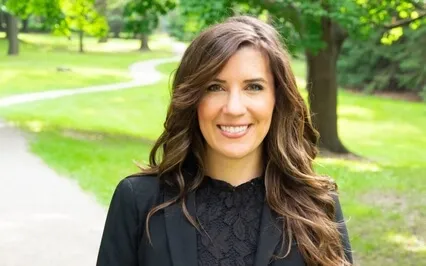
Hello everyone!
Happy Friday!
Welcome!
Just so grateful to be joining you today,
TGIF.
So whether it's your morning,
Your afternoon,
Late into the evening,
Or maybe it's early Saturday for you,
I'm just so grateful that you are here to share in some dialogue today about the healing journey.
So thank you so much for choosing to spend time here today.
I know there's a million things you could be choosing to do.
We have a jam-packed conversation ready to go today,
So I hope you're ready.
For those of you who are meeting me for the first time,
My name is Megan,
And I've been teaching here on Insight Timer for about two years now,
And this is a space that just has really changed my life throughout the pandemic and just means so much to me to support and be a part of this community.
So on this app I do have a 15-day course called The Wisdom of Our Wounds,
And I also lead some private mentorship and workshop sessions,
Also have a lot of free content,
So feel free to navigate that.
Eventually I will bring back more consistent yoga and meditation,
But I'm actively returning to these practices as a student right now to really help heal from a very difficult last year.
So it's really important for me as an educator,
As a practitioner,
To authentically be walking the healing journey alongside you,
So that's why I've been on and off for the last year or so.
So today I am bringing the topic of healing integration to this platform because I have incredible friends,
Clients,
Colleagues in my life,
Some of you are here on this call,
Who are actively working through the healing journey,
And we have collectively 7 billion different journeys to consider,
But I am noticing a very common thread and a very common theme,
Regardless of the age or stage or context of relationship that I have with folks,
And it really centers around this deficit lens that we have about ourselves as we navigate what it means to heal from really difficult events.
And so I want to dive into that.
I wish I had more time to tailor this to your specific situation,
But it's impossible in this kind of platform where I can't hear your voice or learn about your history or your context,
So every single person here does have a different lived experience,
A different lens,
And so if there's something that you feel adds value to this conversation that we're having,
Add it in the chat.
I'm going to draw a lot on my own lived experience and that's only one perspective.
So take what works today and leave the rest.
There's going to be things that I present to you to consider and this is an empowered session today where you get to choose to try that on or you get to choose to say,
Nope,
That's not for me.
Every single one of us here,
Either themselves or someone that you love and cherish,
Knows about somebody who has gone through really difficult lived experiences or exposures to traumatic events or adverse childhood experiences on top of the nuance of many intersectional identities.
And so again,
I always like to co-create these sessions because I have my own perspective,
Which is limited.
It's not going to reach everybody.
So again,
Encourage you to please write in the chat anything that you think would add value to the conversation.
So just a little bit more about my background,
I'm a behavior and emotion science researcher at the Yale Center for Emotional Intelligence and I study the impact of complex tough life transitions on our emotions,
Cognitions,
And behavior.
This idea of mind,
Body,
Soul connection is more of an Eastern philosophy that I'm trying to also bring into the academic space and really understand the impact of hardship on the whole person.
And I really feel like it's taken a lot of time to get this clarity,
But my calling is to help people return back to themselves in safe and healing ways and to discover that you make sense given what your life experience has been and that you have absolutely everything you need within you to heal.
We live in an interesting world where the self-help or healing space really markets not everyone,
But really does market to the deficit lens that I'm seeing.
Like,
Here's what I can bring externally,
Or here's what you need to buy into or buy in order to fill this gap that you're feeling.
And so a lot of my purpose and calling really is to return people back to themselves as experts in their own healing journey.
And so I invite you to think about that.
Think about this idea that you have everything you need already within you to heal.
And notice what comes up internally.
Is there a yeah,
But?
Is there some resistance?
Is there some hesitation?
And just kind of notice that.
So I love,
Love,
Love diving into tough topics like shame and grief,
Trauma healing.
That said,
I just want to be clear that my lane is psychoeducational.
So this space today does not replace the guidance of a trained qualified therapist who knows your unique background.
I don't,
That's not my lane,
But I'm here to provide some dialogue,
Some sharings of what I've seen and yeah,
Take what works.
So in terms of housekeeping,
It might sound like a broken record for some of you,
But creating a safe container for everyone is my priority.
But given the one way platform,
It's really important to remember that feelings might surface just by very nature of what we're talking about.
Whenever there is a topic of conversation around healing,
There is the potential for emotions,
Difficult emotions to surface.
So it's really important that you exercise your right to empowered decision making today.
So if you find that you are in distress or in a crisis or feeling heavy emotions at the moment,
I really trust that you'll make a decision to pause from this session and seek out support in your local area.
Okay.
It's not to say it absolutely will happen,
But just by very nature of this conversation,
It might.
If you want to take notes,
Please do so.
But I do encourage you to see if you might engage in just being present with this dialogue today,
Because sometimes we can get caught up and this is part of healing integration.
We can get caught up frantically trying to write everything down or in that anxiety loop of I might miss something.
And so we actually unintentionally distract ourselves from the material.
So just notice is your note taking linked to pulling you out of the present moment or is it adding value?
Okay.
So just notice that.
Not saying it will or it won't,
But just notice.
And then in the spirit of a really great quote from Suzuki from Zen Mind,
Just invite us all to consider this quote.
If your mind is empty,
It is always ready for anything.
It is open to everything.
In the beginner's mind,
There are many possibilities,
But in the expert's mind,
There are few.
Okay.
So I'm going to read that one more time.
I just want you to really absorb that quote.
If your mind is empty,
It is always ready for anything.
It is open to everything.
In the beginner's mind,
There are many possibilities,
But in the expert's mind,
There are few.
Okay.
And so when we have gone through life challenge,
Trauma,
Hardship,
Chronic exposure to microaggressions,
We can start to develop a worldview.
Okay.
And this is the lens through which we navigate and see the world.
And sometimes,
Not always,
But sometimes our worldview is based on false information.
And generally our worldview about ourselves is not based on the truth of who we are.
And I'm going to get into that in this dialogue.
And so I share this quote with you because we can bring narratives to workshops like this that limit what we're actually open to receiving.
So the expert mind doesn't necessarily mean expert as in academic credentials or mastering a skill.
It means what are the assumptions,
The judgments,
The beliefs that have formed in your life that you might get curious about and not let run on autopilot that are perhaps limiting you to take on perhaps a new perspective.
Okay.
So think about that.
We approach this information with a beginner's mind.
Okay.
And so a question that I want to pose to the group to start off our dialogue today,
I'm going to put it in the chat,
Is what are the words that I need to hear right now to express kindness and gentleness with myself?
What are the words that I need to hear right now that will express kindness and gentleness with myself?
Carla says,
I am enough.
I am that.
Yes.
Ann says,
Trust.
I'm unique.
I'm not doing anything wrong,
Lonnie.
That's amazing.
I am enough.
I am worthy.
So start to notice some of the themes that are emerging in community right now around like,
What are the words we really need to hear right now?
So as I mentioned earlier at the beginning,
There are similar phrases and dialogue that a lot of people in my life have shared with me and I have my own as well that have a theme,
Have a thread.
And so I began to get really curious because the researcher in me is alive and well when I start to see something trending or more times than by chance,
My ears start to perk up where I start to think,
Okay,
I need to look into this because this is too many times that I've heard this similar phrase that it's not by coincidence anymore.
So over the last couple of weeks,
I've been reviewing my own journal.
I've been reviewing the client notes that I take and regardless of the lived experience,
So regardless of age,
Stage,
Life experience,
The most common phrases and statements that I hear include,
I don't know what to do.
And this is usually prefaced with a long list of things that a person has done from workshops to books they've read to therapy sessions to other healing sessions.
And so there's a phrase of,
Well,
I don't know what to do.
The second common phrase that comes through is some variation or some form of what's wrong with me.
And this is usually prefaced with a self-deprecating dialogue of all the ways that someone sees themselves as lacking,
That deficit lens.
And so there's two guiding truths that I want to impart for today's discussion.
The first truth is that you are a whole,
Complete,
Normal human being that survived or is surviving abnormal circumstances.
I don't need to know you to know that that's true about you.
You are a whole,
Complete and normal human being that survived or is surviving abnormal circumstances.
Second truth,
I've already said it once today,
Is that you have everything you already need within you to heal.
You are not lacking anything.
So notice your reaction to this.
And by that,
I mean start to watch the show of the mind.
See if you can,
Instead of go with the automatic thinking of,
Yeah,
But she really doesn't know me or if only she knew this about me,
She wouldn't be saying that.
That's what I mean about the show of the mind.
Almost think about it as playing out on a movie screen in front of you,
That it's something you're watching.
Watch the show.
And that's the first place I'd say let's start to talk about healing integration is watch the show of the mind throughout the next hour or so.
Just watch the show of the mind from a place of curiosity,
Not from a place of this is absolute.
Okay,
Remember that beginner's mind,
That beginner's mind.
So healing integration,
When I say that word,
What do you conceptualize this term to mean for yourself?
What does healing integration mean?
I'm so glad Maureen.
Healing integration might mean a shift of mindset to Becca.
Beautiful.
Using all different modalities.
Beautiful Marzi.
A compass.
I love the visual of a compass,
Angela.
That's great.
I love that.
For some of you on this call that might be in therapeutic or practitioner roles,
This might make sense to you as well,
Is healing integration looks at understanding the whole of who we are,
Mind,
Body,
Soul,
But also understanding the various parts of any of you have done internal family systems work,
This might ring a bell,
But the various fragmented parts of who we have become to be based on our experience,
We learn to lean into,
Look at,
And hold these in the same level of deep tenderness that we do the parts of ourselves that we adore and love the most.
So healing integration,
As I conceptualize it,
Is the ability to hold space for the parts about you that you love and the parts about you that you are afraid to show,
Are afraid to lean into,
Or maybe you've severed or disowned parts of who you are and you learn to appreciate those at the same level as the parts that you love.
We integrate our whole being.
And this definition can be expanded,
It can be shifted,
It can be added to.
And so I invite you to think about the feeling of being fragmented along your healing journey.
This is something very common with folks that I work with,
Is notice the feeling of being fragmented or the different versions of you that operate in your day to day.
100% of the people I have worked with privately share a similar feeling of like,
In some arenas of my life I feel like the adult version of myself,
In other arenas of my life I feel like a more childlike or adolescent version of myself comes through,
Especially if I'm triggered.
And so chronic exposure to past traumatic or stressful experiences or current in our life can create this feeling of being fragmented.
Some days we feel really energized,
Some days we feel completely flat or exhausted and think,
What the heck,
Yesterday I felt on top of the world.
It can come suddenly and it can also be gradual.
Some days we feel like our current age,
Some days we feel like a younger version is coming through.
Some days we feel really kind-hearted and other days we might become really difficult or challenging towards ourselves or to those around us.
Does this ring true for you as I share this?
And so from a healing integration perspective,
It's not about getting rid of the versions of you that you don't like operating,
But observing and taking inventory from a place of radical curiosity,
Like actually getting excited about this work of like,
What can I discover here when I notice I'm showing up as a different version of myself?
So taking inventory from a place of curiosity and not judgment,
This is possible in all of us to have this feeling of being fragmented,
Walking through our lives,
Feeling like we're shape-shifting to some degree.
And so I invite you to think about when do you feel the most authentic and like yourself?
What is the context?
Who are you around?
What environment are you in?
What's happening where an authentic version of you is emerging?
And then when do you become a different version?
For many folks who have been through difficult traumatic experiences,
That different version,
Usually not always,
There's lots of different versions,
But usually involve one of two fragments.
One,
We might make ourselves small.
So we might literally make ourselves small.
In some spaces we might,
You know,
Exude openness.
And then in other spaces we might make ourselves small.
We might not speak up.
We might stay silent.
We might walk away from a meeting or an experience and say,
I wish I would have said X,
Y,
Or Y.
Or in other spaces we might have a very quick impulsive reaction.
So there might be an outburst.
There might be an anger outburst or rage or quick temper or really instantaneous crying.
And just notice.
And it can vary on a spectrum.
It's not one extreme to the other.
There's a whole spectrum in between.
So Carla says,
I'm around like-minded people with bright ideas.
We can communicate well with each other where I'm encouraged to share my thoughts.
Yeah,
Beautiful environment.
And that can be created family life,
Work life,
Friend life,
One of them only,
All of them together.
But yeah,
What a beautiful space to feel authentic where there's mutual encouragement to share.
Exactly.
And so just taking inventory,
This is the start of healing integration of rather than walking away from an experience and thinking,
Oh,
What's wrong with me?
I was not myself.
It's like,
What was happening?
What was the nature of the relationship if there was people involved or what was the thought that came up?
How might you pay attention to who you are being this week when you are around certain people or you experience pleasant versus not so pleasant experiences?
And consider if there's any themes or patterns that emerge.
And we start to take an inventory.
We start there.
Instead of just operating on autopilot,
What can we start paying attention to and get curious about?
Like,
Oh,
Wow,
In that conversation with my boss,
I noticed nervousness and anxiety coming up and I didn't share something I was really proud of.
Why was that?
What happened?
Or in a heated conversation with a partner,
You know,
Why did I react so quickly to that comment?
What was it about that comment?
Let me dive into that a little bit more rather than instantly saying,
Ah,
This communication is never working.
It's like get curious about,
Okay,
What is actually at the root of the version of you that's operating?
Carla says,
I was around people who don't value my ideas or perspective and I felt like shrinking.
Just thinking about what was it?
Like,
What was the clear situation or context that led to the shrinking?
And what is that linked to?
So healing integration requires us to lean in to what we might be missing within ourselves.
We might be avoiding within ourselves.
We might not be aware of in ourselves.
And this takes really deep patience and courage because we might not see it right away.
And so another quote that comes to mind is the day you plant the seed is not the day you bear the fruit.
Right?
The day you plant the seed is not the day you bear the fruit.
So as I say,
Let's lean into what we might be not seeing within ourselves doesn't mean that all of a sudden it's going to come clear to you what you're not seeing.
Okay?
We are planting a seed.
And so I share this as a gentle reminder that you might not feel like you're there yet,
But you are planting a seed in this moment.
Leah says,
Just yesterday I had an irrational response to my partner.
I was able to lean into what happened and come back to him after that to explain what he had triggered.
It's only possible because my partner allows me to be vulnerable with him and honors my healing.
So it's amazing that you have that ability to circle back.
And then I challenge you Leah to think about the word irrational.
There's nothing irrational about your response.
It's like you had something very valid that was triggered within you and you were able to get it up and out of your system.
So I think that's actually a rational,
A very rational response.
And so again,
That deficit lens,
It's happening automatically that we instantly think a trigger or an emotional response means what's wrong with me or it's irrational or and in fact it's actually pointing us to emotional material that just needs to be looked at.
So validate yourself.
That was not irrational.
That was very rational.
And I don't even need to know what the trigger was.
Okay.
So back to healing integrations.
We have to lean in to what we might be missing within ourselves.
So perfect examples.
We might be saying things about ourselves that are not true.
There might be a very valid reason why triggers are coming to the surface.
There is no timeline on the healing integration journey.
I wish I could sit here and say in two years of doing this work,
You will be fully integrated.
It doesn't work that way.
And that really challenges our dominant culture in this world.
It's very linear in progress and very,
You know,
Achievement focused.
There's no timeline.
There's no medal for this work.
There's no,
You know,
Certificate of achievement.
We hopefully through our layers of integration work that we're doing start to feel more consistent authenticity in our lives and start to really return home to ourselves.
And this often first appears as like peeling back onions.
You know,
We don't dive right into the center of the onion.
We got to peel it back in a very careful way.
And I know lots of you love Sarah Blondin on this platform.
And so I just listened to a meditation from her called look and it will lift.
I'll write it in the chat.
And I love that phrase because it encouraged me to think about what am I not looking at or what am I not looking at clearly because it might be too painful to come to terms with or we fear that we don't trust ourselves to navigate the emotions that might come to the surface.
I promise you,
I promise you the energy that we spend individually protecting and surviving is so much harder on our system than what it takes to really bring to the surface the outdated limiting beliefs or story we've created about ourselves.
Let me say that one more time.
I promise you the energy it requires to protect and be in constant survival mode is so much harder on our system than what it takes to bring up to the surface that which we're not willing to look at.
But when we protect and survive,
We are in control and it's familiar.
It's a familiar place to be in fight or flight response for a lot of people.
It's familiar to constantly be looking over your shoulder beyond edge.
It's familiar.
And moving to the unfamiliar of what's on the other side of processing this and really looking at what I'm not looking at is threatening to our system.
It feels more threatening to live in uncertainty than it does in familiarity.
So I'm going to ask you a deep question.
You know I'm not surface level so and trust me on where I'm going with this.
This idea of reflecting on your life journey.
If you could create like a line diagram starting at birth right through to this moment and have little ticks along the life diagram.
What was the earliest memory you had in your life of invalidation,
Being ignored,
Dismissed,
The feeling like you were at fault or something about you that caused something.
What's the earliest memory that you have of this?
And for many of us it's really early memory and for some reason again anecdotally but for some reason between the ages of 8 to 10 in the dialogues that I've been having seems to be a common age range.
That's not to say earlier than that or later than that but there's a I'm noticing a common trend between like 8 to 10,
8 to 12,
7 to 12.
There's kind of these experiences that we go through that are our first experience of being severely invalidated,
Dismissed,
Ignored,
Overlooked,
Unloved,
Told we weren't wanted and so thinking about yeah so let me look at some of these.
Jean says age 8.
Carla chronically dismissed like 6 years old.
Lonnie 3rd or 4th grade so that's like 10,
11 ish.
Angela 5 or 6,
Maybe 3,
7,
Grade 3.
Yeah.
Thank you so much.
I know that it takes courage to press send when thinking about this because these experiences that we have become a source of shame within us and the narrative of oh if people really knew this about me,
If people knew that this happened to me or if or you really internalize it as if what happened is true about who you are,
We pack that down because it's really painful.
So from a young age from developmental psychology,
Look at all the ages here.
From 3 to 10,
3 to 12,
Just from a developmental stage.
We haven't developed and fully formed all the various regions of our brain at those ages and in that part of our life we are very egocentric,
We're very at the center of our lives.
Rightfully so,
We are children,
Right?
And so we start to internalize these experiences or these comments or statements and start to make meaning about what it means about us at the center.
So a very common example to share with you,
Two really good ones top of mind,
Working with a client whose parents divorced in grade 5 and that person carried the narrative that it was because they didn't make the bed or didn't keep their bedroom clean that mommy and daddy got divorced.
And that's not something that was overtly aware in the person when first arriving,
Maybe in their adult life,
Taking on conflict in the workplace as they're at the center of causing it,
Maybe taking on responsibility that's not yours to own became the pattern in adulthood and through this integration work,
Discovering at the core was this narrative that they caused their parents divorce.
Highly,
Highly,
Highly,
Highly unlikely,
I won't say 100% impossible because I don't know everyone's situation but any 9.
9999999% a 9 year old child did not cause,
It's not the reason why two parents divorce.
Okay?
Another example on my 15 day course that literally just came through yesterday,
This idea of finding your essence and we're going to talk about that shortly,
About what's your creative self-expression.
And this person realized that when they were young they wanted a pencil crayon box of 150 colored pencils and the comment the mom made was you don't need 150 so we're going to get you the 75 pencil box.
Such an innocent comment,
You know,
Extending generous interpretation of that parent,
They would not be consciously aware of how that statement would have been internalized for the child but at that age the child internalized it as I'm not worthy of having my needs met or I'm not worthy of anything,
Like I'm not worthy of what I want.
So then in adulthood what does that show up like?
You know,
Maybe you don't apply for that dream job because you think well I don't deserve it and you pull yourself out or you shrink as Carla said.
And so from a young age developmentally we internalize experiences and statements as if they mean something about us and we are meaning making machines like human DNA is to make meaning,
Right?
Our brain makes meaning and we usually place ourselves at the center of why a difficult experience or a difficult statement happened and we start to have this inner dialogue that goes something like well it must have been because there's something inherently wrong with me,
I'm not good enough,
I'm bad,
Right?
I see all of that coming through the chat.
No matter what the experience was,
I'm not good enough.
Another common one is I'm not wanted.
You know,
I'll share an experience from my childhood.
I was a very challenging birth.
My mother had a very challenging birth with me with preeclampsia or toxemia.
I think they're interchangeable.
And you know every birthday it would be emotional for my parents,
Rightfully so.
I don't know what that experience would have been like where my mom's blood pressure was you know skyrocketing and emergency c-section.
But as a young kid I internalized it as I caused my mom so much stress.
And so how do I compensate for that in my life?
I become the good little girl,
Right?
And a lot of people I work with talk about their birth story feeling like they're the cause for their mom's pain or they're a burden or they're not wanted.
And then you develop a way of being to not access that deeply painful truth that you have created about yourself.
Okay,
So seeing how this is landing with you and get curious about like really thinking about what's your earliest memory of feeling invalidated or dismissed and has that shaped a way of being that might contribute now in your adult life to a fragmented feeling of living.
Sometimes these ways of being serve us so well,
You know,
Being a high achiever,
Being you know persuasive in sales like you know these different skills that we develop to protect a truth that we've created about ourselves are really great skills and necessary and lead to really amazing success.
But there's also a flip side of it's overcompensating for a truth within us that is really painful to look at that we've and the truth is faulty.
It's not true because you are a whole complete being.
You are a whole complete normal human being.
As we continue to talk about healing integration the next point I want to make is we do not access our authentic selves through the analytical cognitive mind and yet again commonalities with the people I've worked with is most people err on the side of cognitive healing.
Most people know how to study,
How to listen to things,
How to read things,
How to take courses and these are all really helpful and necessary and a beautiful part of the healing journey.
There is an abundance of practitioners,
Thought leaders,
Subject matter experts on all things healing.
Like you,
I can't even imagine the length of time in years of all the content that is available.
But we a lot of times with clients I work with they say you know I know what to do but I don't feel it and that's because we are using the analytical mind most of the time because it's familiar and it's something we can control.
By very nature of being human familiarity and control is what is in our DNA.
We'd rather stay in a familiar discomfort than see what's on the other side because it feels threatening to our identity.
We know we can check off boxes and do the cognitive analytics but we don't know when we move out of that space and into our somatic unfamiliar space what's going to be on the other side so it's threatening to the system.
Yes Lani,
So evolving so much is moving into the area of embodiment.
So moving from the neck up to the neck down embodying this work.
But the interesting thing is embodiment is always available to you.
Our body is always speaking to us and it's just relearning a set of skills to tune into it and access it.
So integration really does mean approaching your healing journey with a different set of skills that have gotten you to the point that you're at now.
A different set of skills that are different than your survival and coping skills.
Those are amazing skills,
Those are beneficial skills.
I'm not saying get rid of those skills.
Keep those skills,
Those have served you so well in your life,
You have made it through your hardest days.
But if there's an inner nudge surfacing within you like I'm just not quite getting it,
That is a really beautiful sign that you are healing and integrating and stepping into learning a new set of skills for this chapter of your life.
So understanding this idea,
We all go through a period of wanting to analyze and knowledge seek and absorb.
But understanding that you can't only think your way through healing is such a critical component of healing integration.
There is an entire system in your body,
A bottom up approach of body wisdom that is waiting for you to say yes,
I'm looking at you.
So exploring what is the relationship you have with your body and really get honest.
For many people,
The body is not a safe place of refuge.
The body has not been an experience of safety or comfort.
In our earliest memories,
If we never received love in the form of a hug or comfort in the form of a hug,
Starting to explore gently giving yourself compassionate hands to heart is going to feel really uncomfortable.
The body is,
We've conceptualized the body as not being a safe place for our refuge.
So then we look outside of ourselves for the answer,
But the answers are within ourselves.
So what is your current relationship with your body?
And we may have been hit literally or figuratively,
Bruised,
Attacked,
Injured,
Shamed.
And so what do we do?
We learn to sever ourselves from our relationship with the body.
We've completely severed that relationship because we've internalized our body as being not a safe place to return to.
And so working with somebody that you trust,
Working with somebody that understands somatic triggers and how to move you through those is going to be a really important part of healing.
We don't heal in isolation.
I highly recommend not doing somatic-based work on trauma healing alone because of the internal dialogue that we've developed from an early age of what's wrong with me,
Right?
If we have that lens applying to somatic experiencing,
We need someone to walk us through that there's nothing wrong with you.
This is the emotional material that's been imprinted that we need to take a look at.
But this happens,
Okay,
If it's one thing to take away,
It happens in very small incremental steps.
And that's why it doesn't make sense to a lot of people.
So when I suggest to somebody,
I want you over the next week to do some shoulder rolls and some neck rolls,
The most common response is kind of a look like,
What's she asking me to do?
Like,
What's that going to do for me?
I'm asking you to get in touch with the relationship you have with your body.
And for some people,
I even had somebody,
You know,
Mention that hands to heart was too triggering.
So I said,
Great feedback.
This is why working in partnership is so important.
Great feedback.
So instead of hands to heart,
Start with a neutral place on your body where you don't feel,
You feel no feeling.
So for me,
That's like an elbow,
Like my elbow has a very neutral,
My elbow doesn't have any emotional connection to me,
It might for you,
If you're a tennis player and got injured or something like that,
That might be a triggering place for you.
But it's like,
Where in your body can you find neutrality?
It's not about going from,
I don't feel good in my body to all of a sudden I feel great.
We have to titrate,
Which means we slowly incrementally build.
And the word titrate comes from the medical model.
So it might be triggering for some people,
But it's really one of the best words that visually for me describes the healing integration process,
Which is,
I think of a medicine that's going in through an intravenous to a patient and like the titration valve.
It's like if you turned it fully on and the medicine just flushed through,
Like you'd put a person into complete shock,
Right?
It has to be carefully titrated at the right dosage for the person's needs.
So that's going to be different for everybody.
Another analogy,
The elastic band analogy.
So if I were to pull this elastic band as hard as I could,
I feel the tension of wanting to recoil or the elastic band,
Don't even want to try it because it might hurt,
The elastic band completely breaks,
Right?
This is very symbolic of how I conceptualize healing integration.
We can't pull the elastic to its end points because we're going to recoil.
And so we start to build trust within ourselves through small incremental steps.
And that means trial and error.
That means we give something a try,
Which takes courage and everyone's at a different level of readiness.
And when we notice a triggering effect,
Watch the show of the mind.
It'll instantly go to,
Well,
You're not doing it right or what's wrong with you?
You can't even breathe for five breaths without an emotional trigger happening.
And we notice the show and we say,
There you are.
There's the show.
I'm not going to buy into the show.
Thank you for showing up,
But I'm in charge in this moment.
And make an empowered choice of whether you continue or whether you need to pause.
There is so much strength in knowing when to pause.
We push ourselves as a society to try to do more than what the body is ready to.
And so really thinking about what is your relationship with your body and how can you return back to building a relationship with your body that's not based on the hurt,
The attack,
The injury,
The literal injury,
The psychological injury that you've endured.
Because the truth of who you are is that you are whole and complete and that your body is on your side.
The whole purpose of our entire body,
The whole purpose is to keep us in homeostasis,
To keep us in balance.
That's the whole purpose.
All right.
Fire it up because I love talking about this stuff because I want you to,
I want to become redundant for you because you've learned this yourself and you're not broken and you're not lacking.
And any practitioner that says otherwise,
Be mindful of that.
You're not lacking anything.
So another thing that comes through loud and clear with friends or people that I've worked with is that there is an inner nudge.
Some people call it intuition.
Some people call it divine intervention.
Call it whatever feels right for you.
But this inner nudge that says,
There's got to be a different way here because I'm really tired.
I'm really tired.
And this inner nudge is pulling you towards the truest essence of who you are,
Which is freedom and ease.
Our state of being is in freedom and ease.
Our natural state of being is one of ease.
And just think about that.
When was the last time you felt ease?
And I refer to that inner nudge and the experience of feeling ease as the truest part of who you are,
The essence of you.
The essence of who you are transcends all the labels and identities we attach to ourselves.
The essence of you is not your degree.
It's not your role in your family.
The essence of you transcends identity and it's a way of being grounded in ease and freedom.
And this is exciting,
But it's scary because again,
We've been conditioned to label ourselves,
To identify with our hats,
To identify with the mental health conditions that we have.
The essence of who we are extends beyond that.
You're so much more than your identities.
But we don't often take a moment to acknowledge this true part of who we are because we're focused on reaching a different outcome.
And yeah,
Carla,
The DSM-5,
Whole other conversation,
But it is very narrow scope.
Yeah,
Holly,
You are not your autoimmune disorder.
I think it's important to recognize that your essence is always calling to you.
It's always reaching out to you to listen.
And I don't know when we start to actually pay attention.
It's different for everybody.
We all have different levels of readiness.
But that truest part of who you are is always calling out to you to say I'm here.
And our essence often sadly,
So sadly gets ignored,
Quieted or eroded by us if we're operating in survival and protection mode or the very societal expectations that are placed on us or those narratives that we've internalized from a really young age.
They block us from our essence.
So it takes really deep conscious work to return to the truest part of who you are,
Which is you are whole and complete.
You are not lacking.
And if we aren't careful and we don't collectively help one another return to that essence,
Our life begins to feel false or like a performance or we're acting somehow.
And we can become unconscious to this.
We're not actively choosing to wake up to say I'm going to live a false life.
But there's this inner feeling of like I'm not accessing the essence,
The most authentic truest version of who I am.
And for trauma survivors this can become even further hidden as a result of the layers of shame we carry based on what happened to us.
Shame,
Guilt,
Humiliation,
Those kinds of experiences further pack down our connection to the truest essence of who we are.
But again,
Our essence is always trying to communicate to us throughout our life,
Just waiting for us to return,
Just waiting.
So I wholeheartedly believe healing integration is listening to the essence trying to surface within you.
And the hard part really is sifting through all those layers.
We all have our own onion or our own mud to sift through.
And again,
We don't access this part of us through the analytical mind,
Which is where it gets confusing for folks.
We can't think our way to it.
We must use our sensing feeling system with deep trust that our essence will continue to surface louder and louder without our forcing it.
So you embark on your sensing feeling system with no expectation of a timeline.
How hard is that for us?
You know,
In the field of the system of academia,
I've lived my life based on deadlines.
And so wrapping my head around,
You mean I'm going to try something with no deadline or no clear this is working?
Yeah,
Yeah,
That's healing integration.
How might you build more moments?
And let's break it down,
Not talking about going full force into an hour,
Because that's not the elastic analogy.
But more moments of authentic connection with yourself to look at what you might be missing.
What does that look like for you?
So the question I pose is what are the things that make you feel the most like yourself that are not driven by money,
External validation,
Recognition or a tangible outcome?
What are the things that make you feel the most like you?
It's not driven by a paycheck.
It's not driven by status.
It's not driven by external validation or recognition or tangible outcome.
So for our society,
That's a hard thing to switch in our mind because that's what we've our culture is placed value on those things.
The dominant culture places value on money,
Status,
External validation,
Recognition.
That's not where healing integration lies.
It's accessing what makes you feel the most self expressed.
And so things like painting,
Woodworking,
Walking in nature,
Making a favorite cup of tea.
I know somebody that did mosaic art.
I have a very close colleague who you literally see her essence come through when she's singing.
It's palpable.
And when I point that out to her,
She's instantly crying because she's like I never thought of it that way but that's where I feel most connected to myself.
And so really think about the things that you do where you feel most authentic connection with you.
Sometimes that gets hidden.
We think by doing something,
We're connecting with ourselves but we still might be having something we're not seeing.
So when I talk about authentic connection with yourself,
What would you looking yourself in the mirror and spending time with yourself?
What does that look like?
I'm just suggesting so take a look at that.
Take a look at that.
So what does it look like to give yourself permission to spend more time doing the things that bring you to true authentic connection,
Seeing all the parts of who you are with self-compassion,
With deep love and appreciation for yourself.
Okay.
Yeah,
Play,
Creativity.
You know we can really learn a lot from our young people,
Our tiny humans.
You know spending a day jumping on a trampoline with kids or listening to the imagination.
Like it's just it's beautiful to witness that and it can stir that within us.
Like what can I do to embody imagination and creativity and play?
All right.
So I want to walk us through a simple journaling practice based on Kristin Neff's work on self-compassion.
She's a beautiful teacher on this Insight Timer platform and researcher of self-compassion.
And so grab your notebooks or digital notes or you know be in it just reflecting in your mind.
So I want you to think about somebody you really cherish in your life.
Okay.
This could be a close friend,
This could be a family member,
A co-worker,
You know your local grocer.
Like it could be anybody,
The barista that makes your favorite coffee in the morning.
Just something that you,
Someone that you have kind feelings towards.
And just envisioning if this person came to you who and they were really struggling and you could see the struggle in their emotions.
Maybe they're crying,
Maybe you notice that they're shrinking in their body just feeling really down on themselves.
How would you respond to your friend in this situation especially when you're operating as your best most regulated version of yourself?
Like how would you respond to your friend?
Break down or think about one or two things that you would typically do.
What would you say or what would be the action or note and tone in your voice that you would talk to somebody that came to you who's struggling?
What would you say?
What would the actions be and like what would the tone of voice?
If you could think about voice tone,
What would the tone of voice be?
Yeah,
Yeah.
How can I help?
I'm here for you.
I would be gentle with them,
Right?
If we held a microphone to our mind and played for each other when we're struggling what we said about ourselves,
What do you think that would be like?
Would it be the same?
I feel like sometime in this lifetime we're gonna be able to actually hear inner dialogue,
Maybe Siri's already doing that.
But yeah,
Just think about how you would navigate somebody you care about struggling versus how you treat yourself and just notice if there's a discrepancy or a gap.
And healing integration isn't about fixing the gap right away.
It's slowly working towards closing the gap.
Ask yourself why you notice a difference.
Did you notice a difference?
Why?
What factors come into play that lead you to treat yourself so differently than how you would treat others?
What is the tone of voice in which you talk to yourself?
How do you typically respond to yourself?
What are the actions?
What do you say?
And why do you think that there's a discrepancy?
Yeah,
Carla,
Very harsh.
Same.
Same.
And then through our conversation today,
Think about this idea that that voice,
That harsh voice is not yours because the essence of who you are is you are whole and complete and you're not lacking anything.
So that voice is the voice that's linked to past conditioning,
The past narrative that we've developed about who we are.
So how do you think things would change for you if you responded to yourself in the same way you typically respond to a close friend when you're suffering?
Yeah,
How do you think things would change?
What would it feel like to have our default response be one of gentleness and being on our own side and tenderness?
Honestly,
It would probably feel awkward at first if we've been operating for decades and decades of harshness.
Right?
It would probably feel uncomfortable at first given the way that we are conditioned collectively.
Yeah,
Sunita,
Exactly.
You'd have to get used to it.
Elastic analogy.
We start with small steps.
So that,
My friends,
Is a dialogue on healing integration.
I never said we would come to a full,
Complete answer on what does this look like for each individual person because there's seven billion different versions of healing journeys.
But this idea of recognizing that harsh voice,
What is it saying?
What's the statement that is most commonly repeated to you about you?
Getting really curious,
Radical curiosity as to where is that linked to your earliest memory of being invalidated,
Dismissed,
Shown that you were in the way,
Overlooked,
Ignored,
Etc.
And I asked you at the very beginning,
What are the words that you need to hear?
And understanding that we start the healing process in a very small,
Incremental way,
The elastic band of turning tenderness and gentleness towards ourselves along the journey.
Easier said than done.
Somebody said before,
Two steps forward one day,
Eight steps back the next.
But in community,
When we name this in community,
We learn that we can dust ourselves off.
We've got this.
We can get up and try again.
And so I am deeply honored that you would spend time listening to this dialogue.
Yeah,
These are just my thoughts today on healing integration and take what works,
Try it on,
See what works.
I really couldn't do this kind of talk without this community and this beautiful community.
So I just want to thank you.
So right back at you,
I would love for you to settle into knowing that you are a huge part of this too.
I'm going to sign off for now.
Just wish you continued connection with the authentic part of who you are,
Which means we notice when we're living in a fragmented space and we notice with deep love and tenderness and we learn to love the parts of us that we want to push aside at the same level that we love the best parts of ourselves because those parts are important allies to pointing us to the emotional material that we must allow to come to the surface at some point.
So just want to thank everyone so much.
I see you.
I honor you.
I look forward to seeing you again.
Bye for now.
Bye.