So,
Tonight's talk is about being mindful of unpleasant feelings.
And I decided to give a talk on this because last week I listened to a TED talk by Joan Rosenberg and it was about being able to come to terms with unpleasant emotions,
All the feelings of the emotions and how to do that.
And it was really quite good.
I'll talk about that in a little while.
And in addition,
I was ill about five weeks ago.
I was running a retreat and I'll tell you about this in a few moments.
And I just got quite ill,
So I had to deal with unpleasant feelings for a couple of weeks actually so it was quite fruitful.
So feelings are of course very important in the Buddhist way of things.
Feelings are one of the twelve interdependent links on,
Sometimes dependent origination is depicted as a cycle,
A cycle of twelve interdependent links.
And feelings,
The link between feelings and craving is really crucial in whether we use that dependent arising to be free from suffering or it entangles us into more suffering basically.
So the link between feelings and craving is very important because as you know,
The Buddha said craving is the cause of suffering.
And I mean there's a lot more to it than that,
But craving is key in the development of Dukkha and us being bound in the cycle of birth,
Aging,
Sickness,
Death,
Ignorance,
Consciousness,
Six sense fears,
Body and form,
Six sense fears,
Contact,
Feeling,
Craving,
Grasping,
Becoming birth,
Aging,
Sickness,
Death,
Ignorance and so on.
We get caught up in this cycle.
So what happens with feeling,
With this link between feeling and craving is when we have a feeling of either something being pleasant or something being unpleasant or something being neither pleasant or unpleasant,
It has the potential to drive us into craving after the pleasant,
Craving to avoid the unpleasant or just getting confused about the experience.
So it has that great potential and if we are not mindful of these experiences,
That's what happens.
Just it's natural for us to,
When we have a pleasant feeling,
It's natural for us to want more of it.
When we have an unpleasant feeling,
It's natural for us to push it away,
Avoid it,
Condemn it and so on.
And these are the very root causes of us perpetuating our suffering.
So the other thing about feelings is that if we can see feelings as they are,
See them as impersonal,
See them as not-self,
See them as impermanent,
See them as experiences that arise and pass away,
As impermanent,
Then we have the possibility to short-circuit that tendency to be caught up in craving and grasping and becoming and so on and we can be free.
Even at a relative level,
Even to the extent that we can not feed into craving,
To that extent we can be free.
They are very,
Very important and mindfulness of feelings are the second foundation and they are so important that the Buddha talked about them as a distinct domain of mindfulness.
The other domains of course being body as the first domain or the first foundation,
The first establishment.
Feelings is the second one,
Mind or heart-mind is the third and phenomena is the fourth of course and you've heard me give talks about this before and you've heard many talks about the four foundations of mindfulness.
So I won't go into great details.
I just first like to talk about an experience that I had about five weeks ago where it became really powerful for me.
I ran a retreat four weeks ago.
It was a 10-day retreat.
I was going to do it down in Sydney and because of COVID-19 and the complications with that and the fact that if I travel down to Sydney,
My colleagues travel down to Sydney,
We'd have to quarantine when we came back.
Being health professionals,
We weren't allowed to work and so it just got really,
Really complicated.
So I decided to cancel the onsite component but I continued with an online component.
So I ran an online retreat for 10 days in my home in Lismore and we had people from Canada,
Someone from Canada,
Someone from Japan,
Someone from Perth.
All up we had about 17 people.
It was great.
It was a really,
Really good retreat.
A couple of days before the retreat,
However,
I started to get a sore throat.
Started to feel sinacy,
Started to feel unwell and then I noticed it and I thought,
I'll just monitor this for a bit and then Mary,
My partner,
Started to feel sick.
So we both thought we should go and get tested for COVID-19,
So we did.
As it turned out,
We were negative.
So that was great.
So I continued to run my retreat and I thought,
Well,
Lucky that I'm running an online retreat because I'm not going to infect anybody anyway.
So that was really good.
So I ran the retreat and I was having a pretty hard time trying to work out how to manage Zoom and all the rest of it.
18 people full time.
There was a couple of people just for the first couple of days.
A couple more people for the first couple of days.
Anyway,
It was all new for me.
It was a bit of stress.
So Mary just kind of got bad with this virus or whatever it was and I just got worse because I was pretty stressed out.
I just got worse and worse and worse.
So by the time Monday came,
I'd lost my voice.
And I was waking up every night kind of in a fever and coughing.
I couldn't breathe very well.
I thought of phlegm.
It was really,
Really unpleasant.
So I thought,
Well,
It's useless to struggle with this.
It's useless to struggle with it.
And the aim of the retreat wasn't to talk about the health benefits of Buddhist meditation because if I was to do that,
It was going to be a dismal failure.
Rather,
I just kind of hung in there with those unpleasant feelings.
It became really good.
If you remember,
It talks about the four truths,
The cause of dukkha,
Freedom from dukkha,
Way to freedom.
You remember that those four truths can be considered as a sequence.
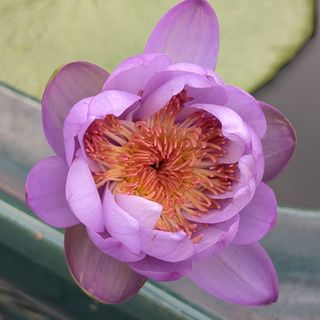
The analogy of something beautiful as a lotus growing out of something kind of like mud.
Mud and a lotus analogy.
Dukkha and getting close to dukkha,
Going into dukkha,
Understanding dukkha is the way to find freedom from it,
Ironically or paradoxically.
So I just hung in there with this unpleasant experience when I was waking up at two o'clock in the morning,
Coughing my guts out.
Then I needed to run a retreat the next day.
Unpleasant,
Unpleasant,
Unpleasant.
Not being able to go to sleep because of there'd be kind of gurgling in my chest and woken up.
And I could have been really embarrassed about this.
I could have been really shamed about it.
But I thought,
Well,
That's a bit useless.
So I chose just to hang in there with it.
And of course,
All the participants on the retreat were really just compassionate.
They weren't judging me in any way.
I wasn't supposed to be a teacher,
Like a guru or anything like that.
I was just simply conveying.
I was just facilitating this retreat.
So it was really good.
I discovered that the more I could just sit with it rather than buying into thinking about it,
Struggling with it and so on,
The better it was.
It was just unpleasant feelings.
They were impermanent.
They were not myself.
They were not self.
They were just rising and passing.
They were not who and what I was.
They were interdependent.
And if I conquer them or I treated them in a way where I would take them personally or struggle with them,
I was not wanting them there.
I noticed that.
But the more I fed into that,
Not wanting,
The worse it got.
So it was really very fruitful.
So that's one experience of unpleasant feelings.
And there's Analayo,
A prolific writer and wonderful scholar and practitioner.
I remember reading a book by his called The Buddhist Approach to Illness and Death.
And it's all about these little suitors of the Buddha.
He's talking to people.
He's visiting people who are dying or gravely ill.
And he's saying to them,
What's happening for you?
It is unpleasant feelings.
And he's saying,
See the reality of that.
See the reality of that.
And that's the way they talked about dealing with grave illness,
Aches and pains and pain that cannot be described.
Like so bad that it's indescribable.
It is the way to psychological freedom to hang in there and see things as they are.
See unpleasant feelings as they are.
And it's quite a fruitful way of liberation.
I'm not recommending that you should go out and get painful feelings like injure yourself or anything like that.
But use it to your advantage.
The other point I'd like to make is this TED Talk that I listened to by Joan Rosenberg.
And it was entitled Emotional Mastering.
It's a great TED Talk.
And she talked about how most of us want to avoid unpleasant emotions,
Painful emotions.
We'll do our utmost to avoid them.
And she talked about eight emotions primarily that can be boiled down to those that we tend not to want.
They are sadness,
Shame,
Helplessness,
Anger,
Vulnerability,
Disappointment,
Embarrassment and frustration.
And what we tend to do is we tend to have beliefs about these emotions that they shouldn't be there.
We tend to avoid them at the utmost.
I'm interesting.
I would say I would add another couple of other emotions like rejection.
The feeling of rejection is a really strong feeling that we don't like.
So what we do is we tend to avoid these feelings at all cost.
We fear that they may take over and last forever.
We fear that we may lose control.
We fear that people will start to see us as those things,
Those emotions.
We fear that we'll start to identify with them and we just tend to not want to have them.
And we avoid them with our addictions,
With food,
With sex,
With social media,
With drugs and alcohol.
In whatever way we can,
We get caught up in these habits.
So what Joan Rosenberg talked about,
However,
Was that these emotions were wonderful opportunities for us to be free.
Wonderful opportunities for us to find freedom from being bound by these emotions,
Being bound by taking them personally.
And she said the way you can be free from them is to lean in,
Choose to rather than avoid them,
Choose to lean into them.
Just as what we're talking about with the Buddhist approach to mindfulness of feelings,
Unpleasant feelings.
Choosing to see them for what they are,
Kind of get up close to them.
And you remember some of the many definitions of mindfulness.
One way I like to describe it is remembering to be present,
Remembering to be attentive to experience,
Immediate experience,
Sorry,
I'll say it again,
Remembering to be attentive to immediate experience with care and discernment.
That's a way Bhikkhu Bodhi describes mindfulness.
Yet there's hundreds of ways we can describe mindfulness.
One way we can describe mindfulness is being present with.
Another way I've seen it being described as coming face to face with experience.
And this requires courage.
This requires courageous effort because sometimes what we become faced with is very,
Very unpleasant.
Yet it is the source,
It can be the source of great freedom.
So she talks about what Joan Rosenberg spoke about was that for all these intense emotions there's a physical representation of them.
And the physical representation is quite unpleasant.
Yet if we can tune into that unpleasantness,
That tangible experience of unpleasantness in our bodies,
For example,
Then it's an opportunity for freedom.
If we turn towards it and ride through it,
We'll see that it only lasts,
Actually she talks about it lasting,
Most emotions will last,
The physical representation of them will last 90 seconds she's saying.
And when people say they've been stuck in a mood,
A really unpleasant mood for a while,
It's like they're feeding into it,
They're making it more than what it is.
So when I talk to people about dealing with painful emotions I usually say name them,
Feel them,
Feel them in your body.
Of course it's much easier to feel them and then a mindful self-compassion approach is to name them and feel them so you monitor them,
You be with them,
You be present with them and then you soften,
Soothe and allow around them.
But the mindfulness component is this naming,
Feeling,
Tuning into,
Getting up close to and seeing them for what they are.
They are just permanent.
They are just not self.
They are just not the source of genuine happiness.
So the capacity for us to stay with,
Turn towards and stay in contact with these unpleasant feelings moment to moment is actually liberating.
So it takes a choice.
It takes a choice to turn towards these experiences,
Stay with them and serve them.
So when we can let go of the struggle,
This is liberating.