Hello there.
Welcome to the space.
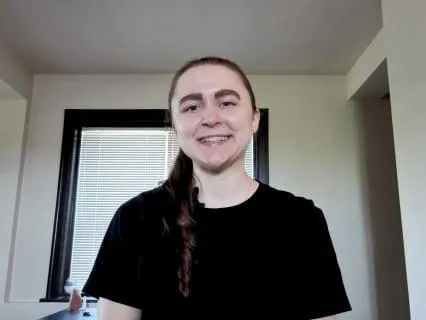
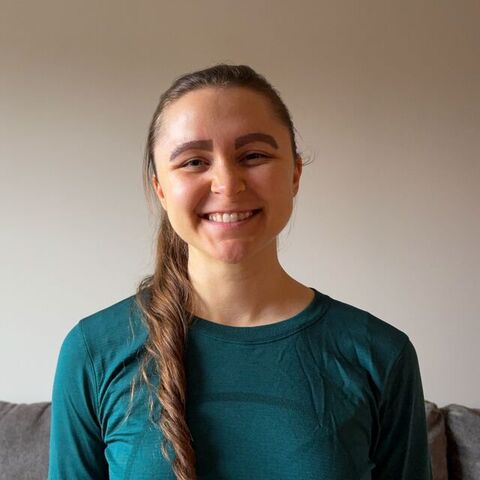
My name is Maya and I'm so happy to be here with you today.
So today I just wanted to make a little video about meditation practice and how we can begin a meditation practice if it's feeling really daunting,
If it's feeling overwhelming.
Just a gentle reminder of how simple and easy it can be to start something new,
Even if you have been wanting to do it for a while and you haven't been able to find a way that truly works for you.
I began meditating about six years ago now.
And.
.
.
When I began to meditate,
It was in the middle of the pandemic.
It was Life was chaos,
Everything was changing,
And I was looking for a sense of calm within me.
And meditation had been introduced to me several different ways over the years,
But the one way that really stuck was the explanation that when you're meditating,
You're just sitting in the space of your aura,
Essentially.
When we look at our energetic body and our physical body,
We often think that the aura sits inside the body,
But it's actually the other way around.
Your aura tends to extend beyond your body about six feet on either side in every direction.
So that's pretty big,
Right?
That's a pretty big area to cover.
And so the physical body actually sits inside of the aura.
And I remember when I was first starting to explore meditation.
Uh.
.
.
I tried several different ways to approach it.
But the one that stuck and the one that worked was literally just sitting.
In silence in the space of my aura.
When you're starting a meditation practice,
The first thing I'll say is that people I think tend to overcomplicate it.
You think if you're not meditating for 20 minutes,
If you're not meditating for an hour,
Then it doesn't count for anything,
Which is not true at all.
When you're starting a meditation practice,
You want to lower the barriers so that it is as simple and as easy as possible to get into a rhythm with it.
I would say that five minutes every single day for a week is a huge accomplishment and that's way more than if you meditate for one hour one time and you never meditate again,
Right?
Meditation is one of those things that we want to build a routine and a habit with because The goal of a meditation practice is never to get it perfect.
It's more so I mean,
There are many different reasons.
Reasons why you might want to meditate,
But for me at least.
.
.
The reason that I meditate and the reason that meditation drew me into it was It creates this spaciousness within your being.
Are moving through life.
We're accumulating all this noise,
All this information.
We're having conversations with people.
We're picking up on psychic debris.
We are,
You know,
Hearing what's happening on the news in places that are so far removed from our lives.
And so as we move through our lives,
Then it just.
.
.
We accumulate all of this noise in our auric body.
And when we were meditating,
At least in the beginning,
One of the goals is just to clear out that noise just to give space for your body and your mind and your heart to process everything that's been moving through you and like everything that you have been absorbing and encountering in your everyday life.
So.
The first thing I'll say.
Is that.
And the second thing I'll say is just make it as easy as possible for yourself to get into a rhythm with it.
It doesn't need to be perfect when you start.
You're probably going to have thoughts.
And that is completely normal,
That's completely okay.
We have this mind that's so intelligent that has.
.
.
You know,
This capacity to go to the future,
To go to the past,
To be in the present.
And that is what makes us human.
And sometimes we get really annoyed with ourselves when we're starting meditation practice because we want to get it perfect.
We want to get it right.
But you don't have to get it right.
You just have to show up.
You just have to start.
So the way I would recommend starting meditation practice if you're completely new and it's feeling really daunting to you,
Is quite simply to have its jacket.
After you eat one of your meals for the day,
For me,
I like to start this with breakfast because In my life,
That was just a nice moment to have some calm before I get into my day.
I would literally finish eating my breakfast,
Put the bowl to the side,
And then just sit in silence for five minutes.
That's how I started.
It was not glamorous.
It was not pretty.
I was probably thinking the entire time.
When I started.
But it was there.
It was a habit.
It was something that I could return to.
And because the barrier to entry was so low,
I continued with it.
If I had made a goal for myself that I had to start with sitting with 15,
20 minutes right away,
I think that would have felt way too daunting.
Now that's something that's very natural for me after meditating for six years.
But when I started,
Five minutes was all I could do.
Really lower the barrier to entry for yourself.
Habit stacking is one of the best ways to do this.
Because then it allows you to get into your rhythm with it.
It's like if you're attaching that meditation practice to something you're already doing.
Then you're more inclined to continue and to follow through with it.
And it just,
It weaves it into your day in a way that makes it more seamless.
And you can't argue with yourself so much about like,
Oh,
I don't have time for this.
I'm pretty sure that you can take five minutes to be with yourself and breathe.
This could also be when you're brushing your teeth after you,
Like when you're getting ready for bed,
That you finish your washing up in the bathroom and then you take your five minutes.
Whenever it works to fit it into your day,
Just find that one time and make it consistent because time holds memory.
And so when we can be consistent with a practice,
Then our bodies will eventually kind of crave that stillness or that moment of presence with ourselves.
And it won't be so difficult.
Challenging to get ourselves to sit and meditate.
And the third thing I'll say is when you're starting,
You're absolutely going to have thoughts.
I mentioned this before,
But you're going to have thoughts.
Um.
.
.
There are many different things you can focus on with a meditation practice.
The simplest one that is always with you is your breath.
And so.
.
.
When I'm looking at.
Developing a very simple meditation practice,
The simplest way that you can start would be just to bring your attention and your awareness into the breath.
There are a few locations in the body that we tend to feel or sense the breath,
And that would be in the chest,
So the heart space,
That would be in the belly.
And if you're really attuned to your body,
You might also feel the inhale and the exhale kind of brushing along the spine.
Upper lip just below your nose.
Really seeing where in your body on a specific day you're feeling the breath.
And yeah where you want to focus that awareness and attention also knowing that like for some people.
An area of the body will be more triggering than others.
So if you tend to be anxious,
Maybe focusing your attention on the chest and like the heart space will amplify that anxiety.
Maybe for you it will be a little more nourishing if you're able to send that attention down into the belly and take those nice deep belly breaths like your baby.
Babies are so good at this.
They just breathe and they don't think about it,
Right?
So we're.
.
.
In our meditation practice,
We're kind of developing and creating space for ourselves to Come back to those innate rhythms of the body and those innate those innate knowings that you carry within you,
For lack of a better term.
So when you're starting a meditation practice to sum it up,
Just make it simple.
It doesn't need to be long to start.
It can just be five minutes.
Habits jacket,
So you're.
.
.
Making it easy to weave it into your day and then your body will get into your routine with it.
And the third thing is to find something to focus your attention and your awareness on.
Most often the simplest and most accessible thing to focus your attention and awareness on is the breath when you're beginning.
You can also work with mantras and different things as you get deeper into your meditation practice.
But again,
I would say when you're starting,
Keep it as simple as possible because that is how you're going to begin to create a practice that you're going to return to over time.
And the benefit,
I would say,
Of starting this kind of meditation practice is that new spaciousness that you're going to start to feel in your body.
It may take a couple of months for that to kick in,
And it may start to kick in more once you are meditating for more like 10 minutes or 15 minutes.
But again,
You have to start somewhere.
So don't be hard on yourself and just start with the simplest,
Easiest way possible that you can.
And it will grow from there.
Over time you're probably going to find yourself that you're more less reactive and that you're more anchored in your truth as you move through your life.
So that is a little bit on how you can start a really simple meditation practice.
And yeah,
I hope that was helpful.
I will see you on the next one.