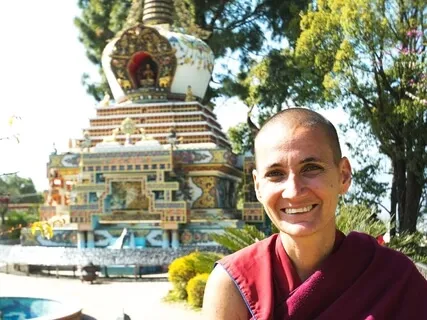
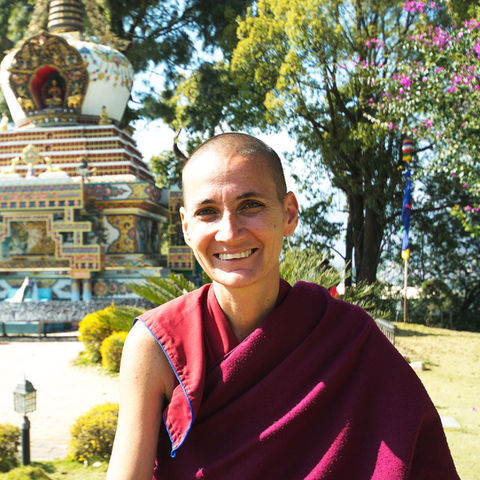
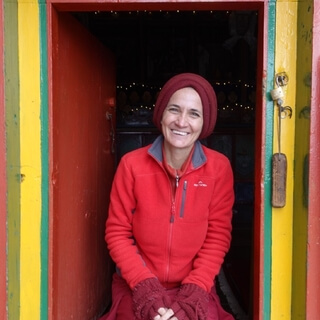
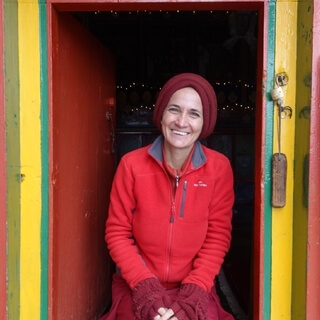
So my name is Helen and I'm here with Venerable Cardo and we're bringing this podcast to you from the Mahamudra Centre located in what has been described as the kindest and most helpful place in New Zealand,
The town of Colville on the sunny Coromandel Peninsula.
Today's podcast is the second in a series of podcasts and we will be reflecting on finding stability in times of uncertainty.
So Venerable Cardo,
Do you even think that that is possible?
Yeah,
Of course,
For sure.
So thank you for having me and thank you for being with us,
Whatever you might be,
And for being willing to take the time to listen to this dialogue.
So yeah,
Let's talk about that.
So,
Uncertainty.
Let's begin with that uncertainty.
So actually if we reflect,
If we take a moment,
Life itself is impermanent,
Right?
Life itself is uncertain.
From the moment that we were conceived,
You know,
There was always a potential for things to change,
For us to pass away,
For everything to just completely follow its natural course of being impermanent.
So having said that,
Understanding that life itself is uncertain,
Within that frame then everything is possible,
Right?
Even stability,
Right?
Now,
Why does it seem nowadays that there are more uncertainties?
Well,
It's because we are having a global pandemic that is pushing our boundaries,
It's pushing our sense of direction,
It's making us change plans constantly,
Yeah?
But if you think about it,
It's been like that even before,
It's just that now it has been more obvious because it's a worldwide experience,
Yeah,
That humans are having.
So yeah,
So life itself is impermanent,
It's uncertain,
And within that everything is possible,
Right?
Including stability.
So what is stability?
Well,
I think a nice definition that I found is that it's a foundation.
It's a foundation upon which we can build,
Okay?
That's what stability is.
So stability,
It could be seen as outer stability,
Having our needs met,
Yeah?
As in shelter and food and education and safety and freedom,
Yeah?
And we can also of course agree that there is another level,
More subtle level,
That is inner stability,
Okay?
So particularly for this dialogue,
I was thinking of talking about that inner stability,
Okay?
Which another,
Yeah,
Synonymous that I would be happy to introduce is emotional stability.
So when we talk about inner stability,
We're talking about emotional stability,
Okay?
So what does that mean?
Well,
That means that you have developed some sort of lifestyle that can assist you with being more in tune with your emotions,
Okay?
So here probably now we're tapping on emotional intelligence.
So emotional intelligence,
It could be discussed at length,
But the two things that I think are really relevant for this sort of dialogue are having self-awareness,
Okay?
So self-awareness and then having some sort of self-training,
Yeah?
Or self-development,
Yeah?
Okay.
So how do we do that?
How do we even start having self-awareness?
So there's a few things that we can do,
A few techniques that we can incorporate,
Right?
But particularly I guess that most of you maybe might agree is that having some sort of a daily mind training,
Daily mind training is of uttermost importance.
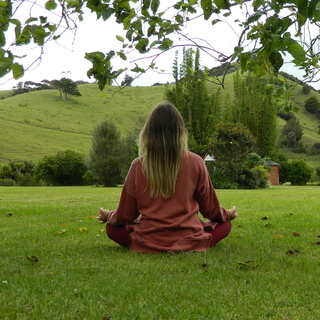
So this could be called meditation,
Like a short daily meditation.
This could be as simple as sitting,
You don't need to be informal posture,
Just sitting on a chair and even just breathing for a few minutes and allowing your body to breathe and allowing your mind to observe that,
Yeah?
You can do that for five minutes,
For 10 minutes or whatever you can.
You can do it more formally,
Yeah?
You could do it for longer periods of times,
But something where you can go inside,
Just something that you can just go inside and be,
And just be without the continual and exhausting self-dialogue that we normally have,
Okay?
So that would be a first step for self-awareness.
So first try to clear your mind,
Create some mental space,
Meditation can help you with that and at the same time try to practice mindfulness in daily life,
Just mindfulness.
So what is mindfulness?
Is that when you are paying attention,
Just pay attention what's going on with you internally,
Okay?
So those are I think really good techniques and tools that we can start trying if we want to have some sort of self-awareness,
Yeah?
It's like you're turning the microscope inwardly and checking what's going on.
So when you realise that what's going on is not working for you,
Then is where we apply the self-regulation or the self-training,
Okay?
So how does that look like?
Well,
If you are a person,
If you are a person that you struggle,
You struggle particularly with these times of uncertainty,
Yeah?
And that might bring a little bit of anxiety,
Yeah?
You might need to remember that whatever it is that is happening now,
It will change,
It's impermanent,
It will change,
It will transmute or it could be transformed,
Okay?
So here now we're talking about the power of the mind,
Okay?
The power of the mind.
So each one of us,
We can train and educate our minds in a way that it actually becomes a phenomenon that you can rely upon,
Right?
Rather than a phenomenon that is against you,
Okay?
So how do we do that?
So just to try to make it really,
Really practical and this is not just like blah,
Blah,
But for example,
If you're someone that projects itself into the future,
Yeah,
Thinking about,
Well,
I planned this and this is not going to happen and kind of like getting anxious and worried and frustrated about the things that you planned that they will not happen in the way that you planned or they might not happen at all,
Just remember that right then and then,
Right,
You have a choice,
You have an option,
Yeah,
To remember that we can take one day at a time,
Like one day at a time.
Instead of like more nowadays with the pandemics and all these things,
It's like,
Well,
Just remember right now I don't know how the future will look like,
I don't know what's going to happen,
Actually,
I don't think anyone does,
Right?
But at least for today,
For today,
Let me just remain calm,
Do my practice,
Right?
Try to be as mindful as I can of my emotions,
Try not to project myself into the future and just allow things to unfold as they need to unfold right now,
Right now and I have the choice to see that I can see this uncertainty as an obstacle and as a cause of my suffering,
Like what we label,
You know,
A problem or you can remember,
You can remember that you have a choice to change the label,
To change the label and see it as,
Oh,
Okay,
This could be an opportunity for growth and to develop what a word that it became quite common nowadays,
You know,
Resilience,
Right?
I don't know how the future is going to look like,
I don't have the certainty of that,
But right now,
See what can you handle right now.
So right now,
You can,
You know,
Transform it into an opportunity of growth,
You can transform it into an opportunity to develop your resilience,
Which is actually inner strength,
Right,
Inner strength and I can transform it in a way,
Okay,
That I don't have to totally deny my emotions,
That's not the point,
But maybe you can just sit with your emotions and allow them to manifest as they need to with balance,
Okay,
With balance and this is a really important factor of this conversation,
Okay.
So stability,
Going back to your question,
So stability is not about always being smiley and joyful and buoyant and no,
No,
No,
Emotional stability means that you have within yourself some sort of inner balance.
So what does that mean is that you are willing to do the work,
What sort of work?
Well,
The sort of work that you pay attention,
As we were talking about with emotional intelligence,
Yeah,
You pay attention,
You start having that self-awareness and that self-regulation,
You pay attention to your emotions,
You allow them to be released as needed without falling into self-fity or grief or depression or whatever it is that it could be pulling you down and the other extreme without falling into denial and just like a total,
Like,
Yeah,
A total like lack of empathy or whatever it is.
So that balance,
Having that inner balance,
That balanced mind that allows itself to feel,
That allows itself to open up to others but it doesn't fall into despair and hopelessness,
I think that is the sort of stability that we are talking about here,
That we are talking about here.
So yeah,
So I would encourage people to remember these sort of tools,
You know,
Like I would encourage some sort of meditation techniques that they can try on their own or they could come here and learn,
Yeah,
Try to take one day at a time,
Like thinking,
You know,
Every day is a new day,
Tomorrow is going to be a new day or today is going to be a new day.
I would like to encourage you to look into your own wisdom,
You know,
Instead of like,
I don't know,
I have to call a friend,
I have to talk with someone,
You know,
Always like grasping for the outer validation and support,
Try to tap into your own wisdom,
Listen to your heart,
Listen to your heart,
See what it's telling you,
Tap into your inner strength,
Yeah.
So with these tools of emotional intelligence,
Of self-awareness and self-regulation,
Try to avoid emotional roller coasters.
That is what we try to avoid with,
You know,
With this emotional stability that we are talking about,
Yeah,
Not being pulled in and up,
Up and down and here and there,
Okay.
Allow yourself to feel what needs to be expressed without falling into these two extremes,
Okay.
So emotional stability takes work,
Okay,
And it's not a matter of disengagement,
It takes works,
It takes practice and it takes a lot of patience,
Yeah.
So I guess,
Yeah,
Words,
Words like,
You know,
You know,
Quality sleep,
You know,
Exercise,
Eat healthy,
Do yourself care,
Create structure,
Sometimes some people need more structure if they want that inner stability for uncertain times,
Just create some sort of structure,
Meditate,
Practice mindfulness,
Self-regulate,
Ground yourself,
Maybe these are the things that you might want to be paying attention to.
And interestingly,
As you were talking,
Venerable,
I was thinking about resilience and the definition maybe and how sometimes people feel that by being resilient,
They have to be positive,
You know,
And they're like,
Everything's great,
Everything's fabulous and that's what being resilient is.
However,
I would maybe argue that maybe that's not what true resilience is.
It's true,
It's true.
I think that that's a really good point,
Helen,
Because resilience here,
We're talking about you know,
Or this inner strength or,
You know,
This inner stability is about having the ability to withstand difficult situations and still remain productive and you remain capable of,
You know,
Of being functional throughout the process.
So it's not about the happy,
Chappy,
Bologneson,
Butterflies and rainbows all the time,
Yeah,
That's what people might think it is,
But it's not,
It's actually not.
It's about being with what it is,
Being with what it is and still being able to function and be kind and be empathetic and not fall into a hole.
What this means is that you're holding your ground,
Your emotional ground,
Whatever is going on with you,
You are capable of coping with it.
Yeah,
Which I think ties in with being vulnerable.
Because,
You know,
If you're holding all of those different emotions and some of them are very uncomfortable,
You're ultimately becoming vulnerable.
So you know,
Is it possible to be both stable and vulnerable?
Are stability and vulnerability opposites or do they work together?
So I'm wondering what our listeners are thinking that answer will be,
Right?
So I would say,
You know,
Definitely yes,
Definitely yes.
And why?
Because one thing that I read that I really liked,
You know,
It says,
You will be most emotionally stable by being strategically emotionally unstable.
That is a fabulous,
Could you repeat that for our listeners and me?
So you will be most emotionally stable by being strategically emotionally unstable.
I love that quote.
Do you know where it comes from?
So this is great because you are allowing,
Yeah,
So you are allowing your vulnerability without being like swept away by it,
Without victimizing and without denial.
So this is a really interesting question,
Like particularly for me at these times that I got some news from my family and so at the moment,
Yes,
I am feeling a little bit vulnerable,
But within my vulnerability,
I feel very stable.
And I'm sure that with other emotions that we might have,
You know,
Like maybe we might feel a little bit low in self-confidence,
But within that,
What you do is that you accept it.
So acceptance has a huge role in this process.
So you accept your vulnerability,
Your loss of self-esteem,
Your lack of joy,
Whatever it could be that it's lacking there,
Right?
So whatever it's lacking there,
You address it,
You address it,
You identify it,
This is what it is,
You accept it,
You allow it to be and within that space,
You can hold your ground,
As we were talking about,
You can hold your ground and you can still keep being productive and capable of functioning.
Within your vulnerability,
Within your sadness,
Within what it is,
What it is,
But when you allow it space,
Then it doesn't become this inner struggle of wanting it to go away.
So the friction of being uncomfortable with it is released when you accept it.
It's like you're just opening the ground,
You accept and it's released and then you can hold it and then you're making space for other things as well.
So the stability that we are talking about here,
Okay,
Is not a stability that comes from the environment.
So regardless of COVID,
Pandemic,
Whatever,
Weather,
People,
Situations,
Life changes,
Whatever it is that it is,
You become less fluctuating with these external conditions.
So stability doesn't come from the outside.
You might have a lot of financial stability,
But internally you feel,
You know,
A mess.
So the stability that we are talking about is one that whatever happens externally,
It doesn't shake your ground constantly.
So you're not on a roller coaster or you're not on a tsunami or you're not on an earthquake all the time.
Of course things will affect us,
But the idea here is that you can hold your ground with whatever is going on without falling into an abyss,
You know,
And without denying or wanting to escape from it.
And so those mechanisms of escaping might take you to destruction,
Always wanting to watch movies or go out or talk with your friends or just drink more alcohol or eat.
Some people eat their emotions,
Right?
As in they have pain and they eat or they don't eat or whatever disbalance that it is that we might be having,
We can heal them by using these sort of techniques to develop that inner strength,
Resilience,
Inner stability and emotional intelligence.
Yeah,
It's true.
And often,
Well,
One of the questions I have is that going back to what you said about distraction and often in uncertain times people notice that they can focus their energy on doing things for others.
And sometimes this with pretty much all distractions,
This leads to not facing their own feelings and how do you have any advice for being able to be stable for others and holding them but still holding space for acknowledging your own weaknesses and your own limitations?
Yeah,
And I guess that's related with what we were talking about,
You know,
Having that self-awareness,
Having that self-care.
If you really want to take care of others,
You need to take care of your mind.
You need to take care of your emotions,
Of your stability.
The more we do that,
The more we will be able to help others.
Now something else that I read,
Preparing for this dialogue that I really like is another quote and it was saying,
What I lack in my emotions,
Stability.
I make up for it in being obsessed with emotionally unavailable people.
So what I lack in my emotional stability,
I make it up for in being obsessed with emotionally unavailable people.
That's interesting.
And it's a rabbit hole that I think many people fall into actually.
So it's like that,
It's like,
Okay,
Out there,
Out there.
I lack it,
I lack it,
So I'm obsessed with those that lack.
So I guess that with being with others,
I think that is a balance again.
I think it's a balance of you hold yourself as if you would be like a pole,
Like a pole,
Like your back is straight,
Your front is nice and soft and open,
Where you can encompass others into your heart,
Into their space.
But you're a pole and that's what emotional stability brings.
Whatever they're at,
You will be able to support them because you're grounded.
You're grounded,
You're stable.
So some people might think,
Well,
How do I do that?
Like,
How do I get to that point?
Well,
As I said before,
It takes time,
But positive affirmations really work as well.
Like really try to identify like what are your strengths and try to remember them every day.
Like I am a kind person.
I am honest.
I am caring.
I do have my own value.
So it's more like you're tapping more on your,
Of course it's wisdom.
You're tapping on your own wisdom,
But you're doing that because you are starting to discover and unfold these beautiful qualities that you have that can be of benefit for others.
Yeah.
I mean,
All those tools,
You know,
They're perfect and they make total sense.
But one of the things I think people struggle with is you know what the tools are.
You can intellectualize all of those things.
They sound ideal.
They sound wonderful and really simple when you say them.
However,
Actually being able to use those tools and commit to those tools and keep a regular practice with those tools can be very challenging.
And often you get pulled into a negative loop and you can't get out of it.
And then people end up beating themselves up more because they know they've got the knowledge that they can't actualize it.
How can our listeners actually integrate these tools rather than just going around in circles in their heads and making themselves feel worse?
Yeah,
Yeah,
Yeah.
It's a very good question.
I relate to it too.
I think that we all do.
I know that medicine is there,
But yeah,
I have to take it,
Right?
So yeah,
I think again,
That comes with acceptance.
Yeah,
With acceptance,
Just accept where you're at.
A lot of self love and kindness.
Yeah.
Self love and kindness.
And really to do what we can.
I think again,
It's a fine line,
Right?
Of being kind,
Yeah?
When we're in that loop and it's difficult,
Yeah?
But also there's going to be a time that we might need to be a little bit more disciplined and tough.
And something that has helped me,
So I'm talking about my personal experience,
Is that yes,
I balance myself of when I get into the loop and it's just difficult and I'm just like,
I'm all over the place.
Yeah,
I'm like blah,
Blah,
Blah.
Yeah,
My mind has gone bananas.
I'm like,
Whatever.
I allow myself there.
That's where I fall into my vulnerability and kind of a little bit of self shame and all that.
Yeah,
Yeah.
Okay.
But sometimes,
So I allow myself to be a little bit like a child,
Right?
But sometimes I draw upon my wisdom side and my inner teacher and go,
Just go,
Cudger,
Just stop it.
Just stop.
No,
Blah,
Blah,
Blah,
Blah.
They're a little bit just stop.
Even just the word stop,
It helps.
And you go by that,
But stop.
And you just keep on telling yourself,
Just stop it.
Stop but stop,
Stop.
And it's like training a dog.
Seat,
Seat,
Seat,
Seat.
You know,
How it times it's the dog will seat and you go,
Oh,
Good boy.
You give a treat,
Right?
So it's a bit like that.
I've been training like that and it works.
So it's a balance.
Sometimes I allow myself to just follow that kind of pattern even though I know it's not beneficial but sometimes I don't have the strength to get out of it and just snap out of it and just shake it off.
And sometimes I go,
Okay,
Now I'm going to try it.
So when I get negative,
I'm going to stop.
You know what to do right now.
Just practice or practice patience or do your meditation or just do what you need to do to get out of it.
So it's like that.
Sometimes I just kind of discipline and just do it.
And sometimes I go,
Oh,
Well,
You know,
Just allow myself to be that kind of child sometimes,
You know,
I'm kind of,
I'm having a little bit of a tantrum and allow the tantrum to just,
You know.
But sometimes I think the training,
That's what we call the mind training,
It's necessary.
Because actually,
Actually,
It all depends on our attitude.
It all depends on our attitude.
So if you really want to give yourself a chance to tap upon,
You know,
Your inner growth,
You will need to take some risks.
And we need to take some breaks and give things a try,
Even if it's uncomfortable,
Even if it doesn't kind of like,
You don't feel safe,
But take risks,
Push yourself a little bit,
Sometimes pull back,
But push yourself a little bit.
I like that little by little,
You know,
Take risks.
And it's sometimes though it's with the risk factor,
You know,
Sometimes people find stability in familiarity,
Which can actually not be a beneficial situation sometimes,
Because familiarity is almost the opposite of taking risks.
So how do you think people could balance,
You know,
Finding stability in risk rather than familiarity?
Well,
I guess that's what I was just,
Like we were talking about before,
The child thing is what we might be familiar with.
Yeah.
So it's like that.
It's a bit of a,
It's like a training round,
You know.
It's like the training round.
It's like sometimes you,
Of course,
We feel more safe and,
You know,
We've kind of been comforted when we are in a ground that is familiar to us,
But if we don't try new waters,
You know,
It's,
You know,
I don't know what kind of beings,
What kind of life we will have,
You know,
We're just always swimming in safe waters,
You know.
So I think it's a balance,
And it's a really good question,
But again,
I think it's about balance.
Yeah.
Yeah.
And really kind of,
You know,
Those,
Just remembering,
Remembering that those aspects that each one of you have about yourself that you are not quite happy with,
Whatever that might be,
Whatever aspects within yourself that that might be,
Remember that you have first the choice and then the power to transform them by,
You know,
By changing the label instead of seeing them as thoughts,
Seeing them as opportunity of growth.
Yeah.
And with time you will be completely able to transmute it.
So that's just not there again.
So really this is about,
You know,
We're using stability as a foundation upon we can build.
Yeah.
It's,
It's about building up,
Building up slowly,
Slowly,
Pushing a little bit of boundaries,
Taking a few risks and within taking that risk,
You can have stability.
Having a risk doesn't mean you know that your ground is completely being shaking.
So that's what stability is.
It's like that your ground is unshakable,
Right?
But right.
It's like even a risk.
Yeah.
Okay.
Your ground might shake a little bit,
But we are talking about major shakings.
If your ground shakes a little bit,
That's,
That's okay.
As long as you can cope with that,
As long as you're not pushing yourself to limits,
That you won't be able to deal with,
It's fine.
Isn't it?
You can still be stable.
So risks is some people call them risks.
Some people call them uncertainties.
It's all how you label them.
It's all how you perceive them is all about your attitude.
Yeah.
So are you,
You know,
Are you willing to,
To be quite uncertain about an outcome?
Because eventually we don't have control about things.
Yeah.
Yeah.
Becoming comfortable with not having control or accepting maybe.
Yeah.
Becoming comfortable with the uncomfortable.
Yeah.
Yeah.
Within your skin,
You know,
It's like you feel comfortable within your skin,
Within your ground,
Your inner stability.
Even if the whole world around you shaking,
Can you keep that ground?
Yeah,
Absolutely.
Now we're coming to the final few minutes of our podcast.
So I was just wondering before we say goodbye to everybody.
Do you have any points,
You know,
Anything?
I mean,
I'm a lover of lists.
So is there any,
Any kind of bullet points that you could give to the listeners to maybe start off the day?
Sometimes it's quite nice to,
Especially if you're practicing finding this stability.
Just yeah,
Just a list of maybe three things that you could do on waking in the morning,
Just to gather yourself,
You know,
Whether it be a five minute meditation or a look out the window at a tree or you know,
Something,
Maybe just three things to get them started to help them find that grounding at the beginning of every day.
Yeah.
So definitely I would start with meditation.
I've been doing it for a while and believe me,
It works.
I was very,
Yeah,
Very unstable before coming to this kind of path.
So meditation,
Now we did talk about it,
You know,
It could be five minutes just allowing your body to breathe or 10 minutes and just being more aware of your sensations in your body or 15 minutes and just following the breath to nostrils,
Whatever the techniques of meditation people have or if they want to learn,
They can.
So I would also really suggest people adjusting their intention for the day.
So maybe they can,
You know,
So they wake up,
They have the meditation and then they can set up a really,
You know,
Altruistic motivation for the day.
You know,
Whatever I do today may be beneficial and kind and considerate and respectful for myself and for others or if you have something challenging happening,
Maybe you can set an intention or whatever the situation is,
May I have the courage and patience and resilience to deal with it,
You know,
So the outcome is beneficial for myself and others.
So probably just I would say to people,
Start with a meditation,
Maybe start with readjusting the intention for the day because as we know with intentions what we do is we set up a certain direction so the more clear our intentions,
The more pleasurable probably will be the outcome,
Right?
And I would say maybe as a third thing is just maybe some positive assertions or reassurances,
You know,
Like I mean something that I use sometimes is well,
I'm not perfect,
You know,
I'm a work in progress,
I'm willing to try,
I'm willing to risk,
Maybe other words that people might want to use are I'm not perfect but some aspects of myself are quite awesome,
Right?
I mean just things that,
Just some kind of phrases that can inspire you,
That can inspire you and if you want to work with,
You know,
Emotion and intelligence,
You know,
Just you can just make a commitment,
Yeah?
So this could be,
So the third aspect could be more,
It's something more internal,
Like for you,
Like whatever you might need to do,
Make the commitment that I may be able to do it,
You know?
If today I see that I get angry,
Maybe let me just work on patience.
So maybe the third aspect will be just some very personal checking in with what you might need for the day and so throughout the day you can tap on that initial phrase and it can help you throughout.
Yeah,
That's fantastic,
Fabulous advice.
Okay,
Thank you Venerable Cardre for today and for your insights.
I hope the listeners have gained some helpful tools in regards to finding stability in these uncertain times.
Thank you to the listeners for tuning in and looking forward to next week.
Yeah,
Thank you so much,
Helen.
Thank you very much,
Everyone.
Go safe,
Have a wonderful day.
Bye.
Susan,
Vault ofanger,