Hi everyone,
You're listening to Mahamudra's podcast series and you're listening to the third episode which will be on sadness.
So we are here,
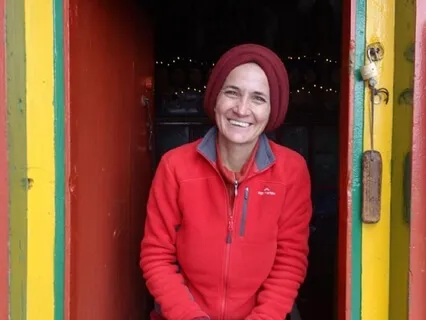
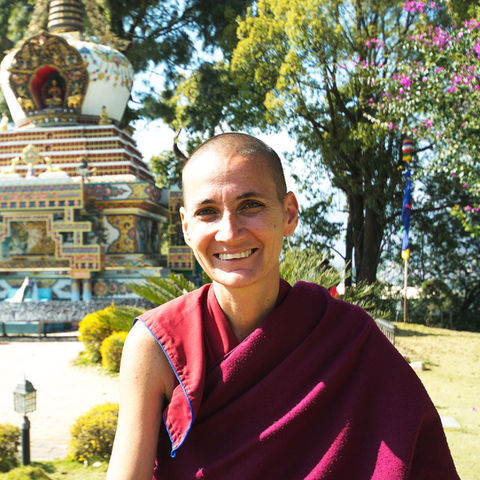
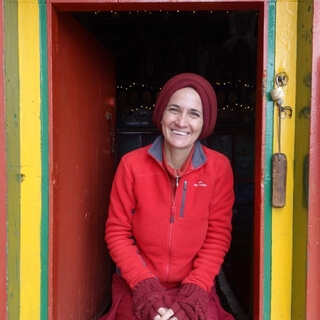
My name is Jen and I'm here with Ven.
Bhakadro and we're at Mahamudra Centre which is in the Kormandil Peninsula in New Zealand and today we're going to be talking about sadness.
So welcome Ven.
Bhakadro,
Thank you for being here with us and I was thinking we could start by just understanding sadness,
So how can we define what is sadness?
Yeah,
So hi everyone,
Yeah thank you for listening to this dialogue,
But it doesn't necessarily have to be sad.
So yeah,
So Jen,
It's a good way to start,
Let's just begin by trying to be clear what sadness is,
Right?
So sadness is like a lack,
It's a lack of joy probably,
It's a lack of wellness,
It's a lack of happiness,
It's a lack of delight,
So this sadness of course could be triggered by different experiences,
Right?
So it could be a result from a loss of someone or something,
It could be a realisation of the sadness or the difficulties that others might be experiencing,
Right?
It could be triggered by different things,
So what causes sadness varies greatly depending on the individual and sometimes it might be seen as a negative feeling,
A negative state of being,
A negative state of mind,
But I think it can serve as a very important role to signal others that we need some help or we need some comfort,
You know?
So the boundaries of sadness,
It could be from a mild,
You know,
Mild disappointment,
You get a bit sad,
You know,
And it can go,
It can escalate all the way from,
You know,
Extreme despair and anguish,
Yeah?
And in between we can have things like discouragement and resignation or helplessness or hopelessness and grief,
Sorrow and depression.
Now why did I say that in my point of view,
Sadness is more a feeling rather than an emotion is because sadness has this particularity that is quite long-lived,
The length normally is longer than just an emotion,
An emotion could be,
You know,
Just a burst of joy or a burst of anger,
You know,
Emotion has motion in it.
So,
But sadness is more like,
It almost feels like,
Like if we normally walk right above the ground,
Sadness is a bit beneath the ground,
Right?
It's like an underground kind of low,
Yeah,
Pathway if you see what I mean and it's quite low,
It's blue,
You know,
It's,
And yeah,
It's normally long-lived,
Yeah?
Okay.
I mean,
I think that you might get an emotion of sadness sometimes if something makes you really,
Really sad suddenly,
But maybe I think that the latencies of that,
You know,
Could be quite prolonged,
Yeah,
If it really triggers some sort of sadness.
That's how I see it,
That's how I see it.
So yeah,
With sadness is something very personal and is something that it can,
We can do something about it.
We can do something about it,
Not because you're sad or you have depression,
It means that you're doomed,
You know?
So I think one of the beauties of Tibetan Buddhism is that we learn about the mind,
We learn how to deal about different states of mind and being and emotions and we can,
We can definitely for sure do something about it.
It's just to learn how.
Great.
So there's quite a range of different emotive states of sadness and like loneliness and grief.
Yeah.
So how do we temper these emotions?
I think the first thing,
The first thing that we have to do is,
And this is quite a thing,
Is to actually have the courage to identify them and just see them for what they are,
You know,
Nakedly kind of identify it and put,
Put them a name,
Put them the correct label,
You know,
This,
This is sadness or this is depression or this is loneliness.
Yeah.
So,
And that takes a lot of courage because sometimes we don't want to face our shadows,
You know,
It's difficult,
It's uncomfortable.
We're not used,
We're not used going to places that are unknown or we're not,
Um,
Probably encouraged to go to places that are not comfortable within ourselves.
So I think the most primordial thing to do,
If you really want to do something about it is acknowledge it,
Identify it for what it is.
Having these kinds of things doesn't make you a weak person.
It could make you vulnerable,
But within vulnerability,
There's a lot of beauty that can happen.
Right.
So I would say it takes,
Yeah,
It takes a lot of,
Um,
Strength to do that because I think,
I mean,
I'm going to make a generalization,
Which I normally don't like,
But I will for this particular case,
A thing that in our societies,
Um,
What we normally do is that we don't want to accept that we are sad,
We are depressed,
We are lonely or whatever it is,
Or we might feel disconnected,
Disassociated,
Lack of purpose,
Lack of meaning,
Um,
Lack of connection,
Intimacy,
Um,
Away even,
Even if we could be very social,
You know,
Beings surrounded by what we think are really good friends and what we think it's,
You know,
It's a good marriage or partnership or whatever it is.
Um,
We might think all the things and it might not be so,
And because it's so painful,
Maybe what we do is we take refuge in just drinking or just being more out there or just inundating ourselves with work or constantly reaching out for distractions and going out and watching movies and Netflix.
And I know that a lot of people do,
Um,
And we think that these things will make us feel better,
That it will take it away.
And we are terrified by spending time on our own because it might come back and it's too sad to be with it.
So it takes a lot of courage.
You see what I mean?
So,
Um,
The thing is that,
Um,
If we give ourselves a chance,
If we understand that we can heal it from the,
At the very core,
From the very root of it,
Then,
You know,
We,
Hopefully we will make small steps towards that.
Right.
And this is probably why we're having this chat is like,
How,
How do we do it?
Right.
So,
So first is identify,
Don't be scared of it.
It might feel awkward.
You might feel vulnerable.
It doesn't make you,
Um,
Weaker or,
Or less,
You know,
Desirable for your friends or,
You know,
Family or whatever it is.
Accept it,
Accept it and make space for it.
And,
And maybe try to stop,
You know,
Try to stop,
Um,
Wanting it to just,
Um,
Flood itself with other stuff,
If you know what I mean.
And so,
So be with it.
And so I think that's a huge first step.
Just acknowledge that you have it.
It's like any other disease first we even need the diagnosis,
Acknowledge that you have something and then find the treatment for it rather than always trying to put band-aids.
As soon as you take them out,
The heart will still be there.
Yeah.
I think that's huge.
Isn't it to accept it and also to,
As you said,
The courage to face it.
I think that's a really beautiful way of putting it.
And I think that,
As you said at the beginning,
There's some maybe discouragement for us to do that,
Which can be perhaps a lack of courage,
But also a societal thing.
So there's often a pop psychology,
Don't be a victim kind of attitude.
So how do we,
How do we not be a victim?
Yeah.
Good question.
Because,
Um,
The idea here is to,
Um,
Deal or target or understand the things with wisdom,
Right?
With wisdom.
So it's a fine balance.
It's a fine balance of having the courage to recognize it and accept it and that we have this,
Right?
And at the same time,
Having the courage to do something about it,
Right?
And at the same time,
And I can say this from personal experience,
Allowing yourself to tap on upon to,
Sorry,
To tap upon your vulnerability,
But without the stories that are just the extra layers of fantasy that we put on top of it.
So what I mean by that is like,
Yes,
Address that there is an issue there that needs to be healed,
But don't feed it with extra drama of layers and you know,
And,
And,
And more heaviness and make it darker from what it is.
Right?
Cause it's,
It's,
It's very healthy.
I think it's very healthy to tap on upon our vulnerabilities saying,
Yes,
Okay,
I have sadness or I am lonely and that's how I'm feeling right now and accepting and make space for it because we suffer when we try to push things away.
Yeah.
When you start pushing,
If there's something,
Then you start pushing,
Then the friction comes.
But if you accept,
Accept it,
Then you create space for it.
And within that space,
Within creating that space for it,
Within that,
That is quite liberating already.
Right?
That's liberating already.
So the idea here is that you do that,
But without adding the,
Because for me,
Because nobody loves me because I'm not good enough and all that nonsense and rubbish that we are experts of telling ourselves.
So it's like,
If you see,
If you see that you start with the,
You know,
Self-pity drama,
Maybe just stop and use your wisdom and say,
Well,
Now I'm taking it now to,
You know,
Like now this is I'm creating stories now.
Right?
So there is an aspect of not falling into that extreme.
There is an aspect of not falling into the extreme of denying it.
That is what we normally do.
Right.
But it's this middle way of being with it,
Having the courage of being with it or filling it,
Of allowing it to be.
Yeah.
And then taking the steps of proactively do something about it.
So it seems quite empowering then to really to face that what you're suggesting is an approach to re face and to have the confidence without having the sort of self pity and the storylines and all of that.
Yeah.
And it seems that there's some kind of relief then in facing or admitting or allowing yourself to be sad,
But how do we allow ourselves to be sad without wallowing in it and without getting overwhelmed?
Yeah.
So,
So first I would say there's different techniques.
Okay.
And,
And everyone will,
Um,
Yeah,
Deal with it in different ways.
I'm just gonna maybe give different tips for different degrees.
Yeah.
Oh,
Certainly.
So for example,
You use the word wallowing,
Right?
What one technique actually,
I mean,
It depends.
Okay.
As I'm saying,
It depends and depends on the degree because some sadness,
You know,
They come from a very,
Um,
Long lived experience.
Like they come,
They might come from trauma,
They might come from childhood.
You see what I mean?
So is this is your case for our listeners is this is the case if you are carrying,
You know,
This sort of unresolved.
Yeah.
So these are unresolved issues that we've been carrying for a long while,
A long while,
And they have become this kind of like dormant,
You know,
Dormant normal label of sadness for us.
Okay.
If that's your case,
One technique would be wallowing it for a moment.
Like one technique that I think that is also,
You need a lot of courage.
It's like,
Okay,
Sit with yourself,
Allow yourself to take that time and without the self peachy,
But tell yourself all these things that have made you sad for a very long time.
Just allow them to reveal themselves to you and fill this sadness and do the cry and cry and cry and cry and cry.
And just as if you will be a sponge,
Just like squeezes but squeeze all this out of you until you don't have any more tears left.
And then you're like,
Okay,
Okay,
That okay,
I deal with that for a moment,
You know,
And yeah,
It's not easy.
It's not nice,
But it's a very powerful technique.
Right.
And it's,
It's used also interestingly enough,
It's used,
I heard,
It's also used.
I heard,
I don't know how true it is,
But that some smokers use that technique.
They,
Um,
They lock themselves in a room and they smoke a whole package in a lot room until they just like completely disgusted by the smell and experience.
And they're like,
I've been like that.
I mean,
I'm not saying that this is about getting disgusted,
Not like that,
But it's like allow the sorrow to be released,
Like have a really good cry and light all to come.
And then you'll be like,
It's like a healthy emotional release.
Yeah.
It seems like quite a radical approach,
But I actually think that there's like a lot of wisdom in that because part of the reason perhaps that we don't want to face our sadness is that we're afraid of it.
And when you think it might overwhelm us,
But I suppose if you allow yourself to be overwhelmed by it,
Then you face,
You really face your fears and you say,
Okay,
Is this as bad as it's going to get?
Exactly.
And then instead of being scared of the little monster that could be,
You know,
Inside the closet,
You know,
You have this fear that is there,
But you don't know if it's there because you never looked at it.
Right.
You have the strength to open the closet and look at it and go,
Okay,
Most of the suddenness,
This,
This,
This deal with you.
We're scared of things that we haven't had the,
You know,
The opportunity or the time or the strength to do something about it.
So that's quite,
As you said,
Jenny's,
It's quite radical.
I have used it.
It works.
You know,
It's like,
It's like allowing a kid to have a tantrum.
You know,
Sometimes they just,
Because kids is different from adults.
Kids,
Kids don't have the tools to deal with emotional,
Emotional kind of challenges,
Right?
As adults,
We have more skills and tools,
Right?
But with a child,
Sometimes we have strong tantrum.
You just,
If you can just sit with them and allow it to have it and just you're there with them and you're just maybe not saying much,
Just loving them while they're having it instead of like,
You should be like this and this and this.
It's like how we treat ourselves to,
I should be like this.
I shouldn't be like that.
All this should and is driving us nuts,
Right?
We torment ourselves.
It's like another layer of problems and the problems we already have.
Yeah.
It's easier.
You're,
You're trying to,
You know,
It's like the sadness is there and you're trying to put all this makeup,
All this makeup on top of it because you don't want to look at it.
That's why makeup is so popular these days,
Right?
Because it covers all these things that we don't want others to see.
So that's a technique.
I mean,
Another technique is,
Is if you don't have that degree of trauma and sadness,
You know,
If it's something that,
You know,
Just,
You know,
Every now and day you get sad.
Sure.
You can just be with it.
Just be with it.
Just,
Just tap on level of nobility,
You know,
Allow it to kind of be a little bit,
You're sad,
You know,
You might be sad two or three or four days or whatever,
You know,
Just,
Just allow it.
Yeah.
Things are impermanent as we know things will come and go.
Things are not,
You know,
Forever.
But yeah,
I mean,
It depends on the person.
Yeah.
I mean,
I would say that one of the best things to do if you're someone that sadness is quite recurrent,
You know,
For you is maybe,
And take this seriously.
I know that,
You know,
Some people might laugh or whatever,
But do,
You know,
Do do your gratitude list.
I know gratitude,
Gratitude is a really good medicine for,
For something is,
You know,
It's like,
So maybe just every day before you go to sleep,
Before you go to sleep.
Yeah.
Yeah.
Maybe just think of one thing that you're grateful.
One thing,
Maybe the one thing that happened that day or one thing that he was quite delightful.
And so he's what we call rejoicing.
Joicing means,
You know,
You,
You try to invite in the joy that he's lacking there.
Remember when we were talking about what is that miss?
So try it like that.
Try to maybe think of one thing before you go to sleep.
One thing that you're grateful for.
One thing that you,
You know,
That makes your heart warm and a bit joyful.
So this sort of two techniques we can use together.
Then one is to accept and to allow and to understand what we're feeling and the other is to cultivate positive sense of mind at the same time.
Yeah.
If you can.
And so how do we know then when it's time,
For example,
With grief,
When it's time to face it and to feel it and when it's time to begin to move on.
Yeah,
Exactly.
Yeah.
I mean,
Grief.
So remember there was different types of,
You know,
Sadness.
So,
So grief,
Grief is,
Grief is,
Is a sadness doesn't mean that it's grief,
But grief is a sort of sadness.
Right?
So grief here,
We're talking about losing something that is,
You know,
That is very precious to us,
Very important to us,
Something or someone.
Yeah.
So probably normally someone.
Yeah.
So we grieve also is very,
Very personal.
Some people grieve for a very short period of time.
Some people grieve their whole lives,
You know,
More parents if they lose,
You know,
The child or,
And they might grieve their whole life with grieving is the idea.
It's not about forgetting,
But ease about learning to,
To live and being functional and productive.
Yeah.
Well,
While you carry these little void in your heart,
Because some people are very difficult to be replaced,
You know,
So,
So it's just learning.
You learn how to be with it.
Right.
So moving on.
It's,
I think I'd actually,
Yeah,
I think it's a word that people use.
I actually don't like keep this move on.
You know,
It's probably the worst thing that you can say someone,
You know,
It's just move on.
And the person who's like,
Oh,
You know,
I would just say,
Maybe just be kind to yourself.
And most importantly,
Be true to yourself,
Be true to yourself.
You know,
If you're not ready,
You're not,
You're not ready.
I mean,
Who are you trying to convince?
You know,
It's like,
So just be true to yourself.
And if there's sadness,
You know,
Because of grief,
You know,
Just as well,
Just allow it,
Allow it again without the self PT,
Without the complete like fantasy story that will totally put you in a hole,
Because that's a danger that you put yourself in a hole.
And that's what we call depression.
That is very,
Very difficult to come out of it.
So with grief,
With grief is a bit like a lie to be,
You know,
It's something that might be with you for a long time.
You will probably know that you are a bit better when grief means that you have a bit of pain in your heart.
And you probably know when you're a little bit over,
You know,
Moving over,
Or moving on or over,
When the pain is not that not that strong in your heart anymore.
There's still that,
You know,
It still means that being that person.
But maybe that with time,
Grief is all about time with time,
That pain lessons.
Yeah.
So I would just say,
You know,
If you're dealing with grief,
Don't push yourself to be anything or anyone that you don't feel like.
Just be very kind to yourself.
Yeah.
And,
I mean,
Again,
As you were saying,
You know,
These two techniques is like,
Maybe also remember the good moments that you have together and,
You know,
Rejoice in the wonderful things that happened with that being or that person or that situation,
Whatever it was,
You know,
And like that,
Right to also bring the gratitude and the delight of what it was experienced rather than the lack of it.
So it's a lot as well about developing this relationship with yourself.
As well to understand which medicine you need at a particular time.
Yeah.
And you touched a little bit on depression as well.
And so is that different to sadness?
Yeah.
So again,
Depression is a sort of sadness,
But being sad doesn't necessarily mean that you're depressed.
So depression is a bit of a more,
You know,
It's,
Yeah,
It's more tricky.
Depression is more tricky because,
You know,
It's very common in our societies,
Depression,
But it's,
You know,
It's a serious psychological disorder,
Right?
And normally this is described by recurrent persistent and intense feelings of sadness.
Okay.
So this,
The sadness is recurrent,
Is persistent and is intense.
Okay.
And normally also with depression,
We have a sense of hopelessness that interferes with our daily life.
So that's the difference.
I think with sadness,
You can be sad,
But you can still,
You know,
Go out and,
You know,
Maybe,
Do your groceries or whatever,
Just like go and work.
And you might feel a little bit withdrawn.
You might not feel like seeing friends and being very social,
But it doesn't totally,
This empowers you from being,
You know,
Functional.
Depression does.
And that's why I say this quite dangerous.
So with depression is a bit like an analogy is a bit like,
As you would always have like a,
Like a gray cloud around you all the time,
Even though it's a sunny day,
You don't see,
You don't feel that you're not interested,
You know,
Even though there is,
You know,
Amazing opportunities for you at that stage or at that moment in your life,
You don't see it.
You're not interested.
You just it's yeah,
Depression is quite tricky because it means that you have fallen into a quite deep,
Probably a quite deep end.
That's how it feels.
And with depression,
Normally people feel very disconnected and numb.
So it's like,
It's even difficult to apply what we're saying,
You know,
The rejoicing and trying to have gratitude.
It's,
It's,
It's,
It's a tricky one depression.
So,
But that doesn't mean that you can't do anything about it.
You still can do a lot,
But of course it requires more effort because probably if you arrive to depression is because you have left it for too long.
You know,
It's,
You know,
You have,
You haven't resolved things for far too long.
And so then depression,
What it does is that you don't even have the strength or the courage is like,
You know,
It's just this continuous cloud around you and,
And it prevents you from being functional.
So we depression,
Um,
Of course you can try what we said about the cry.
Maybe you will need to cry a few times a month,
A year or whatever it is,
You know,
Like,
As I said,
It takes a lot of courage,
But it might be quite surprising what these things can do to you.
Another thing is just,
Um,
For people that think that they might have depression,
You know,
Again,
The courage to acknowledge it,
Partly depression takes way more courage than knowledge,
Not even sadness.
Um,
But I would say that with depression,
Maybe you can use even more radical because it's so deep that you might need more radical steps,
You know?
So with depression,
Remember that you can shake it off.
You can shake it off even,
Even though it might seem that no,
It's too,
It's too deep,
It's too dark,
It's too lonely.
It's too,
I fixating sometimes,
You know,
It's just like completely hopeless.
I fixating regarding to that hopelessness.
I can't do anything about it.
If that's your train of thought,
If that was your train of thought,
Remember that there's always something that you can do about things.
If you use your wisdom,
You know that there's always something that you can do about it.
It might be harder,
But you can still do something about it.
So if you're someone that has depression,
You know,
Just recognize it,
Be kind to yourself and just,
You know,
If you need to do the cry bit,
As we talked about,
Do it.
You might need to every day remind yourself,
I can do something about it.
You might want to learn to actually shake,
Just shake.
Like they do that in Qigong,
You know,
You actually shake and you shake that you're,
Sorry,
You're imagining or visualizing that you're shaking all your depression and your negativity out.
You might need a good dance,
Maybe,
But like that,
It's like you can,
Your mind is amazing.
Your mind can heal itself of everything,
Of everything.
It's just that we need the education of how to do it.
Another thing with depression is another radical thing is like try to do something completely new.
I mean,
For me,
Nature has a,
Yeah,
Has a lot of healing.
Maybe just decide to do a bushwalk,
Something that you haven't done for a long time and just go for your bushwalk or just go for a little walk or just do something different.
Once a week,
Try to do something completely different.
Go to a museum,
Look,
I don't know,
Try to find out if there's any exhibition that you would like to see,
You know,
Something new,
Something exciting.
And you need,
If you have fallen into depression is because you lost your spark.
And so before you try to find that spark,
You know,
Try to take this a little bit radical kind of little,
But radical steps,
You know,
Go,
I don't know,
Go and if you,
I don't know,
If you don't live in Kermano,
You know,
Go to a meditation center,
Come to Mahamudra,
Do something different.
Go,
Go for a spa,
Go for a healing for,
You know,
I don't know,
Two or three weeks,
Do a retreat or somehow try something different and new and exciting and scary.
Get out of your comfort zone,
Shake it off,
Try to shake it off,
Learn to go and learn yoga,
Something,
Learn a new language or whatever it is.
I try to shake it off.
If what I'm saying for someone that is depressed,
You know,
It sounds completely unreasonable and impossible.
Sure.
Okay.
I respect that because,
You know,
I respect that people might find or might feel that way,
But at least try to seek for help,
Maybe professional help.
Identify that you have it.
You know,
It doesn't make you weaker.
It's just that you would just have something that hasn't been addressed properly.
And if you think that you can't,
You just can't do it on your own and you don't want to drag your family and friends into it because that's what happens a lot.
It's like people don't want to burden others with their sadness and whatever.
Just seek professional advice.
Just,
Just,
But,
But for sure there's something that you can do about it for sure.
Okay.
So then with the depression,
You're recommending to do something,
However small or big it might be,
But just to try to.
.
.
Try it out.
Do something new.
Well,
I know it's hard.
I know it's hard because when you're in it,
It's like,
It's like a tunnel with no light,
You know,
It's just like,
Ugh.
But I mean,
I wouldn't,
I wouldn't have any benefit of lying to our listeners,
But if you don't believe anything of what I said so far,
Fine.
But at least believe that your mind,
It can heal itself.
For sure.
I wouldn't lie about that.
I mean,
I can lie anyway,
But your mind can heal and you can do something about it.
Okay.
And what you suggested was such a range of things.
So whether it's something as small as going for a bush walk or something,
Whether it's trying something totally different,
This something,
You know,
Whatever is in your capacity.
Whatever is in your capacity,
Jen,
And try to like,
If it's a bush walk,
You know,
Try to connect.
What you need is more like connection.
Probably if you are in that state of depression is because probably you just lost even the connection to yourself,
To your feelings,
To your emotions,
You know,
To your reality,
Because you're in that black kind of cloud.
So try to connect,
Try to look at the sun,
Try to look at the blue sky,
Try to lie down on the ground and look at the blue sky.
You know,
Try to enjoy these little things.
It makes life life.
Beautiful.
Nice.
Thank you.
And so thinking about sadness,
There's many different types of sadness.
And often when we look at the news and we see all the devastating things that are happening in the world,
It's almost natural or a natural response to feel sadness.
So is that something that we can accept or are there ways to feel that without falling into despair and distress?
Yes,
Yeah.
Of course,
I mean,
It's a beautiful thing that we can feel sadness for the suffering of others,
Right?
If not,
We'll be oblivious and we don't want that.
I mean,
I think it's actually quite a quality,
You know,
Of an emotional and intelligent person to allow yourself to feel sad for the suffering of others,
Right?
Because that brings compassion,
Right?
So sadness,
The beautiful thing about sadness is that it can open the doors to,
You know,
Empathy and compassion and love and care and warmth.
And because if you don't have that sort of like sadness,
Then yeah,
You might be too,
Your heart might be too closed,
Right?
Because you're just like,
Oh,
Well,
You know,
Then it becomes speedy.
Oh,
Well,
Poor people like it didn't have been to me or my family,
You know.
But if you do feel sad for other individuals,
You know,
When you see their suffering,
I think that's a beautiful thing.
With sadness,
That's why I don't think it's such a negative thing because not like anger.
Like anger is,
I wouldn't recommend these techniques that I said about,
You know,
Letting it out with anger or other negative emotions,
But with sadness is because it softens the heart.
You know,
It kind of like sudden,
If you,
If you feel sadness in your heart,
It doesn't necessarily mean it's a bad thing.
It makes you,
It makes you human.
You know,
It's like,
Ah,
You know,
You,
You are relating to another individual experience.
You're relating to it.
You're kind of filling it and that's beautiful.
So for me,
Sadness is it could be seen as a,
Like,
You know,
It's like a vulnerability of the heart that,
That opens it and it becomes a bridge for connection with other beings.
You know,
You're connecting with their vulnerability,
With their humanity.
And that's a beautiful thing.
So again,
You know,
When we were talking about,
Um,
The,
The balance of,
You know,
Over addressing,
Identifying things and not following into them,
It's the same with this question is like,
Allow your heart to feel,
You know,
The,
The,
The,
The,
The global,
You know,
You know,
The,
The,
The global experiences when you read the news and all that.
And again,
With the fine line of not falling into despair,
Right?
It's like this hopelessness is nothing I can do about it.
There's always something you can do about it.
And even with the global things,
A few things that you can do about it is,
Well,
If you believe,
As I was talking about it before,
If you believe that your mind has power,
That by the way it has,
But if you believe that then even like a little meditation,
You know,
From your heart,
You send love,
You send care,
Even that you're doing something about it,
Right?
Or you can do,
You can do more active.
So you allow,
You allow yourself to be part of the global human family.
And then what you do is you become quite proactive locally.
So you think globally,
But you act locally.
So with all this sadness around in the globe,
Do you think,
Okay,
And that's why I'm going to just be a little bit more helpful in my community.
I'm going to volunteer doing this and this and that.
If you have sadness like that and you like meaning,
Maybe,
Maybe what you need is just volunteer somewhere.
Yeah,
Just be of service,
Selfless service.
It's so nice to be kind.
So it feels good to be kind.
So that's another active thing that you can do.
Just connect with others,
You know,
Just,
Do the little that you can,
Or maybe if you volunteer,
You don't have time for that,
Maybe just be kind to a friend.
Just get out of your way a little bit and show your care.
Even by a text saying,
I'm thinking about you,
Something.
Yeah,
And then despair is something.
Despair happens when,
Yeah,
When you think that you don't have,
Yeah,
Yeah,
When you don't have options or when you don't,
When you think that there's nothing you can do,
There's always something you can do.
So it sounds like sadness is not necessarily negative.
It can actually be quite connecting and yeah.
Empowering even to do something meaningful.
Yeah.
Great.
Yeah.
Just,
We just need the courage to recognize it first.
Then the courage of being with it.
And third,
The courage of doing something about it.
And so this has,
This type of sadness has a kind of virtuous aspect.
Is that something that we want to cultivate that feeling of empathy towards our sadness?
Yeah,
Of course.
Of course.
I mean,
There's certain is,
I mean,
I mean,
If I can be truly honest with our listeners,
You know,
It's my thing.
I get sad frequently.
It's my thing.
It just,
You know,
I look at the world like,
Oh,
You know,
But,
Uh,
But that's the thing.
I,
I,
I kind of allow it to fill it in my heart and I,
And I allow it to,
You know,
To,
To that connection to be established,
But without their,
Oh,
Hopelessness without the despair,
Without the self PT and the victim and all the things,
It gives me strength.
So it's okay.
There's all this stuff on what I'm,
What I'm going to do about it.
What is my little contribution?
You know,
Even just something small,
Even something very,
Very small can make a big difference to someone.
So it's like that.
And if you feel like,
And I can talk about my personal experience as well.
If you feel that you're,
You feel too weak even to do that,
That's okay too.
It's okay not to be okay.
And you can still be kind to yourself then I guess.
And that's doing something and that's doing something beautiful.
And you're just being with that,
You know,
Just for whatever days it take,
You know,
Use your wisdom so you don't fall into these other states of mind that are more dangerous like depression and despair,
Those two extremes and be kind and be kind to yourself and allow yourself to feel withdrawn.
And maybe if your friends,
You know,
Care for you and they're concerned,
Just tell them,
Look,
I'm just,
I just need to withdraw.
And they'll respect that too.
And if you have someone in your life that is going through that is just let them know that you respect that they need this space,
But that you are there whenever they're ready to come out of the shell.
Yeah.
Cause sometimes when we go through things,
You know,
You feel that you just want to hide under your bed and just,
You know,
Be in that corner like a little rock or like a little,
A little,
Um,
How do you say those insects?
Then,
Um,
You want to hide in a shell.
Yeah.
And that's,
That's okay too.
Just,
Just be with it,
Be with it,
Allow it,
Allow it.
It will do what it needs to do.
Don't fall into these extremes,
Allow it and it will pass.
It would eventually pass.
But if you want to,
If you don't want it to be there and you start pushing it away,
That's where the friction comes up for the days.
And that's a great insight because sometimes it can be hard to know how to help someone who's sad,
Whether to give them space or whether to reach out.
So try,
Try different,
Try different ways.
You know,
Take risks,
Risks.
Like,
You know,
You might want,
You might reach out and they go,
No,
It's okay.
I'm actually,
You know,
I think you,
Uh,
I just need to be clear with your friends,
Right?
Just to say,
I just feel a bit withdrawn.
Your friends that go,
Oh,
Huh.
And if,
You know,
If,
If you see that many days go by and don't hear anything,
Try again.
And then maybe they're ready and you know,
Just,
I mean,
It's okay to be a little bit annoying sometimes,
Right?
But we just,
But because we want to,
We,
We,
We care and it's better that the other person knows that you care that rather than that,
They doubt if you're caring or not because you don't call because you're not present because you just,
And maybe of course even you're doing that,
Maybe you just don't want to show up because you don't want to be annoying.
But from personal experience,
Take a risk,
Be a bit annoying that I could like,
Make sure that they know that you're there,
That you are thinking of them,
That you care,
You know,
Pull off.
And then if they're,
If they're,
You know,
If when they're ready,
They will come out.
Great.
But yet,
I think worst thing that you can do is not,
Not do anything,
Particularly for a friend,
Just being quiet,
Not ringing,
Not doing it,
Not saying anything.
It's just like the person is just about,
About from what they're going through,
Then they're doubting,
You know,
He's like,
What am I,
My friends?
So I guess when in doubt,
Just do something.
Great.
So that's great advice.
I don't know.
I don't know what people think,
But I'm just talking about personal experience.
Of course.
Great.
Yeah.
And I think that's a really perfect place to conclude our podcast today.
And thank you so much for this really insightful and authentic podcast.
I really appreciate it.
And I'm sure our listeners will too.
And if anyone listening would like to join us,
We'll be doing a workshop on sadness in October,
I think.
So we're looking forward to that with Phnom Penh Kha Jo.
And do you have any last closing things to say?
Yeah,
Well,
Yeah.
So I just wanted to say that all the things might sound easy to talk about and,
Oh yeah,
All the things that you know,
Sadness,
Chick,
Done.
I know that we're talking about something that is not easy,
You know,
But it's like,
You know,
Just,
You know,
Just,
We can just accept things and accept ourselves and just be very kind to ourselves,
Kind to others.
We're all going through something,
Whatever it is.
It might not be sadness,
It might be anxiety,
It might be something else,
Might be low self-confidence or whatever it is.
But if we can just,
That is making us sad,
Right?
There's something that we all have that is making us sad in one way or another.
If we remember that,
That is a common experience and that we,
You know,
We are in it together and,
You know,
And that having friends,
It's really important.
You know,
The friends that you have,
Take care of them.
If you don't have any friends,
I'm happy to be your friend.
Send an email to Maha Mudra,
I'm very,
Very happy to make new friends always.
But yeah,
I think part of that kind of sadness comes from this connection to ourselves and maybe to others.
So yeah,
Whatever capacity you can,
You know,
I know,
I know that it takes a lot of courage,
But maybe you might need to have the,
You know,
Have the resilience.
So resilience is about,
Is the capacity,
Is the capacity to recover from something.
That's what resilience is,
You know,
If you can just work on that resilience and then slowly,
Slowly with the little kind of strengths that you have,
Reach out and volunteer or just make friends somehow.
Just having friends is really good.
So yeah,
Let's get the friendship going.
Yeah.
And anyone listening is looking for a friend,
Come to Maha Mudra.
Many friends here.
Yeah,
We'll be your friend.
Great.
Well,
Thank you again so much.
I really appreciate this and to our listeners,
We'll see you next week.