So Tuesday we begin looking at what are called the three jewels of practice.
The places that we can come and rest,
The places that we can take refuge.
And we come together each week and we sit together with the intention to get to know more some aspect of our internal landscape.
By coming together we're waking up our Buddha nature,
This ability to see and know our minds.
We're waking up to awareness itself and we can rest in that.
You know this is the first refuge,
Refuge in the Buddha,
The Buddha inside.
And for those of you who weren't here on Tuesday the Buddha simply means awake or the awakened one.
So refuge in the Buddha is when we are remembering our own Buddha nature,
The awake and aware parts of ourselves and you can feel it.
You feel it as integrity and sincerity.
There's an ability to connect more with others,
To be open to others.
That's the felt sense of what it is to experience your Buddha nature.
And in the Theravada tradition of which we're practicing one way of understanding what it means to go for refuge is to understand that these refuges are something that you've come to know for yourself.
You've come to know it so well that it's a reorientation.
It leads to a new way of being in the world.
So for example if I'm really grumpy at my husband or my child and I'm short tempered or agitated I can come into this room in my house and shut the door and sit down with my anger or my resentment and that's what I do.
I take refuge in knowing what to do.
It orientates me into action and how I live my life.
We know something that we didn't know before.
When you've had some experience,
When you realize that in some way the way that you're living or thinking or behaving no longer works and you've had that experience that no longer works and you've tasted the alternative.
That alternative is the light in what is regularly darkness.
When I had my first glimpse of this practice,
The first Dharma teaching that I ever heard,
There was an intuitive knowing that I could feel at home in myself and it wasn't dependent on what other people thought of me or what I did or my background.
I knew that the way I was being in the world no longer worked and that this practice offered an alternative and that alternative is deeply meaningful for me and I knew that I wanted this path to freedom to be the way in which I orientated my life.
I couldn't do it automatically.
I couldn't do it right away but I put some effort into the path and I started to learn that I didn't need to hold on so tightly and I was inspired by this knowing but I was also afraid.
I couldn't let go because it was too frightening to let go.
So it took a while because it's not easy to put things down on this path but this path was the orientation of how I wanted to live and slowly it became safe and I became safe.
Safe for others,
Safe for myself.
And to have an orientation,
To have a sense of purpose in practice it doesn't mean you have to be good at it.
You do the best you can and hopefully you're inspired by that.
It's good to find a path that frees the heart and the mind.
Just the path is enough.
So refuge in the Dharma is the refuge in the path of practice.
It's a refuge in a new way of living that follows this path of mindfulness,
The path of ethics,
The path of wisdom,
Investigation,
Looking more clearly,
More carefully and a path of compassion and love.
Taking refuge in the Dharma is taking refuge in these practices and qualities that we have within us and to be inspired by that.
To know that these are true and these are useful.
Useful enough that you're willing to give them your best effort.
Refuge in the Dharma is refuge in the truth,
The truth of our experience.
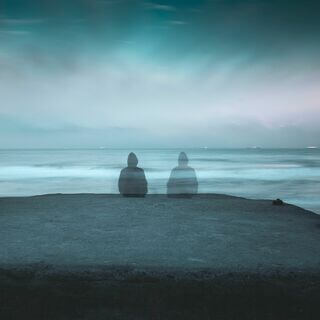
You know sometimes the truth of our experience are like huge waves tossing us around.
And we're really familiar with those waves.
But it's like the teacher John Cabot Zen says,
You can't stop the waves but you can learn how to surf.
And what I'm suggesting is before we learn how to surf,
We learn how to float.
We don't have to do anything with those waves.
We can just lie on our back.
The truth of the Dharma can be understood as taking refuge in the ways that help you come into this present moment.
All the teachings that you've had,
The books that you've read,
The practices,
The retreats,
The podcasts,
Whatever.
Whatever it is that helps you remember presence.
Maybe it's the chant,
The refuge chant.
But it's this pausing,
Breathing in,
Coming into this moment right now.
It's a willingness to say okay so what's here right now?
Let me feel what it's like right now.
And when we can do that,
We're including more of ourselves.
We can begin to heal those parts of ourselves that have not been integrated,
That need healing.
So a big part of this path is self-compassion.
You can't rest in the waves unless you have some kindness towards them.
You're not fighting them.
It's okay to have this stress in life.
It's part of life.
This can be difficult.
All people,
All people have waves and this is my set.
This is my set.
So coming out of the story and coming into the body with kindness and willingness to feel,
Coming into that spacious awareness that is you.
That spacious awareness is like an ocean.
That's your protection from these waves,
Remembering that you're an ocean.
And then the waves don't knock us around so much when we connect to this larger sense of who we are.
So I invite you to just close your eyes for a moment and connect with the waves that rock your life right now.
The waves of uncertainty,
Of stress,
Situations,
People.
Just feel the waves and consciously choose to wake up out of the story and come into the body and the breath.
Sensing into the throat,
Into the chest,
Into the belly.
The Dharma,
The waves,
The truth are very embodied experiences and our practice is to meet them and soften.
This is from the Zen Master Ryo Kan.
To find the truth,
Drift east and west,
Come and go and trusting yourself to the waves.
You might sense refuge in the Dharma in this moment.
Can I entrust myself into the waves?
Can I just let go into the waves just for these moments?
Just let yourself breathe.