Welcome to Breakdown to Breakthrough,
The podcast that empowers you to transform your life by awakening to your true authentic self.
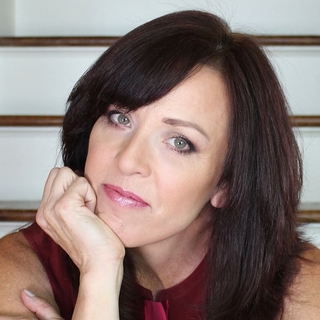
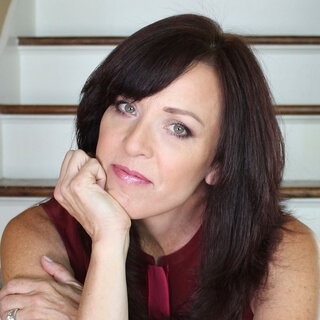
I'm Lisa A.
Romano,
Your host.
As an award-winning author and certified life coach,
I've dedicated my life to helping others understand the incredible power of an organized mind.
I believe that true empowerment begins with awakening to our false self.
My mission is to support you on your journey toward mental and emotional regeneration through conscious and deliberate awakening.
In this podcast,
I'll share insights,
Tools,
And transformative stories that illuminate the path to healing and self-discovery.
Namaste Jai one Have you ever had a moment in your life where you stopped in the middle of your life and you really started to look deep within yourself and you thought to yourself,
Like,
Who am I?
How did I get here?
Why is my life so painful?
How did I become this person who overthinks,
Who overgives,
Who ruminates?
How did I become this person who feels absolutely responsible for everyone else's emotions?
Why do I feel so guilty for just saying no?
Or why do I feel guilty for just speaking my truth?
Why,
When I know someone's disappointed in me,
Why do I shrink so badly?
Underneath it all,
You may even ask yourself,
Like,
Who am I?
And if you're like me,
You've had these experiences where you felt like a shell of a person.
And if you were raised by a narcissistic parent,
Like You really are probably here because you were,
Or you know that you came from a troubled background.
But it's important that you understand that the fact that you're here is not random.
The fact that you are looking for this information does not mean that you're crazy.
It means that something happened to you and this,
Whatever this thing happened,
It happened long before you had language or self-awareness to understand that anything was wrong at all.
And today I want to go deeper than most people go.
I see myself as someone who has to understand this stuff at a cellular level because it's not just what our narcissistic parents have done but it's the experience that has left its emotional residue to our minds to our nervous system to our identity and and sense of self.
Who you think you are,
You become,
But this is all subconscious.
So we're going to flesh that out today.
And it's just about awakening your consciousness.
It's just about stepping back,
Trying not to use the mind so obsessively to figure things out,
But instead to observe and understand.
So number one.
You were conditioned brainwashed and trained to look outside of yourself to know everyone else but yourself.
You didn't learn to understand yourself.
You learned that self-attention needed to be pulled outward.
You learned to watch and listen to sense shifts in the energy of the people that you loved.
You were conditioned to anticipate the moods and the tones and the facial expressions.
Because where you lived required that you stay on guard.
And when you're on guard,
You're not connected to your divine inner child.
You're not connected to love.
And when a child is constantly tracking someone else,
They are not developing a relationship with the self.
So how do you love a self that you've never learned to anchor to?
How do you respect a self that you don't know?
You can't.
So now as an adult,
You may know exactly how everyone else feels.
But when someone asks you what you feel,
You don't know.
When you ask yourself,
What do I feel?
You don't even know that you don't know.
You pause because you are disconnected from that emotional side of your life because you've been taught to be emotionally connected to everyone else.
So no one ever taught you how to look within so it doesn't feel safe.
So that's why so many of us from adult children of alcoholics and narcissists become codependent.
Feel responsible for your narcissistic parents feelings you have to fix yourself so that they can love you or you have to take care of them so your empathy turned into over responsibility and You didn't just notice feelings.
You felt like you had to fix their feelings.
So there was no Barrier between you and and your narcissistic parents It was your job to fix them was your job to keep the peace and to smooth things over and to explain things to them Over and over and over it was up to you to try harder and so so now even as an adult when someone is upset with you Your body reacts your nervous system reacts as if something is terribly wrong You feel as if you did something wrong because the stain from childhood is you're wrong and you have to fix it And so we jump in and we want to fix it and we think in our head Oh,
We're just being kind but it's not kindness.
This is our nervous system trying to cope with someone else being upset with us.
And if someone is not okay.
I am not safe or you are not safe in this situation.
This is meant for you.
So if you feel like someone's upset,
You don't feel safe.
Number three,
You learn that Being connected to someone meant that you had to disappear.
It meant self-abandonment.
Now this one runs deep because as a child,
Being fully yourself.
You were never allowed to be full of yourself.
It wasn't safe to be full of yourself.
When you cried,
You were dismissed,
Or you were called a drama queen,
Or you were told that you were just seeking attention.
And so over the years,
Your needs become inconvenient in your head,
And you believe that your feelings are too much.
And so you adapted.
So you softened your needs,
You softened your voice,
You edited your truth.
And you,
At a psychological level,
Became who you knew they needed you to be.
So you started to wear a mask to stay connected.
And now you may find yourself in relationships where you are disappearing you say yes when your body is saying no and later on when you're in your car or you're in the bathroom you feel it you're angry at yourself you feel exhausted the resentment comes out for other people this quiet ache this quiet sadness because inside of you You know that you did it again,
You abandoned yourself again,
But you don't know how to fix it because you're trying to fix everything outside of you instead of trying to understand yourself at a cellular level,
At a psychological cellular level.
Number four,
You don't trust your mind,
You don't trust your feelings,
You don't trust your opinions.
And this is because as a child,
Reality,
Your inner reality was minimized and it was denied or you were told that you should just be happy.
You learn to question yourself.
So if something hurt you.
You were told that it shouldn't hurt you.
Like you have no right to feel that way.
You know,
There are hungry,
Starving children in Africa.
Like you were judged for having a feeling.
So if something felt off.
You were told that you had no right to feel that way so you end up questioning yourself and over time This creates cognitive dissonance and sadly self-doubt becomes your default.
So now you replay conversations over and over and over and over your head.
You second-guess your decisions.
You look outside of yourself for reassurance,
Which is a hallmark of codependency and that's not because there's something wrong with you.
It doesn't mean that,
Oh,
I'm weak and I'm codependent,
I'm needy.
It's because,
I want you to get this,
Your inner reality as a child was never consistently honored,
And worse,
It was dismissed.
You had to abandon your inner reality for these fragile connections,
Which is where insecure attachment comes from.
Number five,
Shame feels like it's who you are.
Now,
There's a difference between feeling shame and becoming shame.
There's a difference between noticing guilt because you went against your moral code Where you wanted to really go in life and feeling the guilt and becoming the guilt feeling shame says I did something wrong But becoming shame feels like I am What's wrong?
It's me.
I'm fatally flawed.
I'm unworthy.
I'm beyond repair This is just who I am And this happens because when you grow up blamed,
Criticized,
Dismissed.
Or consistently made to feel like your needs were a burden or you were annoying.
Just get out of here,
Kids.
We as children,
We don't blame the parent.
We blame ourselves for having the need,
For being emotional,
For wanting attention,
For wanting love.
It's me.
There's something wrong with me.
For wanting to have all these innate,
Beautiful needs met.
And that belief follows you into adulthood.
When you're doing everything right.
You don't know that you're actually doing what a huge disservice to yourself.
Now number six,
You learned through brainwashing and conditioning that you had to perform for love instead of being love or resting it.
Love felt conditional.
Even though you never really experienced true love,
Whatever the connection was,
It was like an on and off switch.
You had to earn it.
It's not something that was like a faucet or a river or a waterfall where love was just unconditional.
You had to be the good one,
You had to be the strong one,
Or the helpful one,
Or the responsible one,
Or the one with no needs,
Or you had to be the family mascot,
The one that made everybody laugh.
And on the outside,
You can look super responsible,
And lots of codependents do,
Because we are the caretakers,
The fixers,
And the healers.
But inside,
There is this invisible,
Quiet pressure.
And we feel it like we're a pressure cooker.
And we don't know that the question is,
If I stop,
Will I still matter?
If I stop giving,
Will I still be loved?
And this is why rest for a codependent or an overachiever feels so uncomfortable for the perfect daughter or the perfect son.
Because our nervous system is still trying to earn something that should have been given freely and we associate not giving.
With death and abandonment.
They're going to stop loving me if I stop.
Giving up myself for them.
This is deep number seven boundaries feel like danger and they don't feel like Empowerment so people just think that they they just say a boundary,
Right?
Like I don't want you to do this,
But you're but or I want you to do this or I want you to do that But when you begin to set a boundary,
Your mind and body remembers what happened to you when you tried to tell the truth when you were little.
The people that you love withdrew their love.
They got angry.
They guilted you.
They punished you.
They stonewalled you.
They smeared your name to your aunts and your cousins or your siblings.
They did triangulations.
So now when you even think about saying no,
You have to think about addressing a boundary.
Your stomach,
It's just the memory.
Right?
Because trauma is memory.
We're holding on to the memory.
Every day we bring the memory forward.
So when you even think about saying I don't want you I'm not gonna do this or no I'm not gonna be able to help you your body remembers your chest tightens your stomach drops your mind races you overthink and overthink and You until you're really in recovery emotional codependency recovery Lots of times you override yourself again,
And it's not because you don't know better It's because your body is trying to protect you from all of the shame and the pain that experienced as a child as loss of connection and loss of love.
And these are.
The wounds that we must heal to really free ourselves and become emotionally free.
You might be drawn into familiar patterns without even realizing it.
You can find yourself in relationships that feel familiar.
Like I did,
I married my mother.
I didn't do it on purpose.
It wasn't healthy,
But it was familiar and below the veil of consciousness I didn't know that so here I was over giving I was waiting for this person to change and love me I was hoping things would change I was trying to prove my worth to him and to my kids and to my in-laws and even to my family and it was so confusing and and I still felt unloved and disconnected and I didn't know that I was attracting people who were conditionally loving and didn't want to connect and didn't see me as worthy.
I never felt chosen.
I never felt seen and I was hoping this relationship would finally make me feel enough but that was my wound that I was carrying forward.
And my healing didn't come until I stopped trying to understand everybody else.
And I started to try to understand myself.
I was the one that had to choose me.
I was the one that had to see me.
I was the one that had to prove to myself that I was enough just because I breathe.
Healing can't happen unless you go into the stillness of observation mode.
You're trying to solve a problem from the same level of consciousness that created the problem and doing that just doesn't work.
And that's why talk therapy without some type of 12-step program or similar to it,
It's really hard to go this deep.
Number nine,
You're going to have to grieve the relationships that you never had.
And.
Not only do we have to grieve what happened,
But we have to grieve what didn't happen.
We have to grieve the mother-daughter,
Mother-son,
Father-daughter,
Father-mother relationships that we never had.
We have to grieve the fact that we never had emotional presence and safety.
We have to grieve that we're never going to have those connections.
And you have to grieve that part of you that always hoped that it was going to be different,
That one day I'm going to do enough for my narcissistic or narcissistic father.
And we see this a lot when our parents are aging.
We're at the nursing home.
We're at the adult living facility.
We're cutting their toenails.
We're doing everything that our narcissistic parent needs us to do.
In the hopes that they're finally going to see us.
And dear one,
They don't.
Because the older they get,
The more ornery they get,
And the more entitled they get.
We hope secretly that one day they're going to see me.
One day it's going to be different.
One day they're going to understand how much love I have for them.
But this is our process.
This is our growth.
This is where the transformation lies.
Healing requires absolute radical honesty.
It requires us to see what is,
All of it.
And to begin letting go of what never was and making peace with it.
And that can feel like a real loss.
But it's also where freedom begins at the precipice of letting go and acceptance and surrender.
We stop resisting all of this grief and the sadness.
I was raised by a narcissistic mother.
When you stop resisting that,
And you come into alignment with that and you accept all the grief that comes with that and then you start to accept the trauma that's been stored.
That's when healing can begin,
Not before.
Okay,
Number 10.
Hmm,
The deepest wound.
Just might be the self-abandonment that happens as an experience of being raised by a narcissistic parent.
And when you really take a giant step back and you look at all of this,
What do you see?
Seriously,
What do you see?
You see an inner child that learned to leave themselves,
To dissociate,
In order to stay connected to very immature narcissistic parents.
And so this work is not about erasing all of that.
This work is about learning how to stay in the reality of that reality.
It's how do we stay with our feelings?
How do we stay with the truth?
How do we stay with our needs?
How do we stay with this knowing that I did not get what I needed as a child.
How do I hold on to myself?
When my nervous system wants to run from all of these experiences because I was never learned to honor what I feel.
So just stop for a moment and put your hand on your heart and pause.
Just pause.
Because the mind is going to keep you running from those feelings and trying to be good enough.
And that's not the way to healing.
So if any of this resonates with you.
That means that something inside of you is really trying to wake up.
Otherwise,
You wouldn't have attracted this information.
So dear,
When you're starting to see the patterns,
Not just intellectually,
But emotionally and personally.
And if you stick with this,
This is where everything begins to shift.
But there is a truth here that we don't want to miss.
And a lot of people,
I think they're missing the mark here.
I know I did.
It was my false codependent awakening.
Seeing the pattern is only the beginning.
Understanding that you're the adult daughter of a narcissist or son of a narcissist is not enough.
You have to understand that what's really wrong is now rooted in the subconscious mind and it's been rooted through repetition,
Through consistency,
Through emotional experiences,
Through the eyes of the perception of your inner child.
Which means they cannot be undone by thinking differently alone.
Right,
Because the subconscious mind is 95% of your mind,
The 5% of you is the thinking part of you,
But what's wrong is what's in the subconscious mind.
Once this clicked for me,
I knew that I had to address the subconscious mind,
And that's why I've devoted my life.
To helping adult children of narcissistic and emotionally unavailable parents who are stuck in this codependent craziness.
Not just understand the patterns but understand what happened to them as a result.
And arm them with life-changing resources that can help them change at the subconscious level.
So that They not only can see the patterns,
But they can stop overgiving.
They can stop overthinking.
They can stop abandoning themselves.
They can stop saying yes when they mean no,
Even when their knees are shaking.
Allow them to learn how to place self-trust and clarity and emotional freedom within themselves.
To stop seeking approval and permission and a sense of worthiness outside of themselves.
So if you're at this point,
You don't want to ignore these patterns anymore.
If you are really ready to understand yourself at a deeper level because without that self-understanding and the self-inquiry Even the greatest work in neuroscience is saying,
Ain't gonna change.
You can't change your inner reality.
You have to change your inner reality in order to change your outer reality.
Just stay with yourself.
Stay with self-understanding.
And in time I really hope it clicks that what has to change resides at the subconscious level because the the moment you begin to see your pattern is the moment that you have an opportunity to finally find the road back to me,
Yourself.
It's the path back home.
You see,
You've been disconnected from love.
And yet you are love so the whole point is for us to return to the love that we are.
And Also be mindful that your narcissistic family is not going to change.
And so you might have to.
Truly leave this paradigm in order for you to Develop the resiliency.
And the ability.
To focus entirely on yourself,
Which daughters of narcissistic mothers and fathers and sons of narcissistic mothers and fathers don't do.
We generally focus on everyone else.
As I bow to the love and light in you,
I wish to say goodbye until next time.
Bye for now.