Welcome to the practice of pranayama,
Also referred to as conscious breathing.
Breathing is the vital process that sustains life,
Which normally functions unconsciously,
Similar to the unconscious process of your heartbeat,
Body temperature,
And metabolic activity that most cannot be controlled by the average person.
But the breath,
However,
Can be consciously observed and this observation moves vital prana or life force energy within our system effectively.
To understand,
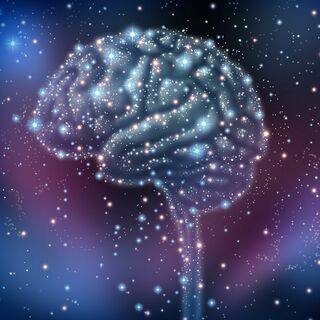
Unconscious breathing is controlled by the medulla oblongata in the brainstem,
The region known as the primitive brain.
Conscious breathing comes from the more evolved areas of the brain in the salabral cortex,
Consciously stimulating and engaging the salabral cortex with regular practice of pranayama daily,
Reinforces cortical control over the breath and process called telencephalization,
Where one shifts from unconscious breathing to conscious breathing,
With profound effects on one's overall health and well-being.
Using the conscious control of the breath,
The salabral cortex bypasses the respiratory center in the brainstem.
This involvement causes the salabral cortex to develop and affects positively the adjoining areas of the brain concerned with emotions,
Thus allowing one to engage in entering into the higher stages of the evolutionary cycle.
Anyone at any age can practice this breathwork and see benefits right away with the daily practice.
With any pranayama breathwork that you practice,
If you feel uncomfortable,
Simply return back to the natural breath,
Slowly breathing in and slowly breathing out.
What you do has the potential of affecting you and the entire world in a positive way.
Let us begin.
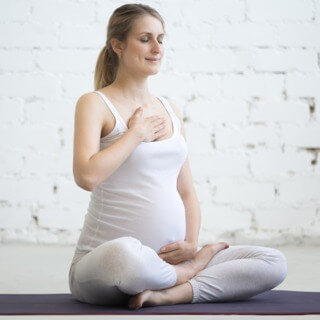
Find a comfortable seat and sit with a tall spine,
Relaxing your shoulders down and away from your ears,
Creating space and relaxation.
If this is not available to you,
You may sit or lay any way that is comfortable for you.
In this moment,
Gently close your eyes and begin to notice your breath,
Slowly moving in and slowly moving out.
Allow yourself to take a few natural breaths here,
Just becoming aware and connecting with the natural inflow and the natural outflow of your breath.
Notice its rhythm.
Notice your rhythm.
There is no other rhythm quite like yours.
Slowly breathe in and slowly breathe out.
This breathing begins with awareness,
As you continue to consciously feel into your breath.
Notice the sensations in your body.
Keeping the breath slow and easeful,
Notice as awareness itself of any sensations.
Allow yourself to be with what is there,
Noticing as a kind,
Compassionate witness of your breath.
No judgement or any engagement,
Simply noticing.
Taking this process for a few moments.
In your next inhalation,
Notice if you can hear the subtle sound that your breath makes.
Fully notice the subtle sound of your own breath.
Allow the sound to swirl and travel in your inner ear,
Simply becoming awareness itself.
Now mentally repeat to yourself on the inhalation,
I am now breathing in.
And on the exhalation,
I am now breathing out.
Exhaling I am now breathing in.
And exhaling I am now breathing out.
Now allow yourself to feel into the joy of your breath.
Mentally say to yourself,
I am now enjoying breathing in.
And I am now enjoying breathing out.
I am now enjoying breathing in.
And I am now enjoying breathing out.
Continue this process for a few moments.
Conscious breathing begins with creating and connecting to the awareness of consciously breathing in and consciously breathing out.
The awareness is an aspect of consciousness and the breath is a vehicle of prana.
When prana and consciousness move together,
Awareness of the breath implies that one is simultaneously aware of the consciousness.
With this practice of conscious breathing,
The witness aspect develops and the expansion of your consciousness begins.
When you are ready,
Take a nice long slow deep inhalation.
And on the exhale,
Take a nice slow exhalation.
And again breathe in,
Nice slow deep inhalation.
And one last time,
Take a nice long deep inhalation.
Keeping your eyes closed,
Bring your hands in front of you and rub them firmly together creating some heat.
Keep rubbing.
When you are ready,
Place your fingertips on the outside of your closed eyelids and take a few normal natural breaths.
Slowly breathing in and slowly breathing out.
Slowly feeling into whatever is there or noticing any colors in front of your closed eyelids and allowing yourself to be right there,
Enjoying whatever is present for you.
Allow yourself to feel whatever you feel with love and a compassionate heart.
Conscious breathing has a calming effect on the mind.
Even simple breath awareness,
Like we have done here without exerting any control over the natural pattern,
Will induce a more relaxed and regulated rhythm of breathing.
This is an effective method of quieting an overactive mind.
There is no system like pranayama that has such an immediate influence on the nervous system,
Brain and mind.
We encourage a daily practice as needed throughout your day to remain calm,
Balanced and happy.
Offer your self gratitude for taking this time out just for you.
Namaste.