Hey,
This is Ish,
And in today's talk,
I'll be going over the art of doing less.
And specifically,
I'll be going over what happens when you conserve your energy.
Rather than leaking it.
So in my early 20s when I was teaching about confidence,
I would often talk a lot about external techniques to add on to appear more confident.
And what I started to notice actually over the years is that there is another more mature,
More powerful way to be confident and to also appear powerful.
And that is by doing less and actually conserving your energy and only acting when it is necessary rather than expending a lot of effort,
Which is very common,
Especially when you're younger to do a lot.
Now,
I first started to observe this principle in senior leadership at different workplaces.
And I'd contrast their energy with entry-level grads at the same company,
Who would oftentimes do a lot.
They would talk a lot,
Make a lot of noise and movement.
And the senior leadership,
On the other hand,
Seemed very poised and still,
So the opposite of these qualities,
And more contained internally.
If they were stressed out or panicking,
You would never know because they were so still.
And that is actually a sign of a powerful person is that they are able to be still,
To not waste any energy,
And they're more emotionally contained.
So again,
If you think of the opposite energy of this,
It just simply means your energy is spilling out everywhere rather than being contained.
So someone spilling their energy will over talk.
They will have a lot of nervous energy in conversations.
They may put on a forced smile or get into some appeasing behaviors like excessive nodding to show the other person that they're trying to sympathize with them and understand them and constantly reassuring them.
Another manifestation of this nervous energy is fidgeting.
So moving your body often as well.
And if we look into the animal kingdom,
What we'll notice is that The animals that are at the top of the food chain,
And they are the predatory animals,
Have a different way of moving compared to the prey animals at the bottom of the food chain.
So big animals like lions,
Elephants,
Tigers,
What you'll notice is that they move very slowly and they spend a lot of their time resting so they can gather and store that energy for the right time to when they have to act.
You can think of a bear hibernating,
That's a good example.
Now contrast this to a prey animal,
Like a mouse or gazelle.
You'll find them moving quite a bit.
They're always scanning their environments for threats.
And there's a lot of excess movement there.
And this is for a good reason,
They want to keep safe.
But you'll see this in human beings also,
Where people unconsciously emanate to their environment or transmit to their environment that they are feeling nervous by leaking their energy.
Like I mentioned before,
Fidgeting is an example,
Or over-explaining,
Or trying to appease another person excessively.
What these things do is that not only do they show other people that you don't seem very confident,
And you don't seem powerful,
And you don't feel very comfortable,
For one,
But it also robs you of your personal power if you engage in these behaviors,
Because again,
You are tapping into your resources and reserves of energy.
So think of energy as a very precious resource that you want to guard.
So this leads me to my next point,
Which is in order to guard your energy,
You have to first understand how you're leaking it.
So it can be helpful to take an energy audit.
And really ask yourself,
In what way today did I expend my energy unnecessarily?
So were you checking social media for no reason?
Some people open up their social media apps,
Doom scroll up and down,
And then put their phone away,
Not having actually done anything meaningful or productive.
It is almost as if they've lost their mindfulness and they've been controlled by their phone.
Then you can also see this in fidgeting,
Like I mentioned,
So tapping your feet up and down for no reason,
Or adjusting your clothing in conversation when you don't have to.
And you can also think of saying yes to unnecessary commitments.
So sometimes saying no is what could be useful to guard your energy and protect your boundaries.
So boundaries are good for not only keeping things out that you don't want in,
But also protecting what you have internally.
And this is why being able to set proper boundaries can be very useful for you.
Now once you've done this energy audit,
You can then start practicing.
Limiting some of the behaviors.
So what I did personally was I Notice that I had scrolled my phone like I mentioned in that example.
So I wanted to monitor my screen time.
And I noticed that I spent all this extra time.
So instead what I did was I installed certain apps that would put a delay so I can gain that level of clarity to stop,
To cut off those behaviors.
And then with that extra time that I would have spent on the app,
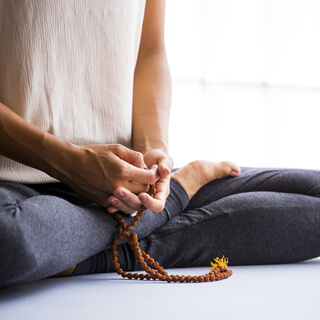
I actually use that for meditation,
Which is obviously something I love to do,
But it also conserves energy as well.
Meditation is a great way to conserve energy and also build it.
I also used to have a lot of nervous energy,
Especially when I was a bit younger,
When my energy was kind of all over the place,
Especially with ADD.
And I noticed myself fidgeting.
And what I had trained myself to do is actually start to relax the body.
Through somatic exercises,
But also keeping the body still and being okay with that in a conversation.
You don't have to move for no reason,
But only move when you actually have to.
And I think that's very important because again,
You're taking back the control and being more mindful of how you behave and act.
The last way you can also do that is notice your speech.
And many contemplative traditions actually talk about this.
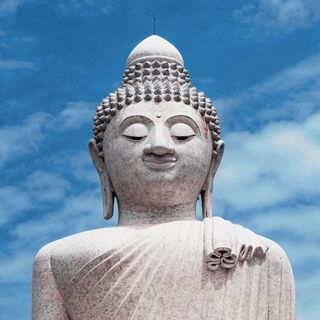
In Buddhism,
For example,
There is noble silence and also right speech.
So you're practicing limiting your choices of words.
And when you do speak,
It is useful and helpful for other people.
And I actually think a good mindfulness exercise to do is.
.
.
When you have an urge to say something,
Actually just notice,
Is this just a feeling of anxiety?
Or do I actually want to say something?
And I think it can be very good to discern those two feelings.
Because sometimes we'll just want to fill in a conversation,
But then not realizing that we actually had nothing to add.
It was just noise.
So we want to limit the amount of noise.
And then when you do say or act or express yourself,
You will actually carry more weight because people can sense you're now more selective.
On how you speak,
So lean in.
Rather than when you are constantly chatty for no reason at all,
People tend to tune you out and not focus as much.
So I hope you like this talk on the art of doing less and why conserving energies can be important.
So again,
You're building up a source of energy.
So then when you do act in the world,
It is more focused,
More concentrated,
And you actually get a lot more done with less effort because you've who did on energy.
So take an audit of how you're doing the opposite in your life by leaking energy unnecessarily and then practice eliminating or greatly reducing these behaviors.
And then start to think about how you can build the energy within,
Say no to things.
And you'll find that when you start to protect your boundaries and build this energy in,
You'll be able to use it more effectively.
So we found this helpful.
Thanks.