Hello,
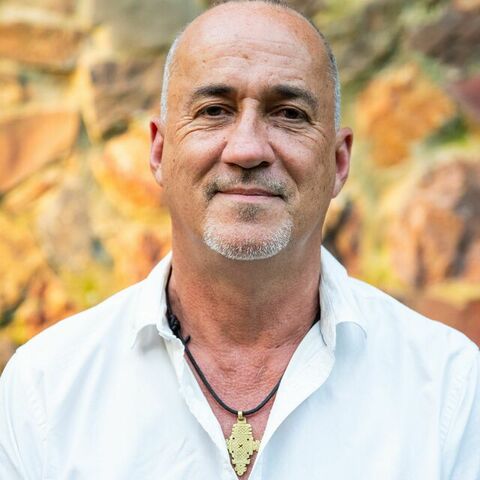
My name is Leonard Prague.
Welcome and thank you for joining me in this Yoga Nidra practice on the art of letting go.
The practice of Yoga Nidra is both restoratively restful and enlightening.
If you fall asleep,
It's because your body and mind need it.
If you stay awake,
Then sleep is not your primary need and you'll enjoy the enlightening encounter with your bliss or supreme body.
The intimate relationship between rest and enlightenment,
Between sleep and meditation,
Is profoundly evident at the beginning and again at the end of the practice when you're asked to articulate a heartfelt desire,
Often called the sankalpa or positive intention.
This refers to a way of being in the world that you'd like to realize in your life.
Stated in the present tense,
As if it has already been realized.
For instance,
If you'd like to be less anxious and fearful,
A simple sankalpa could be,
I am loved and I belong in the world.
We state our sankalpa once at the beginning of practice,
As soon as we've entered a state of relaxation,
And reiterate it again at the end of practice,
Just before we start the return journey from the state of bliss back to the waking self,
From the bliss body back to the physical body.
This intimate relationship between rest and enlightenment,
Which is specific to Yoga Nidra,
Allows us to plant the seed of change while we're relaxed and most susceptible to change.
We plant that seed at the beginning and water it again towards the end of the practice.
The power of Yoga Nidra lies in the way it enables us to combine transformative rest with transformative change.
This particular practice focuses on those hurdles,
Obstacles or shadows that prevent the realization of our positive intention.
It's about letting go of that which no longer serves us,
So that we can realize our deepest and most heartfelt desire for change.
Every sankalpa is haunted by obstacles that hinder this realization.
If in previous Yoga Nidra practices you've already articulated a sankalpa,
Then you're probably aware of what these obstacles for you may be.
In fact,
Your sankalpa,
As positive intention,
Probably arose from an awareness of the negative habits of mind or living that prevent you from realizing your full potential.
As we start this practice,
Take a moment to let your sankalpa articulate itself.
Then another moment to identify three obstacles or shadows that stand in the way of you realizing your desire for change.
Capture these three shadows in no more than one or two words each.
For example,
Jealousy,
Impatience,
Addiction,
Laziness,
Fear,
Inadequacy,
Self-loathing,
Self-doubt and so on.
Once you've done that,
We'll start the Yoga Nidra practice.
We return to the three shadows later in the practice.
I'll assume that by now you've settled into a comfortable position you can sustain for the next little while without moving.
Allow your breath to settle into its natural rhythm.
Then make two long,
Deep inhalations.
And when your lungs are full,
Hold it,
Hold it,
Hold it.
And on the exhalation,
Let go of today's business and all the thoughts that distracted you,
Even while I was talking just now.
A second time.
Inhale,
Hold it,
Hold it,
Hold it.
Exhale and again feel those daily concerns and worries disappear.
Then allow your breathing to return to its natural rhythm again.
Pay particular attention to the exhalations and make them purposeful,
Accompanied by the intention to exhale.
So normal breathing in,
But with an intentional exhalation.
In and on the exhalation,
Let all lightness leave your body and allow yourself to sink into the floor.
Allowing your body to become heavy with relaxation.
Relax all the muscles in your body.
Your body is a knot,
A knot of tension and stress.
And feel how every exhalation allows your body to become heavy with the weight of relaxation.
Relax in the quiet of the moment,
In the knowledge that you chose to be here,
That you're safe,
That there's nothing to do and nowhere to be.
In and on the exhalation,
Sinking into the floor,
Allowing your body to become heavy with relaxation.
Now take a moment to allow your body to become one with the silence of the world.
The silence outside the room you're in,
But also the quiet inside of you.
In that stillness,
Become aware of your body.
From your head,
Down the shoulders,
The abdomen,
Arms,
Thighs,
Legs,
Feet,
Toes.
Become aware of your whole body.
Your whole body.
Become aware of your whole body.
And say to yourself,
I'm going to practice Yoga Nidra.
Only two doors of perception are open.
Awareness and hearing.
Now state your sankalpa three times quietly to yourself.
Three times with true feeling and awareness of what you're saying.
We'll now rotate your awareness throughout your body.
I'll name different body parts.
All you have to do is visualize that body part.
It's not about intention or doing anything.
Just visualize the body part as vividly as possible before moving on to the next one.
Bring your awareness to your right hand.
Right hand thumb.
Second finger.
Third finger.
Fourth finger.
Fifth finger.
Palm of the hand.
Back of the hand.
Wrist.
Lower arm.
Elbow.
Upper arm.
Shoulder.
Armpit.
Side.
Waist.
Hip.
Thigh.
Kneecap.
Calf muscle.
Ankle.
Heel.
Sole of the foot.
Top of the foot.
Big toe.
Second toe.
Third toe.
Fourth toe.
Fifth toe.
Left hand thumb.
Second finger.
Third finger.
Fourth finger.
Fifth finger.
Palm of the hand.
Back of the hand.
Wrist.
Lower arm.
Elbow.
Upper arm.
Shoulder.
Armpit.
Side.
Waist.
Hip.
Thigh.
Kneecap.
Calf muscle.
Ankle.
Heel.
Sole.
Top of the foot.
Big toe.
Second toe.
Third toe.
Fourth toe.
Fifth toe.
Go to the top of the head.
Forehead.
Right eyebrow.
Left eyebrow.
Space between the eyebrows.
Right eyelid.
Left eyelid.
Right eye.
Left eye.
Right ear.
Left ear.
Right nostril.
Left nostril.
Right cheek.
Left cheek.
Upper lip.
Lower lip.
Chin.
Jaw.
Throat.
Right collarbone.
Left collarbone.
Right chest.
Left chest.
Middle of the chest.
Navel.
Upper abdomen.
Lower abdomen.
Right groin.
Left groin.
Right thigh.
Left thigh.
Right knee.
Left knee.
Right ankle.
Left ankle.
Right ankle.
Left ankle.
Right toes.
Left toes.
Now go to the back.
Right heel.
Left heel.
Right ankle.
Left ankle.
Right calf muscle.
Left calf muscle.
Back of the right knee.
Left knee.
Back of the right thigh.
Back of the left thigh.
Right buttock.
Left buttock.
Right hip.
Left hip.
The whole spine.
Right shoulder blade.
Left shoulder blade.
Back of the neck.
Back of the head.
Top of the head.
Take your mind to the brain.
The nasal passage between the nose and throat.
The tongue.
Teeth.
Roof of the mouth.
Right eardrum.
Left eardrum.
Throat.
Right lung.
Left lung.
Heart.
Stomach.
Right kidney.
Left kidney.
The abdomen.
Small intestine.
Large intestine.
Now the whole parts of the body.
The whole right leg.
The whole left leg.
Both legs together.
Whole of the right arm.
Whole of the left arm.
Both arms together.
Whole of the head together.
Whole of the back together.
Whole of the front together.
All the internal organs together.
The whole body.
The whole body.
The whole body.
Concentrate on the body lying on the floor.
Your body lying on the floor.
And become aware of all the meeting points between body and floor.
Head floor.
Shoulders floor.
Arms floor.
Back floor.
Buttocks floor.
Thighs floor.
Calves floor.
Heels floor.
The whole body and the floor.
Bring your awareness to the face.
Become aware of the skin on your face.
Aware of your face.
Develop your awareness of the skin on your forehead.
Cheeks and chin.
Become aware of any lines on your face.
Bring your attention to the eyelids.
And the meeting points between the eyelids.
And now the lips.
The meeting points between the lips.
Now bring your attention to the natural breath.
Become aware that you're breathing.
Conscious of your breathing,
Nothing else.
Count down from 9 on every exhalation.
Breathing in 9.
Out 9.
In 8.
Out 8.
And so on.
In your own time,
Following the rhythm of your own natural breathing.
If you lose count,
Your mind wanders,
Or you get to zero before I continue.
Just go back to 9 and start again.
If you lose count,
Or your mind wanders,
Or you get to zero before I continue.
You must go back to 9 and start again.
Now cease your counting,
But maintain awareness of breathing.
You're aware of breathing.
You're aware that you're lying in Shavasana.
You're aware that you're lying in Shavasana.
Nothing else besides these.
Allow your body to recall the physical sensation of being cold.
Concentrate on your spinal cord and invite the feeling of coldness and shivering.
Concentrate on the breath in your left nostril and develop the feeling of cold in the whole body.
Every breath you inhale makes the body cooler and cooler.
As if you're walking in snow or a cold winter's night.
Concentrate on the left nostril as you breathe in and out.
With every breath you take into the body,
Experience the cold.
Now concentrate on the physical memory of heat in your body.
Become enveloped by heat throughout the body,
From your head to toes,
Permeating the whole body.
Concentrate on the breath in the right nostril and with each inhalation,
Increase the feeling of heat in the whole body from head to toe.
As if you're walking in the sun or lying on the beach,
Inhaling the heat.
Now recall the experience of a moment in your life when you were very young,
Bursting with energy.
Such an abundance of clear energy that you could hardly contain it.
Feel and remember the experience of your own youthfulness.
Feel it in your body.
If it helps,
Invoke an image of a time when you felt this energized.
Make the image or recollection as vivid as possible.
And then let go of the image and the memory,
And retain only the bodily sensation of being so beautifully energized,
So brimming over with life.
And now allow your body to feel fatigued.
Let your body sink back into the experience of an all-consuming tiredness.
A tiredness that seems to drain the very life out of your body.
A tiredness so profound that you feel as if you'll never be able to move again.
Again,
If it helps,
Recall a memory of being that fatigued.
And once the sensations become tangible in your body,
Let go of the memory and retain only the sensation of tiredness.
That deep tiredness in your body.
And now you find yourself on a path in a deep,
Lush forest.
It's late afternoon.
There's nothing to be afraid of.
This is a familiar and safe forest.
You've been here many times before and you know the path well.
High above you,
The late afternoon sun is breaking through the canopy of treetops.
Some of the sunbeams fall on the path in front of you.
You walk along the path towards where you know the edge of the forest is.
Around you are tall trees.
A thick undergrowth of plants and shrubs that you gently caress with your hands as you walk past them.
Notice the multitude of flowers and plants.
Notice the multitude of flowers and plants.
Each with its own heavenly scent.
You pause as you look and smell each one of them.
Red flowers and the smell of cedar wood.
Orange flowers that smell like roses.
Yellow flowers and the smell of lemongrass.
An abundance of green ferns that smell of pine.
Blue flowers and the smell of chamomile.
Purple flowers and lemon.
Small white flowers and lavender.
Then you come to the edge of the forest and beyond that,
A vast clearing with tall grass.
You leave the forest and walk into this green peaceful meadow.
Your fingers gently caressing the tips of the tall grass as you walk through it.
And then in front of you,
A small hill with a path leading to the top.
You start out on the pathway and walk all the way to the top of the hill.
You start out on the pathway and walk all the way to the top of the hill.
At the top,
Another meadow.
And in the middle,
Three huge hot air balloons fired up and ready to fly.
Gently swaying in the wind,
Each basket tethered to the ground with two ropes.
Stand back and look at the three balloons.
On the side of each basket is a wooden board,
And on the ground below it,
A marker.
You walk over to the balloon on the right,
Kneel in front of the basket,
Pick up the marker,
And on the wooden board write in big letters the name of the first shadow that haunts the realisation of your son Kalpa.
Then stand up and release the two anchors that tether the basket to the ground.
Stand back and watch the balloon slowly starting to lift.
Slowly.
Slowly.
Higher.
Slowly.
Higher.
And higher.
Look up at the balloon,
Eyes fixed on the wooden board and what you've written there.
Slowly it gets smaller and smaller,
Until you can no longer make out the words.
Smaller and smaller.
Until the basket and the balloon become one.
Smaller.
And smaller still.
Higher.
Higher still.
Until the entire balloon is nothing but a speck in the sky and disappears in a whiff of white clouds drifting across the sky.
In your own time,
Do the same with the other two balloons and the other two shadows.
If you're done before I continue,
Simply lie down on the grass and look at where the balloons disappeared into the white clouds.
Allow any spontaneous thoughts or impressions to arise.
Become aware of them.
Let them come into full view.
Recognise them.
Acknowledge them.
Then detach.
And let them go.
And allow the next image of thought to arise.
To recognise.
To acknowledge.
To let go.
Remember your resolve,
Your sankalpa.
Repeat your resolve three times with absolute faith and awareness.
Return your awareness to your whole body.
Your whole body.
Your whole body.
Relax all efforts and become aware of your whole body.
Bring your attention to the natural breath.
The quiet breath.
Develop awareness of your body.
Deeply relax it,
Lying on the floor.
Visualise the surrounding room.
Let your mind become completely external.
Start making small movements with your body.
Bend your fingers.
Move your toes.
Take a few deep breaths.
Stretch out.
And when you're sure you're wide awake and back in this world,
Sit up slowly and open your eyes.
The practice of Yoga Nidra is now complete.