You know the traits people praise you for.
I don't know,
Maybe they say that you're so easygoing or.
You're so low maintenance.
Maybe you're the strong one,
The reliable one,
The one who never needs anything.
And I'm sure you've heard it your whole life and somewhere along the way you.
.
.
You started like wearing it like a badge.
This is who I am.
But today I want to gently suggest something that might be helpful.
Might unsettle you a little.
Because some of the traits that you're most proud of might not be your personality at all.
They might be the strategies that a younger you came up with to stay safe.
And they kind of worked,
They did work,
And that's exactly why you never questioned them.
Hi,
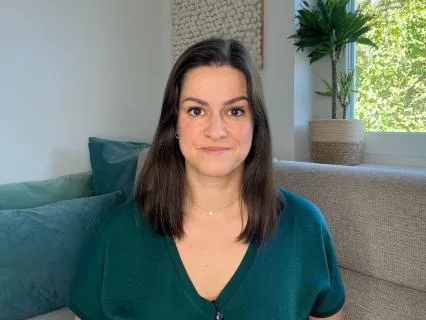
My name is Ginga and I'm a nervous system and somatic trauma release practitioner.
And I'm not here to take anything away from you.
By the end of this video I actually want you to feel more compassionate.
Towards yourself.
Not less.
But I want to show you the difference between a trait that you choose and the trait.
You kind of survived into.
Because one of them is freeing to keep.
And the other one is quietly running your life.
Now,
Let me start with how these form and take shape.
Also,
Because once you see it,
You cannot unsee it.
So when you're a child,
You are completely dependent on the adults around you.
You cannot just walk out the door.
You also cannot fix them.
So your entire survival depends on staying connected to them,
Regardless of what kind of people they are,
And staying safe in the environment that you're in.
So your nervous system,
Which is much smarter and much faster than your thinking mind,
Does something brilliant.
It actually just studies your environment and it figures out.
Who do I need to be?
Who do I need to be here to be okay?
And then it becomes that,
Not on purpose,
But like sort of automatically.
This is all happening underneath your awareness.
So if you grew up in a house where a parent's mood could just turn in an instant.
.
.
Your system learned to read the room before you even walked into it.
You probably became attuned,
Sensitive,
Always a step ahead of everyone's needs.
It's kind of me as well.
And people now call that being intuitive or being caring,
But it started as a surveillance.
It started as safety.
And if you grew up where love felt like it had to be earned,
You know,
Where you were praised for achieving and ignored otherwise,
Your system learned that being impressive is how you stay connected to the people around you.
So maybe you became driven,
High achieving.
Never quite able to rest.
People call that ambition.
But it started as a child trying not to be abandoned.
And if you grew up where your needs were,
Let's say,
Too much for the adults around you.
Where asking for things made you sort of like a burden.
Your system learned to just do it.
Need nothing.
You became independent,
Low-maintenance.
You know,
The strong one who handles everything alone.
And I know some people admire that.
But it started as a little kid deciding that it was safer to stop asking.
So do you see this?
Because these aren't flaws.
They are not even bad traits.
Most of them look great from the outside.
That's the trap.
Because they got you praised,
They got you loved.
They worked so well that you built an identity on top of them and forgot that they were ever a strategy at all.
So let me tell you where I see this most because.
.
.
It is the one that hides the best.
Um,
It's people-pleasing.
Because we treat people-pleasing like it's just a bad habit or a lack of backbone,
But it's not.
It's one of the most sophisticated survival responses there is.
In trauma work,
We sometimes call it the phone response.
Because when a nervous system decides that it cannot fight and it cannot flee,
In a moment it just finds a third way to stay safe.
And it makes itself agreeable,
Useful,
Easy to be around.
It manages everyone else's feelings so that no one ever has a reason to be angry or to leave.
So the person who can't say no,
You know,
The person who apologizes constantly,
Who feels physically anxious when someone is upset with them,
That person isn't weak,
That actually their body is running a strategy that once kept them safe.
Because saying no felt dangerous a long time ago.
So their system made very sure that they'd never have to.
And here's the cost,
Because there is one.
A survival strategy doesn't fully understand that the danger has passed,
So it keeps running long after you needed it.
So let's say you're 40 years old,
Safe,
Surrounded by people who love you.
But your body is still managing a threat from,
I don't know,
1994.
You're still disappearing.
To keep a peace that isn't even under attack anymore.
And you're still not asking for what you want,
What you truly want,
Because some old part of you believes that Wanting is dangerous.
That's the difference I mentioned at the start.
So a real trade.
.
.
Sort of expands you.
But a survival trait.
Contracts you and it costs you.
And the tell is usually this.
Is there fear underneath it?
Is there fear?
Because when you imagine dropping the trade,
Being unavailable,
Saying no,
Letting someone be disappointed in you,
Or needing something and saying it out loud.
Like,
Does your body break?
Because if it does,
That's not personality,
That's actually protection.
Personality doesn't need to defend itself.
Protection always does.
Let me be honest about my own,
Because.
.
.
I have one that runs deep for me as well.
So mine was independence.
I was the one who needed nothing from others.
I could handle anything alone.
And I was proud of it.
Ask for help.
No,
I'm good.
I'd rather struggle for three days.
And I told myself that this was strength.
It's self-sufficiency.
It's a good quality.
And it took me a long time to feel what was underneath it all.
And underneath it was just a child who had learned that needing people led to disappointment or pain.
That it was safer to just expect nothing,
So you could never be let down.
My independence wasn't actually strength,
It was.
.
.
Armor!
That I built beautiful functional armor that I'd been wearing so long I thought it was Part of me,
It was my skin.
And the thing about armor is it doesn't just keep the bed out,
It actually keeps everything out.
Because my,
I don't need anyone,
Kept me safe and it kept me also alone.
It kept help away.
It also kept closeness away and it kept me from ever finding out that some people if you let them.
Actually stay.
So,
What do you do with this?
This is important because the answer is not to just rip the armor off.
I want you to hear this part.
These strategies protected you beautifully.
Some of them still serve you today and you get to keep those.
This work is not about becoming a completely different person,
Completely leaving the past behind.
It's a bad choice.
Like right now,
The strategy runs automatically.
You don't actually decide.
To please,
Or achieve,
Or withdraw,
It just happens so automatic.
The goal is to bring it from automatic to chosen,
So that you can Let's say you can be generous because you want to,
Not because you're scared or you're afraid.
Or you can be independent when it's wise and able to to lean when it's safe.
And that's freedom,
You know,
Having the freedom of choice.
So not losing the trade,
But being able to put it down when it doesn't serve you,
When you don't need it.
So here's a practice,
And I promise it's a gentle one.
Because these are tender.
So just pick one trait that you are known for.
You know,
One of the,
You're so whatever,
Easygoing,
Strong,
Helpful,
Whatever yours is.
And instead of judging it,
Just get curious.
Ask it three questions like this.
What did you protect me from?
And sit with that question,
Like,
What did you protect me from?
And let the answer come from your body,
Not your logical mind.
You might feel something in your body before you actually understand it.
And then ask,
When did I first learn you?
When did I first learn you?
And notice if a certain age comes up,
You know,
A certain house,
A certain person's face,
You know,
In your mind,
You know,
Just a vision.
And then the freeing question is,
Where am I still running you?
Where am I still running you?
Though I might not need it.
To anymore.
So where am I still running you?
Even if I don't need you anymore.
And you're not asking these questions to try to fix anything.
You're just meeting the strategy with the solution.
Some understanding instead of judgment.
Because these parts of you were never the enemy.
They were a child's best solution.
And they deserve a thank you,
You know,
Before they deserve an update.
If today anything I said stirred something up in you,
That's okay.
It's actually a good sign.
It means that you felt the difference between who you learn to be and who you are.
Actually are underneath all that clever loyal protection.
You're not your survival strategies.
You're the one who's finally safe enough to just look at them.
And decide if you still need them.
So this week,
Just pick one trait and ask it what it protected you from.
And listen with your body.
See you next time.