Maybe you do a type of breathing exercise,
Or a grounding technique,
Or the 5-4-3-2-1 method,
And it works for about 20 minutes.
But then something hits you,
Something small happens,
And then you're right back where you started.
Now,
If you've ever felt like you're just constantly putting out the same fire over and over.
Like,
No matter how many tools you collected,
How many methods you have in your toolbox,
I want to offer you a different way of understanding what's actually missing,
Because there's something really missing there.
Because the problem was never that you don't have enough techniques,
Okay?
But you probably notice that most of what gets taught in the nervous system space is regulation.
Download this PDF,
Learn how to regulate your nervous system.
How to calm yourself down once you're already activated.
And that's great.
And regulation does matter.
Those tools are needed and useful.
But regulation alone has sort of a ceiling.
You know,
It brings you back from the edge.
It's perfect for that.
But it doesn't move the edge.
It doesn't widen your tolerance.
So what actually changes your life,
I believe,
Isn't just better regulation,
It's actually having more capacity.
And capacity is built.
And by the end of this video,
You'll understand the real difference between these two and why you can be excellent at regulating and still feel stuck in the same patterns.
And what it actually takes to widen what your system can hold.
And hi,
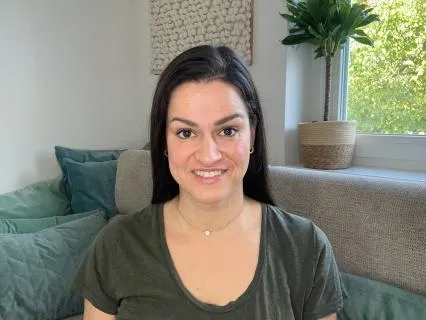
My name is Kinga.
I'm a somatic trauma release and nervous system practitioner.
So let's get into it.
I like to say that regulation is the floor and capacity is the room.
So here's the simplest way I can actually put this.
Regulation is your ability to come back to baseline after something knocks you off of it.
And capacity is how big your baseline is to begin with.
So like how much stress or stimulation or conflict.
Or maybe even stillness your system can hold before it tips into activation,
Fight,
Flight,
Freeze,
Or phone.
You can also think of it as a container.
So regulation is the skill of not spilling once the container is already full or kind of mopping the floor,
You know,
Once the container has spilled.
But capacity is the size of the container itself.
You can be genuinely skilled at regulation,
You know,
Like a great breathwork technique or solid grounding tools,
Or,
You know,
You have the whole toolkit and still feel like you're constantly one small,
Tiny little thing away from overflowing.
Or overreacting,
And sometimes you will not be able to control it.
You react.
And then you regulate yourself back to baseline from there.
But those moments will more likely also require lots of apologizing.
Well,
A small container will always overflow quickly,
No matter how good you are regulating or at mopping up afterward.
So I want to tell you why regulation alone keeps you stuck.
And this is the part that actually surprised me most in my own work and in the people I sit with daily.
Because someone can do everything right,
You know,
The breath,
The somatic tools,
The awareness,
And still find themselves activated by the exact same triggers month after month or year after year.
And it's not because they are doing it wrong.
It's just because.
The regulation techniques that we can all pick up from the internet now,
We can learn them,
They are designed to manage a moment when you have or when you are activated.
They are not designed to change the size of the container that keeps filling up.
In the first place,
But I'm sure you understand it by now.
So if your container is small,
You'll easily get activated.
And even if you get excellent at damage control,
Let's say,
Learn to maybe even learn to notice activation fast and become good at not just good but also efficient at bringing yourself back down.
Underneath all that skill.
You will feel exhausted.
You'll feel like.
A failure at times because you're managing the same small container over and over instead of just growing it.
So let's look at what capacity actually looks like in real life.
Capacity isn't about becoming someone who never gets activated,
Okay?
That's not the goal,
And to be honest with you,
It's not realistic.
Capacity is about your whole system being able to hold more before it tips,
So more conflict without shutting down,
Or even more stillness without needing to escape it.
And also,
For example,
More closeness with that contracting,
Bracing,
And more uncertainty with that spiraling.
And here's the part that matters the most.
Capacity.
Capacity doesn't build the way regulation skills do.
Because you cannot think your way into a.
.
.
Bigger container.
You cannot force it into existence in a single session.
It actually builds through repeated embodied evidence.
Your nervous system slowly,
Over time,
Collecting proof that hey,
More is survivable than it once believed.
And that's absolutely a slower work.
Also less glamorous.
Than a quick-fix breathing technique,
But it's the difference between managing your life around a small window and actually living inside a wider one.
And my personal experience with only relying on regulation tools.
Is that.
Activation can happen so fast and you know this.
So fast that many times we don't even remember to use any of those regulation techniques.
And here's why.
So the moment something triggers you,
Your amygdala fires first.
It's a part of your brain that's constantly scanning for danger.
And this whole thing is instant,
Faster than conscious thought.
It doesn't ask for permission.
It just reacts.
And in that same instant,
Your prefrontal cortex,
The part that actually remembers your breathing technique or the regulation tool or the grounding tool,
Everything you've learned basically,
It just goes quiet.
Almost like it's not present.
Temporarily offline.
Because your brain,
In that particular moment,
Has decided that this isn't a time for calm and rational thinking,
It's actually a time for survival.
So you.
.
.
Might know 10 regulation tools by heart and still find yourself three sentences into a reaction before any of them even occur to you,
Or the possibility of them.
And that's not you failing at the tools,
It's just.
That is biology.
That's how it works for all of us.
The thinking brain arriving late to a party.
The feeling brain already started.
So.
This is exactly why capacity matters more than technique.
A wider window means that the amygdala still fires,
But it doesn't fire as fast or as hard to begin with.
You're not relying on remembering a tool mid-hijack.
You've changed how much it takes to actually hijack you in the first place.
That makes a huge difference.
So here's how I actually started building mine.
My capacity.
Through doing physically hard things on purpose.
For example,
Planking for three minutes every morning.
And around two,
Two and a half minute,
My body is screaming.
Stop!
But I stay anyway.
And I knew it was not going to cause me harm.
The whole practice was just.
.
.
About watching the edge.
And staying somatically aware the entire time,
Like feeling the shake in my arms,
The burn.
The urge to quit without letting my brain run off into a story about it,
Telling me I cannot do this,
This is too much.
I'm just watching the raw sensation itself.
Breath by breath.
And the moment my mind starts narrating,
I bring it back to just a feeling in the body.
And that's the whole skill.
So sensation over story.
And that's actually the exact same principle behind BBTRS,
Biodynamic Breathwork and Trauma Release System.
Which is a huge part of my own training and my work and also my personal healing journey as well.
And I use it with my clients.
So in BBTRS,
We work with something called titration and pendulation.
Now,
Titration means you're introducing activation in small,
Manageable doses,
So you're never flooding the system all at once.
Giving it enough to touch the edge without overwhelming it.
And pendulation is this rhythm underneath that,
Like moving back and forth on purpose between activation and deactivation.
And you let the intensity rise and you stay with it a little longer than feels easy.
And then you deliberately swing back into calm,
Into your resource,
Into safety.
So you do this back and forth,
Back and forth,
Edge and then rest,
Edge and then rest.
And this oscillation is what actually teaches your nervous system that intensity doesn't mean danger,
Doesn't have to mean danger,
And that it can always find its way back to calm afterward.
So with this technique,
You can easily teach.
Your nervous system something new.
That discomfort doesn't equal danger.
And it's the same thing that happened.
With me in my plank practice.
Obviously I started with one minute and then two and then three minutes and I now offer this exact work,
The activation and deactivation,
The titration and pendulation in my one-on-one sessions as well.
Because I noticed that this is where real capacity gets built.
Not by thinking about your edge.
But by actually touching it on purpose.
Safely again and again until your body believes that you can come back and you are safe.
The next time you reach for a regulation tool,
You know,
It could be breath or a grounding technique or whatever that has worked for you.
After it's done its job,
Just ask one more question.
Am I just managing this moment or am I giving my system practice at holding more than it used to?
Because sometimes the honest answer is that You just need to get through the next five minutes.
And that's completely fine.
Regulation exists for a reason.
But if every single day is only.
.
.
Ever just this management with no moments where you deliberately let yourself stay a little longer in discomfort than whatever feels easy.
Then nothing about your baseline will ever change.
You just get very good at surviving the same size container forever.
And then coming back down and having to apologize.
So let's practice some more piece of capacity building right now together.
So think of something mildly uncomfortable,
Not overwhelming,
Just like,
I don't know,
Mildly activating.
Is there a message sitting unanswered in your phone right now?
Because it makes you uneasy.
Or a conversation you've been quietly rescheduling in your head.
Just something small that you've been avoiding today alone.
It could be a phone call,
An email,
A decision.
Or maybe you had a small conflict with someone,
Like not something huge.
But a mild conflict with someone recently.
I want you to bring it to this moment.
Found it?
Good.
Now let it come into your body for a second.
So think of that conflict or that task or whatever gets you a little uneasy right now,
Anxious or activated.
And just notice what happens in your body,
In your chest,
In your stomach,
Your jaw.
Just from thinking about it.
And now,
Instead of immediately soothing that away,
Or reaching for your phone,
Or telling yourself that you'll deal with it later,
Stay with it.
Right here for three slow breaths.
You're not fixing it.
You're not doing that right now.
You're just staying with the discomfort of it.
Being unresolved.
And letting your body log that this was survivable too.
That this is capacity building,
Small,
Repeated,
Unglamorous,
But it's real.
And if you want a few more places to start,
Here are some doses small enough to actually stick with.
You could actually take a slightly too cold shower 10 seconds longer than comfortable.
Or sitting with a silence in composition instead of rushing to fill it.
Or holding a plank or any physical position past the point you want to quit.
Of course,
Safely,
Not to the point of unbearable pain or injury.
Because some pain is okay,
Just past the point of,
I want to stop now.
Or maybe let your phone buzz once without instantly checking it.
Or saying the honest thing instead of the easy thing and staying in the room for what happens next.
None of these need to be big.
That's actually a whole point.
Because big is,
It's not big that builds capacity,
It's repetition.
So just pick one,
Not five.
Not a whole new routine.
Just taking it in small steps.
So just one dose,
Small enough that you'll actually do it again tomorrow,
And the day after,
And the day after.
And I see you soon,
Maybe in the next video with more capacity or in a one-on-one breathwork session with me.
And I'd love to read your comments if you tried any of these or if you have any questions.