Cognitive flexibility,
Which is our ability to kind of view things creatively from different perspectives that's linked to empathy,
Like it's linked to our ability to kind of snap out of unhealthy patterns of thinking as well.
But there's also something closely related to it called coping flexibility,
Which is our ability to be able to choose wisely and adaptively between different ways of coping with problems.
I mean,
The simplest example of that is sometimes when you're dealing with other people,
It's important to be able to speak up and assert yourself.
Other times,
I hate to break it to you kids,
Sometimes you'd be better off zipping it and saying nothing in some situations.
But a really smart person will be able to pick their battles and choose.
But if you think I have to confront,
Confront,
Attack,
Attack,
Attack,
Assert myself every time,
That generally doesn't work out that well,
To be honest,
Even though many people believe that that's healthy.
Likewise,
Always kind of avoiding things and kind of being resigned and accepting doesn't work.
Sometimes you need to be able to speak up,
But you have to pick your situations.
I think Epictetus talks about something very similar to this,
But he recognises that for Stoics,
There's this problem.
Famously,
He says,
How does the bull know that it can kill a lion?
Seems like an odd remark to make,
Right?
I didn't know bulls could kill lions,
But I did a bit of research on it.
Oh boy,
They can.
So like a bull that's in charge of a herd can toss a lion in the air on its horns,
Make mincemeat of it.
But the calves aren't strong enough to fight off a lion.
Only some of the bulls are powerful enough,
Strong enough to do that.
So Epictetus says,
How would you know that you could fight a lion?
Well,
The only way that you would really know is through trial and error.
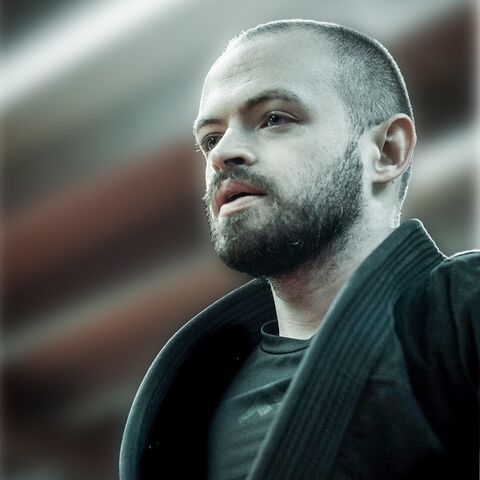
So I think what he has in mind is most ancient philosophers had some experience of martial arts,
Like they did Pankration or wrestling or boxing.
It's surprising to us now,
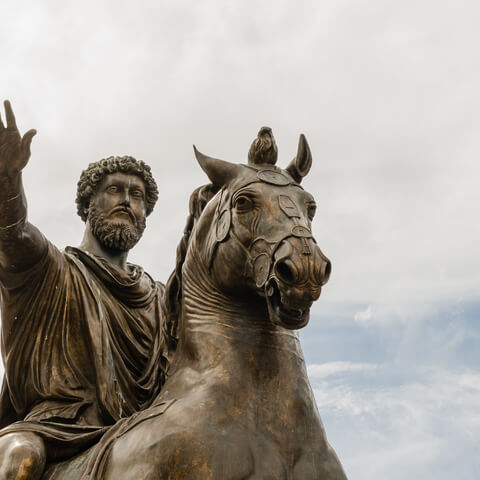
But even Marx Aurelius,
Who was a bit of a weedy nerd,
Was definitely trained in wrestling and boxing and alludes to it in the meditations.
So did most people in Greek and Roman society.
So they're very familiar with the idea of choosing a sparring partner,
Right?
And this becomes a metaphor for life on many levels.
But part of it is if you choose somebody that's too easy to fight and you're really experienced,
You're a big,
Strong guy,
You're really fast and you're really skilled,
You're going to have a sparring partner that's too easy.
You're not going to learn.
They're not going to be that much of a challenge for you,
Right,
Perhaps.
But if you pick somebody who's twice your size and way more experienced,
Like much stronger and much faster than you,
Then you're just going to get your butt kicked,
Right?
And maybe you learn something from that,
But you'd be better to pick someone generally speaking,
Who's more evenly matched.
We said earlier you can learn from novices and stuff as well,
But for the most part you want to pick somebody that if you're sparring with,
You might want to pick somebody where you think there's kind of a chance that they might beat you,
A chance that you might win,
Or they're reasonably evenly matched.
You know,
They're not just going to beat you within the first two seconds every time or something like that.
There's not going much opportunity to learn stuff perhaps,
Right?
So Epictetus says you can only judge this from experience.
Through trial and error,
You kind of figure out what's too much and what's not enough is a challenge.
And in terms of stoicism,
If you can use stoicism,
For example,
Psychologically to endure pain,
To resist temptation,
How do you know?
For some people being promoted to a position of power,
They lose their mind.
Like some famously in politics,
If you power corrupts,
Right?
And whereas other people are kind of unfazed by that,
Right?
How do you know?
But you have to observe yourself very closely in similar situations and think,
I know that this is a weakness for me or it's a strength for me,
Right?
And so deciding whether it's a good idea to face certain challenges or you'd be better off avoiding them because it's going to overwhelm you.
Everyone has to decide that for themselves.
There's not a standard formula,
Right?
Unless you're the stoic sage,
You can't throw yourself into every challenging situation because some of them are going to be too much for you.
It's going to be depressing or you're going to lose your temper.
You're going to succumb to temptation,
Like unless you're saintly,
You know,
And you've completely mastered all fear and anger and desire in yourself.
And some challenges are going to be a piece of cake for you,
But we have to know ourselves.
We have to study our strengths and weaknesses and figure out on the basis of self knowledge,
What would be an appropriate coping strategy for us in different situations,
Right?
And that,
That takes thinking,
It takes coping flexibility,
You know,
It takes,
You know,
Also on a part of it is evaluating what aspects of the situation you have control over and which ones you don't,
Which aspects you don't have control over.
Um,
And some situations,
The way you cope might depend on,
Uh,
How much time you have.
Right.
So generally wisdom,
Would you say it sounds like it's wisdom where you're describing it?
Definitely.
It's a form of practical wisdom.