A state of chaos seems more common these days,
A byproduct of the increased complexity and pace of life we are accustomed to.
And in the wake of this chaos,
It's easy to get caught up running from something without understanding what that actually is.
So how do we slow down the frenetic pace of life to get a better picture of who we are?
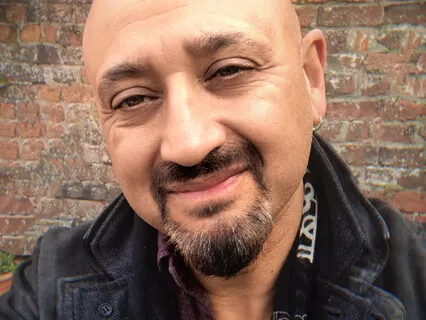
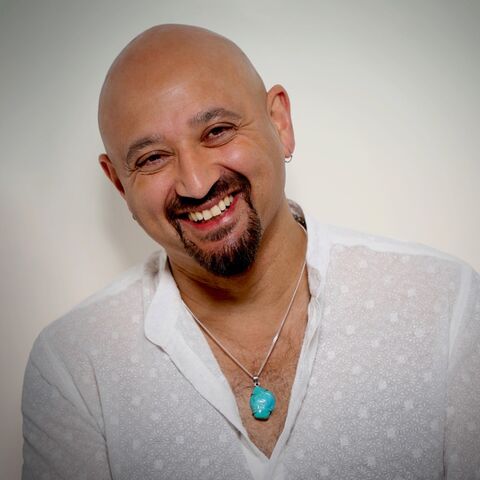
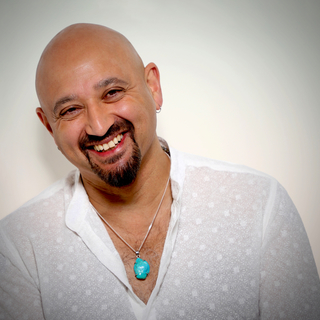
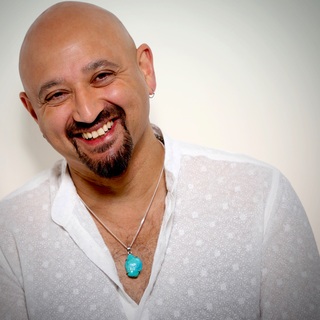
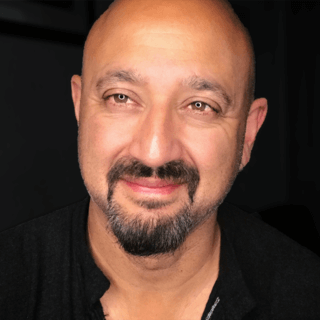
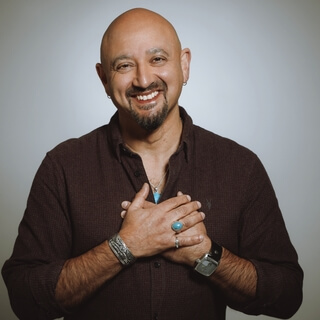
In this conversation with John Sudeik,
Spiritual teacher,
Poet,
Author and founder of authentic living,
We discuss the role of science,
Spirituality and the soul in creating an awareness of ourselves,
How we interpret our emotions and the actions we take.
From the team at Helix,
I'm Tim Mullen.
This is the science of us.
Hey Tim,
It's lovely to see you.
Lovely to see you.
Thank you for making the time to come on.
I'm very excited about this.
It's one of those conversations we were just talking about before the show that it can kind of go anywhere and it did go anywhere even in our first introductory conversation.
So I think that's probably what I'm looking forward to the most.
If we,
Maybe if we start with you though,
Because that's just a good way to help position things for the audience.
I'm particularly interested in where the story of John Sudeik began in terms of like what you're doing today.
So and a lot of the journey you've kind of been on to what you do today as a poet,
Spiritual leader,
Meditation coach,
Which I know you don't like that term,
But a lot of things that you do in this space.
So where did that all begin for you?
Yeah,
It begins straight out of the womb,
Quite honestly,
Probably in the womb,
But I'm one of those people who always felt that sense of being kind of deeply connected to life.
I was also very artistic and inquisitive.
So even as a child,
I'd have like a biology or a physics book in one hand and an art book or something in the other from the library.
And as I go into my teens,
I'm kind of,
I'm reading young at the age of 13 and stuff.
So I was always that weird kid.
But when you grow up in a extremely impoverished family,
I come from a very poor family and dysfunctional at that.
So I'm a young transitional person.
And then when the environment that you're in,
So like for example,
School,
For example,
Doesn't see the books that you're reading,
High school,
Doesn't kind of see the essays and things that you're writing in English and sends you off to train to be a welder.
The town I grew up in just kind of doesn't recognize the artistic or the creative in that sort of way.
And the family too,
I was the weirdo in the family.
And so you do everything you can to kind of.
.
.
What was the town?
If I can answer,
What was the town?
I grew up in a town called Rochdale in the north of England,
Which is known as a.
.
.
These days,
It's known as the town of pedophile grooming gangs.
And when I grew up,
It was the heroin center of the UK and it was also the stronghold of the Nazi National Front Party.
So it was kind of hell in every direction,
Quite honestly.
And it was all linked to the football hooligans as well back in those days.
And in fact,
There's an incredible book that if anybody wants to know what Rochdale was like in those days,
There's a guy called Trevor Hoyle.
And he's written some episodes of Doctor Who.
He's a well-known sci-fi writer and he's from Rochdale.
And he still lives there to this day.
And he took Burgess's Clockwork Orange from 1970,
71 and recast it and reset it in Rochdale amongst the football hooligans in 1973.
And I swear I know some of the people in that book,
But if you want to know the world I grew up in.
.
.
And it's a fantastic book.
Absolutely astonishing.
So it begins there,
But then gets kind of subsumed.
And then in my 20s,
I get into Buddhism.
That doesn't really work for me.
Then I get into Zen.
There's yoga going on all the way through this.
But still with those kind of twin passions of being absolutely curious about everything on a sort of.
.
.
Almost like a kind of scientific method to everything.
How does this really work?
What's really real?
Almost like comparing and contrasting all the time.
Not so that I feel better and kind of build an ego and a reputation for myself,
But just so I can actually get to what's real.
And then sort of blank space.
And then coming into my sort of 40s and 50s,
Because I'm 56 in a few weeks,
Around about 2012,
The kind of life that I'd built wasn't really sustainable.
And I think a lot of people get to this point where you're living through things.
And it started to fall down.
And it was almost like,
Whilst my life was an utter disaster,
That kind of voice from my childhood or from my teenage years really strongly reasserted itself.
And so I had this dual time of kind of.
.
.
I had to do a lot of psychological healing and work.
And at the same time,
This kind of sacred voice was kind of speaking louder and louder and louder.
I started Authentic Living around about 2013,
Just to kind of start introducing sort of people to meditation in a more realistic way,
Because I was seeing so much meditation that was cut off from what the true purpose of meditation was,
And that being passed off as being the way to do it.
Also,
People were speaking with lots of false voices.
And you had that kind of the oneness of everything,
Ignore all your problems sort of thing going on.
And I thought,
Well,
That's no good.
We can't live like this.
And then life decides to really give me the push.
Sorry,
This is a long answer.
You did ask.
No,
It's good.
No,
It's good.
And in 2014,
I'm traveling in India.
I go to India every year because my wife is Indian,
And so she's there half the time.
I arrived in India,
The day I arrived in India in 2014,
This pain starts in my side,
And we don't know what it is.
And it's the worst pain I've ever felt.
And it gets worse and worse and worse.
And I go to the ER after about three or four days in terrible state,
And I'm misdiagnosed as having a microbial infection.
And we have to go back again a few days later.
And amazingly,
We find this doctor,
And he just puts me straight into ICU.
Turns out I've got this burst abscess in my gallbladder that's been there for years,
But now it's leaking poison through my entire system.
And I'm on kind of 20-minute watch by the nurse,
Every drip you can imagine.
And I died.
My body just gave up,
And I died.
And that whole,
The light,
The voice,
The whole caboodle took place in that time.
And I wasn't resuscitated.
My body switched off and came back on.
I was actually spoken to within that time and given a choice.
I mostly came back for my wife because I knew she wouldn't be okay without me at that level.
She would be now,
But I ain't going anywhere.
So she stuck with me.
But at that point,
She wouldn't have been okay.
And I was told to leave my old work and just go and start talking to people.
So when you get the direct instruction in your death,
And then you're brought back out,
You better get on with it,
Quite honestly.
So here we are today kind of thing.
That's the instruction that I run on still to this day,
But with as much humility and love as possible.
And so what does authentic living then look like?
So what does this work that you do now in terms of the people that you speak with?
I know it's from what we've talked about,
It's quite broad reaching in terms of the different parts that you look at.
But what are the sort of the main things that you will work on with people as your clients at the moment?
Well,
The thing is,
Is that anything that we live through that isn't really us is not us.
It's as simple as that.
And we all do it,
But we don't have to.
We're conditioned at such a deep level to live through falseness that we basically miss out on so much of our lives.
And it's not a mental trick.
Authenticity takes a lot of work and it's particular to each person.
So one person might need inner child work,
Another person might need to learn how to actually feel their emotions because most people don't feel their emotions at all.
And we'll talk about this more a bit later,
I think.
A lot of people,
A trauma has happened to them and they've no concept of how to deal with the trauma.
And so while the kind of the healing holistic side of things and the psychological side of things is hugely important,
It also isn't the same as the spiritual path.
They're two paths that kind of,
They're almost like the cordicus.
They kind of run side by side and weave in and out of each other.
It's quite possible to kind of have a spiritual life and not attend to your stuff.
But all you've got to do is look at all the kind of priests,
Gurus,
Teachers and so on who don't sort their stuff out,
Have some kind of spiritual experience and then turn into kind of money grabbing,
People abusing,
Power,
Hungry.
It's almost like every single time.
And it's not that we have to become that person,
But unless you kind of do the twin work,
Well,
Why wouldn't you?
Quite honestly,
Because I have a saying which is kind of,
You know,
It's hard and it's horrible doing the work,
But it's better than the other thing.
Which is you just live this horrendous life that you don't know that you're living and then project that out onto everybody unconsciously and make it everybody else's fault.
You know,
And kind of become that person always ends up in power somewhere,
Which is really quite weird.
And if I come back to that point that you made about,
You know,
The authenticity,
The fact that that's really hard to achieve,
But also the fact that we often go through life and then don't even know how we then get to this state of where we're so removed.
Well,
I was there.
I was completely removed from my life.
It's not that it's hard to get back to authenticity.
It's that we won't allow it.
Because the shift that we need is that we have to stop all the tricks and we won't allow that.
But the minute that we put all the tricks down and all the trying to convince ourselves we can get away with it down,
Which includes getting into blame and shame about things because that's another kind of ego get out method.
Well,
I'm the lowest of the low then.
I'm so bad,
The ego says.
So we have to get past that bit too.
And the terrible thing is it's that terrible four letter word that is the key to all of this.
Love.
And when you bring the love in or access it at the level of the emotion and the heart,
Which is,
You know,
Because a lot of people love is a very strange thing for them,
Sadly.
That unlocks everything.
It doesn't mean that the works are done.
It means that vulnerability and that love is what actually empowers the work.
And we move through it that way.
But it's easy to kind of clear it out.
Once you get to that radical honesty with yourself,
Which doesn't mean being telling everybody your stuff and making a victim story out of things,
Just getting on with it in a loving manner.
It is so funny though,
How hard it is to achieve that.
We've talked with other guests about self-compassion and the true sense of self-worth.
And even another one of our guests came on Hans Hickler who talked about the fact that we do tend to put up walls around ourselves in so many ways and compartmentalize our lives.
I mean,
Is there one core emotion?
So we've talked about love,
But what is the thing that we are then so scared of in terms of,
Is it fear?
Is fear like one of the biggest things that we're actually afraid of?
It's a fear of death,
But it's a false death that people are scared of.
It's the death of that constructed self.
So we think we're going to lose ourselves because we're so bound into the identity.
And sadly,
If we go at it through religion and spirituality,
We kind of think that we can just kind of create a set of precepts or rules and then we don't have to deal with that stuff anymore.
That's why a lot of isms don't work,
For example.
So you have to see it as a kind of a transcending path that it's your life's work to kind of just.
.
.
If you walk the path of yourself,
Not of me,
You walk the path of yourself.
And when it's no longer time for something,
When that thing no longer serves you,
If you have that openness and that spaciousness within you growing and developing,
Then it just fades away.
When the time is over for something,
You put it down.
I think it's that line in the Bible from when I was a child,
I played with childish things.
Now I'm a man or a full grown woman.
And just upgrade the Bible slightly.
I no longer have a need for childish things.
So it's not a false state.
It's a genuine letting go.
But then drinking culture,
Drug culture,
Being unwell and psychopathic and being in office or in a high powered job kind of thing,
Being in a culture where you're supposed to work 60 hours a week,
Kill yourself,
Whatever unhealthy cultures are around,
They just self-sustain themselves.
And the minute you come out of that,
You're not one of us anymore.
And Jung talks about this,
How hellish it is for the transitional person.
The minute you break the rules,
You're the bad guy.
Get healthy and you're the bad guy.
The complexity that you talked about,
The fact that we're so unwilling to let go of that complexity,
It is so funny as you said,
Because you see,
And I use that word funny because it's just,
It's almost strange.
People seem to use so many different methods to try and escape the reality of which they're in,
But it's only a temporary escape.
So they use things like,
As you said,
Drugs,
Alcohol,
Whatever it might be.
And it's just to go away for a little bit,
But then coming back and really breaking down the core of then being able to sit in that state for a longer period of time is just,
It's unthinkable.
So I can only do it for a little bit of time,
That temporary piece,
And then I'm going to come back and I'll just,
Okay,
I know I had a bit of vacation for myself,
But I'm now going to come back and just resume the status quo.
And that thing about being a vacation from oneself,
I mean,
That's crazy.
But it is,
It just seems impossible to deal with.
And in fact,
That's kind of why I created the framework that I have,
Because it seems impossible,
But it's not in the slightest and every single person has it.
It's not out there anywhere.
It's closer than your own breath to you,
How to begin working with this.
And it just literally is that movement from here to here that starts it.
But that movement from there to there is the longest journey in any human's life from the head to the heart.
And it's because we're utterly convinced that it's not real and that we believe we are the things.
I am my job,
I'm my status,
I'm my doctorate,
I'm my master's degree,
I'm all the books that I've read,
I'm this,
I'm that,
I'm my family values and so on.
We don't tear those off,
But as we keep coming back to the self,
That's what meditation is really for,
Then it's not that those things go away,
It's that all the false stuff goes away and you get yourself back and then you express yourself through those things and they start cleaning themselves up rather than being the crutches that you are so divided into so you have no energy in your life.
Because if you're busy keeping all of these plates going,
You're exhausted as well.
And so life seems to slow down,
But it doesn't.
You know,
You can have two or three roles,
You know,
I work two or three different roles,
Nothing.
It's all like play.
You have to just not worry too much about how other people go about things because they're behaving crazy and are over-invested in things to kind of keep their egos going.
You have to kind of leave them to that.
Is this why it often takes,
Back to your very original point of when you were telling us about your story,
Is this why it takes an event or something very large to jolt you into a position of saying,
I am now actually going to look at my life about what I want to achieve and to come back to that authentic self.
Because it seems that there are a lot of commonalities,
And I know you mentioned there are a couple of different types of personalities when it comes to that,
But more often than not,
You do tend to hear a lot of stories where people have an event or an experience and that's the thing that has to jolt them back to it because otherwise we are so busy,
As you say,
We just keep going and just forgetting about.
I think the other thing you've talked about in the past is we're always running to something or running away from something,
We're never sure what it actually is.
And because of this fogginess,
It has to take a large event to do that.
Would you say that's correct?
It seems to be kind of a rule of life in a way.
It just seems to be one of those things,
A bit like Maslow's hierarchy of needs is kind of pretty much solid.
The seven habits of highly effective people are solid.
Campbell's discovery of the monomyth,
They're not precepts that we take on that actually how human beings work.
When we live through things in that,
It's not necessarily our fault,
It's the conditioning,
It's generational conditioning over as long as human beings have been going.
So all that is kind of built up so that we're kind of pressed into the face of these things,
Believing that's who we are.
And so life tries to keep showing up and it tries to show up in nice ways,
Like showing us art and sunsets and there's opportunities within our sexuality to kind of,
The ego comes off a little bit and you meet the other person and so on.
So it tries to show us,
It even tries to show us through the drugs and the alcohol,
You have these moments of clarity and insight,
But we just kind of go back again and again.
So eventually something comes that is always to do with the ending of our form.
It's always a kind of a mortality based event of some kind.
Something leaves,
Somebody leaves,
Somebody dies,
We get an illness.
It's like it punches a hole in that sphere of things for a while.
And then we have a choice whether we actually take that space and then come back to ourselves within that.
And we see people do that for a short while,
But then slowly kind of go back again into the old stuff because they're returning to normal.
But we can actually make a choice at this point then to not go back,
But to not stay in the pain and the grief that has to be healed of course.
Because that's the price that you pay letting it get to that point.
You let it get to disaster point or failure point or dying point and then you've got to deal with all that stuff too.
So it's better to get with the program of your own life beforehand rather than when that doesn't mean that people aren't going to die and people aren't going to leave,
But you'll actually be there with them to say I'm here.
On the note of spirituality as well,
It seems to be something that for many,
Many,
Many years people have struggled so much.
If it's a conscious choice,
As we say,
We separate out from that sort of morbidity event.
But if you just are looking at your life and assessing how to improve things,
There's always this resistance against spirituality because of non-belief or whatever it might be.
People tend to always go for science first.
And if you think about science,
I mean I've gone through this myself with my own journey about I've got chronic pain,
I've got a back issue that I've dealt with for many years.
And it's always science was the first thing to go to.
So you'd go,
Okay,
We'll get all my scans,
I'll take all this medication,
I'll do all this physio,
All that kind of stuff.
I'm not saying that the physio has enough because the physio definitely has.
But the reason one of my physios has helped because they started to help me understand the relationship between the body and the mind and the fact that the mind was a much larger player in this whole stage act,
If you want to call it that,
That we're going on.
And once I started to open that up,
I'm not saying that I'm now at a point where I'm sort of definitely healed,
But I have definitely noticed the difference of when you start to say,
Yes,
There is a physical part to this,
But there is a very,
Very strong connection to my mind that actually regulates the signals,
The emotions,
Everything else that it's getting from the body.
And if you have that out of whack and you don't quite understand it,
I can so easily see where things then lead to anxiety and everything else because it's always bubbling away under there.
You know,
We are much more likely to be negative than we are positive.
And if you don't understand that and have that sense of awareness,
I think that's where you can see some of these problems happen.
But coming back to my original point,
The spirituality piece is so huge.
Why do you think that so many people do struggle with getting a sense of that spirituality and they just go straight to science?
I know you said the two are intertwined as well.
I think,
Again,
It's just part of the conditioning.
It's part of science's conditioning too.
Science is not,
Sadly,
Like everything.
If it's left to kind of those kind of egoic pressures,
It too becomes that.
We see over and over again,
Sadly.
You know,
Like,
So I don't know about in Australia,
Well,
I do,
But kind of I'll speak from the UK point of view.
Science often goes like everything,
Where the money goes.
It goes where the money goes and it always goes to please prove this point,
Please prove that.
There's very little pure science anymore.
There is.
I mean,
You know,
If science had that purity to it,
I'm a fan of that science more than anything else.
And the thing is,
Is that up to a point that it does work,
But again,
It only works in the same way that the people in it work.
So if they're full of generational conditioning,
Unconsciousness and chasing their next doctorate,
Their next reputation,
Their next Nobel Prize,
People are not one thing or another.
It's not a polarity.
It's not a dualism.
We believe in duality.
That's the real problem.
It's that we're a combination of all that,
But that stuff just gets the better of us over and over again.
And people kind of use it.
Like Thomas Jefferson asked the scientists of the day to kind of prove that people of color were kind of less intelligent,
Because that was the start of Big Pharma in a way,
Because he wanted to put his stuff forward or Edison kind of basically stealing everybody's inventions and whacking his name on them because he had more money to do that.
So the kind of the business side kind of dirties everything up a lot of the time.
And at the same time,
We have to be really clear and honest about it,
That what we call science is like,
If we looked at the Jefferson model,
Is absolutely infested unconsciously with a kind of white supremacist sort of aspect to it,
So that it kind of throws away older modalities and calls them new age nonsense like Harry Vada or Chinese medicine and so on.
So there's a lot of people around for like seven to 10 to 15,
000 years that have their own track.
But why not kind of why don't the three or four things get together?
Why not actually kind of bring it all together?
Why can't the sort of spirituality kind of come into this as well?
We almost need a kind of democracy of modalities and bring it all together.
And I think that would be a beautiful way to kind of move forward.
You almost need to go back to Aristotle's kind of,
Was it Aristotle?
I always get them mixed up.
I can't remember who came up with the idea of democracy as we use it now.
Well,
We're supposed to use it now,
But we don't.
And a cabinet was meant to be,
It was 12 men,
Of course,
In those days,
Or 15 men.
But these days we could have people,
Which would be fantastic.
So you have 12 or 15 people who have all reached a certain age in their life,
About 60 or so,
Who have worked in the ordinary world,
And then they bring their knowledge and wisdom from working in the ordinary world with ordinary people together.
And then you also have a poet,
An artist,
And a philosopher.
And I would add a true inkling of spirituality within that as well.
And you could create a democracy that way so that things are much more informed.
But we could do that with our modalities as well,
I think.
So it's not that.
It's that each one wants to be the one that's right,
But it also wants to be the one who grabs the money and has the ego and has the reputation of being right.
And anytime you think I am right and everybody else is wrong,
You're in trouble.
And science,
Unfortunately,
Has that kind of ego about it.
Yeah.
And I wonder as well,
If we look at what's happening now across the world,
Even in the lead up to things like COVID,
That big sense of populism and tribalism was starting to occur anyway,
Led by people like President Trump and other world leaders.
But the fact is,
I guess,
Deep down,
If you look at it from that emotional need that we have,
Is that we're very protectionist about what we want,
Particularly if we're put under any sort of threat at the moment.
And I think that it's crazy,
Right?
Because again,
You see it happening.
We had an outbreak of COVID in Victoria here and you saw the shelves starting to get cleared yet again.
Have we learned absolutely nothing from what we just went through before?
But it must because again,
We are hardwired,
We're programmed to have this sort of innate selfishness about us in there.
And I suppose,
From your perspective,
Is that something that therefore makes it even harder if we come back to that authenticity piece?
No,
In the slightest.
No?
That's not a problem at all.
No,
Not really.
It's just that we're not willing to give it up.
There are unfortunate kind of conditionings within us that do cause us great problems.
So the problem that we have,
I never used to look at the news,
But in the last couple of years,
What I do now is I give myself 10 minutes a day of looking at what's going on,
But I meditate while I do it so that I'm not pulled into it because it pulls you into it.
It wants you to join in with its energetic flow.
And one of the things,
If you looked at the tantric tradition of yoga,
People all think it's all sex and that sort of thing.
It's got nothing to do with that at all whatsoever.
True yoga is actually about kind of being in your own self,
That your energy is just here in you rather than spread out in all those things so that when you meet somebody else,
You're fully in yourself and they're fully in themselves and you kind of resonate together rather than kind of trying to pull things out of each other.
And what's happened is that we are operating with a dualistic model,
So you'll see that.
So like for example,
In this week alone,
You've seen like every footballer and so on in the world kind of take the knee for Black Lives Matter.
Then what you see the papers do is they say that instead of actually explaining what's meant by we should look at defunding the police,
They take that as get rid of all the police and anarchy will rule.
So that view is put forward.
But what's not put forward is if we took like 10% of the military budget of like $17 trillion a year or whatever it is for the world or whatever,
That might just be the US,
I get confused,
And use like a few percent of that to kind of open some youth clubs and improve the health and make sure that there's a financial system that works for everybody in place and so on and so on.
That's what's actually meant by it,
It's kind of taking a little bit of those resources and reapplying them so that criminality doesn't.
.
.
So we meet at an earlier level than at the symptomatic level.
It seems to me that policing and military is like medicine,
Like for four stage cancer.
It's like the chemotherapy version,
You know?
It's like we meet it at the kind of the end,
The life end stage instead of actually looking at preventative medicine.
I think you need a bit of both,
But because it's presented as an either or model,
Then you say,
Well,
That's a right wing thing or that's a left wing thing.
And then straight away you can move people into division.
The minute you've got them divided in their own minds about something because their identity has been taught to bond with a certain set of values,
Then that thing has no power anymore.
So you politicize it by creating a dualism around it and off it goes.
And so that polarization of things always will lead it to just fizzling out and the reapplication of the dysfunctional norm.
And the dysfunctional norm can operate because we believe that things like health,
Democracy,
Economic systems,
The way that cities work and all that are automatic.
So we don't put any effort into them.
We believe democracy just comes,
But we don't work at democracy.
We believe that love is automatic,
But we don't clean up our psychology.
So it's that leaving everything to somebody else.
So the key to it all is a radical taking of responsibility for one's own life.
I can't do anything about any president of the world,
But I can meet you right now.
Tim,
Here I am with Tim.
Am I here or am I not here?
I can't do anything about you either,
But I can do something about me.
Totally.
And this makes me think of the conversation that we had last time we spoke around the idea of consciousness.
Like have you actually reached consciousness?
So like non-consciousness,
Are you awake or are you asleep?
And this also relates to the beginning of our chat.
But I think a lot of the people that are out there,
As you said,
Can get led so easily because they do not fundamentally understand who they are.
They don't understand that they can get led down certain paths because if people are just playing on those primal emotions that people have,
And I think I mentioned to you as well,
Katarina who we work with,
I think one of the lines that she said was that those who understand the role of emotion,
How powerful it is,
They're the ones that actually can dictate the state of play because so many of us are effectively asleep.
And I think,
I mean,
I told you this story about even myself that I feel like until about,
I can't remember now,
I think probably six,
Seven years or something like that,
I feel like I was asleep throughout the entire period until I started to get more in touch with the understanding of who I am.
And I think as I said before- What does that mean for you,
Tim?
Can I just,
I'm sorry,
I'm turning the tables.
No.
So you say,
You know,
You started to understand who you are.
How did that occur?
What was the process of that?
The process of that was probably another,
It was an event related,
Not like a super serious one.
I've had some super serious sort of family stuff happen and that I think rather than alerting me to it,
It just exacerbated maybe some of that,
Those feelings that were sort of happening and things were bubbling down below.
And I think for me,
When I started to understand it better was when it came to a point where there was a lot going on with work,
It was also related to that back injury that I was talking about as well.
I started to understand and step back to see my emotions and to be aware of how I was actually feeling as opposed to wanting to run from it.
How did you do that?
That's what I want to know is how you did that,
Because that's the question you would ask me,
You see.
So I'm asking you.
Yeah.
No,
I think it got to a point where everything just bubbled to the surface.
And I think,
Actually,
I think at the time I had a panic attack,
Which was one of the things that I'd never felt at the time.
So I remember I was sitting,
Actually,
No,
I was on holiday and we were diving and I was,
You know,
I'm a competent diver.
I've been on hundreds of dives.
It was totally fine,
But we were at about 10,
12 meters.
And I,
All of a sudden started,
I just saw something and I,
And I now know I can look back on it.
And it tweaked with another memory that I had when I was originally diving,
Where I got really scared and panic and all this sort of stuff started to boil to the surface and I started to hyperventilate.
I went straight for the surface,
Which is that literally the number one thing you're taught to never do as a diver.
And I,
Um,
I did,
I had the guys had to grab my leg and pull me down and help me calm down.
And that it was that,
That point where I now remember that happened and I started to understand there was so much that I think I'd always known that was maybe bubbling down,
Being held down beside in Pandora's box,
Whatever you want to call it.
And it was often,
I think it was,
You talked about you,
I was running away from a lot of the time I was saying,
No,
No,
No,
It's going to stay down there.
It's all fine.
Um,
But I decided at that time that I was actually then going to say,
No,
I'm going to confront this.
And I started on a process of being much more,
You know,
Mindfulness practice.
I tried to get into meditation,
Which I'm still,
I was still working out.
I think I've still got a lot of work to do on that,
But I just started to become aware of the emotions that can govern who I am and how I operate.
And it's been,
Honestly,
I,
I,
I think of it now as I'm so awake to that stuff.
And when I feel stuff nowadays,
I'm so aware,
I step back and I acknowledge it.
I don't fight it.
I let it sort of flow out.
If I find myself fighting it,
I can even recognize myself fighting it.
So I then say,
Stop,
Just let it flow through you.
And it's amazing that control that,
That comes with that,
But it controls the wrong word because it's not about control.
It's just about acceptance,
I think.
And that's been the big part for me.
Do I still have fears about things?
Like if my,
If my back might go whatever,
Sure,
Of course I'm going to have that,
But I approach it now and I even do this in my,
My daily mantra that I do every single morning when I'm,
I'm in the shower and uh,
God,
I just realized I'm really opening up here,
But this is,
This is quite a therapeutic.
Um,
I,
You know,
Really when the,
The water's flowing and I'm,
I've got my eyes closed and I'm just,
I'm talking to myself through all these different things about just having that awareness now and a greater,
Greater level of understanding and being accepting of it.
And it honestly,
It calms me through every day that I do that.
And I,
Uh,
And I feel even calmer now as I talk to you about it because it's,
Again,
You don't,
You're not hiding anything,
You're not suppressing anything.
And I think the obvious reaction from me was not to want to probably share it on here,
But I'm like,
Hey,
You know what?
Feel great.
So it's amazing.
Well,
What we're talking about here right now,
Okay.
And for people listening,
But hope you can hear that what's going on here is that this is an authentic conversation.
And even though Tim and I don't know each other very much,
You would actually call that you would actually say there's a basic level of love going on because love isn't kind of an attachment based thing.
It's just life meeting life in another human and another being.
And that can be from tree,
Rabbit,
Frog,
Person,
You know,
Anything.
And it's that,
Uh,
Lack of living through the dualistic stuff and the conditioning.
It doesn't have to be a total thing.
You know,
We are,
Again,
It's part of our conditioning that we have to be a hundred percent something,
You know,
But because I actually like running businesses,
I actually work with quite a lot of people in business.
I always say,
All you need is a 51% controlling stock in your own life.
You know,
Go for the 51% and then actually the jump to 60 is actually quite easy.
So you know,
And then that's only 40% of the time you've got kind of crazy stuff going on.
You'll manage it much better then,
You know?
So yeah,
That,
That kind of coming back to things of who we actually are,
It always is to do with love,
But,
But try,
But that's not explainable.
It's not,
It's not a doing thing.
And that's where everybody messes up.
They think I can still do this.
I can do spirituality.
I can do this,
Uh,
You know,
Thingy thingy method.
I can do this method and that will do something for me.
But at the end of the day,
It's about reacquaintance with your own being.
And that's what's so scary because if it's been suppressed for a long time,
It's going to feel like it's going to just swamp all over you and you're going to die from it sort of thing.
But actually that passes very quickly and it eases out into kind of a much more smooth sort of thing.
I was teaching a panel,
Uh,
Or speaking on a panel this week on a teach on a couple of apps.
I teach on insight time,
Uh,
Teach on wellness coach and wellness coach.
I do these live classes and when we're talking about,
Um,
Just kind of taking care of yourself and boundaries always comes up and I was trying to explain the difference between trying to create a boundary.
So where you go,
Right,
That person's not doing that to me anymore,
You know,
And then you go for Christmas at your family's house and even though you're whatever age you are,
You turn into a screaming,
Crying five year old within minutes and then you sit outside with kind of multiple cigarettes and multiple cans of beer,
Even though you don't smoke or drink,
Uh,
Going,
You know,
What happened,
You know,
And what happened was is that you were trying to do it with your mind.
You were trying to do it with force of will,
But you hadn't sorted anything out,
But the more that you actually come back to being,
Come back to self,
Which is not a mental trick and that's what the problem is.
Being isn't a doing and we still keep thinking that being is a doing and we have to learn what that is for each of us in our own sort of way,
But it begins with embodiment,
Always begins with embodiment.
I think being actually here in your body.
Um,
Once you become more embodied and sort of presence grows or awareness grows,
Whatever we want to call it,
Consciousness,
Then you don't need to make boundaries that are false because you're in the kind of truth of yourself.
That person does that thing and it doesn't affect you in the same way and you can see what they're doing because your awareness is now not later,
Uh,
Or in things or that person does the thing that they always do to try and pull on you and you go,
No,
No,
No,
No.
And,
And you know,
Isn't coming from here.
It's just,
It's like from,
From,
From the earth almost.
Or you say,
You know,
You and I talk about maybe doing something or whatever and we say yes to it.
It's like a genuine shaking of hands.
You know,
You don't need to say anymore.
The deal's done as it were.
So the value within it is unbelievable because suddenly you're dealing in a world that has trust in it,
That has got love in it,
That you've got your protection is automatic in a way as well when it's needed.
It's funny that notion of trust as well.
It makes me think of the work that we do with organizations and when you have that trust level within the team and that authenticity within the team,
It is incredible what can be created.
But so often you go into this sort of environment and people put the walls up,
They,
Um,
They don't want to open themselves up.
They don't want to be who they are and it's,
Uh,
It's makes it really difficult because in your,
What you would normally be dealing with then in terms of on a human level,
You're almost not,
There's some of that humanity that's maybe being removed in a way.
Or maybe it's not,
Maybe it's just this is what we deal with in our day to day lives,
But it's just exacerbated at work because you come in and you're in a very regimented sort of schedule.
But it's,
Um,
It's very interesting to sort of say that,
That,
Uh,
That trust and that,
That notion of,
I think coming back to the notion of self as well,
Because one of the other things that I remember is that we've had,
I've got a few friends who that definition of self and who they are,
It often,
It seems to be predicated on something else.
So I've got a lot of friends who they love to go out,
Like going out seems to be who they are.
That's a,
It's the one thing that they help to define themselves as opposed to,
To peeling back those layers of the onion and probably getting to know themselves in much greater detail.
And I don't know if that's a deliberate thing or if it just sort of seems to happen as they go throughout life.
But I've always,
I think coming back to the point that we talked about before,
Where I looked at my own awareness,
I think you then become so much more familiar with everything else that's going on.
You can see it.
It's almost like,
Not like the matrix where it's going in ones and zeros,
But you do get a much greater sense of where you can pick up on things.
And then I guess then your job is as a person is to help those other people in terms of getting to the place that you are.
It's natural.
It's just natural that that would be the case.
And it comes not because you decide it,
And that's where I have a lot of problems around kind of,
Sort of spiritual teaching and mindfulness and all these things,
Is that people decide to do those things.
And that's just the addition of that identity again,
You see.
So it's the belief in identities that is always problematic.
I'm a scientist,
I'm a meditation teacher,
I'm a this,
I'm a that.
It's not that you're not those things.
It's that when they're taking on,
Taking on egoic value.
Rather than a meeting of the self,
They become completely useless.
And you kind of,
You find yourself trying to ram it down people's throats.
Whereas if you are sort of in yourself,
Just being as it were,
And then you express yourself through your art,
Through showing people meditation,
Through working with a purer science,
Through opening cooperatives or gardening or baking bread or raising your kids or whatever.
Other people see you do that.
And if they've got a little bit of space in them,
And most people have,
Because everybody wants that true aspect of themselves back.
Everybody wants that,
Unless you're absolutely psychopathic,
Because you're so far gone over into schizophrenia,
As it were almost.
And that's almost become a norm really,
Which is extraordinarily difficult,
Especially on the political level.
Dualism leads to kind of belief in false things,
Leads to literally a kind of schizophrenic state.
People just come to you.
Well,
What is it about you?
How do you do that?
What's going on there?
You know,
So I don't advertise,
And nor would I want to,
Nor do I want the most people in the world to work with me and be the biggest teacher or anything like that.
People just find you because there's a space in them to kind of do that.
And when they're ready,
They're ready.
They come.
And I think that's a much nicer way of operating in a way.
I mean,
You can tell people,
Oh,
I've got this going on.
I've got that going on.
But if it's not for them,
It's not for them.
Yeah,
It's just worth kind of remembering that.
If you see somebody nice and healthy,
I don't mean kind of gym healthy,
I mean actually kind of exude that health.
You kind of go,
Oh,
You know,
What's going on?
What are you doing?
So we need to be more interested in that rather than the other thing.
You know,
We don't have to get all deep and serious.
We can just allow ourselves to begin being interested.
Okay,
Well,
That person seems to be doing something.
That's interesting to me.
What's going on there?
And then we have to understand that it's not really what they do.
It looks like it's what they do,
But it's more coming from a place of being within themselves.
Always really.
When somebody has mastery of something,
It's kind of moved to a being state rather than a doing state.
The doing looks like something.
But if you,
You know,
I remember watching some old film of Jean Cocteau,
You know,
The artist Jean Cocteau,
Picasso as well,
Actually.
This film's of him doing this.
And if you gave me a paintbrush,
Right,
And some black paint,
And I tried to draw something on a thing,
It would be nothing.
It would be nothing there.
Jean Cocteau and Picasso both could do this thing where you just make three lines like this and there's a picture of somebody.
Not only is there a picture of somebody,
You can feel the life in it.
It's like,
You know,
Where's that coming from?
These are not necessarily the best people,
But something in them has that connection,
That deeper part of themselves.
They too,
Of course,
Could have kind of worked on themselves in lots of ways and famously kind of difficult people reputationally because they believe that the art was them.
They used to take it on and make it themselves rather than being,
This is life sort of singing through me.
Yeah.
And one thing I wanted to ask,
Because this is something I wanted to ask the whole time we've been chatting,
Which a lot of what you mentioned just then,
Are we talking about the soul here?
Are we talking about when we talk about the,
When we say spirituality,
Does that mean the soul?
I mean,
We talk about this inner awareness and sort of coming back to self.
Is this the soul or is that something different?
There's always a confusion.
People think that their emotions are the soul.
The soul,
You know,
If we look to Sanskrit,
We look to the old word Sanskrit,
Old words in Sanskrit,
Which is kind of,
You know,
The roots,
Because I'm a writer,
I was always interested in etymology as well,
Going back and looking at the roots of language.
And a lot of our language comes from Sanskrit,
Especially if we're speaking,
You know,
English and so on.
And so,
When you come right back,
They call that Atma,
Or Atman,
But Atma.
So within kind of like the old kind of Upanishads in the Vedas and so on in the old religion,
As it were,
And even what Jesus was teaching,
And the Buddha and so on,
There's this kind of getting to know yourself at that level.
That's what they call the self.
So that actually comes before the mind,
The emotions,
And the kind of the general consciousness of being a human being,
That there's something before that.
And it's not something that you believe in,
Because you might even just call it like the life principle.
So you know,
If you because people are triggered by,
I'm triggered by that word,
You can't say soul to me,
I don't believe in that.
I don't believe in God,
I always say,
Well,
God,
It's a good job,
Because God believes in you.
And even the God word,
Of course,
Is going to freak people out.
Took bananas,
Really.
I'll see you when I see you.
Because there's nothing to believe in.
That's the whole thing.
It's more like,
It's like Maslow's hierarchy of needs or the seven habits.
There is a life principle.
You know,
The fact that you and I are sitting talking is because there's a life principle operating in both of us right now,
That has created this body.
And for all the science in the world and all the operations and clever chemical stuff we can do,
We cannot replicate that life principle.
I don't think we've even investigated it,
Quite honestly.
We never looked at the awareness and life principle within that.
We just say,
Well,
We can't see it,
Therefore it doesn't exist,
So we end up with a materialist model.
And it's that materialism that is the problem.
But the fact is,
If you're alive,
You're alive.
You don't need to call it any more than that.
But you can feel that within you.
Everybody can.
And the more that you allow yourself to kind of be grounded in that part of the self,
Then all that stuff starts taking place.
It all starts cleaning out because you're congruent with the true aspect of your life.
It's congruence with that basic life principle.
So I use the word soul.
And the reason I use the word soul is,
And I can't give a kind of a textbook answer for this,
Is because I've always known my soul.
And people will tell me all reasons otherwise.
But right back since I was a child,
I have been this.
And it's a constant.
It's like a thread through my entire being.
I lost sight of that.
And I see other people lose sight of that.
And then life brought me back to it,
Or death brought me back to it,
Because it literally killed me and brought me back.
And yet while I was within that place of the body being ended,
I was gone for about five minutes.
But also,
In my daily experience too,
I'm aware of my soul,
But I'm also aware of something else.
I'm aware that there's a space even around that.
And in the old Sanskrit,
They call that Brahma or God.
So God in the more original sense,
Sort of almost like pre the religions that we have now,
I don't mean pedantic or anything like that,
Because that's getting into,
Again,
Putting people,
People putting labels on things and Hindus will claim this or the Christians will claim that.
There's like a space in which everything is held,
You know,
That allows that life is kind of coming from,
That is aware of that life.
And I have no explanation for that because a dualistic model can't contain it.
In Zen,
They have a beautiful saying,
Which I just should have tattooed here,
Which is they say,
It's not two,
But it's not one either.
And we can't deal with it,
You see,
Because being isn't two,
But it's not one either.
That's it.
And so dualism,
The opposite of dualism isn't one.
It's not one either.
And so that's what we really are like.
And because we want certainty in that mentalist materialist sort of model,
We don't learn what that means,
That it's more of an acceptance of what is in this moment with no ability to explain it whatsoever.
And no claim that we can make upon it.
But there it is.
That's where we get into trouble because it's ineffable,
You know.
Well,
It's ineffable,
I don't want to know.
But it's not ineffable because you and I are talking to each other.
Donna Farhi is a yoga teacher I dearly love.
I did some training with her years ago.
And she said,
You know,
The proof that your soul exists is that you're alive in this moment because it couldn't be any other thing.
How could you be here if you weren't,
If you didn't have the life principle in you within this moment?
Yeah.
I have to say,
John,
I mean,
I've just moved to such a state of calm even just as we're chatting enough.
There's a bill on its way to you later.
Yeah,
Great.
Okay,
Perfect.
I'll be happy to pay it.
It's well worth it.
But thank you,
John,
For your time.
We've covered a lot and that sort of hour or so raced past.
It did,
Didn't it?
It's incredibly,
I can't believe it.
It's late for you,
But it's early for me.
I'm looking at my coffee pot actually.
I know.
Thank you.
Thank you for the listeners who can't sort of see that.
John got up very early.
He gets up very early anyway,
But he's agreed to do an early,
Very early interview.
I think it was 6.
30 you started your time.
Yeah,
6.
30,
Yeah,
Because I'm in the UK.
I got up at 5 as usual,
But you know,
Yeah,
I did my hair especially for you.
Well,
Thank you,
John.
I really appreciate it.
It was a really,
I don't even know how to give it one label.
I'm just going to say thoroughly enjoyable chat.
For those of the listeners who are interested in finding out more about John,
We will put some links in the show notes.
For now,
John,
Thank you very much for coming on The Science of Us.
Bless you,
Tim.
Thank you.
Thank you everybody for listening to our Wobblings.
Lots of love to you.