Hello,
Welcome to another What Is Now?
Experience.
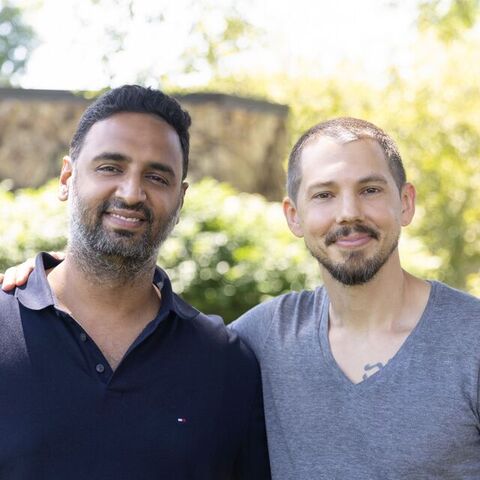
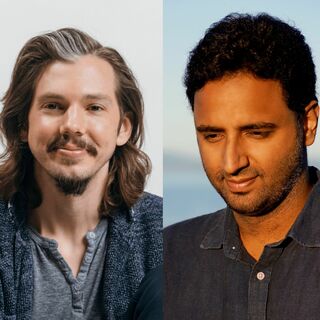
I'm Charles Freely,
And I'm here with my good friend Sakib Rizvi.
If we had to be categorized,
We're both investigators of consciousness,
With training backgrounds and professional experience in the world of psychological and spiritual healing.
Each of these sessions is an adventure of the present moment.
Sakib and I begin each session by sitting in silence for one minute,
And then simply see what arises now.
We have no plan,
No prepared material or concepts to cover,
But are placing our trust in the wisdom of this right now experience.
This is an expression of our shared philosophy of healing.
If we can only let go of our desire for the present moment to be a certain way,
Other than it is,
Then we can find the unexpected answers of what is actually now.
So if you will join us,
We will begin with one minute of silence,
And you can use this minute in whatever way you like,
With your eyes closed,
Sitting,
Eyes open,
Standing,
Or walking or driving in your car.
We only ask that you return to what is actually happening right now in this moment,
To reset the momentum of the day,
And open up to just this.
After this minute,
Sakib and I will explore whatever arises between us.
We identify themes of our exploration as we go,
And then Sakib finishes with a short guided meditation based on the themes that arise in the session.
And now let's enter one minute of silence together as we explore what is now really.
You'll hear a bell to start and end this one minute of your day.
So Charles,
How was that one minute for you?
Just a challenging question.
Something that I'm noticing or did notice,
Well,
Okay,
A couple things.
So the first one was the final thing I noticed,
Which was when the bell rang.
It was almost like a,
Like you're on sort of thing.
Like I was in a state of very kind of openness and relaxedness.
And then the bell was almost like I felt like I was at school or something like,
Like,
Now time to go to present or something like that.
That was one thing,
Just in a short lived sensation,
But also in the moment of feeling it,
I noticed myself have a smile on my face.
It was just kind of funny to notice that feeling.
I was also noticing this,
Like the sense of you,
Even though my eyes are closed or were closed.
I was noticing,
You know,
Here as we sit here,
Even though we're via video,
We're very close and there's something very intimate about it.
But then when your eyes are closed,
That person has in some way vanished from your experience.
But really you're still just as close with that person.
And so I was kind of just noticing your continued presence in exactly the same way,
Even though my eyes were closed.
Those and then one other thing I was noticing that I feel like kind of silly today,
Which I like.
I like the feeling of silliness.
And to me,
It's actually quite an important feeling in life and in maybe spirituality.
So a couple of things.
I think I heard a friend of mine say one time,
His name's Timmy,
That I really liked.
He was presenting something to me and he was like,
Okay,
I'm going to put a lot out in front of you right now and then you can double click on whatever you like and then we'll get like a dropdown menu from there,
Which I like that little turn of phrase.
So I just put a lot out and maybe we could go in any of those directions.
But I also want to know what your experience was like or is like.
So my,
I think there were two things that were arising for me.
One was,
So when,
You know,
Usually what I would do is when the bell rings,
I would close my eyes,
But this time I decided to keep my eyes open.
And this made me question that what meditation is really.
So the question was that does meditation only happen when we close our eyes or,
You know,
It can also happen when our eyes are open,
Then,
You know,
They were a chain of thoughts that,
Okay,
We spend our most of the time during the day,
You know,
With our eyes open and how can we carry that meditation into the day?
Because usually meditation is associated with closing the eyes,
You know,
For 20 minutes and doing that practice in the morning.
However,
How do we,
How can we stay,
How can we reap the same benefit with our eyes open during the day?
So that was one question that was rising because I was,
I was able to listen to your clock ticking.
The question,
You know,
There was another question and this question I think was about time and this question about was the title of our podcast,
What is now?
And you know,
This time in a very literal sense that what is now,
What is now,
What do you mean by this thing now?
And you know,
Is what,
What,
What time is,
Is there,
Is there even a thing like now or is it that,
You know,
Now is everything,
Now is all time.
How do we define now?
How do we segregate now from not now?
So all these questions,
I think these were the two things that I think.
I'm curious to know when you said the term Siri,
You know,
You were saying something about Siri.
So what,
What does that mean to you?
What is that Siri-ness?
And I'll go into that and I just,
I was,
It was interesting to me for you to mention that your eyes were open.
Cause I mean,
I mean,
Maybe it had nothing to do with it at all,
But I wonder if that in some way played into my experience of your presence and my awareness of that.
And I also think that is a really interesting topic,
The notion of eyes closed versus eyes open meditation.
And I'm not sure if you're aware,
But in these sessions before I've,
I've done both,
I've had my eyes open sometimes and eyes closed.
And so that would be maybe an interesting topic to come back to.
Cause I have some particular experiences with that too,
But silly.
It's a feeling that is,
I guess,
Just very light.
And even that,
You know,
There,
That's sort of a crude description that can be applied to a lot of different things,
A lightness.
So maybe there's,
Maybe there's a hint of irreverence too,
Like a,
I don't care kind of thing in a,
But in a playful way.
Like I could say anything or do anything and doesn't really matter.
And it's almost like a sense of a little kid that is there's some like teacher figure where there's some rules and that are being imposed on,
On the kid and the kid being like,
That's stupid.
You know,
It doesn't,
I don't care about it really.
But not in a way that is adversarial,
But that is just kind of like fun.
And that's,
I really liked that feeling.
And it's,
It's been something that I've actually put some thought into in terms of cultivating it and,
And how that,
That silliness or however you might describe it,
It may be like,
I've actually,
I was just having a conversation with a friend about this,
My friend Raj,
About seriousness versus silliness.
And we use the term fatuity versus solemnity.
And like,
So fatuous is just like,
There's no rhyme or reason to it.
You're just like doing some weird thing.
And solemn is like this very serious way of being or communicating.
But I wonder if silliness is maybe a more pure expression of truth in a way than any sort of serious conversation could be.
And of course there are a variety of different ways of being silly,
But to me silliness kind of maybe there's some implication of like uncontrived-ness.
Like I'm just,
I might make a sound or like do a silly voice or say a weird thing that I don't mean.
So it isn't,
It isn't like conceptually true,
But there's some truth to it in that it's just bursting out of me and it's fun and it makes me laugh and it might make someone else laugh too.
And I can't make a laugh happen.
It's just a feeling and that it just occurs.
What I can see right now in you as a child wanting to express itself,
Whatever comes in the now.
Right.
And how children just play and they're constantly playing and with whatever they interact with can be a game.
And it seems like without any rules or without there being a winner per se,
I wonder if that's something that a child develops at a certain point where games become something to be won.
And then I feel bad if I lose and I feel bad if you win.
But there's this whole realm of playing that's just silly.
Seems like a really pure thing to me.
I don't know.
What do you think about that?
No,
It's wonderful.
And I think that is what our true nature is.
What we develop is I think what's called in psychology is the persona that we develop and we present with the world and the masks that we have.
So beyond that is our true nature which wants to play,
Which wants to just do so many things.
So there are times I would just want to maybe shout or crack a joke.
I would want to just laugh,
Have that weird laugh.
But because we are taught to be in a certain way in the society,
So I think we repress all those feelings that arise in the moment.
This makes me think that a child is actually very much present in the now.
So if you ask a child what is now and if a child is there in our podcast,
I think that would be a lot of better representation of what is now rather than what we are doing here.
Right.
They would answer maybe with a really true expression of what is now and the question probably wouldn't make any sense to them because it doesn't make any sense.
It's an absurd question.
And that's what's fun about it too because we're sort of pointing at the absurdity of this concept of now because it is not really a concept.
It can't be.
You can't actually grasp it in any way.
So a child might respond by doing kind of like what you said,
Like shouting or dancing or something like that.
But then that might not make a lot of sense through our adult conceptual lenses that we develop.
Yeah.
I'm wondering how,
How would the world look like if you all start doing that,
You know,
Playing around like a child.
If everybody starts doing that,
You know,
I'm just trying to imagine that.
I think it will be very pure sense that just doing whatever you feel like rather than being in a certain way,
You know,
The rules that you were talking about.
I wonder if you ever watched The Office.
No.
It just made me think of something where the boss,
I don't know if you're familiar with Steve Carell,
An actor who's pretty funny in my opinion,
But he talks about,
He's saying something about how it'd be so great if children ruled the world,
You know,
If they were our presidents.
And then he quickly realizes,
But then it would,
It would be anarchy and it would actually be awful.
And so I wonder if we need at the same time,
Well,
I wonder if we need a certain element of structure,
Organization,
And this conceptual like rule-based way of thinking,
I wonder if we need that or if we just allowed for the playfulness to be,
To occur however it most naturally does,
If that would lead to some sort of beautiful harmonious way of existing.
Yeah.
Yeah.
Because I think the other model in which we are going by the rules doesn't seem to be working.
I think the word that we have created,
Yeah,
I'm just thinking about now,
You know,
Now that you have mentioned,
I can,
I can see the American president being a child,
Just playing around and giving this order to everyone to play,
Just playing,
To just enjoy.
Yeah,
It's interesting,
It's an interesting concept.
It also reminds me of a workshop that I attended back in India.
This was an Osho workshop on,
Based on Osho's concepts.
And in this workshop Osho had this idea of giving up the masks and giving up the personality that we develop to come to our childlike nature.
And he did certain practices for that.
And what he would do is one of the practices was gibberish.
So you know,
Make sounds,
Any sound that comes,
You feel like making,
And this is how you let go of the accent,
The persona that you have developed.
And you also make faces,
You know,
Weird faces.
And that is how you let go of the masks.
So if we keep doing this,
Doing this through whatever arises in the present moment,
We get to that childlike nature.
And by the end of the workshop,
Trust me,
It was such a beautiful,
You know,
So the workshop began on a very serious note,
Everybody was so organized,
They were standing in a circle,
They were listening very attentively.
But by the end of the workshop,
Everybody was laughing,
Playing around,
Just doing whatever they felt like doing.
And it was beautiful thing to witness.
Maybe we can try that something with what is now.
Yeah.
What was that like for you?
Oh,
It was beautiful.
It was beautiful because it,
It helped me to share my own persona,
Share my own,
You know,
The mask that I have created,
And come realize my own true nature.
And it was,
It was shocking at that time because I realized that how much I'm pretending,
How much I'm pretending in my true nature,
There are so many things that I desire from within,
But I'm every moment,
Every single moment,
I'm replacing those things.
What's that like for you now?
For now,
Like there is a yearning.
I don't know if I'm still waiting for that environment,
You know,
To do those things.
But I know what I do is usually when,
When I'm alone,
Maybe I'm still not,
You know,
Able to,
I'm not able to do that with other people.
But when I'm alone,
I will do this.
So I would practice gibberish,
I would just dance around,
Do wild things.
But I think the better way to do it would be just be that way all the time.
It makes me think of some of my,
Well,
Maybe not some,
I'm just thinking of one professor of mine in my PhD program.
And I,
I loved them.
I was so inspired by them.
And I'm,
I'm thinking now it's because,
And they probably rubbed a lot of people in a negative way.
But they just seemed so unabashedly themselves,
And they were so,
Like,
Bizarre,
And like,
Just the way they said things or the way they express things or whatever,
It just seemed like they had at some point moved into the space of being like what you were just describing all the time,
No matter what.
But then it also seemed to me like that made them,
There could be no replication of this guy.
He had his very own authentic thing.
And I also feel like it made him this really cool professor,
Because he could teach in a way that only he could.
But it meant that he was owning every weird thing about him.
But then through owning it,
To me,
At least it seemed cool.
I wonder if that also means,
Inherently,
If you are to do that,
It will be really awesome to some degree,
But then you're also inviting a fair amount of,
Like,
Negative reaction on the other end.
So then we maybe stay in this,
In this space that feels safe,
But is not very authentic,
But also blocks us from potentially receiving the inevitable,
Like,
Rejection or criticism from the people that don't like what we have to offer when we're just totally unabashed and authentic.
Do you think that is fear of judgment?
Like the idea that,
You know,
What someone else might think,
Or is it more of fear of,
You know,
Abandonment,
Which is,
You know,
Getting abandoned by the society in general?
Yep,
Probably a combination of both,
Because I guess judgment might be a representation of someone that is going to reject you or leave you or whatever it might be.
Them criticizing you is,
Might be indicative of some deeper fear of being alone or of being ugly or weak or whatever those things might be.
Yeah,
This makes me also think of people who,
I don't know,
You know,
What do you call these people who maybe,
You know,
Some of the society calls it people who lose their mind,
You know,
From a psychology background,
I think you would know that better.
Is it that the people who lose their mind,
Do they get to their childlike nature or,
You know,
Are they actually truly expressing themselves and maybe we,
This organized society,
We are,
Because most of us,
You know,
Are following the rules,
We consider ourselves as normal and those people as abnormal.
They are the ones who are expressing their true self and we are the ones who have a lot of fears due to which we have developed our personal.
Yeah.
I've thought about that and I feel similar to what you were just describing.
I mean,
It sounds like what you're in terms of like psychological terms,
The notion of psychosis or someone who has lost touch with reality in some way,
But maybe they're in a state of like hyper reality and what's happening is they just simply cannot conform to the structures that have been created that maybe aren't real and are just are constructs because like,
You know,
Sanity is defined via whatever is the most common thing.
So then someone might be psychotic if they are not subscribing at all or maybe they don't have the option.
I wonder if that's maybe two ways of looking at that experience too,
Where maybe you have someone on one side who's like quote unquote transcendent or enlightened or whatever it might be and it's almost like they're actively choosing to not abide by this and they still find a way of kind of existing in the world.
And then on the other side,
I wonder if there's an experience of what you might call psychosis where there's just simply,
They just are not able to conform,
Which might also be a heightened sense of reality or enlightened way of being to a certain extent,
Because it's more real.
But they just maybe haven't developed this ability to exist in society.
So you might find them living on the street or wherever you might find someone or like in a mental hospital or something like that.
So you what you're saying is you might find it like in person on the street,
You know,
And what it means is.
.
.
Sure,
But maybe the difference is between someone that is quote unquote enlightened is that they have this other awareness of the game,
Of the constructs,
And they can see it and they can choose whether or not to participate in it in this very kind of comfortable way versus someone that just simply is outside of it and cannot participate in it.
But that makes me wonder that the person who is,
You know,
Maybe not conforming with the society and,
You know,
Maybe not also not choosing to behave in that manner,
Which is very childish.
Does that person have fears and that is where they're not able to do it?
And if they have fears,
Are they enlightened?
That's a good question.
Then maybe I think the person who is just being and expressing that way,
Whom you know,
The person is seen as a normal,
Maybe that is that person is,
I don't know if there is a comparative here notion here,
But maybe that person is more enlightened person who has those fears of not expressing.
Like there may be even more courageous.
Yeah,
Yeah.
Yeah,
This makes me not to rethink about this notion of normality and looking at the person or maybe if I go on the street and if I see someone just doing what they like to do,
Maybe now I will see them in a different light after this conversation.
Have I talked about that?
I don't know what you call it.
Like it's a metaphor to a certain extent,
But it's this visual kind of paradigm of psychosis and enlightenment.
And it's the beach and the ocean.
Have I mentioned this before?
No,
I don't think so.
So you could look at life as existing like on this beach and then you have the ocean here on the shore of the beach and here the vast majority of society live on the beach and they're there,
They're comfortable there,
They see other people there,
They have their magazines or maybe their phone or whatever you have to just enjoy sitting on the beach,
Relaxing,
Taking it all in.
And they might every once in a while go swim in the ocean for a little bit or just dip their toes in the ocean.
But they're not going to go out into the ocean because that's dangerous.
But they might go in there every once in a while,
But they come back to the beach and that's where they live.
And then there's the potential for two ways of moving into the ocean and going all the way into it and exploring kind of the way out into the ocean.
And one would be learning to swim and like developing the ability to swim.
And even though it might be scary,
Like you have the capacity to swim in the water.
And so like,
Maybe unlearning not to swim.
Yeah.
Right.
So unlearning maybe the fear that is associated with swimming because other people might swim but there's something different about like not being afraid of going all the way out like into the darkness.
And so that would be one way and then another is just to go out and get caught and not know how to swim at all and then flounder and drown in the water.
And I think it was Aldous Huxley who wrote about that paradigm.
I'm thinking that it was him where I read that.
And so the notion being one is potentially like an experience of what you might call psychosis in the floundering in the water and not knowing how to swim in this water of maybe hyper reality.
And then the other being learning how to swim and that could be maybe like a spiritual practice or something like that where you're kind of gradually moving into what consciousness is or what now is or whatever you might call it and developing the ability to swim in those waters,
Which I think is kind of a cool notion.
That actually brings me to the fear of death because if I take this analogy a bit more seriously then what I see is the person who still wants to swim in the water,
They still have that idea to stay on the surface.
But maybe the person who is drowning,
That person might experience something which is beyond even the ocean.
So this brings me to the notion of death that maybe because we fear death,
Maybe there is this sense of survival that we have on this planet,
We cling on to that idea of being in a certain way and fitting with the society.
However,
This person who has totally,
If we call this person who has totally lost it in that sense,
Then maybe they experience something greater than the person who is still wanting to be in the society because they are embodying that expression.
Even if we think about death in the literal sense then maybe and this also brings me to the idea of the people who have had near-death experiences,
Experiencing maybe something more than what we in this physical form,
In this limited life have experienced.
So I'm not sure even about this idea of wanting to swim in the ocean.
It's really interesting.
And then what the definition of greater means,
Potentially by letting go of swimming and just letting the ocean swallow you,
Something potentially greater being there,
But what does that greater mean?
And kind of like what I'm hearing you describe there is potentially something beyond the human experience.
And this is so fitting.
Like we are using this perfect analogy here because the person drowning in the ocean,
You know,
If we consider,
You know,
What the spiritual mistakes are,
Thought about that is like the person merging with the ocean,
The individual consciousness merging with the ocean of consciousness.
So it seems very fitting to me.
Yeah.
Have you heard that?
I think it's,
I heard it from Thich Nhat Hanh,
The line about enlightenment,
That enlightenment is when a wave realizes it is the ocean.
Can you repeat that?
Enlightenment is when a wave realizes it is the ocean.
Which I'm seeing that kind of like what you're describing,
It's like the person dissolves into they merge with the water and there no longer is someone to be even swimming.
Yeah.
Yeah,
I wonder and you know,
I'll be very honest today that I had this intention once,
I'm not sure if I still have that,
To experience near-death experience.
I was making that intention somewhere in my mind and trying to overcome this fear of death because as I would listen from so many experiences,
Which I read,
Most of the experiences would say that it was the blissful experience.
You know,
The pain is kind of there in the physical body at one point of time,
But after that it is a blissful experience.
So maybe we fear that pain and if we overcome that pain,
Go beyond that,
Then there might be something greater to experience which in human form we are not able to experience because of our fear of death.
I guess I would see like the physical pain potentially is a like a last desperate effort of the human form to sort of keep quote unquote you from experiencing that and if you can only transcend through it,
Then this larger you can feel it,
But maybe the body is sort of seeing you quote unquote transcending the body and it's sending you all of these signals to say go back,
You know,
Don't keep going here,
But potentially there is a way of moving through that and opening up to something different.
Yeah,
Yeah,
I think a good analogy there would be,
You know,
The idea of adventure sports.
So there is this fear that we have,
But if we move beyond that fear,
Then we experience beauty,
You know,
Maybe whatever that adventure sport is.
I think it fits with any example in life of that fear of the struggle that we go through and you know,
I have this sense that maybe death is similar in that mind and that we fear it so much that we don't experience or maybe the true nature that we have just because of this fear.
If we can somehow let go of that and you know,
This is something really blasphemous that I will be saying right now,
But you know,
Maybe make this an experience,
This near-death experience,
Make it an actual experience for people to experience.
It makes me think of another line.
I'll see if I can remember it.
I think it's from a guy in the realm of existentialism named Otto Rank,
The psychologist within existentialism,
I think,
But it was something like,
We reject the loan of life in order to avoid paying the debt of death.
It's just that line just came into my mind that we reject the loan of life in order to avoid paying the debt of death.
Maybe to accept the loan is to really intensely feel the pain of maybe death or,
Well,
I guess in this,
Just thinking that death and real life are intimately attached to one another.
So to really be alive is to really feel the loss and pain of death because they're one and the same.
That's interesting,
Actually.
And it again makes me think of the notion that,
You know,
Is death something to be feared the way the human society fears it?
Because maybe we are limiting our experience of existence by fearing death.
Have you read the book,
The Denial of Death?
No,
I haven't.
If I'm remembering correctly,
I think this kind of central thesis from the book was that essentially every fear is an extension of the ultimate fear of death,
Which maybe is really the fear of the unknown.
Because it seems maybe death is scary because of what it represents.
It represents something totally beyond my ability to even comprehend,
Which is like the scariest stuff in life,
I think,
Are because they represent something that is unknown.
You don't know what might happen.
It's like a scary monster in a movie is the scariest because you only have a little glimpse of it,
Or you can only kind of imagine what it might be like,
But you don't actually see it.
So it's like the specter sort of figure.
Do you watch Star Trek?
No.
Okay,
So there is this scene and something similar to what you are saying,
There is a scene in Star Trek Discovery and there is this person from a particular species,
This alien species.
And this is the,
This person is the only person surviving and the mother of this person,
This extraterrestrial,
She created a virtual world for her child.
And this person is living in this virtual world within the physical world.
And this person is so scared to go out of that virtual world because her mother deliberately planted that idea that the world outside is very scary.
The world outside is very scary so that the child doesn't harm itself because it was the only surviving child of the species.
So that the child just stays in that comfort zone of the virtual world.
And as soon as someone mentions to this child,
You know,
There's a world outside,
The child would get scared and would just go into its own shell.
So maybe we are like that,
You know,
Maybe we are like that,
That we are so scared of the world beyond that we are not able to see the reality.
We are not able,
We are just in our shell,
In our comfort zone.
It's a pretty interesting idea.
The way we have been thinking about it,
This might have been limiting our experience.
I wonder how that continues to play out even with us in these meetings of,
I don't even know how to fully articulate it,
But just the notion of me and what is in my comfort zone and what is outside of my comfort zone and how I might be maybe steering the conversation in ways that are supporting or protecting me in a way.
Also just noticing this may or may not be related,
But how I felt fairly forgetful of the things that I have said.
And I could stop and reflect and probably go back and find them.
But there is something kind of cool about how,
And this could feel like a total shift,
So tell me if you think so,
But how these words,
All this communication and interaction,
I'm just now reflecting on a starting with silliness,
Which began in my sharing about my meditation,
Or not a meditation necessarily,
Just sitting in silence.
And that it somehow has evolved and we've found ourselves here and we've kind of touched on all these different topics without at least on my end any intention.
I don't sense that from you either,
That it's just sort of,
There's a ping pong effect and then it just develops and grows.
And I don't feel like the author of it really.
It's just something,
I mean,
There are times I think I feel like more,
Like I'm sort of pushing something out.
And then there are times where something's happening where in,
For example,
Right now it feels like whatever I'm saying is just sort of manifesting and I'm not so much in control of it.
It's just like occurring now in the moment with you.
And it feels really alive and kind of outside of the comfort zone to a certain degree.
What I think we've maybe been doing here is familiarizing ourselves with this interpersonal discomfort zone and becoming more and more just like open to playing in this interpersonal area.
Yeah,
Yeah,
No,
Totally.
And isn't that beautiful to experience it that way.
If the conversation is more without an author that we are in this podcast,
If it is just flowing and I don't know where that is coming from.
And it's very beautiful because then we are learning something new here rather than repeating what you already know in our minds.
Then maybe there is a download from some higher realm,
Whatever that is,
Rather than the download from our own minds.
Yeah.
Maybe it's like,
It could be sort of a potentially pure answer to the question of what is now and now is just sort of happening and we're two vessels for this thing that is occurring between us.
But also at the same time,
We're not really the authors or the creators of this.
It's just kind of happening through two channels that are sort of cycling together.
Right.
This reminded me just of a video that I watched some time ago and I was listening to YouTube and the way he's,
I realized that there's a certain charisma to the way he speaks because he is totally in the now.
He's like inquiring in that very moment.
I was inspired for him.
So he,
And he would urge his followers to inquire in the moment rather than listen to inquire in the moment rather than writing down.
There was this woman who was taking down notes and he told to that woman that,
You know,
Don't do that disservice to yourself,
You know,
Inquire,
Be in the moment,
Inquire for yourself.
What you are writing down is my knowledge given to you,
My understanding given to you.
It's not your route.
So I think that's a beautiful way what I feel that,
And personally what I feel that these podcasts are really helping me to get into that state of just being and letting the information flow rather than controlling it and repeating what I already know.
Me too.
It's like a dojo.
I might have said that before.
It's like a dojo for that.
Or it feels like we're kind of sparring partners in a way of in this realm,
Which is a really cool,
You know,
Personally in terms of personal,
Whatever you want to call it,
Growth or maybe de-growth or,
You know,
Removing whatever stuff has been piled on top of the deepest me and continues to be piled on top of this is maybe an interpersonal experience of attempting to shed that stuff and just play in an open way.
Yeah I think,
And that's a really cool notion too in terms of Krishnamurti and,
You know,
Having these big talks or something where there's all this pressure on you to provide a service to a certain extent and then you have the total confidence of just arriving there and sharing whatever feels,
Rises in the moment.
Yeah,
That's where he takes a lot of pause.
You know,
You will notice in his speech that he is half of the time he is just contemplating and then,
You know,
Then he will speak.
I think we can clearly see that difference between a lot of speakers that who is maybe repeating the knowledge and who is in the moment in the now and,
You know,
Letting that flow with the audience.
Well,
I was wondering maybe if you're comfortable with this or I'll see what you think about it to maybe finish this session,
Which we typically do is like a guided practice by you,
That's more still and silent.
I wondered if you wanted to lead maybe me and potentially the listener through something related to that,
Like what you were describing with Osho with those trainings,
Like the element of silliness or,
You know,
I feel a little bit nervous.
I don't know what that would look like.
But what do you think about that?
Yeah,
Sure.
We can do that.
We can,
We can do.
Let's try.
I think that's where it comes up.
So for this practice,
I think then there are no rules.
And,
You know,
Whatever you feel like whatever the listener who is listening wants to sit in any posture,
You want to lie down,
Whatever that is for you,
Whatever you feel like doing.
This meditation is like an open meditation in which you just do whatever you feel like.
And maybe just a bit of instruction is that maybe you can bring your awareness to your face and just make whatever faces you want to make,
You know,
Whatever comes up for you,
Whatever we always have this idea of presenting our face to the audience,
To people in the world in a certain way,
But maybe you want to make faces,
Maybe you just want to make weird faces.
So let's do that.
And the listener who is listening,
You can do that practice with yourself.
That's great.
I wish the listener could see.
That's fun.
It made it connected me to what I might feel like if I'm just on my own.
I just had this sort of memory or just thought of,
Like me in the morning,
When I'm going into the bathroom or like going to brush my teeth or something or go to shower,
You know,
There's no one to judge me whatsoever.
And I might do something really silly or like do a dance move or something like that,
You know,
And so it's kind of cool to do that,
Though I still do notice some element of self-consciousness with you.
But that's a really cool exercise.
Yeah,
I think if we do this often,
Then maybe we can,
You know,
Really release that fear of judgment and just be and,
You know,
Do whatever we feel like,
You know,
Maybe then someone will take us to the mental asylum really,
Very soon.
Great.
It was a great time today.
I hope the listener enjoyed the session and I totally enjoyed it.
Yeah,
Me too.
And I feel I still feel silly and it's cool to kind of play in that realm a little bit with you and cultivate it and I feel motivated to express my silliness for the rest of the day.
Yeah,
Yeah,
Even I do.
Yeah,
We have to make more faces in the washroom now.
Sounds good.
All right,
Well,
Always awesome spending time with you and look forward to seeing you soon.
See you soon.
Take care.
Thank you for joining us in the What Is Now?
Experience.
We hope that you liked the episode.
If there were any insights or ideas arising for you as you were listening to our conversation,
Then you can share those ideas through your comments.
We would love to know.
Stay tuned for the next episode.
Namaste.