Unicorns have been prancing in our imagination for over a millennia.
We can find unicorns from pop culture in TV and movies,
And there are historical people who have claimed to have seen a unicorn One of them was Alexander the Great himself,
Who even said that he had written one.
The stories of unicorns are similar to stories told about mermaids and fairies and dragons.
In that sense,
The stories about unicorns,
Or unicorn-like creatures,
Can be found from all over the world,
And they are being told in different cultures.
Unicorns are part of the world of magic.
People have believed in magic since the dawn of time.
There are a couple of different versions of how the unicorn came to be.
One of the first unicorn legends comes from ancient Persia.
In this legend.
Unicorn was born from a cloud.
This first board was called Essilam.
Aztlán was a lightbearer who could drive away darkness with its spiraling horn that shined light.
Asala was able to spear rocks and create water into a desert.
And grow plants and trees.
He created a beautiful garden.
And then he bred life into a man to live in the garden,
And from that day forward.
The man and the unicorn were bound to one another.
La la la la.
Because a big thing may come in the world and the last thing is to make you accept it.
It's you.
To watch this movie.
We can find a great deal Abrahamic symbolism from this myth.
The man represents mankind.
The garden is the earth and Esselam is God.
Unicorn was a very common symbol within Christianity in the old days as well And this is a Persian myth.
We can see that,
Since very early days of Abrahamic religions,
The unicorns have been used as symbols of purity when we think about creatures that we now think as mythical.
A lot of times,
There is a seed of truth behind these myths.
Did dragons existed?
Not exactly,
But when we look at the bones of dinosaurs,
It is easy to see that during the time when people did not know about the dinosaurs,
Finding these bones of a giant lizard only could mean that dragons were real.
In the medieval legend of the unicorn,
The unicorn story is intertwined with the maiden.
There was a king who lived in a beautiful castle with his daughter.
The princess was a kind and a pretty girl.
And she had a pure heart.
One sunny day she decided to go for a walk and pick white flowers.
She heard birds singing and saw that a rainbow colored all the flowers underneath her feet.
When she walked deeper into the woods,
The colors disappeared and the birdsong ceased.
The grass was parched.
The girl got scared and her hair got tangled into the branches.
When the sun set,
The vines began to tangle the girls down.
And she was hopelessly lost.
Don't have to go without them in your team.
I'm sick of feeling high.
I'll have a green miffle at least if I choose to visually do it.
I meant that much.
It's not funny.
I don't really come into your room.
Girl Walk in the Heart of the Forest.
She found herself lying on a clearing.
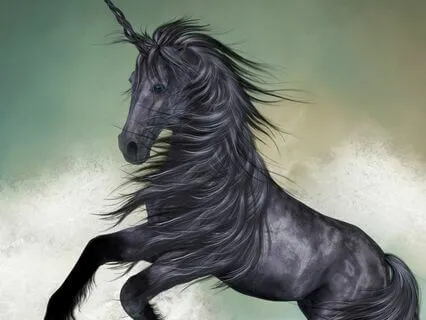
And then she spotted a beautiful creature.
For watching.
Aaaaaaaaaaaaaaaaaaaaaaaaaaaaaaaaaa It shined so bright,
It was magnificent.
It resembled a small horse or a deer,
But with a single spiral horn in the middle of its forehead.
Unicorn itself was beautiful and magnificent.
But the magic of the unicorn lies in the corn.
Which was believed to be able to heal sicknesses and erase poison from drinks.
To get its horns,
Men had hunted unicorns for centuries,
But never managed to capture it.
The radiant white horse trotted towards the princess.
Unicorn recognized another pure soul and kneeled beside her.
The princess,
No longer afraid,
Climbed to the horse's back and they galloped through the dark woods into the castle.
When they arrived to the palace,
The king's men had their eyes on the unicorn.
Soldiers grabbed their spears,
Ready to attack.
At last they were able to capture the beast,
They thought,
And they surrounded the unicorn and the princess.
No.
No!
Cried the princess,
Wrapping her arms around the unicorn's neck.
Then the king arrived,
Finding her daughter crying,
Trying to save the unicorn.
Father,
You cannot kill it,
For he saved my life in the woods.
King ordered his men to lower down their weapons and waved them away.
He hugged his daughter and thanked the unicorn for saving her.
When looking to the unicorn's bright blue eyes,
The king realized that this was the most pure and innocent creature in the world.
King ordered that no one should ever hunt the unicorn.
He opened the gate and the unicorn was sent free.
And only those with pure hearts were able to see it.
This medieval legend of the unicorn is based on the unicorn's history in the Christian iconography and storytelling.
During the first centuries of Christianity.
As the new religion became more popular in Middle East and Europe.
The story of the unicorn became intertwined with the story of Christ.
Early Christians raided an allegory where a unicorn became a symbol of Jesus because of its purity.
To read the story,
Unicorn is tamed by an innocent maiden,
The Princess.
Christianity,
Jesus was born from a virgin.
The unicorn's magical horn,
With its power to erase poisons and heal,
Became a symbol of Christ redeeming the sins of mankind.
The hunt of the unicorn symbolizes the passion of Christ.
During Renaissance and medieval periods,
The hunt at captivation of unicorn became a very common scene.
Whippy Davis trees,
Mosaics,
Van Nutter,
Religious artifacts.
Like in the Persian story about the unicorn that's alarmed.
In Christianity,
There are also stories about the unicorn in the Garden of Eden.
According to one story,
Adam was given the honor to name all animals,
And the first animal he named was the unicorn.
And some stories say that when Adam and Eve were banished from Eden the only animal who agreed to accompany them.
It was the unicorn.
Saint Hildegard von Bingen.
Wrote that the innocent unicorn was allowed to travel into the paradise once in every century.
There it would drink the sacred waters and eat the whole vegetables and fruits that only grew in that sacred wheel and thus renewed its strength.
Unicorn appears quite a few times in the Bible.
In King James's version of the text.
Book of Daniel.
Daniel has a vision of a unicorn-like animal.
Quote.
And as I was considering,
Behold,
A he-goat came from the west.
On the face of the whole earth.
A duck snuck the ground,
And the goat had a notable horn between his eyes.
And here are some other mentions of the unicorn in the Bible.
God brought them out of Egypt.
He had,
As it were,
The strength of a unicorn.
Deuteronomy 33.
17 His glory is like the firstling of his bullock,
And his horns are like the horns of unicorns.
With them he shall push the people together to the ends of the earth.
Psalms 22,
21.
Save me from the lion's mouth,
For two hast heard me from the hearts of unicorns.
Sobs,
92,
10.
But my horn shall too exult like the horn of the unicorn.
I shall be anointed with fresh oil.
I saw ya!
34-7.
And the unicorns shall come down with them,
And the bullocks with their bulls,
And their land shall be soaked with blood,
And their dust made fat with fatness.
Perhaps not all text in the Old Testament describes the unicorn.
Another animal could be a Babylonian Talmud.
Now it's tint.
Talmud was a multi-colored desert animal with a one single horn.
Mentions of the unicorns in the bible date back to the period between 300 and 200 bc This was the time when the Semitic scholars in Alexandria,
Egypt,
Took a great task to translate old Jewish texts into Greek.
This text mention then which is Hebrew and refers to a large old beast Scholars translated this to Monogeros,
Which is Greek and means one horn.
It is likely that these old interpretations were influenced by the earlier unicorn legends that existed hundreds and perhaps thousands of years before Christ.
Like the unicorn,
Re'en was free and attainable.
It was also graceful and strong,
And had lots of stories and legends connected to it.
The Alexandrians produced a work of text known as Septuon,
Which served as an early source for the Old Testament.
This work was reproduced several times during the following centuries,
And that is when the unicorn existed in the pages of the Bible.
One of the explanations why unicorns no longer exist is that it did not want to enter to Noah's Ark.
Poit was too independent and wanted to continue its life frolicking in the woods.
Another tale tells that Noah could not take both the lion and the unicorn because these longtime enemies would just keep on fighting,
Endangering everyone else.
And Noah chose the lion.
Some versions of the story say that the unicorn swam beside the ark for 40 days and 40 nights,
But never came on board.
According to a Jewish fairy tale,
The Giant of the Flood by Aunt Meryl B.
Unicorn did survive.
In this version,
Noah wants to save the unicorn from the destruction.
But he cannot find one.
A giant named Rok,
Who wants Nowak to save him,
A spell,
Fetches the unicorn.
But the unicorn is so enormous,
It cannot fit into the Ark.
So the unicorn can spin alongside the ship.
With the child on its back.
They stream forty days and nights until the waters recede and the ark comes to rest at the top of the mountain Ararat.
And from that day onward Bolt becomes Noah's most loyal servant.
I know it,
And I had to.
Some purists believe that a spirit animal cannot be a magical animal.
I don't personally agree with that.
And if I had to pick a magical animal to be my spirit animal.
.
.
I might pick the unicorn.
When we think about horses and the symbolism of horses,
Horses are connected to loyalty.
Bravery and family,
Speediness,
Strength and beauty.
All of these elements can be associated with the unicorn.
But beside them,
There are elements like imagination,
Magic,
Purity and enchantment,
And faith.
The spiritual meaning of the unicorn is rooted in magic,
Myths and legends.
The unicorn reminds us of our essence,
Our purpose and our inner strength.
The unicorn helps you to realize your dreams and your potential and bring your dreams to reality.
Unicorns can also work as a guide towards unconditional love.
Like an angel.
The unicorn as a spirit animal enhances our dreams from the imagination to become reality.
They can work as guides through tough times.
If a unicorn shows itself to you.
Perhaps in a dream.
Miracles can truly happen.
Unicorns remind you not to give up on your dreams.
The difficult time that you are going through is only temporary,
And better times are coming on your way.
As a spirit animal,
Unicorn brings certain calmness,
Serenity and self-awareness.
Unicorns can bring a state of wholeness.
The people who like meditating can imagine a unicorn running or walking in nature over the hills,
The seas and the woodlands.
The unicorns create magic around you.
They bring that little bit of magic to every day.
Encouraging joy and happiness.
Finding time to play and remember childhood.
Unicorn as a spirit animal will bring you closer to the world of spirits and angels and other worlds.
Unicode does not judge.
Unicorn encourages you to let go of the thoughts that drag your mind.
One of the unicorn's powers is healing,
And it is an excellent totem animal for healers,
Those who wish to heal others,
And those who are in the process of healing.
The loving kindness of a unicorn brings comfort and protection.
The unicorn as a spirit animal represents individuality.
Unicorns are often associated with the LGBTQ community.
For this very reason.
Unicorn encourages you to be who you are,
No matter your accent,
Your orientation,
Your skin color or your background.
Unicorn encourages you to be yourself and to release your inner child and open your heart to the world of enchantment and wonders.
It is not only the word of imagination that is magical.
There is enchantment in your own heart.
Unicorns inspire us to discover our inner magic and our strength.
Thank you for watching!
Unicorns reached the height of their popularity in the medieval ages,
An era that lasted almost thousand years,
From the fall of Rome to the Renaissance era in the 14th century.
This time period is also referred as the Dark Ages.
During these hopeless times,
An idea of a pure creature that was a sign of good luck was more than welcome.
Medieval times are often seen as a mysterious time period,
Filled with magic and superstitions.
A great deal of religious conflicts and curiosity towards the unknown.
Adventurers began to explore the great unknown.
Travelers went on to create exhibitions to China,
Arabia and Africa.
And the new world,
And they returned filled with new stories about strange and unusual creatures and other cultures.
Legends and fables from numerous countries intertwined with local folklore and fairy tales.
During medieval times,
People were fascinated about strange creatures and unknown animals.
The Old Testament mentioned animals in a way that gave them spiritual meanings.
Back in the days,
Christians believed that the God intended the animals to teach humans and be their guides.
We can find the following passage from King James's version of the Bible.
But ask now the beast,
And they shall thiep steep.
And the falls of the air,
Until Delphi O speak to the earth,
And it shall teach thee.
And the fishes of the sea shall declare unto thee.
These theories were illustrated manuscripts that told about animals,
Both mystical and actual ones.
They weren't meant to be accurate scientific resources.
They reserved moral guides and offered Christian interpretations of the animals.
Around the third century,
A book called Physiologists had a collection of 50 stories that used animals and birds as Christian allegories.
Over time,
More animals were added from Hebrew,
Indian and other legends.
Book became very popular and it was translated into several other languages.
In the 7th century a man called Isidore of Seville wrote an encyclopedia called Etymologie which contained more animal folklore and elements taken from earlier works.
Later these two books were combined into a book,
Known as the Book of Beasts or Bestiary.
These books captured the public's imagination.
Most people did not know how to read,
Therefore bestiaries were illustrated with pictures of unicorns,
Rabbits and other mysterious creatures.
Aberdeen Beast Theory tells us,
Quote The Monocheros is a monster with a horrible below.
The body of a horse,
Feet of an elephant,
And the tail,
Very like that of a deer.
A magnificent horn projects from the middle of its forehead four feet in length so sharp that whatever it strikes is dearly pierced,
Nor living one a kettle.
As they were coming to man's hands,
And while it can be killed.
It cannot be captured.
Some unicorns in bestiaries are based on rhinos.
Others have features from dogs and monkeys.
Some of them have scales and spiky backs.
Often monokeros and the unicorn were portrayed as two different animals.
In bestiaries,
Unicorn is a white horse who is resting its head on maiden's lap and they are surrounded by soldiers with their axes and swords.
Perhaps religious propaganda.
The unicorn represented Christ and the soldiers were Jews ready to crucify him.
Some bestiaries offered advice on love and relationships.
In the era of the courtly law.
There was a code of behavior related to courting.
Writers and artists used animals to convey specific meanings and instructions for lovers,
Symbolically drawing attributes associated with different animals.
For example,
Fox symbolized cunning and trickery and owl wisdom.
To produce then about the animals who in reality symbolized the maiden and the suitor.
Unicorn often symbolized a man who lived wild and carefree until they then surrendered themselves to love.
In other tales.
The unicorn pursues the lady,
So he is both the hunter and the hunted.
And this story is the lady is naked,
Tied into a tree.
Unicorn seduces the woman and gets killed.
This can symbolize the petite mode.
Also on this little deck.
Which refers to orgasm.
During this time period,
A lot of the sexual references were disguised in allegories because of the religious prudence of the time.
In medieval times,
Churches throughout Europe incorporate bestiary images.
Into their structures to inside interiors and gargoyles in the gates and on the walls.
Unicorns were carved into altar furnitures and walls.
Woven in tapestries and painted on glass windows.
Towards the end of Middle Ages,
Other stories featuring animals appeared.
One of the most famous ones was Greek story collection of Aesop's Fables.
These stories often were Christian metaphors,
But they included moral guides and messages to their readers.
In the story.
The lion and the unicorn.
Unicorn even has compassion for his longtime enemy,
The lion.
In the story,
The ailing lion asks if he could borrow the unicorn's horn as a walking stick.
Unicorn agrees and gives his only weapon,
The iron.
And the lion attacks the unicorn.
The moral of the story is that you cannot trust your enemy and always be prepared.
When entering to the Renaissance era,
These theories slowly became more scientific,
As the world became more well known to people.
Now these theories offered information about botany,
Geography,
And more detailed,
Realistic descriptions on animals.
And the religious tones and moral codes started to fade away.
Medieval traveler Arsmat Ibn Thadiyan wrote about the unicorn in his journal.
He kept wild traveling in Russia.
What could have been the animal he came across?
This is what he runs.
Whenever it sees a rider,
It approaches.
And if the rider has a fast horse,
The horse tries to escape by running fast.
And if the beast overtakes them,
It picks the rider out of the saddle with its horn and tosses him in the air and meets him with the point of the horn.
And continues doing so until the rider dies,
But it will not harm or hurt the horse in any way or manner.
Medieval legends say that the only way to capture a unicorn was to take a virgin of noble birth deep into the forest and leave her there and wait.
When the unicorn would arrive to the maiden and rest its head,
The girl's lap would be The hunters would appear and capture it.
Because of the story of Eve in the Bible being a seductress and eventually causing the banishment from paradise,
The church regarded all women vicious and tainted.
A luring power of woman was connected to witchcraft.
That woman could tame him meant that the woman had bewitched him with her charms.
Once under her spell the unicorn was helpless and now the hunters could kill it and take possession of its horn.
Unicorn entrapment was also a metaphor that Homer could not be trusted.
Showing the misogyny of this time period.
Peace out.
Well,
Thank you.
During the late medieval period,
The attitudes towards romantic love and relationships changed.
At least in the court.
In the southern France,
Poets and troubadours created a concept called amour-courtois,
Also known as courtly love.
Which soon spread to other parts of the world.
A highly structured codes of behaviors were formed in terms of how a male suitor must worship and serve his lady,
A woman who usually was not their wife.
Greatest time most marriages among nobility were arranged because of political reasons.
And love rarely was a factor be considered.
Man's erotic passion and love were reserved to another lady of the court who he promised to serve,
Even till death.
These relationships were not supposed to be consummated as the church considered infidelity as a sin.
Literary and romanticism populated the literature of the time.
Musicians,
Artists and poets began to connect courtly love to the story about the maiden and the unicorn.
The maiden represented the virgin,
The meat of the unicorn,
As always included a spiritual level and an idea of a chaste devotion.
The story of a beast being tamed by an innocent maiden was a natural extension to symbolize the courtly log.
Another interesting way to interpretate the story of the unicorn is to see it as a coming-of-age metaphor.
The beautiful,
Kind,
Innocent teenage girl ventures into the woods.
She leaves the safety of her father's home,
Which signifies childhood.
She explores an unknown territory,
The woods,
Which represents the girl herself.
Forest has always represented the mystery,
The great unknown,
And the dark side of our nature,
Or the shadow of the self.
Like the Jungians like to call it.
Meden gets lost in the woods,
Her hair and dress get tangled in the branches and weeds,
Which represents the tangles of emotions and desires that drawn.
A young woman into the confusing world of womanhood.
She wakes up in a safe place and sees the unicorn.
A creature which symbolizes purity and goodness.
Unicorn's horn is an obvious phallic symbol.
The maiden is now in the presence of male age,
Who teaches her the mysteries of sexuality.
This interpretation was also very popular in the medieval times.
But the unicorn is the embodiment of goodness as well.
It represents gentleness and wisdom.
He saves the girl from the darkness.
Lays its head to the girl's lap and allows her to pet him.
Unicorn is not a brute.
She frees the girl from her fears and helps her in her transition from childhood into adulthood.
The princess stands against the soldiers.
Her love wins over a cruel action.
When princess saves the unicorn,
Who is ultimately set free,
She accepts herself and the woman who she has begun to love.
And she can be proud of herself.
And her achievements.
Cut the end of it.
I love the little duckling girl and the old devil.
Can't help trying to do that.
In the medieval times,
People believed that the unicorn horns could purify waters and could cure illnesses such as epilepsy.
The material that the horn was made of was known as alicorn.
I grind my salt in apothecary as powder.
People could mix it in their drinks.
Urgently.
Queen Elisabeth I owned two of them.
Belief to the powder existed all the way to the 15th century,
Until it was found that Alicorn was really powdered Norfolk dusk.
Suspicion began to raise and people began to question the validity of the product.
It's their way of paying fortunes.
Scientists began to develop a series of tests which could prove if the unicorn horn was a real deal.
Here is how you can find out if you have genuine alicorn in your possession.
Real unicorn horns begins to sweat when it comes near poison.
Put some unicorn powder and a Scorpio under a bowel.
If the scorpion dies.
The horde is real.
Burned some powdered horn.
If the scent is sweet,
It is authentic.
Draw a circle with the top of the horn.
Put the spider into the circle.
If the spider cannot get out of the circle,
The powder is real.
In Europe there was a very common belief that unicorns lived in Germany and they were known as Einhornen.
Like we earlier discussed,
It was believed that the unicorns lived in the black forest.
Other tales say that they lived in Harz Mountains,
A region in central Germany.
There was a cave called Einhornhöhle,
Which was believed to be unicorn's lair,
In the old days when Germanic people believed into different gods and goddesses and spirits.
Germany was a vast territory,
But unmapped.
Stories were told about wise women,
Shamans and witches.
Hexen.
Who lived in the Steinkröte caves in the Scharsfeld area.
People came to seek help from these women.
Or they were powerful healers.
Christian missionaries did not agree that these women were wise and called them witches.
They convinced Franky's king to arrest one of these witches.
The king agreed and sent soldiers and a monk to kill the witch.
Krupp approached the cave where the witch resided when a unicorn emerged from the black forest and knelt beside the witch.
She climbed on his back.
And they capped away.
Soldier pursued the unicorn.
But they could not catch it.
But the monk managed to catch the pair,
And he tried to drag the witch away from the unicorn's back.
But she waved him away with a magical sign.
When the soldiers finally reached the monk,
They found him dead and lying at the bottom in a hole in the ground.
Unicorn and the witch had disappeared.
In Germany,
Einhorn is also a Christian symbol.
Germany has a long Catholic tradition.
And many churches are decorated with images of unicorns and there is a branch in German Christian mysticism completely based on the worship of Virgin Mary.
Where she is referred as the mother of the Christ,
With the nickname Maria Unicornis.
Meaning the mother of the unicorns.
Here in the end I would like to read you a poem and this is from Rainer Maria Rilke and he was an Austrian poet who lived in the 20th century.
The unicorn,
The saintly hermit,
Midway through his prayers,
Stopped suddenly.
And raised his eyes to witness the unbelievable,
For there before him stood the legendary creature,
Startling white.
That had approached,
Soundlessly pleading with his eyes.
The leg so delicately shaped.
Balanced.
A body wrought of finest ivory.
And as he moved His coat shone like reflected moonlight,
High on his forehead rose the magic horn,
The sign of his uniqueness,
A tower held upright by his alert,
Yet gentle,
Timid gait,
The mouth of softer stints of rose and grey.
When opened,
Slightly revealed his gleam indeed.
Whiter than snow.
The nostrils quivered faintly.
He sought to quench his thirst,
To rest and find repose.
His eyes looked up.
Far beyond the saint's enclosure.
Reflecting vistas and events long vanished.
And close the circle of this ancient mystic ledge.