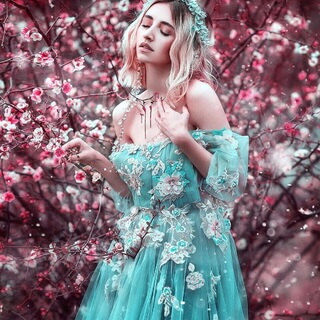
Utskaväenäys is the end of winter and time to welcome the spring.
In the old days Utskaväenäys was celebrated during spring equinox and later it became a movable holiday.
Utskaväenäys is celebrated as a carnival.
The tradition is based on ancient rituals during which shades of the dead and different nature spirits are met and greeted.
Some of the traditions of Utskaväenäys were riding and races,
Sleigh rides and masquerades.
Still today celebration of Utskaväenäys includes abundant meals.
The symbol of Utskaväenäys was moore.
Moore was a woman that was built from straw and she symbolized winter.
She was dragged from farmstead to farmstead and then destroyed as a symbol for the end of winter.
In carnivals people dressed up as horses,
Storks,
Goats,
Strange people,
Beggars,
Soldiers,
Gypsies,
Demons and even giline,
The dead goddess.
As a spring holiday Utskaväenäys was related to fertility of the land and especially the growth of flax,
Similar to the opposite velines.
During Utskaväenäys the spirits of the dead were able to visit the human world and help the flax to grow and the farm to flourish.
This was one of the reasons behind wearing a mask and dressing up.
People did not want the veles to see them or to notice them and it was important to stay out of their way.
Here is a poem of the symbols of Utskaväenäys.
A horse ran,
The grass grew,
Water,
Running water.
Beyond seas,
The seas,
The lakes froze.
In that river,
In the lake,
In a chair,
Sits a girl.
Sitting in a golden chair,
She is combing her hair.
The running horse symbolizes the awakening earth and moving plants and life energy.
Water is the source of life.
Water melting and flowing symbolizes the awakening of nature.
Girl is the symbol of the ancient goddess of nature.
Combing represents the flow of water and the movement within nature.
Hair is the symbol of flax and growth.
In the Baltic folklore,
The goddess who is associated with the springtime is Zemina,
The earth mother.
Zemina was very much beloved goddess by the ancient Balts.
She was the personification of the earth.
The goddess who nourished all life,
Humans,
Plants and animals.
Everything rose from her and returned to her.
Every major celebration began with an invocation to Zemina.
The head of the household fed a ladle with beer and poured some into the ground while saying a prayer.
They drank some beer and thanked the gods and the other members of the household.
Then he passed the ladle and everyone got a chance to express their gratitude.
She was one of the daughters of the Sankares Solei.
And she had a brother called Tseme Baatis,
Who protected the farmsteads and households.
In the springtime,
Zemina was honored as the pregnant mother in a festival called Utskavenes,
Spring equinox,
Which was celebrated in early March to drive winter away.
Zemina was present in numerous rituals that were connected to first planting,
Because Zemina was the goddess of sustaining life.
Zemina also received the dead.
She did not bring death herself,
But transformed death into new life.
Lithuanians made special offerings to Zemina at funerals.
Since the earth was the holiest of all things ancient,
Lithuanians did not joke with her,
Spit on her,
Throw trash on her or disrespect her in any way.
On the contrary,
They often and regularly kissed the earth,
Especially in the morning before starting to work and in the evenings before going to bed.
This is a good time to reflect what is your relationship with the earth.
Perhaps you like gardening and grow flowers and herbs and fruits,
Berries.
Do you feel special connections with trees or specific plants and flowers?
All of these are things that we should nurture within ourselves,
The same way as Zemina nurtures the earth around her.
The worship of Zemina was part of everyday life,
And she was the basis of the agrarian cycle of the year.
People invoked her when seeking justice and swearing oaths.
A clear image of Zemina never evolved.
There are amber statues of birds giving matters and fertility figures.
In Lithuania,
Zemina was worshipped at large,
Flat stones that were dug into the earth.
These stones represented Zemina and her powers.
It is also possible that many other Lithuanian nature goddesses,
Such as Lasdona,
Hazelnut goddess,
And Medene,
Forest goddess,
Are all different aspects of Zemina.
The big magical themes at this time of the year are purification,
Protection,
Fertility,
And inspiration.
We are beginning to come out of the winter season,
To quieter time of the shadow work,
Inner reflection,
And dream time.
Towards Imbolc and the spring equinox,
We start to see the stirring of spring,
The earth being reborn,
And we start to feel as if we are being reborn ourselves.
When the spring turns into May,
At the beginning of summer,
We see the earth bursting forth with fruit and bounty.
Zemina,
The great mother,
Is fertile and begins to bear fruits at this time.