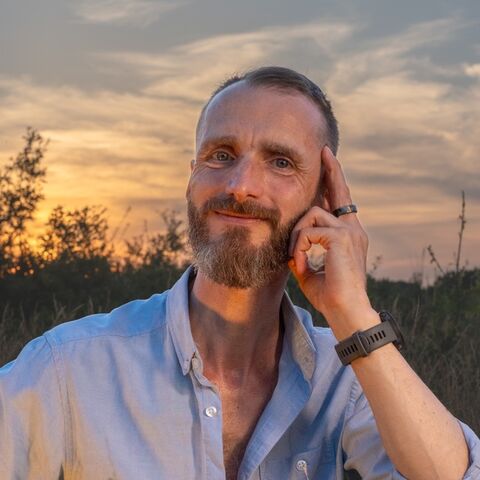
Good Hello Grant!
Hello there.
So lovely to sit with you again and join in another conversation.
Sorry.
Just before we started,
We were wondering what to talk about today,
And you came in with a suggestion,
Which actually sounds quite interesting.
So what was it that you were saying as a theme for reflection today?
Oh,
You might have read,
And I think you already have,
In different contexts.
Uh.
.
.
This whole thing about mindfulness being that the dark side to mindfulness.
There's a dangerous dark side to mindfulness that can bring up real dark things.
It could possibly be psychosis or there could be mental breaks or people having panic attacks or trauma.
And.
I find it quite fascinating.
That this is coming to light.
After the thousands of years that mindfulness has been.
I'm practiced.
So I thought it might be good for us to unpack.
And maybe bring some of our own.
Personal experience to you.
To the conversation as well as practitioners.
Yes,
And when you mentioned that it was timely because a friend of mine actually shared an article with me.
Saying like,
Oh,
Did you see someone's been writing about this?
It seems as.
Uh.
.
.
Few people who are who are very much exploring this idea of is there a dark side to mindfulness trying to debunk mindfulness.
And of course.
.
.
Things are never black and white,
There's always a grey to everything.
Um and in the way you framed it you've already given one one aspect of this which is that mindfulness is something that's been practiced for over 2 500 years and for longer i mean in the buddhist tradition it's 2 500 years in in the Indian.
Subcontinent sort of the traditions of that place is maybe four or 5000 years that people have sat reflected and focused on their breath and contemplated the nature of existence.
There is,
Probably to address it.
From where there is a risk.
I'm trying to remember the name of the person who uses this phrase,
But he talks about McMindfulness.
It might be Jon Kabat-Zinn.
Oh yes,
Yeah.
And he talks about how mindfulness is being separated off from its true purpose.
And then we're sort of using it.
It's one of the reasons I feel a little uncomfortable about just doing wellness days or mindfulness in the workplace even though it could be quite lucrative,
But I'd want to go in and do it with some depth rather than just be like,
Here,
Use mindfulness to make yourself more efficient.
Yeah.
Because it's almost mindfulness is about seeing through the illusion of duality and the stories we tell ourselves it's not about making yourself more efficient so that a company doesn't have to employ enough staff to reduce stress.
Yeah,
I pulled up the.
Make mindfulness how mindfulness became the new capitalist spirituality.
Book by Ronald E.
Purso.
So that would be an interesting read.
To have a look at that.
I think that really feeds into what you were saying.
That we've taken an Eastern tradition and we've put our Western values of productivity and getting the most out of the workforce.
And then we've tried to meld the two together.
To create.
And enhanced product.
Yeah,
Interesting,
Very interesting.
And.
It's not a statistic I would use when I'm trying to promote mindfulness in the workplace,
But there is one study where it actually suggests that practicing mindfulness makes you less efficient.
Bye bye.
Are you just content doing nothing?
You're just spacious and present.
I mean,
I went back to the monastery where I used to live and I was reminded of how projects take place in the monastery,
That there was a stupa,
Which is like a stone structure that is often built to put in the ashes of some revered person.
And there's the Borobudur stupa,
Which are these beautiful stone structures which have a lattice work,
And you can see a Buddha sitting inside meditating.
For about four years and over those four years there were constant discussions about how this was going to be built,
Where it was going to be built,
What the landscaping of the meadow around it would be.
In those four years it didn't happen and then it was a few more years and it was finally built It lasted for a couple of years and then they found I hadn't put the right foundations in and it was all subsiding.
And it's now been dismantled.
And there's now plans for a different stupor,
A bigger stupor and to commemorate,
You know,
That can you can actually walk into and walk out of.
So it's like the monastery is just like,
Yeah,
You know,
We'll have 5000 meetings about what colour we're going to sort of paint the room and then we'll paint it white.
Yes,
Yes,
Yes.
And let's also have a big lecture on the nature of impermanence.
Yes.
Yes.
Train yeah yeah so you have to remember that really mindfulness in its spiritual perspective is part of various insight traditions which are wanting us to wake up to the illusion of the belief in there being a self,
In the belief in duality of self and other.
And so it's a very different thing to trying to be more efficient and effective in the world.
Absolutely,
Yeah.
The reason it can make us more effective is because when we,
When I can let go of some of my stories or unhelpful habit patterns of thinking,
Well then I can maybe be a bit more creative or a bit more in flow or you know negative self-view and self-talk isn't isn't hampering me.
Uh but for that it needs to be like an eight-week course so i do think there's a risk that if we just teach people mindfulness on a sort of like one day intensive or we come in and do a workshop on mindfulness and then people still go away sort of thinking like oh i just have to stop my thoughts or um you know,
I will practice mindfulness by ignoring that thought and focusing on productivity.
And it's like,
Well,
Then that really isn't very helpful.
No,
That's an absolute misconception.
That's perpetuated.
Thank you.
From the tradition that I come from,
Kashmir Shaivism.
Mindfulness would probably be equated with being absolutely present to the moment.
So the term mindfulness isn't actually used.
Kashmir Shabesam.
To represent some sort of meditative practice.
But there are a lot of practices which are about being absolutely present with the breath,
Or being present with the void.
Voidness is a huge one.
Yes.
Or being one pointed on the senses,
That could be very closely linked to mindfulness,
You know,
So the summit or taste or touch or sound,
Really becoming present and moving into it.
But one of the things that Kashmir Shaivism teaches Is that.
Even negativities.
Even the stuff that we might consider dark,
Even the stuff that is incredibly difficult,
It's all a manifestation of the energy of meditation,
Which is the shakti.
So that when it comes.
To us.
One of the best things that we can do is to see it as a manifestation of the energy rather than getting thought and the duality of is this good,
Is this bad,
Is this high,
Is this low,
Is this light,
Is this dark.
That was one of my major reservations when I heard about the dark side of mindfulness,
Because in the tantric tradition,
That I come from.
Even the dog.
Is a manifestation of the energy.
And in fact,
If you're really going to start to completely understand yourself,
It's not just the lights that you have to own.
It's a darkness as well.
You have to see absolutely all of it.
And it's not a pretty little Pollyanna.
Rainbow unicorn fluffy marshmallow thing either.
Sometimes there will be times when you've got to go through the fire.
You've got to go for something that could be considered hellish.
The Dark Knight of the Soul.
And somehow just get through it.
In the Christian tradition,
They call that the dark night as a soul.
Yeah,
Yeah.
You sit and you face all the sense of struggle,
Doubt,
Fear,
In Buddhism,
Anger,
Lust,
Anger,
Rage,
Jealousy,
Rage,
Yeah.
Yes.
Yeah.
And it is,
It's one of the dilemmas of the way Christ's teaching ended up being transferred to us.
It may not have been how Christ originally taught,
But it sort of,
As it got absorbed into the Roman empire and the Roman sort of structure of thinking,
Christ is very much an Apollonian figure.
He's a figure of light,
The light,
The sun,
And all that was Dionysian got pushed down.
And whereas in pagan times,
There were festivals for Dionysius,
And you could worship at a temple of Dionysius,
The god of revelry and of drunkenness.
And it was included within the pantheon of the gods,
But the way Christianity developed,
Dionysius was pushed down and became the devil.
And Apollo was simply worshipped as the representative of the light and so then we got very much this split in us of needing to reject the darkness and just turn towards the light.
Yes,
Yes.
Where are those use animal nature?
Yeah,
Press the animal nature.
Yeah.
And bring out the divine nature and just keep it split and don't mingle the two.
And also don't You know,
I don't for a minute.
I look down at the animal nature because that's dangerous.
And if you look at the animal nature,
It could drag you down.
But the trouble is,
Of course,
What happens?
What happens?
We know the stories about what happens in the church.
Yes.
And it's like Jung says,
What you resist persists and what you fight,
You get more of.
So when you resist something,
It's it takes on a power of its own.
And in a way,
That's that's what the Buddha and his sitting underneath the Bodhi tree represents,
Because as he sat there,
Mara's army approached him and fired on him.
And Mara was,
You know,
Anger,
Rage,
Lust,
All the unskillful emotions.
The Buddha didn't battle Mara.
The Buddha didn't banish Mara to another realm.
He just sat there.
And with a sense of an openness and an acceptance and allowing.
And that's why truly mindfulness is about teaching us to sit with this attitude of allowing,
Welcoming,
Being curious,
Being open,
Being spacious,
Knowing that in this present moment,
The one translation of mindfulness is paying attention from the heart to the now.
And I think there's a risk because we've taken this translation of mindfulness.
When we're practicing mindfulness we're thinking we want a clear head or I've seen a cartoon of a man walking a dog and the dog's got this empty bubble and the man's head is full of things and it's saying mindful or minded and it's sort of implying that the dog is being mindful because it's just in the present moment with no thoughts but then it's this idea that Mindfulness is this empty head and then we battle and struggle and try and push all our thoughts away.
But what the Buddha did was he embraced everything.
As the arrows of Mara's army showered down on him,
He simply opened his heart and recognised Whatever he recognized,
He just embraced the present moment,
Recognized that all of this was arising and passing within the field of experience.
And the arrows dissolved into petals and fell around him like flowers.
And at that point,
Mara said,
I have lost my grasp on the Blessed One.
He is no longer under my control.
Now the interesting thing is,
After the Buddha's enlightenment,
Mara still appeared to him.
So he didn't vanquish Mara.
Mara didn't die.
But Mara would still appear to the Buddha and try to,
You know,
Get into his mind.
But the Buddha always just turned to him and just very gently said,
I see you,
Mara.
And then Mara would say like,
Ah,
The blessed one sees me,
The blessed one,
I have no butthold with the blessed one anymore.
And then he would dissolve away.
So it suggests to me that in the enlightened mind,
You know,
Anger still arises,
Lust still arises.
You know,
All the human things still are here,
But we're just able to just go like,
Ah,
You know,
I see you.
Agreed.
Agreed.
I think that I'm We have taken.
A lot of what the East has to offer us and we have got it.
Our Western mindset.
Thanks.
And I don't necessarily think that's a negative thing because every tradition changes and grows.
And transforms depending on where it is taken to.
And I think with one of our strengths in the West is that we're very good at achievement.
We're very good at goal setting and going towards goals.
But then,
As you said before about the dog with the empty bubble.
What Tantra would say is,
Well,
The dog has an empty bubble because the dog doesn't have a mind.
The dog doesn't have a mind like a human has a mind.
That's why he's in his instinct.
He's not in his mind.
He doesn't think the way a human does.
We put that onto the dog.
We imagine that the dog thinks,
But the dog doesn't have a mind in the same way that we do.
But then when I hear people say,
Oh,
In order for me to meditate,
My mind must be completely still and I can't do it.
So therefore I'm not going to meditate.
And then I say to them,
Well,
Actually,
No,
You don't have to have a completely still mind in order to meditate.
All you need to do is see the thoughts that move through the mind as an expression of consciousness.
That's all you have to do.
Very similar to what you said about with the Buddhas,
When Mara was doing the arrows,
Right?
So it's like the blue sky and there's the white clouds all scutting along.
And so the blue sky is the screen of consciousness,
And the clouds are scuttling along,
And they're the thoughts.
We don't have to grab the clouds,
And the clouds are gonna change,
And sometimes they're gonna look nice,
Sometimes they're gonna look scary,
Whatever they're gonna look.
All we have to do is just watch the clouds as they move,
And just let them do what they do.
And then of course,
If we do that,
Then we're free of them.
We're free of them.
We're not caught in them anymore.
So I find that a huge thing that we in the West have misunderstood about meditation,
That we have to actually have a completely still mind in order to meditate.
All we have to do is understand the mind and just watch the thoughts as they arise,
They're there for a while.
And then they dissolve.
Yes.
And perhaps that is where we can say there is the dark side of mindfulness.
And the dark side of mindfulness is our Western consumerist attitude.
I like that.
Yeah.
And I,
Because I recognize that from myself.
So I learned to meditate when I was about 19.
And I hated my mind,
I hated my thoughts.
I loved the idea that there was some state that was beyond self and other,
That was blissful and spacious and in which there was no thought.
There is that.
None of this crappy me that I have to deal with all the time.
And of course,
The layer of minority stress and hating myself for being gay and the struggle of having to come out and feeling wrong and different and bad.
And so in my first five years of practice,
I very much took on mindfulness as being a practice for eradicating thought.
For making the mind clear,
For focus,
Focus,
Focus,
Focus.
And the tradition I was in,
The Tree Ratna FWBO,
It didn't really give me a grounding in how to meditate in a healthy way.
It taught me how to meditate in a stylized way.
Um,
Rigid way,
Um,
Which was very much about focus on the breath count in count one,
Two,
Three,
Four,
Five to count one to 10.
And so I was using the counting.
I was trying to like focus on the counting and.
Push the thoughts away and and there was nothing in the teaching about opening to embracing allowing welcoming.
Being the presence that was already there.
And the result of that was I became very good at counting from 1 to 10 as I focused on my breath.
And having lots of wandering thoughts.
I'd be counting one,
Two,
Three,
Four,
As I was focusing on the breath and thinking,
Yeah,
Okay,
This meditation,
I wonder what's going on.
It's like,
How can I both be counting and be having wandering thoughts?
This is sort of like so annoying.
Maybe it's an ADHD mind that's very good at multitasking and sort of like counting and thinking.
And so I tried harder and harder and harder to squeeze myself and until it's almost felt like there was this little me sitting behind my nose really focusing on the breath rather than anything expansive or open or spacious.
And so that when I did then go to the monastery,
The Buddhist monastery where I trained,
I went there at the age of 3027.
Years later,
The abbot told me his reasoning.
He said that when I went there,
I was such a space cadet,
He wasn't sure if he would take me on or whether I was capable of learning.
And I was in a very dissociated space.
I was in a very agitated and unhappy,
Fragile space.
Five years of really hard dedicated practice had just resulted in me becoming very narrow and very limited.
And so he told me to stop meditating on my own,
To only meditate with the community in the morning and the evenings.
And then he instructed me to start rebuilding the stone walls around the monastery because it was in Northumberland,
Which is a part of England where there's lots of rocks in the fields and Way back,
You know,
The farmers built with these stone walls to create enclosures for the sheep.
So the monastery had all these dry stone walls around it,
Which had all crumbled.
And so I spent a year just making piles of rocks,
Carrying the rocks,
Putting them,
Rebuilding the walls.
And it was about It was a wonderful teaching because it was that mindfulness is about actually just being present in the moment.
In the touch of the rocks,
In the noticing the shapes in the wall that were waiting to be filled,
Finding the rock that would fit in there,
Feeling the sweatiness of my body as I'm doing this work,
Feeling the breeze on my face.
And it brought me back.
So I could understand why some people would be saying,
Or have had an experience where they then say mindfulness was harmful for them,
If they learned it in a way that led to them becoming a little bit narrow,
Tight,
Dissociated from their body,
Because,
You know,
We've come with trauma.
And then if we're taught in a way which isn't about opening and embracing and holding and bringing love,
To our trauma but it's like just focus on the breath and know that you're your no self.
And then the trauma gets buried even more and we dissociate even more and we cut off from our body even more.
But I would say that isn't mindfulness,
That's a dissociation practice.
Well,
It sounds like you had a very skillful teacher.
I had a similar experience.
Made us heading a hell of a lot because I wanted to get enlightened real quick.
I was meditating much more than I should have,
But I was going to get there as fast as I could.
I was doing a lot of study,
I was in my head,
I was studying the scriptures.
I was really,
Really reading my teacher's words and immersing myself in that.
I thought I was being very holy and I was doing everything right.
And then I started to have panic attacks.
Careful.
Terrifying,
Terrible,
Debilitating.
I said terror full at the beginning.
That's exactly what it was like,
Full of terror.
And I remember my teacher said,
Well,
You've got two choices.
We're going to go.
Or two.
Work at the food loading dock.
Unloading the food from the trucks.
When I first started,
Every part of my body screamed because I'd been sitting in front of computers for like a year.
And then after about three or four days,
Everything started to settle.
My mind started to settle.
I'd been way too in my mind.
I'd been way too mental.
I was way too in there.
And.
Then I settled into the mind.
And what actually happened when I settled into the mind,
This is interesting,
Because I thought I was settling into the mind.
But when I actually settled into the mind,
And saw that it was like a certain level,
Then I naturally dropped into the body.
You know what dropped me into the body?
My muscle soreness.
Because if that was the soreness of my muscles and I'd be like.
.
.
I'm storing my body.
Oh,
I'm back in my body.
Yes.
So I actually wrote her a letter and I thanked her.
I said,
Look,
Right at the beginning,
I hated it.
But then all of a sudden I realized I was completely stuck in my thoughts and I thought I was in my mind,
But I wasn't even in my mind.
It was like what you said,
It was like in that dissociation thing.
And uh So it's interesting how we hit that.
That similar thing happen of,
Okay,
Where are we?
Are we embodied?
Or do we want to just check out of this reality?
Do we want to dissociate?
Whatever.
What do you want to do?
Do we even know what we want to do?
Exactly.
And I think I mean,
For anyone who doesn't know what dissociation is,
It's it's where you stop feeling your body,
You stop being able to be present in your body.
And,
And one,
One understanding of mindfulness is actually that it's about filling the body with mind.
So it's not being up here,
It's the mind,
The conscious awareness,
Saturating through the body.
I think one image I've heard of it,
Which I've forgotten,
But it's like when you take a square of sugar,
A sugar cube,
And you dip it into some tea,
And then the water of the tea seeps and permeates through all of the sugar.
So we want to take our mind from being all constrained and caught up to just like seeping out and filling and permeating throughout the body,
Which is one reason why we,
I often start my meditation guidance with a body scan.
Because.
When I learned to meditate,
It was all about coming to the nose and focusing on the sensation of the breath at the nose.
And I,
For years,
I had this sensation of like a tight band around my head as I meditated,
Which the teacher,
Sangharacharya,
He did actually address.
And he said that if your effort is too willful,
You might feel this sense of a tightness around.
Metal band that was a little bit too tight.
Yes but i didn't know how i i understood there's something not quite right here but the teaching was to keep focusing on the nose and to to feel the sensation of the breath at the nose and that is even a misunderstanding of the buddha's teaching to his son rahula where he says place my or one translation is place mindfulness in front of you Um.
.
.
And so then some interpretations of it are,
Oh,
Well,
You place your attention on the tip of the nose and you keep your focus there.
But another way of interpreting that is bring mindfulness to the fore.
So a bit like when you're doing a Word document and you realize that the thing you really want has disappeared behind a few other layers.
And you click bring to front.
You want to bring your mindful attention to the front of your sphere of awareness.
And then your mindful attention is the thing that is holding everything rather than it being lost behind layers of thought or memories or ideas or being caught in the fact that you've got an itch on your neck or something.
So,
Again,
Like you,
Yes,
Very much,
You know,
Going to the monastery and then being instructed to build the walls or to work in a garden or unload pallets.
It's like,
Then you realize,
Oh,
I've got a whole body.
And this body,
And the Buddha said,
You know,
Mindfulness is about permeating your whole body with awareness.
You're knowing that your arm is moving,
You're knowing the sensation of the movement of your arm,
You're knowing the touch of your feet on the ground.
Um.
.
.
So.
.
.
But if someone experiences trauma,
They're much more likely to dissociate.
And many people who come to meditation come because they've experienced some form of trauma.
And there's this desire to escape from it,
To run away to a safe,
What seems to be a safe place.
And what you started by saying,
Which was so beautiful,
Which is that actually our practice needs to open us to what we might see as the dark side.
The fear,
The terror,
The anxiety,
The stress,
The feeling of not being good enough.
Because if we can't accept it all.
.
.
How can we completely accept ourselves?
So my understanding is that meditation is never about running away from myself.
It's about embracing all of me.
And that's what that is.
Yeah,
I have,
I have an iron band story that I'd love to share.
Yes.
So I was in India,
And it had the iron band for quite some time.
And it was getting excruciating.
And it's interesting how you describe it from your Buddhist perspective.
And now I'm going to describe it from the Shabite perspective,
But how interesting it's so this is why I love meditation,
You know,
That there are so many commonalities.
So I'm sitting there and I'm chanting the Sanskrit text.
And the band is getting tighter and tighter and tighter.
And I'm living in an ashram.
As the Werner Monastery.
All of a sudden.
It snapped.
And there's his net.
Everything was white.
Everything was wide,
It was like.
The body,
My sense of body had gone.
I was in shavism,
They would call it becoming one with Shiva,
You're one with the field of consciousness.
So I'm there and I'm chanting.
At the same time,
I'm thinking,
Where have I gone?
Like,
It was just like being the field of consciousness.
And there was a sense of relief,
Right?
Because the band had gone.
And when I could I had a visual of it,
It's like,
You know.
You know how the knights had that band that they would have around their head armour,
And there was a band there?
It was like that,
And I actually saw it snap.
And stepped,
And then I was wide,
Absolutely wide.
And I thought to myself,
And it was terror.
There was absolutely terror because I thought to myself,
What am I gonna do?
I'm not.
I don't even really remember my name anymore.
What's going to happen?
Yes.
And then I was hoping and praying like,
Oh,
By the end of the chart that I was going to come back that that might be able to be back.
Next,
It didn't happen.
And I stayed in that state.
For weeks.
For a long time.
As I was going,
As I was leaving the hall.
People started saying to me,
Hi,
How are you?
I could recognize that they didn't really know what was happening.
They saw me as me.
As my physical body and all of that.
Hi,
How are you?
There was one little old lady,
She knew.
Learned,
Okay?
Probably because she'd had the experience herself at some point.
And I remember though,
Walking around the ashram and you know what I felt?
And in the tradition that I come from,
The Kundalini Shakti is,
She holds you.
She's the energy,
She holds you from within.
So that's what I found.
It was like,
You're in the right place to have this experience.
You're being supported to have this experience.
You're not out in the world having it.
You're here.
You're in this place.
You're all right.
I know you're freaking out,
But just know that you're held.
Your health.
So I think part of the reason why I'm sharing that story is When people are taught mindfulness or meditation in corporate settings or They're not given the framework.
In order to support them in case they do have a huge experience like that.
They're not.
It's kind of.
Well,
They'd be lucky if they had a teacher like you,
Who would say,
Hold on a sec,
This is what's going on for you.
You're all right.
But if they had another teacher who was like,
Oh,
No,
Just continue to breathe.
You'll be right.
Or just it's fine.
That could be really quite damaging because they don't have the support network there that they would have in an ashram or a monastery or.
A spiritual community.
Hmm,
They might even think they're going mad.
Rather than having a bona fide,
Might I add.
Spiritual experience.
And if they don't believe it,
They can read it in the scriptures,
Which are thousands of years old,
Go to exactly that state which is called There's one called,
They're called avastas,
Which is a state.
One of the states is being Why?
And at some point after a while then I did come back into the body as well too.
Yeah,
It's almost like we're It's being taught out of context.
And because it's being taught out of context,
There are deficiencies placed upon it.
That perhaps aren't even necessarily put.
To put on mindfulness.
It's just the way it's being taught.
Yes.
And I think that's very important that the fact that it's often taught in a secular format.
And.
.
.
It's true what you said earlier.
Know,
There are strengths and Buddhism has always adapted to the religion of the country it's entered.
So when Buddhism came to Tibet,
It met the Bon religion,
And a lot of the deities that we now see as Tibetan Buddhist figures,
They sort of connect back to original Bon tradition.
And so the Bon tradition was a tradition of lots of visualization and chanting.
And Buddhism didn't try to destroy it.
It sort of met it and it incorporated those figures into what then became Tibetan Buddhism.
And of course,
When Buddhism comes to the West,
What does it meet it meets science.
And so,
Meditation and mindfulness has become very much a science based practice with.
Studies and peer-reviewed papers and things showing that mindfulness builds gray matter and stress reduction,
You know,
Supports the healthy telomeres,
Protecting our DNA within each cell.
So there's lots of things,
There's so sort of science and mindfulness have met and merged.
The risk of that is unless we get into the more esoteric aspects of physics,
Where actually,
You know,
It does start to suggest that we are a universe which is interconnected and arising all at the same moment and all is a fascinating vibration,
That there's a risk that then we lose or when we're being taught mindfulness we don't have that sense of well actually you know the the realization of this practice is opening to a spacious state of non-duality and So what people I haven't read the articles,
Actually,
Because it only came up when we were talking at the start of this.
So I don't.
But I know a friend was mentioning to me that this person.
Was saying that you know they'd been practicing mindfulness and then it took them into a state of sort of depersonalization of um uh dissociation and they had to go through therapy and sort of come back to what they felt was a healthy sense of themselves.
I've spoken my own experience and so I can definitely see that there is an unhealthy way that mindfulness can play out and that then a good teacher is needed to help you ground and come back again.
And it may also be that,
But some people,
I know I read an autobiography of someone who described their sense of self exploding and disintegrating.
And it wasn't until they met a teacher years later that they were able to put it within a context where they could understand,
Oh,
Actually this is a realization,
This isn't,
Um a psychosis this is actually uh me recognizing that there is no self another that you know everything is interconnected,
Seeing through with the delusion of the separate self.
And from the ego perspective,
A spiritual awakening is going to be terrifying.
Because it's a sense that the ego is dying and the ego will say,
This is wrong.
I need to go into therapy and get myself back.
Yeah,
Please.
No,
I don't want to die.
And I think it maybe points to another aspect because the Buddha did say,
I'd be interested to know if you have similar in in your tradition a similar saying but the buddha His attendant,
Ananda,
Who was his cousin,
And so he'd grown up with the Buddha,
And then during their adult life,
Ananda accompanied the Buddha as they walked around and taught.
And so Ananda was always with the Buddha,
Always looking after him,
Always attending to him,
Hearing all of his teachings.
And.
.
.
There's a lovely example in a way of what this teaching is in the very way the teaching is described because there's a sense of friendship and care and closeness and conviviality because it describes Ananda coming to the Buddha and he says,
Ah,
Blessed one,
I've been thinking.
And I've reflected that spiritual friendship,
Kalyāṇamitta,
Is half of the spiritual life.
And so you get this sense of these two men who are very comfortable with each other.
One's a teacher,
One is a disciple,
But he just wanders up to his teacher.
He's like shares some thoughts that he's had.
He's wondering what his teacher might say back to him about this.
And it's a lovely sense of friendship,
Warmth,
Care,
Mutual respect.
And the Buddha then turns to Arnanda and he says,
Say not so Arnanda,
Say not so,
Kalyanamita,
Spiritual friendship.
Friendship with those that can guide and support you.
It's the whole of the spiritual life.
Thank you.
Yes.
Friendship.
Not showmanship.
There's so many.
You would have seen it.
Is so much for show.
I'm going to teach you meditation.
I'm going to entertain you.
I'm going to entertain you by teaching you meditation.
I'm going to give you all the content you want.
I'm going to,
You know,
That runs contrary to the way that.
Mantra teachers.
Tantra teachers.
Give just enough.
Give just enough.
Because that actually is friendship.
Because that's saying.
I respect that.
And trust you enough.
To know that you are going to uncover the wisdom that is inside you.
And I'm going to give you just enough.
So that you can then see it inside yourself and bring it forth.
And then once you've seen it inside yourself and brought it forth,
Then you will assist others to do the same.
So it's never about sort of,
I am going to show you from on high.
Oh,
I am the chosen one who has.
Realized it all.
Oh goodness me,
Get over yourself.
Oh you mean I've been teaching the wrong way all this time?
What was it?
I've been teaching the wrong way all this time.
Oh no Nick,
You and I,
We must be the chosen ones.
Oh,
It's so good.
You and me,
We are so holy,
More holy than everybody's soul.
You know,
So it's like.
.
.
So my understanding.
Is that that spiritual friendship?
Needs to exist.
Rather than this whole thing where people take someone and make them some sort of forget and oh they're so perfect.
One time they walked past me and they farted but it's okay because it smelled of roses because they're so pure.
And I kid you not,
I did hear that story.
When I was in the ashram,
Someone told me that,
Oh,
Someone walked past me,
But,
You know,
They're so pure.
And then they farted.
And it did smell like roses,
Because as you know,
There's so few of them.
Yeah,
Right.
It smelled like shit.
And it should smell like shit.
Because it is shit.
So what I'm saying here is,
This whole thing that we've got in the Western mentality about mindfulness meditation being about being holy and pure and spiritual and so much better than everybody else.
That's just all an illusion.
That's it.
But also it's still being caught in duality,
Isn't it?
That there is good and bad,
Right and wrong.
Yeah,
Yes,
Yes.
Yeah,
I so hear that.
So where to from here then?
I mean,
What are we?
How do we address the situation?
People are experiencing full on experiences through meditation.
I remember once in India,
This man came up to me,
I knew him from Australia when I was living in the ashram there,
And then I was living in the ashram in India.
And he came up to me and he said,
Please help,
Help.
And he was absolutely terrified.
And I looked at him and I said,
What's wrong?
And he said,
I'm in panic.
I'm in panic.
And I said.
Come here.
And you see,
I hadn't,
Not that long ago,
I'd been in that place.
I'd been in that,
And I said,
Come here.
I said,
Put your feet on the ground.
Feel your feet on the ground.
Engine needs a bit.
Relax your jaw a bit.
I'm with you.
You with me?
Yes.
You're there.
Yes,
Yes.
And it goes.
And I said,
The panic may not go away straight away.
But that's OK.
Just come back to centre.
Be centred.
Yes and not long after that he saw me again and he said Thank you so much.
You see,
Because I was asking people and they were saying,
Oh,
It's all right.
It's just the energy.
Just meditate.
Just breathe.
It'll be okay.
Oh,
No,
It's all fine.
Just trust the process.
But nobody was listening to me.
Nobody was there with me.
Yes.
Maybe that's part of the symbolism of the Buddha or Prince Siddhartha sitting underneath the Bodhi tree,
Because what you did was you helped him ground and become present and connect.
And,
You know,
Obviously the symbol of the tree,
It's roots going into the soil,
It's branch connecting into the air.
And,
You know,
And the same with me building the dry stone wall or you know working in the ashram and it's this thing of how to help someone in that situation.
And it's not to take away what they're experiencing,
But it's supporting someone to ground and be present and to bring a Western perspective to it.
It's about helping someone self-regulate by co-regulating.
And that's what a good teacher would do.
It's sort of like,
Yeah,
I let you still be in your experience,
But I just let you know,
I'm holding space here with you,
You know,
Feel your feet on the floor,
Feel your contact with the ground.
Just make some space for for what's,
What's arising within you.
So then,
As a therapist would or anyone in a role of supporting another to self-regulate themselves and to feel present and embodied.
Grounded.
Because without the grounding.
It doesn't work.
There needs to be the grounding.
Because otherwise,
In the tantric tradition,
The energy just flies away.
Just flies away if we're not grounded.
And then it's so easy to,
As you said,
Or beautifully,
You know,
We're all up here in the tangle in the head.
And we forget that actually,
The mind needs to permeate the whole body,
You know,
Rather than just be up in that tangle.
Yeah,
So you have to become embodied and be in that place.
In Kashmir Shaivism,
They call it Jivan Mukti.
Means liberation while still in the body.
That's one of their main tenets of the system.
You can be realized where you're still in the body.
You don't have to wait until you leave the body for moksha.
You can have jiva mukti.
It can happen.
Beautiful.
Well,
Thank you.
That's been a lovely conversation.
Yeah,
Thank you.
I just wanted to say something deeply spiritual before we finish.
I just had to say that my battery is now at 5%.
I'm so very spiritual.
I'm talking about my phone,
Not my battery.
My battery is dead.
Way more than 5%,
I hope.
Good,
Well,
That's a lovely point at which to finish and to wish everyone well.
And if you are listening to this and you came in because you saw the title or were worried about where your mindfulness practice is taking you,
You can connect to Grant or myself.
You can look to see in your local area where are there teachers or communities that might be able to support you.
People I know maybe start practising and disconnect from any community or they've done it by listening to apps or never having had a teacher.
So just recognising it's not necessarily that your practice is wrong.
It may simply be that you need the support of someone with a little more awareness and presence.
And I know Grant has to go now,
So we're going to finish.
So thank you,
Grant.
Three percent.
Three percent.
Thank you.
Thank you very much.
Thank you.
Yes.
Absolute and relative truth collide in the 3% battery.
So lovely chatting with you and yeah look forward to our next conversation and whatever we do.
We explore the next time we come together.
So be well everyone and enjoy your day and I hope there's something from here you can take away and make use of.
Bye for now.