Welcome to the Art Therapy Mindfulness Exercise.
What have you brought mindfulness awareness to today?
Heart,
Mind,
Body,
Breath,
Environment.
To begin this mindfulness exercise bring your awareness to why you chose this topic.
How your belly,
Chest,
And head each feel when you reflect on this topic.
The emotions that you can associate with these visceral feelings.
The positive or negative impact of any stories you believe in regarding this topic.
The fact that many others are feeling similarly about this topic as you.
How you might feel with increased awareness around this topic.
And when you can apply increased mindfulness to this topic in your day-to-day life.
Immersing into the art process allows us to enter a meditative state where relaxation and unconscious expression can thrive.
Whether the artwork is a light-hearted reflection or a deep focused exploration,
The benefits can be significant.
Releasing emotions and thoughts through a creative force can relieve stress,
Encourage problem-solving,
And heighten senses.
Though it can also bring up some rough memories.
Art is a safe controlled way to manage our life experiences which we may not get to do in other ways.
Select an art form and use it to express yourself however you see fit.
Keep in mind that your primary intention should be for exploration and experimentation.
Free from a sense of what it should look like.
A lot of our anxiety about expressing ourselves has to do with this desire for approval that may go back as far as wondering why our parents never put our artwork on the refrigerator door.
Try to separate how you think of the art in museums versus the art we create every day in order to express ourselves.
Follow your own intuition about how to proceed,
When to add to your work,
And when to stop.
Also try to avoid over analyzing the meaning of your work if it feels forced,
Inorganic,
Or if it's causing you more stress than before you began.
This may be an opportunity to seek guidance from a professional though sometimes the art doesn't have to have a meaning.
Do something you like.
If you find painting appealing you can explore with various colors or application of paints to your canvas.
If you're a very tactile person you may enjoy working with clay in order to express your emotions.
Scrapbooking and collage can be an effective way to enhance or deepen a connection to a memory since you can use universal materials such as magazines to make a personal creation.
Think about colors.
What colors make you think about yourself and your life?
Which colors reflect your moods and your emotions?
You could use a body outline and depict feelings and sensations abstractly.
Think about shapes and objects.
Does a certain image stick in your head?
For example,
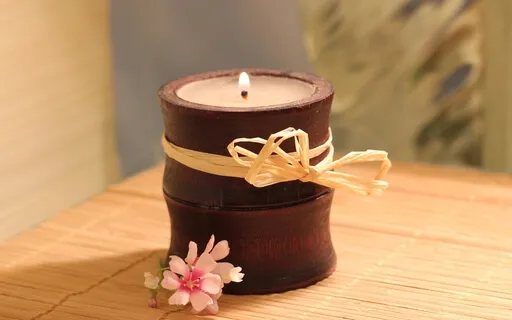
Do you feel like part of a broken circle of trust or perhaps you find the light of a candle in the dark inspiring?
Use these images to express your feelings through your art.
They can be as abstract or as concrete as you like.
Often the symbols in our dreams can be redo for our creative impulses.
Try a random scribble for a few seconds and see if any images develop for you.
Art has long been a form of expression to validate existence and make sense of the world.
Every generation in every culture offers clues into how art is crucial to document,
Communicate,
And make sense of shared values,
Experiences,
And norms.
To go the extra mile,
Art making is the linchpin process in a particular field of mental health.
Art therapy is a world recognized profession that developed and flourished in both Europe and the United States during the early and mid 1900s.
Many artists recognized the value of the creative process and began volunteering and working in hospitals to encourage patients to be active participants in their own treatment.
Art therapy has gained exponential recognition worldwide as being a holistic and alternative treatment in light of global tragedies such as Hurricane Katrina,
The earthquake in Haiti,
And with our returning veterans suffering from post-traumatic stress disorder.
Remember,
Art making isn't about being the next Da Vinci or Picasso.
The point is to express yourself.
Worrying about your skills will only hold you back.
Also,
If you feel you need additional guidance in overcoming life struggles,
It is important to seek professional assistance that best suits your needs.
This exercise mentions a profession of art therapy and it is important to note that while art making is not a proprietary technique,
Art therapy differs in that it is a credential profession that requires master's level education,
Training,
And supervision for someone to be legally considered an art therapist.
If you are interested in art therapy either as a service or career,
You should consult with a legitimate source.
The American Art Therapy Association provides guidelines and information about the profession and the education requirements for programs and oversees the work of the state chapters.
Also,
The Art Therapy Credentials Board oversees and maintains the credentials earned from postgraduate supervision and passing a certification exam.
Last,
There are other creative modalities that have engendered credentials professionals to assist clients with healing.
These include dance movement therapy,
Music therapy,
And psychodrama therapy.
Lynn Baranis-Brown