17:07

Mindfulness Of Breathing + Open Awareness

by Daniel Scharpenburg

Rated
4
Type
guided
Activity
Meditation
Suitable for
Everyone
Plays
184

This is a two-part meditation. We start with the practice of mindfulness of breathing (Satipatthana) and then shift into the practice of open awareness (Shikantaza). Using the breath as an anchor helps us get ready for the formless practice.

MindfulnessAwarenessBreathingMeditationNon AttachmentSatipatthanaShikantazaMindful BreathingBreath CountingHand PositionsOpen Eye MeditationsPostures

Transcript

I'm going to lead a meditation now.

This is a two-part meditation.

It is going to be mindfulness of breathing and then leading into open awareness practice.

Two-part meditation.

So sit up as straight as you can.

If you're in a chair like I am it's recommended you firmly plant your feet on the floor but we do want to sit up in a position of attention.

We don't want to be like this.

We don't want to be like this.

Oh I'm meditating right?

We want to sit up so that we're in a position of attention.

I have always found and I've heard this said by others as well.

I've always found that when my mind is wandering when I've totally lost track of the meditation I pay attention to my body and I notice oh I'm slouching.

Oh my back is bent and I straighten my back and then my mind gets straight and I don't know if that works for everyone but that works for me.

So anyway sit up as straight as you can.

If you're in a chair firmly plant your feet on the floor.

If you're not in a chair if you're sitting on the floor then kind of cross your legs in a way where your feet won't fall asleep and there are two different hand positions I like to recommend.

One is called the bowl.

I call it the bowl actually and it's one hand on top of the other thumbs gently touching so it makes kind of a circle resting in your lap and people that are into fancy names call that the cosmic mudra but I just call it the bowl and you can do some people say your left hand should be on top and some people say your right hand should be on top.

I don't think it matters and I don't care but so whatever is more comfortable for your hands and rest that in your lap.

That's one.

The other recommendation I sometimes give is called the relaxation or the relaxation mudra.

Mudra just means hand position so don't get caught up in that word.

So the relaxation hand position which is just hands flat on your legs in your lap wherever is comfortable.

The point is that there's a plan for what our hands are gonna do because if there's not a plan then our hands can be a point of distraction and I like to do an eyes open practice.

This is supposed to be an eyes open practice so what I'm going to do is just fix my attention on a blank wall that's in front of me and if you have that available that's what I really recommend the most but that said if you don't another option is to kind of have it your eyes at a downward angle and try to find a part of the floor you can look at.

Hopefully a part of the floor that's not distracting like if you have a really cool rug or whatever that's not where you want to put your attention because it's gonna distract you but something to look at that's not interesting that's not gonna take your attention.

Okay okay so I'm gonna ring the bell and then I'm gonna give the instruction and then in a little bit we'll switch I'll kind of slide you in from one practice to the other.

So I'm gonna ring the bell three times now.

We'll begin by taking three deep heavy breaths.

Now bring your attention to your breathing.

This is something we're doing all the time that unless there's a problem we're not really paying attention to it.

We can focus on either the air coming into and out of our nose or the rise and fall of our belly.

Both these things are happening all the time but we just aren't we just aren't paying attention to them and that's what makes it a good anchor for our attention because it's always with us it's not gonna stop anytime soon we hope and it's not something we attach a lot of significance to again unless we have some sort of breathing problem then we will bring a lot of significance to it right but it also it's really our connection it's a really real connection to the outside world that's happening all the time we're breathing in our environment all the time our whole lives and that's sort of an interesting thing to think about so bring your attention to your breathing in out and every time something distracts you every time something takes you away from this moment right here just bring your attention back to your breathing and so I start to think about what I'm doing later and I just bring my attention back to my breathing breathe out breathe in breathe out a lot of people find it very helpful to do accounting to help them focus on this this is our anchor and the counting just makes the anchor a little stronger and that is mentally note one on the in breath and mentally note two on the out breath in one out two in one out two and that one is always there for us to return to when we find our mind wandering and we will find our mind wandering a whole lot and we just go back to that one in one out two our goal is to not beat ourselves up when we're struggling because we're going to struggle but rather just to go back to one just to go back to one in one out two and we will sit here breathing for a few minutes you you you you you you you you you now I want you to release the breath as your anchor and we're going to change our attention and instead of using the breath instead of focusing on that we're going to try to just be aware of the full range of our experience just be present and notice everything that's happening and not grab on to anything so I hear a sound and I think I'm hearing a sound instead of thinking I'm hearing a sound what is that is that gonna keep going forever no I just think hearing a sound if I feel bored I don't think of what I could be doing but rather I just think I'm bored I just notice my thoughts and I just let them pass some people find this practice a lot more difficult than following the breath but if you do it over time it will get easier it will get easier so we just want to be fully present and notice all your thoughts and feelings but don't attach to them they are like clouds passing through the sky this is called the meditation of open awareness or silent illumination just be here and don't try to do anything but just be here silently you you you you you you you you you that is going to bring our meditation to a close for today thank you very much for taking the time to sit with me and have a good day

Meet your Teacher

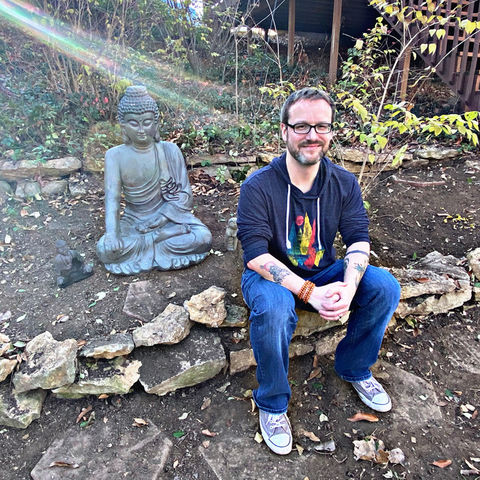
Daniel ScharpenburgKansas City, MO, USA

More from Daniel Scharpenburg

Loading...

Related Meditations

Loading...

Related Teachers

Loading...
© 2026 Daniel Scharpenburg. All rights reserved. All copyright in this work remains with the original creator. No part of this material may be reproduced, distributed, or transmitted in any form or by any means, without the prior written permission of the copyright owner.

How can we help?

Sleep better
Reduce stress or anxiety
Meditation
Spirituality
Something else