Welcome to the Happiness Podcast.
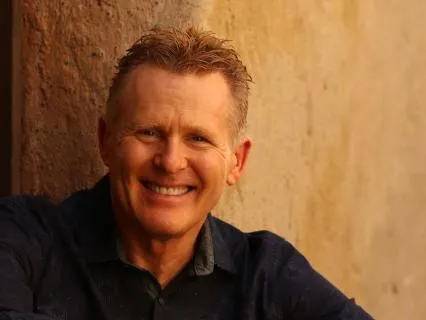
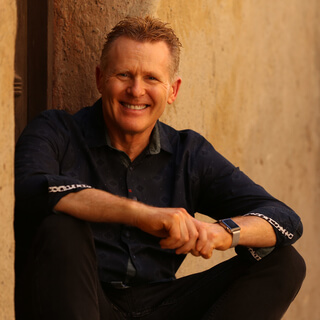
I'm Dr.
Robert Puff.
Do you want to know a secret that a lot of people don't know?
That our brains actually have a conservative mode,
But it's not what you think.
Our brains love the familiar because the familiar requires such little energy.
We stay in unfulfilling careers,
Stale relationships,
Or unhealthy physical habits simply because they are known quantities.
But this safety is an illusion.
We convince ourselves that staying still is safe.
But staying in a state of stagnation is actually the slow death of our soul.
We ignore the quiet,
Still,
Small voice telling us we were made for more,
Trading our ultimate happiness for immediate comfort.
Very few people willingly jump out of a comfortable,
Albeit sinking boat.
We usually have to be pushed.
But as we journey through life,
We realize the earthquakes,
The crises come.
We're often forced to be awakened.
A crisis acts as a psychological earthquake.
It shatters the foundation we're clinging to.
Last night at 1 14 a.
M my daughter sent me a text saying she'd experienced an earthquake for the first time in her life and obviously it woke her up out of a deep sleep.
When earthquakes happen to us psychologically it's like stripping our ego.
In the immediate aftermath we feel entirely out of control.
Our ego,
Which spends all its energy trying to predict and manage the future,
Is forced to surrender.
But this is the critical moment.
A crisis will do one of two things.
It will make us bitter or it will make us deep.
The event itself,
Like an earthquake,
Is neutral.
It's our perception and our navigation that determines its outcome.
In China,
Many people consider the greatest masterpiece of Chinese literature to be the story of the stone.
The story looks at the 18th century and the life of Qiao.
His family is one of the wealthiest in China,
Enjoying the emperor's direct favor.
He was perfectly comfortable,
Like many of us,
Though a lot wealthier.
Then a sudden political shift resulted in the confiscation of all their properties,
Plunging his family into devastating poverty.
This absolute crisis stripped him of his future as an aristocrat.
Yet,
Living in a small village and surviving on rice gruel,
This dramatic loss forced him to examine the fleeting nature of wealth It became the exact catalyst that drove him to write the semi-autobiographical novel,
The Story of the Stone,
Which as I said now is considered the greatest masterpiece of Chinese literature.
You may have never heard of him,
But I bet you've heard of Marcel Proust,
The author of In Search of Lost Time,
Who many people consider the greatest novel ever written.
Proust was a highly social,
Active participant in the glittering high society of Paris.
But a severe,
Worsening health crisis forced him to withdraw completely from the world he loved,
Eventually confining him to his bed in a soundproof,
Cork-lined room.
This physical limitation could have destroyed him,
As I think it might have many of us.
But instead,
Because he could no longer travel outward,
The crisis forced him to travel inward entirely.
That confinement birthed In Search of Lost Time,
A sweeping masterpiece of human psychology that would never have been written had his health remained comfortable.
We've all heard a lot about PTSD,
Post-traumatic stress disorder,
But psychology also recognizes a phenomenon called post-traumatic growth,
PTG.
This is a clinical finding that many people who endure profound psychological struggles don't just bounce back to their baseline,
They bounce higher.
Through the crisis,
They develop a deeper appreciation for life,
Experience a profound shift in their priorities,
And cultivate a massive expansion of empathy for others.
The crisis breaks open their heart,
Allowing more light to enter.
It's this PTG,
Post-traumatic growth,
That makes my job so beautiful.
As a clinical psychologist,
People don't come to me because everything's going well.
They come to me because life is a struggle.
But together.
We figure out ways to make it better,
Not just heal it,
But better.
And the one thing I believe to the core of my being is that no matter what's happened to someone,
No matter how horrific,
They can turn it into something beautiful.
When we're in the middle of a storm,
It feels like destruction.
But looking back years later,
We often recognize that that crisis was the exact catalyst required to push us into our true life.
There's an ancient art called Kintsugi where it entails repairing broken pottery with lacquer dusted in powder gold.
The bowl becomes more beautiful and more valuable because it was broken.
Were exactly the same.
You may have heard this from me before if you've listened to this podcast.
But one of my main missions in life is to find people who are truly shining in life.
And when I meet them,
I always ask this question.
How did you get here?
And I always get the same answer.
Suffering.
It's the challenges that we have to face,
Or perhaps we're facing right now,
That make us stronger if we choose to work through them.
When the earthquake hits,
We can't waste our time and precious energy fighting the reality that the ground is shaking.
Instead,
We just have to accept that the current season is this right now.
We can't rebuild until we accept that the old structure has fallen.
For example,
If someone's going through a divorce,
They could spend the rest of their life being bitter and upset that they aren't in that relationship anymore.
I think we all know people like that.
But yet they're still divorced.
So when we go through a crisis,
We have to first practice radical acceptance in our mind saying,
This is what's happening.
And then we have to deploy our physical anchors.
Crisis creates immense mental noise.
So we have to rely on our physical daily routines to keep our nervous system grounded.
For example,
We might maintain a daily yoga routine or engage fully in the quiet sensory ritual of meditation.
Let the body tell the mind we are still here we are still safe and then thirdly we have to ask the pivot question we shift our internal monologue from why is this happening to me What is this trying to teach me?
When we ask our brain for a lesson,
It stops looking for a villain and starts looking for wisdom.
So to summarize,
To navigate the storm,
First we have to practice radical acceptance,
Then we deploy our physical anchors,
And mostly we have to pivot the question to,
What is this trying to teach me?
Perhaps right now you want to scream at me and say,
Dr.
Puff,
You don't know what you're talking about.
What I'm going through right now is horrible.
I'm not negating what you're going through,
But after helping people for over 30 years,
Go through horrific crises,
I've learned that no matter what we go through,
No matter what we're experiencing.
We can come out of it.
And we might,
And I believe we will find.
That through this crisis,
That when we look back on it,
If we've turned it into something beautiful,
Will actually be thankful,
Maybe not for the events that happened,
But how the events changed our lives and transformed us.
Into something beautiful.
We are far more resilient than our comfort zone allows us to believe.
The storms of life are not sent to destroy us.
They're sent to clear the path.
When we embrace the crisis as a teacher rather than as an enemy,
We'll emerge with a depth of joy and wisdom that never could have been found in the shallows of comfort.
Thank you for joining me on the Happiness Podcast.
Until next time,
Accept what is,
Love what is.