What is it about yoga that makes it so effective?
And what are some practices from yoga that you can do on a regular basis to help you feel better psychologically and physically?
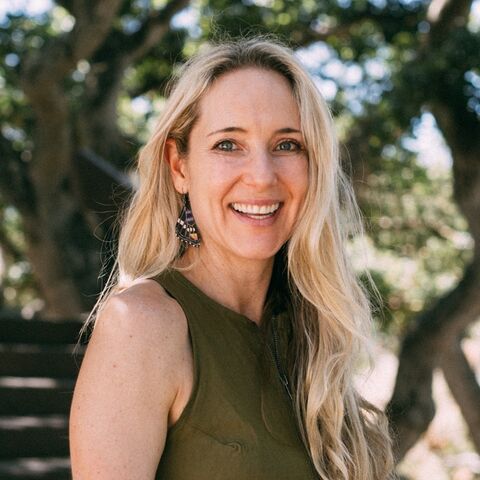
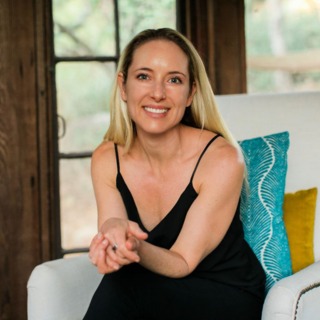
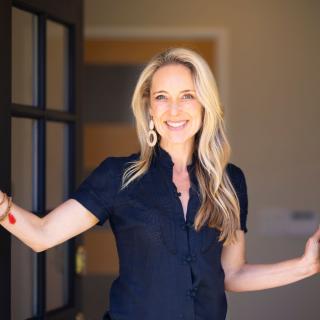
That's what we're going to explore today with Dr.
Julie Kangas on your life in process.
One of the purposes of this podcast is to look at the intersection between contemplative practice and psychological science.
And that is why I'm so excited to have Julie Kangas on the show today.
She's a licensed clinical psychologist,
Certified yoga teacher,
And certified compassion meditation teacher.
And she's associate clinical professor at University of California,
San Diego,
And a psychologist at the San Diego VA.
Her current research interests include applying yoga and meditation for mental and physical illness.
And she serves as the director of the Advanced Fellowship for Women's Health and teaches doctoral and postdoctoral candidates in clinical psychology.
What I loved about this conversation with Julie is that we were able to look at yoga through the lens of science and look at some of the mechanisms that are underlying why it works so well.
Many of you may have tried yoga or are interested in trying yoga.
If you've tried it and you're coming to this podcast because you know how beneficial it is,
You'll find the science behind it fascinating.
And if you're new to yoga,
This just may convert you to go and learn more.
So I'm really excited about sharing this and I'd love to hear from you what your experiences of yoga have been like.
Don't forget to check me out on Instagram.
And don't forget that you can download the daily practice from this week in the show notes.
And please share this episode.
It's a bit of a chain reaction,
Right?
You experience something that's meaningful to you,
And you share it with somebody else,
And you have someone else to talk to about it,
But also you spread the good.
So go ahead and spread it.
So Julie Kangas,
I met you while hiking in the foothills of Mexico.
We were hiking behind each other at Rancho La Puerta on a,
I guess you would call it a yoga retreat.
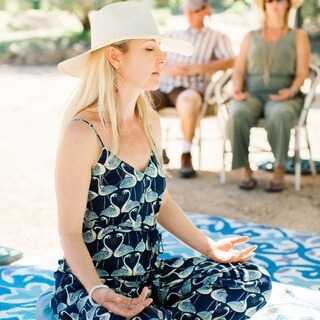
I was visiting a yoga teacher of mine there and you were presenting on the science of yoga.
And we just were chatting.
I had no idea that you were a presenter,
But during our chat,
I got more and more interested in what you're doing at UCSD and how you're really taking this ancient principle and practice and applying it in the realm of psychology and mental health and what you're finding science-wise.
So I'm excited to talk with you today about this intersection of science and yoga.
Yeah,
Me too.
The research study that I was mostly referring to is that we're actually applying yoga for veterans who have PTSD.
And the study design is really interesting because we're actually comparing it to just physical activity to be able to actually say,
Well,
What is it about yoga that makes it different than just exercise?
Because we know exercise is useful for a lot of mental and physical health problems,
But what about yoga is actually the key ingredients that we really want to emphasize and educate on.
So yeah,
I think this will be a great conversation.
Okay.
So you already asked my first question.
What is it about yoga?
How is it different than just exercise?
I think many of us have taken a yoga class.
Many of us have exercised and we do feel something different going on there.
Yeah.
And so I think that the science is still in the works,
Right?
Because there was decades of people doing research saying,
Oh,
How interesting yoga is effective for older adults,
For children,
For veterans with PTSD.
It's effective for asthma.
It's effective for heart failure.
It's like effective for all these different things.
And so now we're kind of at the phase of research where we're actually asking the question,
Why is it effective?
Not just,
Is it effective?
Like why is it effective?
And so I think that the answers will end up being kind of nuanced for like the actual reason that a person is seeking out yoga.
Like the thing they get from it might be quite different depending on what their goal is.
But I mean,
I think that I boil it down to three categories.
That the first thing is that all movements is good,
Especially in our sedentary society.
And it's like a nutritious movement as to reference your other guests that this is like ways that we're not maybe typically using our body.
So there's so many benefits to that.
And I can go into the research more.
But then also yoga always contains an element of breath control.
And a lot of people are not aware of how they're breathing.
And really specifically people with stress and anxiety are overall breathing way too much.
And so yoga is actually helping you to slow the breath process and to actually be more mindful of am I inhaling here as I come into this upward-facing dog and actually like having that breath control and awareness.
And then like the third,
I would say category is mindfulness.
And we can talk about all the different benefits of mindfulness.
So I think that those are the three reasons why yoga is actually so useful for so many things.
And what's interesting is,
You know,
I think maybe we need to rewind a little bit even just define what is yoga and what is the yoga that you're researching?
Because I guess it sort of would be like Mexican food is good for you.
Well,
Are you going to Chipotle or are you going to the taco stand around the corner?
Or are you making Mexican food at home because you're with your mom who's Mexican?
Like there's all these different,
You know,
Different aspects of what you could call Mexican food.
And the same is true for yoga.
And a lot of what's happened in the West is I guess sort of a cultural appropriation of yoga and a real change of yoga.
How are you defining yoga in your research and what is it that you're doing with folks to find these benefits?
So specifically,
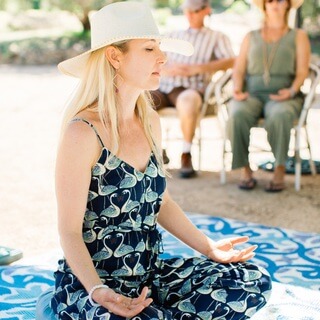
I am a yoga teacher and I teach some of the classes for this yoga protocol.
So I can answer real specifically what we're doing.
We're doing like what Americans would call Hatha yoga.
And so we're just kind of like sustaining these poses,
Like the traditional warrior poses,
Plank,
Downward facing dog,
We're doing all of these and kind of sustained several breaths holding it.
We're also doing a lot of education.
I do a lot of education as we're going through about like,
Notice your body in this way,
Notice your breath in this way.
And then also notice the judgments,
The distractions,
And use your body,
Use your breath as an anchor to come back to for your attention.
So that's like what I'm referring to when I refer to yoga.
But yes,
You're totally right that there's such an interesting history of how we've come up with this kind of set of practices that we as Americans and Southern Californians or Californians define as yoga.
The principles that you're talking about in terms of breath retention and asana and how you're concentrating your mind are very central to the practices of yoga.
I'm curious how when you're working with folks,
People coming in from lots of different backgrounds,
Different abilities,
Different body,
You're working with PTSD,
How you make yoga inclusive to people.
Yeah,
I think that whenever I am working with somebody who is doing yoga for the first time,
I kind of almost ask them like what their fear about yoga is.
And so for some people,
I think their fear is very like clearly about a physical ability level or an injury background.
For some people,
It's actually,
Especially with my veterans,
Sometimes it's like this perception of like,
Who does yoga,
Like,
You know,
Almost the culture of,
You know,
These like white women doing yoga in California,
Like there's like,
Kind of just like,
Depending on what somebody's kind of concern about getting involved in yoga is.
And so I think that having just a frank conversation about that,
And then breaking it down to the point,
I think,
To be,
As I said,
So practical,
That like,
Really,
The point isn't to make your body look like my body as we hold these poses,
Or the point is that really to be,
You know,
In this advanced elite exercise class,
Where we're all like doing inversions and headstands,
That actually the point is to be able to use your body as an anchor for your mindfulness,
And then for many people to rebuild a healthy relationship with their body and with their sensations.
What are you noticing in terms of changing and folks that are coming into work with you,
Say someone that comes in with PTSD?
Yeah,
I think that a metaphor I like is a lot of people feel like they're driving around in a car where the check engine light keeps on coming on and like things keep on like,
Alerts keep on happening.
And they learn that they can't really trust those alerts anymore.
That's like what it's like to be in a body with anxiety or with PTSD that you kind of can't trust some of the cues that your body gives you anymore.
And so you actually in the same way that if you were driving a car that like,
You can't really trust the check engine light anymore.
Like you have to learn the car like,
How does the car feel or like what feels different in your turns or in your brakes to indicate to you that there actually is a problem that needs to be addressed.
And I think that that's something I observe with the yoga for PTSD is this rebuilding a relationship with the sensations in the body and being able to actually be able to tell is this safe for me?
Is this not safe for me?
What is this breath actually feel like?
Some people are so afraid even to settle down and pay attention to the breath.
And so I think that it's a rebuilding the relationship with the body and with the cues from the body.
So really developing that interoceptive awareness of what's going on inside your body,
Being able to listen in,
Being able to trust it again,
Rebuild the relationship.
And I like what you said about the breath because when we're anxious,
It does sometimes the message that people tell anxious folks is just like,
Take a breath.
And that isn't always the most helpful thing to do when you're facing anxiety.
Exactly.
That's what the research shows is that particularly somebody who is prone to panic attacks,
That's the worst advice that you could give them.
And so I always tell my people is that whenever you are starting to get anxious,
The point isn't to take a deep breath.
The point is to take a long exhale.
That the exhale actually is the thing that you need to focus on,
Not the inhale because people hyperventilate so often when they're anxious and breathe too much.
And so I do a lot of education too about the fact that our exhale really is paired with the parasympathetic nervous system,
The rest and digest,
The calming down.
And so,
Yeah,
We do a lot of emphasis on the exhale and yoga practice too.
So let's take the three components that you introduced to us that you think are part of really the mechanisms,
The key underlying factors that are contributing to the benefits of yoga.
And let's maybe break them down even more in terms of the science and then give examples of that.
So the first component is asana,
Which is the physical practice of yoga.
The second component pranayama,
The breath.
And then the third component is what you're doing with your attention,
With your mind,
The attentional practices.
And these loosely map onto the eight limbs of yoga,
Patanjali's eight limbs.
So you're leaving out a little bit of the ethics of yoga in there.
So just to orient people,
The eight limbs of yoga include ethical principles,
The yamas and the niyamas.
Yeah,
So how you are relating to others,
Things like truthfulness and non-stealing and how you're relating to yourself,
Things like having self-discipline and practicing contentment and sentosha.
And then there's also these other limbs,
The other six limbs that have to do with asana,
Which is the physical practice pranayama,
Concentrating your mind,
Withdrawing of the senses,
As well as a practice of finding this transcending of the self,
The samadhi,
Where you get into a self-absorption into awareness.
But it is helpful just to break it down into these three things.
I think most people who practice yoga are going to practice those three aspects,
The physical aspect,
The breathing aspect and the mental aspect.
In terms of asana,
The physical postures,
You mentioned how you're helping people become more sort of embodied.
How would you,
What is the science behind that and why is it so beneficial?
Well,
I think embodiment is maybe an even more nuanced layer of it,
But I actually just want to talk first about the benefits of exercise.
And I,
You know,
It's so interesting actually for me personally because the very first research study I ever worked on 16 years ago was about basically augmenting a depression treatment plan by adding exercises called the TREAD study out of UT Southwestern.
And back 16 years ago,
We were like saying,
Okay,
Well,
Exercise is helpful for depression,
But like nobody really knew why.
There's like a lot of theories.
It's like,
Is it kind of like this runner's high type of like endorphin response?
Is it like heating up the body?
Is it just like the behavioral activation of like getting out there and being social or being in nature or whatever to go for a walk?
Like people didn't really know what the active ingredients were and so it's been interesting in the last couple of years to really see so much more understanding of what actually happens in the body when we're moving and exercising.
And so specifically I would refer people to a good summary of that called The Joy of Movements by Kelly McGonigal.
And the reason I referenced that is because it's so useful to me to actually understand a bit more about what's happening.
And so I pulled a quote from her book and she says like,
We have a pharmacy in our quadriceps,
Meaning that our muscles are like an endocrine system.
And she talks about how like actually like every time you move your body,
You're actually giving yourself an intravenous dose of hope,
Which is called like myokines.
They're also called hope molecules because there's just so many useful benefits of it.
And so I think that like just understanding that on the basic level of like moving your body in this way,
Activating your muscles,
This is giving just so many different benefits,
Not only for your mental health,
But also like for your physical health.
Because I think that also we have a lot better understanding of the fact that like,
You know,
Yoga is helpful for diabetes,
Like yoga is helpful for so many things.
And part of the reason is because actually too,
When you engage your muscles,
Like you're helping yourself to regulate your glucose better.
So like almost every system of your body is better because of engaging your muscles.
So you you also said something in the in the talk that you gave the Rancho La Puerta,
Mexico,
Where you talked about,
I hadn't heard this before.
And I loved it that the evolutionarily there's also a reason why it's so in the beginning,
It's so hard to get us to move.
And then once we start moving,
It feels so good.
Yes,
I would love to tell you about that.
Because for me,
It's so validating and so I am glad that your brain latched on it to it the way that mine does.
So basically,
I'm saying here,
That exercise,
Yoga,
Or any type of exercise makes us happier.
It's like better for our bodies,
It gives us this hope.
And so it's just like,
Well,
Why is it so hard to get moving?
How is why is it so hard?
If I know that exercise makes me feel better?
Why is it so hard sometimes to like get off the couch and start doing it?
And so actually,
I think that evolutionary psychology really explains this well,
Which is that historically,
We didn't have endless calories or endless food.
And so the decision to move your body,
You actually had to make that decision with discernment.
And so there's almost like this,
Like,
This check system that happens in your body,
Where it's like,
Are you sure you want to move?
And then like,
If you say,
Yeah,
I am sure like,
I need to chase after,
For example,
I need to chase after this antelope.
It's like,
Okay,
Well,
If you've made the decision that it's worth it to you to move,
Then good job,
Good job,
Good job.
And like your body starts to secrete all this stuff that says,
Yes,
Keep going,
Keep going,
Because you've obviously demonstrated that it's worth it to you to move.
We could capitalize that in terms of our movement values,
Like making it reminding ourselves that it's worth it to move can help get us out into doing the movement.
And then once you do it,
It starts feeling good as well.
So I loved how you talked about nutritious movement,
Because I do think yoga has that benefit of moving the parts of our bodies that we don't usually move in lots of different directions,
Right?
We're moving forward and backwards.
We're bending,
We're opening up,
We're moving sideways.
That's all part of the traditional asana practice.
And one of the things that I think is interesting in thinking about cultural appropriation of yoga is how some of those movements have begun to be people have begun to think of that is yoga,
And even use using words like vinyasa.
But actually what vinyasa is,
Is the the awareness of the connection between breath and movement.
And so it's not just about the movement and getting to the next thing.
And I've been in yoga classes before where I've heard instructors say things like,
Only 30 minutes more think about how good you're going to feel when you're done.
I'm like,
That's not yoga.
Because it's about being present in the in the pose that you're in,
And exploring it and also exploring it with the breath.
So how when you're working with people in in postures,
What are some of the cues that you're giving them to help with that process of the exploration of the movement from the inside out?
I don't think I'm the best yoga teacher,
I'll start there.
But I think that the things that I have found to be the most useful is like,
You know,
Not only checking the small things about alignment,
But like for me,
And for my population,
It's just like so many people have like,
Tension headaches,
They grind their teeth,
They have like all this tension that they hold.
And so every time we get into a pose,
Like we'll do all the kind of checks to make sure that everything's in right alignment and like,
Check this,
Check this.
And I'll often say,
Notice how many things there are to pay attention to right here right now.
Why would you let your mind drift somewhere else?
Or why would you like go on to the next thing?
There's so many things we can pay attention to right now.
How is your knee aligned?
How is your breath?
Is your core still engaged?
Check in with your forehead,
Your jaw,
Your neck,
Your shoulders,
Are those soft?
And so I kind of just usually emphasize the fact that like,
Oh my gosh,
Like our body is so like richly giving us information in the moments of yoga.
Like why would you put your attention anywhere else if this is so many things?
Pick something here.
Okay,
So that's beautiful.
That is really good yoga teacher.
What I love about that is that,
You know how often when we think about yoga,
It's sort of whatever's happening on the mat will happen off the mat.
Right?
So if you're on the mat and you're having a hard time paying attention or being in your body or staying present,
It's likely that you're also going to have a hard time in when you're like in a work conversation with a colleague,
Your mind might be on something else or when your kid comes home from school,
Your mind might be something else.
And if you took that mindset of like,
Wow,
But there's so much to be present or and pay attention to in this moment,
Then it may change your experience off the mat as well because you can use that skill.
You can use it with your body,
But you can also use it in your relationships.
And the more you do that,
The more,
You know,
Thinking about Dan Siegel's wheel of awareness,
How he does a lot of practice in building the awareness of our eight senses.
So the five physical senses,
But also awareness of our interoception and our thoughts and our interpersonal relationships,
That the more that you do that,
The more you strengthen those connections in your brain to be able to stay present.
And the more nuanced you also become at sort of like the subtleties of the sensations in your hips or the sensations in your back,
And you have more ability to work with them as well.
Yeah.
Cause I think the like mindfulness component certainly is like a component of non-judgments like in that something that's emphasized,
But the other like definition of mindfulness that I like is,
I forget who I'm quoting,
To bring in like the exquisite vividness of every moment.
And so,
Yeah,
I think that that's what I really like about it.
So we're naturally kind of moving into mindfulness.
As soon as you start getting present in the body,
There's the benefits of the exercise,
But there's also the benefits of embodiment and that leads to mindfulness.
There's so much science behind mindfulness at this point.
I don't know how much time we need to necessarily spend on that.
Everyone sort of knows about the monk studies and the insula and all that,
But what,
You know,
In a real practical way,
How are you cultivating mindfulness and what are the benefits for it for people that are struggling with things like anxiety or depression?
So I think that I go back to the fact that especially,
Let's start with anxiety.
One of the most important treatments for anxiety is just exposure therapy.
And it's like actually like have the experiences that you are afraid of in a healthy,
Structured way.
And I think that like mindfulness really is that it's exposing you to like the things that you might be afraid of.
So like in yoga,
You are settling down being with your own thoughts.
It's quiet maybe.
And so that can be scary on its own.
And so it's actually like have this experience to like,
You know,
Let yourself be with the discomfort of that quiet during Shavasana or the discomfort of noticing your breath.
And also just like the literal discomfort of like some of these poses,
Like you will feel like especially in different variations of yoga practice,
Like maybe like a yin yoga,
It really is this like practice of being uncomfortable and making peace with the fact that you're going to be uncomfortable.
And I think that that just has endless benefits to make peace with the fact that you will be uncomfortable knowing this too shall pass,
Knowing none of these sensations are going to last,
Knowing that you can be uncomfortable without being in danger.
Those are like some of the things that I think mindfulness offers for like depression and anxiety.
Absolutely,
And I think in the tradition of yoga,
The kleshas,
Which are the things that create suffering,
Right?
And the things that create suffering in your mind are things like an attachment to self or aversion to trying to avoid something that's painful or holding on to something,
The attachment to something good,
Like not wanting it to go away.
And then also just sort of the not knowing,
They call it ignorance,
Sort of the not knowing of your true nature of just like who you are,
That when you practice mindfulness in this way,
I think through yoga,
What it helps with is those mind states that cause a lot of our suffering,
Right?
So with anxiety,
You're either trying to make it go away,
Or you're maybe you're having a moment where you're not experiencing anxiety and so you like want to hold on to that moment really tightly,
Or maybe you're over identifying with your anxiety,
Like you're you think I am my PTSD or I am my social anxiety.
And with yoga,
You get a little bit of space from all of that,
That's just being in the moment as it is and watching it unfold as the sensations do unfold with yoga.
It is something that I think yoga in particular is helpful with because for some people meditating mindfully is more difficult and actually being doing like a physical practice of yoga helps kind of it just it helps to have something else to bring your attention to in the present moment as opposed to just sitting in silence.
So I do think the physical practices add another layer of something to bring your attention to that can be really helpful as well.
Yeah,
And again,
Just like emphasizing like we do have such a sedentary society and so then like the challenge of like,
Okay,
Well,
You've been sitting all day now for your own wellness like a sit in stillness.
That's like not really appealing.
I will just say for me personally,
I do find this to be like just a better way for me to practice mindful awareness in the present moment.
Yeah.
I also think there's an element that's really helpful for people that in with yoga that really struggle with body image and it's a different way of relating to exercise and that's that's sort of how my path to yoga my path to yoga was in order to find a different way of relating to my body than one of punishment or forcing it to do things or ignoring it signals and then also how to begin to appreciate my body differently as well.
Do you notice that in terms of people's and are you measuring any of that or what's the research behind that in terms of body image and body appreciation with this type of practice?
That's not my personal area of research.
So I am not really able to give you any citations but gosh,
That's so intuitive to me that the idea of again rebuilding a relationship with the body with non judgments and I think also for me you know even sometimes as I'm leading yoga I'll like encourage people to like is there any experiences here that you actually treasure and like can you thank your body for your body giving you that experience and so I think that yeah relating less to the appearance of your body to the sensations of your body and to really the marvel of like how many processes and that's what I'll often do too in mountain pose is just kind of like paying attention to all of the things that are going on at the same time just to hold you up how many of your muscles are engaged that really having that gratitude or even awe of the complexity of our bodies and our perception that yeah that that really maps on for me.
Such a different way of relating to the body as opposed to sort of the body is sort of objectified it's more of appreciation of the body and befriending it getting to know it getting to listen to it and seeing that it's way more complicated and complex and amazing than we often give it credit for when you slow down and take the time with it.
But I think also the thought that comes to mind just honestly is that I have a hard time sometimes engaging in yoga culture because like the ideal body type for women you know in some ways has become this like very like strong like you know lean muscle type of like yoga woman I would actually say is like that has become such a thing and so I would notice like if I went to certain types of yoga studios that I would actually feel pretty awful about my body and compare it to other people so I think that it is I think I just want to validate that that's maybe a thing that made me not want to enter into yoga for a while because I felt like so physically unable compared to the the people around me and so I think I think that's kind of such a interesting duality that there's this all this type of information you could be getting to honor your body even more and at the same time depending on the the culture of the actual studio or class you could actually be getting a lot of information that makes you disrespect your body.
You know I really love this book called Embrace Yoga's Roots by Susana Bakatake and someone recommended it to me when I was wanting to look more into cultural appropriation and yoga and she describes cultural appropriation is when someone uses someone else's culture including practices,
Symbols,
Rituals,
Fashion or other elements from a target or minority culture without considering the source,
Origins or people of that culture.
They may use another culture for various reasons such as to make a profit,
To make a new trend,
To look cool or be fashionable,
To be cultural tourist and explore the exotic,
To mold another's culture into a more Eurocentric one and I think that the focus of yoga turning into this sort of like what type of body do you have,
You have a whatever that image of the yoga body that's out there is very closely linked to cultural appropriation of yoga and also capitalism because there's a billion dollar industry now selling yoga clothes and yoga materials and sort of selling this promise of feeling a certain way if you wear these things or you look this way and it's really actually the complete opposite of what yoga is about which is not about getting your body to be a certain way or be in a certain pose,
It's yoga is about a union of the body and the mind and the spirit as well as being able to actually create pure awareness of who you are from the over identification with the body.
It's just really interesting to me the way that the West has kind of taken this and manipulated it and appropriated it and I do think finding yoga studios or maybe even starting your own practice,
You can do online practices where that's not part of the teaching and if it is,
If you do get triggered and you feel like okay and I think it happens to everybody,
They go into a class and you compare yourself to other people or you compare your clothes to other people's clothes,
That that is actually also part of the practice that you could bring that to your practice of mindfulness as well.
Yeah,
No,
I just agree with everything you're saying and it has three different lines of thoughts opening up and so I guess one thing I'll mention is that ultimately a product that we want to have at the end of our research study is basically a guide so that we don't have to be doing tons of yoga classes for example at the veteran's hospital but that we could actually do an education session with a veteran and say go to the YMCA,
Go to Core Power Yoga,
Go to whatever is easy and available to you,
Do these online ones but here's the things that we want you to pay attention to like when you go so that you can actually be like an informed and educated consumer of yoga and that this would actually be like the most kind of cost effective and the most realistic way that we could allow our veterans with PTSD or with anxiety disorders to utilize yoga for actual benefit rather than just like oh yeah go to this exercise class and potentially compare yourself to other people,
Potentially feel really uncomfortable that somebody wants to walk around and potentially touch you that you know we want to actually make a consumer guide and so I think I was just so resonating with what you're saying that I think that's part of the consumer guide that we would make is that you know when you are in one of these yoga classes automatically for sure judgments are going to come up,
Comparisons are going to come up,
Distractions and can you use even in those tough moments where some of them might be such painful judgments can you maybe bring your body your mind back to your body can you maybe regard your body with kindness or non-judgments and yeah like this is such a challenging thing but you could actually learn a lot that's translatable off the bat in those moments.
Oh I love this concept of bring your guide to wherever you are it's sort of like you know you can go into any restaurant anywhere fast food or not and make choices for you that work for your body and work for your goals and work for what you're trying to grow in your life and maybe there's a place where if you go to you know this specific yoga class at this awesome studio in this one location that costs a lot of money that would be great but we don't all have access to that so we may need to go to studios or places that maybe aren't always bringing in you know sort of the traditions of yoga or cuing you in a certain way but if you have those principles within yourself and you take it into a yoga class then you can practice it anywhere and then ultimately I think also practice on your own because I do think that yoga classes are wonderful and there is good research on synchronicity as well you know that that sweet combination of having physical arousal with synchronicity helps us feel more connected and collaborative and solve problems better when we have that you know we have that experience I think of doing a sun salutation with a group it's just really lovely to do that together but there's also an individual practice that you can start to develop and sort of the discipline of taking 10 minutes or 20 minutes a day to do some simple poses to care for your body and really listening into your own body as to what feels right to me what does my body need and that will change from day to day it'll change during different times of the day and when you take some some yoga classes over time you'll also be able to bring that that ritual home as well.
Yeah and you cued my mind to another kind of interesting thing I don't know I think this stood out to me because of my personal history with like being in like choirs and everything when I was a kid but I heard a quote that was just like you know all of these traditions across world and across time had people chanting together or singing together and said actually like a function of that is that you're actually breathing together and I think that that really resonated with me so much about like oh what's so special about like that communal yoga environment and it's really that we're all breathing together and there's something lovely about that.
So that brings us to the to the third practice and and I will say at the end we're going to give you some maybe some ideas of how to do each of these but the third the third component that you're finding through your research to be particularly to be one of the key mechanisms of yoga is the breath he mentioned we're breathing too much we're focusing too much on our inhale and not extending our exhale I love the book Breath by James Nestor many of us have read that but really his his thesis at the end was slow your breathing down to about five counts for the inhale about five counts for the exhale and whatever way you want to do that you can do it you can do it through you know a chant naturally takes your breathing down to that pace some controlled breathing if you do pranayama at the beginning of your yoga practice but also the breathing throughout the practice so how are you how are you teaching what types of breath exercises are you teaching and what is some of the science behind that yeah so I do reference very heavily that's that book by James Nestor because it's just so good at making the science really user-friendly so I highly recommend it and I think that's again like our cultural messages around breath are just wrong that if somebody is having almost a panic attack and you say take a deep breath it's just so the worst message that they could get because really like the functional component of so much anxiety is hyperventilation so actually explaining that to people and then explaining that our exhale is actually activating the vagus nerve and so this is what I do pretty much at the beginning of every class when I know a new person is there as I just explained like your body naturally knows that the exhale is how you calm down and the same way that if you were to get frustrated you would actually go because that exhale is trying to calm you down or if you can finally relax at the end of a long day and you take off your your bag and you can finally relax you go because your body naturally knows that the exhale is so paired to your relaxation and so I give those examples just so that maybe people can actually remember it's like our because it's just different than our cultural message so just the education that your exhale is what we really want to pay attention to making that a little bit longer and a little bit deeper and I think also the the problem too is that not only are people breathing like breathing too much holding their breath but they're you know breathing at such a fast pace and so not that this is a sustainable number but we actually see that physiologically the kind of perfect amount of breaths for like the most physiological react like relaxation is a five and a half breaths per minute and that's so different than the way that we typically live so breathing less often and then also like not needing to take these like heaving deep breaths that I kind of cue people just like sip in a little bit of air and like maybe pause before you like take in another breath and just kind of notice if you can breathe less frequently and even like a little bit less deeply like taking in less air and that's so counterintuitive to people so I think it's like not only do you need the education of it you need that like embodied aha moment of like oh wow that is actually what it feels like to breathe in a relaxing way what's interesting is when you pair it with yoga so say you're doing a difficult pose or a pose that requires a lot of concentration maybe you're doing a balance pose isn't super physically difficult but requires a lot of mental concentration you may notice if you're bringing breath work into your yoga practice you may notice that those are the times when you hold your breath and this again how what is on the mat is off the mat the same is true when you're in a difficult conversation with someone or when you are focusing really intensely on your work and you're trying to figure something out you may notice that that's the time when you hold your breath and so it's really nice to be able to look at okay if I can in yoga class when I notice discomfort show up focus on that smooth slow exhale and in yoga I think in particular in pranayama at least how I was taught pranayama is to balance the inhale or exhale or have the exhale be slightly longer than the inhale but when you bring your attention back to your breath again it helps you get back into your body and actually can transform your experience of that discomfort so it's a nice thing to bring off the mat when you when you when you practice it on the mat you can practice it off the mat and then there's specific breathing exercises that you can do and sometimes at the beginning of a therapy session I'll walk people through a breathwork exercise where I'll do something like alternate nostril breathing or a slow five count inhale hold for five counts five count exhale hold for five counts so a box breath and just doing five minutes of that totally changes your physiology changes how you're thinking how you're landing in the room and it's a nice thing to bring into if you have a meditation practice or yoga practice to bring into the beginning as part of your your ritual as well okay so we've talked about these three main components of yoga the the physical practice the mental practice of mindfulness and then the the breath work practice if you could give a practice for each one of those and I could give one too that people could do today that they could actually apply today to their life to to try this on so first a physical practice what would be something that people could do today you know and I have total like humility that like I'm kind of keep coming up with these off the cuff so you're gonna correct me or add to it if you if you think if you think so but yeah I think like as far as like a movement practice a thing that I really value and have learned from being a yoga teacher and actually like balancing a class is I've really learned about like the importance of like counter poses so when you've been doing something a lot to do the counter of it and so that was such a revolutionary idea to me even though it's pretty simple so just noticing in my everyday life when I'm sitting at a computer all day I have my arms out in front of me I'm like slightly maybe like forward posture it's just like I need to do counter poses for the things that I'm spending so much time on my day and so for me personally that's just like chest openers and just like really doing a lot of time with the chest openers and I see how useful that is for balancing out my body and so I think that that would be kind of like a movement challenge that I would say is super useful for people notice the movements that you're doing all day long and on purpose spend time doing the opposite so for many people that is arms in front of you doing something and so just like extending the arms back opening up the chest and like holding that was I think of really useful practice for me.
So you're interlacing your fingers behind you you're reaching your arms back and up and you're opening up your chest and then I would even add like pulling your head slightly back a little bit too that forward back it's like yeah if you hold the bowling ball out in front of you it gets really heavy well your bowling ball is your head so it's not so great for your neck.
So doing a counter pose I love that we spend so much time forward we need we need to move our arms back and open up I think a related practice for me that I try and do on a regular basis that comes really from from yoga as well as getting my feet above my head so whether that's lying down with my legs up the wall when I'm reading books to my kids at the end of the day sometimes in between clients if I want to read a book or I want to leaf through something I'm preparing for an interview I'll lie down and put my legs on on a couch with my knees bent and just lying on the floor with my knees bent on the couch but it's sort of a counter pose because we spend so much time with our head above our feet and can you spend a little more time with your feet above your head and that there's all sorts of benefits to that and part of a balanced practice as well.
Okay so those are those are some physical things you could try how about the the mindfulness component the attentional component what could be something that someone could do today to build that into their practice or into their day?
I think you know everybody's different on what they're already doing with mindfulness but like the most basic thing I tell to people if they don't have any type of mindfulness practice is I say the next time you're in the shower just be in the shower and I use that as a really salient example for me personally because like when I'm in the shower I'm thinking about like what I'm gonna do next or I'm thinking I'm just like my mind is anywhere but right there in the shower and in the same way that we talked about the the body being a nice attentional anchor I think that a shower there's many pleasant things to pay attention to when you're in the shower but for me I'm planning or I'm rehearsing or I'm daydreaming what would it be like to actually just uh like have that be a practice of just feel the nice warm water on your skin or just smell these nice things and that this could be a starting point of like embodiment and then practicing attentional control because what we see to be true is that our attention is like a muscle and so that every time you get distracted and you bring your attention back you're like strengthening the muscle of your attention so picking whatever kind of anchor is nice for you it could be movement could be eating it could be being in the shower as I often recommend but give yourself this opportunity to notice when you become distracted and bring your attention back great yes I was going to do something similar which is just the walk from your car to wherever it is you're going so if it's your walk from the car to the grocery store or from your car to your office or your car to your home what if you were to take that walk and walk it as if you've never walked it before and even to the point of noticing how it feels to put your how do you put your foot down how do you swing your arms how do you hold your body really as if you were on a yoga mat moving into a downward facing dog you're paying attention to the backs of your calves and your back and your head and your what if you were to bring that to your walk and in notice how it feels different when you become fully embodied in a very short keep it short something small as well keeping building that attentional resource back into paying attention to the present moment in your body and your movement okay breath work what what would be a way we could bring some breath work into our day so I was struck by noticing how difficult it was at the beginning of the pandemic switching everything to being online and that like my body got very fatigued and I read an article that actually referred to it as zoom apnea that a lot of people especially when there's like a little bit of a glitch or a delay that people were actually like you know if you set them up with some type of a monitoring device that people were holding their breath so often when they were like on zoom or even just like on the computer working and so for me that was so interesting to notice that I just did not have an awareness of my breath in this way and so that was a thing I don't know if everybody's life still contains zoom to the same extent that mine does but I think that noticing maybe in that situation or any moments where you might feel particularly prone to holding your breath or breathing too much and then just like on purpose I'm gonna pay attention to it and anytime I notice that I'm gonna give myself a nice smooth long exhale to kind of reset the nervous system oh my gosh zoom apnea definitely I love that I totally have that yes so I love that I also would recommend trying to bring a one minute breathing practice into some point of your day and choosing either square breath or alternate nostril breathing or even just a breath retention where you breathe in you hold your nose and you breathe out for as long as you can and hold your out breath isn't one minute and just notice what happens pre and post for you do a little self assessment a little scientific self-help on that rate your stress levels rate your physical tension whatever and if you notice a change in one minute imagine how much the change would be if you took it to five minutes but we can all do that for one minute there's some good resources on insight timer as well for breath works that could be another place people could go if they want a little bit of guidance and I will probably all record like a five minute breath work what I do in the morning and I'll put that up there so folks could try that out as well because I don't think these things need to be long we need to make it doable can be in our car it can be in our shower it can be on our walk to work but they these little micro practices in our day is is taking yoga off the mat and into our life as well okay so I'm curious you know how how you ended up here you know a scientist that's now studying yoga a psychologist is now studying yoga with an interest in this perhaps you'll relate to this but as a psychologist I was trained in all of the kind of gold standard evidence-based practices and I was working with you know veterans who were really suffering and had already tried all of the things like all of those CBT all of the prolonged exposure they kind of tried all of these things and so I think I was so interested in this general idea of these ancient practices that have been around for so long and then kind of like also seen in so many different cultures what can we learn from those and I don't think that you know yoga for PTSD should be the first thing that you try if you have PTSD or if you have panic disorder if you have something really difficult like that like absolutely try the gold standard interventions but I think for me I was wanting to be able to still have something to offer these these veterans and these people who had already tried everything and so I think there's a subsection of people who have already tried everything and this is what finally worked or finally like kind of got through in a different way and so that was kind of I guess my like reason for feeling really passionate about this area and then also I would say that my other research interest is that we we kind of consider some of these things to be like fluffy or woo-woo or kind of like ah you know not not very scientifically based and I think that adding to adding to the evidence-based and actually saying no these are interventions of substance that can actually be very meaningful to a person's quality of life those are a couple of my passions around this area.
I appreciate that because I think the science in some some ways it's like the science is catching up yeah but the science is also the credibility so it's both I mean it's so wonderful to have the science catch up with things that people have known and practiced as beneficial for thousands of years and for many people they may not try it if there if there wasn't the science there and if there wasn't that rationale behind it so and and and for me I think the the path to yoga was actually it was like I was one of those veterans you know like that I I had tried so many different things to try and heal my relationship with my body and my relationship with food and had been through pretty much everything that you can do and a lot of those things did help but I I think that like you were saying with complementary medicine it's like they helped but yoga offered something else that wasn't getting touched by those things and and for me it was a a new relationship with myself a deeper relationship with myself and also like a true ability to surrender some things like let go that concept of there's so many dualities in yoga that are also non-dualities like effort and surrender of how to put effort towards my own recovery but also surrendering a lot of the things that I was holding really tightly to and when I when I went into yoga it was it was through an ashram so it was very much the traditional I still have like a little bit of am I doing it wrong by playing music during yoga I mean it was a very traditional practice of yoga and because of that it was exactly what I needed because I could just surrender all of the beliefs that I had about exercise and movement and the body and what it's supposed to look like and just try this new way of relating to myself that really freed me so I think that when you've tried everything sometimes these complementary approaches whether it's trying acupuncture or qigong or meditation practice sometimes it can open a door to something you wouldn't even expect so it's wonderful and I love that science is is demonstrating that and finding the mechanisms behind it it's very cool yeah and I think I'm so happy that that actually was your path that like because I just think that there are a lot of people in those shoes that this will kind of unlock something unique for them and I think that like the real reason why I'm also passionate about this like research effort of actually figuring out why is it effective not only that it's effective but why is it effective because depending on what your goals are yeah like if we understand more about why it's effective for people with a history of like you know poor body image or if it's like helpful for people who have had panic attacks like if we can understand better why it's effective then you can like turn that part of the practice up to a thousand and maybe some of the other parts of the practice aren't as meaningful for for you or for that particular group but I think that once we have like a little bit clearer answers about like okay let's like toggle the dials a little bit and say like let's turn this part of it up to a hundred maybe like let's emphasize this one a little bit less and in fact maybe some of the you know strenuousness of some of the kind of exercise component could be super not helpful for a person with a certain type of goal and those other practices could be so useful so I think that you know not only is our research trying to do this but I think that like me as a person you as a person everyone as a person can kind of check in with themselves and say what do I like about this what do I resonate with this and then let go of all the other maybe cultural pressures around like oh because I felt that way that I was apologetic when I walked into my yoga teacher training because I was like I can't do inversions I have really poor upper body strength like I can't do a lot of these things I'm so sorry that I'm quote bad at yoga and like that's just such not the mentality to have so I think that we can kind of zoom in on what do I love about this and let me actually just marinate and savor that part of it and the other stuff like maybe let it go yeah so it's it's really about self-exploration individualization and isn't that the way that medicine and psychology is going right it's like taking the evidence base that we have and using that as one piece of information and then using your personal experience with it the case study of one which when I was in graduate school used to be like poo-pooed like you know case studies don't now it's like back again like the case study is back for then the case study is you how does this work for you what parts of it work for you what do you need what do you resonate with and it's a lifelong journey to figure all of that out so it's it's fun you get to keep on exploring more and more and more and there's lots of different ways to do that with yoga there's it's endless this I feel like I'm you know 20 years in and I feel like I know nothing so it's it's wonderful it's beginner's mind over and over again yes well thank you yes and thank you Julie for spending this time this hour with us I know that you have a private practice so people can work with you directly now in San Diego or in California I'm sure you're online as well you're also teaching at Rancho La Puerta you're working at the university what would you like to share about how people could find you if they want to learn directly from you well I have such a limited online presence but I do have a website and so you're welcome to call or email me from there and it'll be in the show notes I love that you have a limited online presence it makes you very likable having a limited online presence but good okay well thank you so much it's really been a pleasure and treat to talk with you today yeah same thank you so Julie and I shared at the end some ways you can bring yoga into your day the physical practice of yoga the breath work practice of yoga and the mindfulness component of yoga I would love for you to do that today for your daily practice actually do these three things and notice how it feels for you when you do them try out some of the physical practices of yoga in your day Julie mentioned a chest opener where you interlace your hands behind your back and open up your heart or the physical practice of putting your legs up the wall or my favorite get into a squat while you're working try out some of the breath work go to insight timer and try out my five minutes of breath work it's free and it's on the app and then bring some mindfulness into your day do something that you usually do mindlessly with your full intention yoga has so much to offer and today we just scratched the surface but I hope that our conversation piqued your interest and that you will go and explore it more for those of you that want to read more about the traditions of yoga I love the inner tradition of yoga a guide to yoga philosophy for the contemporary practitioner by Michael Stone I also love the Yamas and Niyamas exploring yoga's ethical practice by Deborah Adele and a classic from my yoga teacher training is the heart of yoga developing a personal practice by TKV Desikachar and as I mentioned in the podcast I really recommend embrace yoga's roots courageous ways to deepen your yoga practice by Susanna Barkatake we'll link all those books in the show notes and then finally you all know that I'm a big fan of yoga soup and if you want a spiritual embodied and traditional exploration of yoga I highly recommend you check out yoga soup they offer classes online and in person in Santa Barbara and I might just see you there thank you so much for listening to this episode of your life in process when you enter your life in process when you become psychologically flexible you become free if you like this episode or think it would be helpful to somebody please leave a review over at podchaser.
Com and if you have any questions you can leave them for me by phone at 805-457-2776 or send me a voicemail by email at podcast at your life in process.
Com I want to thank my team Craig Angela Stubbs Ashley Hyatt Abby Deal and thank you to Ben Gold at Bell and Branch for his original music this podcast is for informational and entertainment purposes only and it's not meant to be a substitute for mental health treatment.