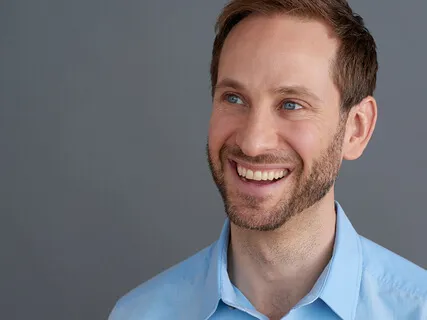
This is Dr.
Adam Bledsoe and welcome to today's meditation.
Today we're going to take a few moments to do what we call a wave breath meditation.
Imagine a wave on a beach,
Crashing into the shore,
Lots of energy,
Loud,
Powerful.
And then there's a moment of peace as the wave recedes back into the ocean before the next wave comes.
The breath works just like that.
It's a cycle of in and out,
The cycle of life.
As it happens,
The inhalation is controlled by the part of the nervous system that manages the fight or flight response.
And that's by design.
As we inhale,
The heart rate and the metabolism increase just a little bit to move the blood and the oxygen around the body that was just brought in.
And then as we exhale,
The body and the heart calm some because there isn't as much oxygen to move around right now.
So in the body,
There are cycles as well,
Moments of increased activity and moments of decreased activity.
In life,
It gets very busy and we can get stuck in the activity,
Stuck in the busy tension and stress continue.
So this is an opportunity to rebalance our body,
To bring ourselves back into the calm,
The non doing,
The peace.
To do this,
We can use the breath to help calm the body.
We can emphasize the exhalation.
We can allow there to be more peace in our moments.
And that ratio over time will start to calm the body overall.
To do this,
We take the form of the wave in our breath.
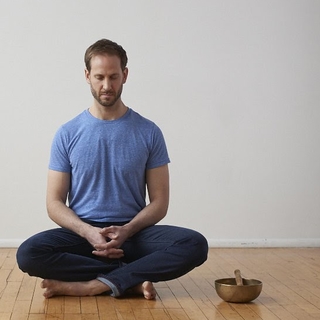
So come into your resting position.
You may lie down or just semi recline or even be seated.
And we'll take a breath in and we'll let that breath out.
And imagine your breath like a wave inhalation,
Exhalation,
Noticing not to hold your breath at the bottom or the top.
And when you're ready,
As you inhale with no effort,
Just allowing it to happen naturally.
And then exhale,
I want you to slow your exhalation down.
Not holding your breath or struggling to keep it in or becoming hungry for air,
But simply slowing it.
Inhalation and then slow exhalation.
You might want to think of it as three to four second inhalation and a six to seven second exhalation.
Consider making your exhalation breaths twice as long as your inhalation.
Inhaling for three seconds,
Two,
One,
Exhaling for six to seven seconds,
Five,
Four,
Three,
Two,
One.
You can do this slower exhalation by breathing through your nose,
By breathing through a contracted throat or by breathing through what we call pursed lips.
As if you're trying to blow out a candle that's across the room and you'll blow a thin stream of air towards that candle.
Inhaling,
Exhaling.
And using our metaphor of the wave in the beach,
With every exhalation,
Imagine that peace,
That calm and that quiet,
The gap between our thoughts,
Between the busy,
Collecting rest,
Collecting recovery,
Rejuvenating and healing in that space.
Inhaling,
Three,
Two,
One,
Exhaling,
Six,
Five,
Four,
Three,
Two,
One,
Inhale and exhale.
Carrying on that pattern on your own right now.
While you do,
Imagine you're at the beach,
Effortless inhalation and exhaling the stress back into the ocean.
The body getting heavier,
The mind relaxing,
The arms and the feet warming as if the sun is warming you.
Each cell,
Organ and tissue of the body collecting that energy,
Using it to repair,
To build,
Start creating.
Breathing a few moments in this breath in quiet,
Breathing in for three to four seconds,
Breathing out for six to seven seconds.
Okay.
Bring your attention back into your body,
Back into this moment.
Noticing the calm and the relaxation that's accumulated that you've cultivated and created over the last moment or two.
Recognizing that at any time you can come back to your breath.
You can elongate the exhale,
Activating the nervous system to begin to calm,
Into quiet,
And to allow peace.
And in there is recovery and rejuvenation and relaxation.
Thank you for meditating with me today.
This has been Dr.
Adam Bledsoe,
Helping you create the health and life of your dreams.