Life is going to be hard.
This isn't about to be easy,
But I got you and you just have to keep showing up.
Welcome to another episode of Within Us.
My name is Azrielle Lajinkovic and I am your host.
I'm a podcast host.
I write.
I do one-on-one coaching and mentoring,
Facilitate masterminds and all sorts of other things.
At the root of it all,
I'm an educator.
I'm inspired to teach and share all that I learned in this wild and wonderful life about how to live happier with more wellness,
Wisdom and wonder.
That's what the show is all about.
It's all about enhancing your life and my guest today,
Kaylee Zaytuny is here to do exactly that.
So for the first time on this podcast,
I want to make a dedication and I want to dedicate this episode to a very,
Very dear friend of mine.
I'm not going to mention her name because I think she'd like to keep it that way,
But she knows who she is.
This very special friend of mine has been suffering from multiple sclerosis for several years now.
I've known her since I was a teenager and I've watched what she's been through and she has faced it with so much strength and so much fortitude.
And recently I learned over the course of the last year that she was working with a professional who is helping her through her process.
And thank God and thanks to this person who's been helping her,
She has really made tremendous progress.
She's now walking for the first time without a cane in several years and she's living her dream of chasing her four year old daughter down the hallway of her home.
That's the dream,
My friends,
That is the dream.
And it reminds me every day how important it is to be grateful for the little things.
You know,
The more we're learning about happiness,
The more that we're understanding that it's these micro moments of connection.
These three second moments of playing with our kids,
Having a conversation at the grocery store with the clerk or the person behind us in line,
Putting on a pair of fuzzy slippers,
Doing an act of kindness,
Receiving a compliment.
All of these small acts are what bring joy to the world,
Bring joy to our lives and bring happiness.
So my friend who will remain nameless,
You are an inspiration and I want to thank you for being who you are and inspiring me every day to live happier and live with more gratitude and for loving me.
So this friend of mine is,
As I said,
The one who introduced me to my podcast guest for today and my guest today is absolutely incredible.
She herself has had a journey,
Really a saga with wellness and with struggle and she has faced it with an unrelenting sense of optimism and hope.
Really there are several parts to her journey and I'm not going to get too into the details here in the introduction because I really want you to hear it from her.
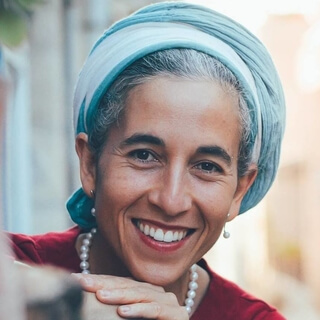
My guest today is Kaylee Zatuni.
Kaylee is a coach,
A speaker and an author and she's also a trained therapist.
Her focus is on helping her clients both through grief and through illness recovery.
And both of these topics are topics with which she is very personally familiar.
You're going to hear about her story with recovering from illness today and no matter what it is that you may be dealing with in terms of health or wellness or perhaps in the lives of other people that you know who are dealing with challenges having to do with health and wellness,
There is something in this episode for everyone.
And I know even on a regular basis in our lives there are so many different health challenges that we can face and truly our health is our wealth.
And I'm so excited to share Kaylee's story with you,
Her insights and her expert advice.
I know that it inspired me and I'm going to take these lessons with me as I go and with nothing further here's Kaylee.
When I was 12 I was diagnosed with multiple sclerosis,
MS and the reason I start there is because on the surface that sounds like a terrible thing,
Right?
A child's diagnosed with a debilitating disease and somehow at that age we feel invincible.
Also too hard at that age to fully grasp what the implications of that kind of diagnosis are.
And so I think that very much prepared me for the rest of my life,
Prepared me for the challenges since which have been in the last few years and really gave me the foundation that life is not supposed to be some smooth sailing experience.
We're not here for something easy.
And because that was always my perspective,
That's really all I've known,
Not in any negative way.
It was in a very optimistic way.
I know life is hard,
There are going to be challenges and I'm going to be able to meet them was sort of always my perspective.
And so as a result,
I just was constantly building this resilience muscle constantly.
And since I've really come to believe that everyone can do that and that's been really an amazing experience for me to get to see what are the things that move the needle,
What allows you to cope,
What allows you to overcome and to be able to face challenge.
And the baseline of that,
And I think it's really,
Really,
This is something so important for me to share.
The baseline of that is first and foremost,
The recognition that life is challenging inherently.
And I find that a lot of times what makes people break is where they were expecting it to continue to be smooth,
Where they were expecting it to be easy.
That's when we break.
And when we know that this is just inherently part of life,
Then things actually get easier.
They get much easier because it doesn't come as much as a shock.
So that was my upbringing,
That was my childhood.
And all I really knew was illness.
And of course there was an adaptation that I had to go through.
There's a learning curve with illness.
It was much easier than I think the average person facing a diagnosis,
Certainly the average adult.
Because just take an adult,
For example,
Is adapting to shifting careers and parenting differently and a different relationship.
And I grew up with this.
And so illness just naturally kind of integrated into my life and I was naturally able to adapt.
And so in an interesting way,
After 18 years of living with MS,
I set out to change that.
I was sick and tired of being sick.
I hated that experience of not knowing what tomorrow was going to hold,
Not being able to plan,
Feeling like,
Well,
I would love to go on that vacation in two weeks.
I don't know if I'll be able to see.
I would love to take this job.
What if it's going to be too many hours for me?
That's so many people with illness face every day.
And then having everything revolve around that.
You cannot plan without,
Oh,
Then this is going to be my treatment day.
And then I'm going to need another day to rest.
And just everything is around that.
And I just said,
Enough is enough.
I cannot live this way.
And so I set out to figure out what this amazing body that we have was going to provide me with.
I knew that we are walking miracles.
We are walking.
We are the most advanced machine on the planet.
And still doctors and scientists haven't quite figured it out.
And I just knew inherently there's got to be a way that this organism that creates human life could give me more for my own healing than I was giving it credit for.
And so I set out on this journey,
Which we can talk more about later.
But I set out on this journey.
And after 18 years,
I did it.
I became illness-free,
Disease-free.
And what I was going to say is that what's so interesting is that I spent my childhood adapting to illness.
And now to this day,
Even though it's been a few years,
I'm still adapting to health.
I'm still adjusting to what it means to be healthy.
In the smallest ways and in the biggest ways,
It's in waking up and just,
Oh,
I have energy.
And I can actually plan my day and expect that that's going to happen.
And then there's also no disappointment afterwards because I lived most of my life,
Thankfully aware that we are not in charge,
That God is in charge and that I can plan all I want.
And he's going to let it go however he wants because my body always stopped me.
Now my body's not stopping me.
So I get to plan,
Which is an amazing,
Exciting thing that I guess other people have grown up with.
To me,
It's new.
And then be able to roll with it.
So it's kind of interesting.
I feel like I've gotten the best of both worlds because I have this ability to be flexible and this incredible gratitude for just every second.
Just looking at you,
Just seeing that there's no question that today I was going to wake up and see the screen and not have any problem with my vision.
And that's not something I take for granted at all.
It's so profound how little moments we're walking through a miracle.
We are living miracles.
We can walk down a path and notice a leaf,
The beauty and the intricacy of one leaf that nobody's ever looked at.
And here we are,
As you said,
The most complex organism on the planet.
And we're still,
Science is still catching up.
We're still learning.
We're still trying to figure it out.
So you are clearly an optimist and I love your positivity.
And we're going to keep this as optimistic and positive as can be.
But I want to go back a little bit.
And I know that you faced some real challenges with the illness.
And it wasn't as though you just fell into illness and you were kind of sick.
I mean,
This was a major life-altering diagnosis.
And I'm curious if you could share with our listeners just a little bit about what was life like for you after you got diagnosed and over the course of the time when you were experiencing symptoms?
The best way I can describe that is life was uncertain,
Always.
Even the process of my diagnosis was an immense challenge.
It took three months to get my diagnosis.
And even though I had classic symptoms,
I had something called nystagmus where your eyes rapidly move right to left.
So my world was constantly turning.
I was incredibly nauseous.
I mean,
It was so bad that if I opened my eyes,
I vomited.
There was no question about it.
I was like that for 60 days.
So sorry,
30 days.
So Kaylee,
You lived life with your eyes closed for 30 days.
For 30 days.
Well,
I lived life with my eyes closed for 60 days,
But I'll tell you why in a second.
So I literally did not open my eyes.
It didn't mean I couldn't see if I did.
I could,
But it just wasn't worth it.
It wasn't worth that feeling.
And so everyone did everything for me,
From feeding me to showering me,
Everything.
And I just laid in a bed,
Basically.
I went to and from the doctors.
And then all of a sudden,
One day I woke up and the world wasn't spinning.
And I remember this moment,
Because my mom and I would get into this routine.
She'd get my brother off to school and then she'd come sit by the bed and we would basically do a body scan.
How are the toes?
Oh,
Still tingling.
How are the legs still crawling with ants?
Like we would just go through my body.
And then the last thing we would do is open my eyes.
And I remember the morning that I opened my eyes and I was like,
You're not spinning.
And it was such an exciting moment.
And I went,
But there are two of you.
So then I saw double for the next 30 days.
And it was sort of an interesting experience because I was surrounded by the most incredible people.
I was in seventh grade.
And as you can imagine,
The average adult doesn't know how to interact with illness.
And I was really,
Really blessed that these seventh graders,
My class,
We went to this small private day school in LA called Kadima.
These were just incredible human beings and they would help like lighten the mood.
So I would go to school just because I wanted to be with kids and I was just bored at home,
But I wasn't actually going to class and they would just tease me like,
Oh,
So do you see two of me?
What do I look like?
And they would play with their fingers and they would edit.
So I just became like the focus of everyone's attention,
But they tried to make it fun and really lighten the mood.
So I was really lucky in those ways,
But it was really,
Really challenging.
So yeah,
That was the first 60 days of my experience with MS.
And it kind of got worse from there,
Honestly.
Every day was just different.
And so I had moments throughout.
I always had a good baseline.
I'm really,
Really grateful for that.
The type of MS I have is called,
I had is called relapsia.
I'm still getting used to that.
It's called the relapsing remitting.
You have a relapse,
Get a lot of symptoms at once,
And then I can go into what's called remission.
It does not in any way mean being symptom free.
Not that anybody explains that to you when you're first diagnosed.
It means that your symptoms somewhat calm down and you have kind of a baseline in between.
So throughout middle school and high school,
I had experienced paralysis.
When I was in college,
I was blind in one eye for a couple of weeks.
That was the most terrifying experience because you just don't know what's it going to take to get your eyesight back.
I've had times when all my internal organs had just shut down.
And it also affected my cognition.
It affected things that you wouldn't imagine because it's the immune system attacking the brain.
And because it's your central nervous system,
Anything can happen.
So speech can be slurred or you can be missing vocabulary words.
And there were times when I thought I was speaking perfectly clearly and my family would just look at me just blank and just say like,
What are you talking?
What were you trying to say?
And then in my mind I had said something very clear.
So anything,
You name it,
Memory,
Concentration,
I faced it all.
Times when I remember I had this very strange cough,
It was bizarre.
I was feeling fine and it was going on for months.
And eventually when doctors said,
Well,
Yeah,
Of course you have MS.
And I thought,
What are you talking about?
How is this even connected?
I've had MS for years.
What do you mean?
And they're like,
Oh,
Your lungs are having spasms and that's causing a cough.
My lungs,
Like just the most,
Any,
Yeah,
You name it,
It happened.
So there you were at age 12 diagnosed with an illness that caused literally anything and everything to go wrong at the drop of a hat.
And you suffered.
I mean,
Anyone looking in from the outside would see suffering.
And yet here you are this many years later and I first became aware of you because of the work you're doing helping other people get well.
And then I discovered your work and I discovered your pictures with the doctors who were baffled by you,
Who can't figure out what happened here.
And yet here you are and you're smiling into the camera and you're seeing one of me and thank God,
Thank God you're planning your day and you're out there smiling and optimistically making things happen and bringing wellness into the world from within as you describe it.
So how did you go from the suffering to here?
What was that?
What inspired the transformation?
I think more than anything was this constant inner knowing that this wasn't going to be my life.
I didn't really know as a child how I was going to do that and what that would entail,
But it just,
There was always that fire in me and I held onto it and I knew it was the only thing I could hold onto.
I knew I had to hang on tight to that somewhere.
It was like stored away on the back burner,
But I always knew it was there.
And it really started the day I saw my first MRI,
My first brain scan.
I honestly remember it like it was yesterday and I think about this moment all the time.
My first neurologist was not such a warm,
Friendly guy,
Kind of a grump or a Grinch.
I think that's more appropriate.
And we're looking at my brain and you can see the scar tissue on my brain scan.
And I looked at him as a 12 year old.
This was even before I had the official diagnosis.
And I remember just,
I remember the feeling of like how I turned my head to him and said,
Is this,
Is that ever going to get better?
Can my brain repair?
And he said,
No.
And I remember the exact feeling of,
I almost felt like I could feel the sound waves like bounce off where I was just like,
He said words and I,
That's just not going to penetrate and we're just going to let that bounce right off.
And it was in that moment that I just had this visceral experience of that's impossible.
That's impossible.
I don't know where it came from.
I don't know how I had any awareness of that.
I had never heard of all the things that I learn about now and all the research that I,
That I base everything I do on now.
I didn't know about any of that,
But I just held on to that belief that there could be another way,
That there could be a better way.
So that was one massive part of it.
And I think the other big part of it,
Sorry,
Go ahead.
So you had this flash of lightning moment of just knowing you knew from somewhere,
Somehow that you would get through this.
Absolutely.
I just knew.
He said to me,
He said,
You will be in a wheelchair by the end of high school.
Don't plan on going to college.
And I just,
He lit a fire under me.
I mean,
What a jerk,
Right?
But like,
I think I needed to hear that where I was just like,
That's not going to be me.
And that started this,
This fire was this,
It was,
It was this lightning moment and I just knew somehow I was going to change this.
Didn't know when or how,
But I just knew.
Amazing.
Thank God.
Thank God.
I feel really,
Really blessed.
And I,
You know,
A lot of times I've,
I,
I,
I became a public speaker immediately.
I started sharing my story because I saw how much it changed.
The diagnosis changed my,
My own approach to life and my families.
We were much more loving.
Our relationships changed.
We never left the house in the morning without making sure we all said,
I love you to each other,
You know?
So that,
That was profound.
That was a gift.
I was grateful for that.
I was,
I,
There was definite suffering.
It was not a walk in the park,
But I was grateful for those moments.
And my parents were really incredible in reinforcing that lesson and that message.
You know,
They would,
I'd get a call.
I'd get called to the principal's office in the middle of the day,
You know,
In the middle school and all of a sudden my mom would be there and be like,
Come on,
We're going to Disneyland.
It's amazing.
You know,
My parents really got on board.
They were like,
Life is too short and we're going to make memories.
And if Kaylee can walk today,
We're going to take advantage of that.
And that was kind of an amazing way to grow up,
To be honest with you.
So I think that also helped me stay really optimistic and know that,
Okay,
Right now things are hard,
But I also celebrate the wins and celebrate the good moments and the little things.
And that kind of optimism got me to the point where,
And actually gave me enough strength that when the healing process started,
I could power through.
Because I think actually getting healthy was in many ways harder than maintaining my illness,
Which was also a shocking experience.
So it's interesting that you mentioned that,
That getting healthy was harder than maintaining the illness.
Yeah.
Now,
If we can go back a little bit to your journey,
At what point did this shift take place from maintaining an illness to getting healthy?
And what did that look like?
So really the moment that it really shifted for me was actually the week I moved to Israel.
There was so much stress around the move and with MS.
Kaylee,
Let me ask you,
When you say the week you moved to Israel,
Can you take us back and just tell us like when you moved to Israel and how old you were and kind of how long?
Oh my gosh,
I don't know if I remember how old I was.
I was 28,
29.
This was in July of 2015.
And I moved from LA.
It was also one of those things that was just unknowing where I've my whole life wanted to live in Israel and just always sort of said,
Okay,
God's going to tell me when that time should be and when that time will come.
And I got a job offer the same day that I had told my current boss,
I have to move.
So I just came to him one day and just said,
If I don't do it now,
It's not going to happen.
I got to do it.
And he was so supportive.
I'm really,
Really blessed.
He said,
I totally understand.
I totally get it.
And I wish you nothing but luck and success.
Keep me posted on your timing.
So I didn't have really a plan.
And I got home that day and had an email asking me to take a job in Israel.
So it was just like,
I really find this by the way,
In life,
When you make a decision,
I find that the things we desire the most are things that God wants to give us.
It doesn't come out of nowhere.
This is what God wants to give us.
He just needs us to be on the creation team with him.
And so we have to decide,
Yes,
That is what I want.
And that is where I'm going.
And he goes,
Cool.
I'm so glad you're on the team with me and just provides it,
Which has been an amazing experience.
So anyways,
So I made the decision.
So 2015,
You made a decision to quit your job and move to Israel.
And the day that you did that,
You got an email in your inbox that you had a job lined up.
Now,
Where were you in your health journey at that point?
I was doing okay.
So I did have a good baseline.
I was strong enough to be exercising regularly.
I was feeling good overall.
I was working full time.
That's a huge gift.
But it was still this mindset.
We're kind of always waiting for the other foot to drop.
Definitely I would say the worst symptom at the time was pain.
I would just suffer through pain for days on end.
And I just sort of learned to mask it,
To suck it up and deal the best that I could.
And the other biggest challenge at the time was actually my treatment.
So I was on a great treatment at the time,
Tysabri,
Which had really shifted the course of my disease.
I'm really,
Really grateful for that.
And I think that was a big part of my healing journey where I always say,
If you're in the middle of a burning house,
You don't sit down and meditate,
You run.
So a lot of times people think like I'm really anti-medication.
And like,
No,
Actually medication can be really great.
And it quiets everything.
If you can get things to quiet enough to where you can then get in touch with your own body,
That's beautiful.
That's a wonderful thing.
And that's what this medication did for me.
But I would do an infusion once a week,
So once a month.
So I was in the hospital for a full day every month.
And then I was basically out of commission for the next 24 hours.
And that is really hard when you're working full time and just want to be a normal adult and have a weekend and run errands.
Like none of that was really within reality.
So that was the other biggest challenge.
And that was a huge challenge,
By the way,
With making Aliyah,
With moving to Israel,
Was just getting my treatment lined up.
It took so much legwork in advance.
I think that was harder than anything,
Than the packing and then all of it by far.
But it all worked out.
I'm really,
Really grateful for that.
And the doctor who actually changed my diagnosis to being disease free is at Sheba Medical Center,
Which is the sixth best MS center in the world.
And they were actually incredible.
They were dedicated no matter what it took to make sure that I would be able to land and have my treatment on time and take care of everything.
But of course,
Them,
Their entire team,
Along with my neurologist in LA and myself and my family were all terrified of what was going to happen once I got here,
Because it's an immensely stressful experience.
I did it very quickly in about a month turnaround.
And that stress is,
It's expected that it's going to bring on a relapse.
It's going to bring on an attack.
And that I was,
It was just,
It was just almost like a given.
I was going to get sick when I got here.
And so when I did,
When I did get in for about the first week,
I couldn't feel one of my hands.
I was going to use my hand.
Which was a really,
I was staying on someone's couch,
Staying on a friend's couch.
You know,
It takes time to when you get here and you arrange it.
It was just,
I remember laying in bed asking whoever was home to just open a bag for me.
And I just at that point was like,
Nah,
I'm not doing this anymore.
That was the moment where I was just like,
This is not going to be my life.
I did not move to the other side of the world to live my dream,
To be sick in a bed and not be able to open a bag.
It was like a bag of chips or something.
I don't even remember.
I couldn't do,
I mean,
I needed help writing notes and imagine like you're here and trying to set up a cell phone and trying to like all these things.
And I just not use a hand.
And I just,
That was the moment that I just said enough is enough.
And so I started the search immediately.
Like who,
Who is it going to be?
Where were the,
Where was the source going to come from?
And a lot of people say,
You know,
When you're ready,
The teachers come.
And I was really lucky that,
That many people showed up in my life to help guide the process.
And more than anything,
It was an intuitive experience.
Once I,
Again,
Once I made that decision,
Answers just came to me.
So one of the most important things I did,
I know you haven't asked this yet,
But one of the most important things I did was a daily meditation of seeing my life and my body healthy.
And what's so interesting is Dr.
Joe Dispenza,
Who now informs so much of my work and what I do,
And I had never heard of,
I did not know who he was at the time.
I didn't hear about him until after I was declared MS free,
But it's almost identical.
What I was doing is almost identical to what he does.
So this,
That to me just says like,
This is an intuitive,
Inherited,
Inherent knowing that all of us have.
And we just have to get in touch with that.
And so I wasn't surprised when I read about him and went,
Oh my gosh,
He did the exact same thing.
That's so cool.
Yeah.
Okay.
So I'm so happy you brought this up.
And essentially to recap,
You landed in Israel in July of 2015,
Which is four and a half years ago.
You're staying on a friend's couch.
It was expected that even though you were at Sheba Medical Center,
Which is one of the best in the world for MS,
That you would still have a relapse.
Like these relapses are something that in general are not really escapable.
It's just something that happens.
And this is a very serious disease,
But for whatever reason,
When you were sitting at your friend's home and having to ask someone to open your bag of chips because your hand was numb,
That was it.
That was your moment when you just decided I will not live like this.
Yeah.
I just couldn't imagine what,
Like,
Why should it be expected?
Like you just said it and even just hearing you say it gave me the chills.
It was so normal.
All the doctors expected it and said,
You know,
They were prepared.
Call us if this happens,
Call us if that happens.
We're prepared with steroids.
This will be the plan.
And I just went,
This is just not a way to live where it's expected that if I go through a stressful experience,
My body is going to stop functioning.
And when someone else gets a cold,
You know,
I was just like,
This is,
Yeah,
It was,
It was normal and expected.
And that was when I went,
No,
I can't live my life expecting this.
That was my moment.
That was your moment.
Wow.
It's powerful.
It's like,
You know,
We don't have to,
We don't have to accept everything we're told.
We don't.
And somehow you had that knowing you had it when you were 12,
When the doctor tried to tell you what your life was going to look like.
And you had it again when you came to Israel in 2015.
And you were told that these are all the things that could be done for you and that stress is going to cause this.
And you just said,
No,
I see something else for myself.
Yeah.
What did,
What did you see?
I saw a vibrant life.
I saw health and I felt it.
I felt it in my body.
I could feel that that's what my body really wanted.
Um,
And I wanted everything,
You know,
I wanted to dream the way other people can dream.
You know,
I wanted to,
To dream about playing with my kids and all of these things that I think the average,
It's such an irony on the one hand,
I look at healthy people and I'm like,
Just appreciate every second because you have no idea what's going to come tomorrow.
And we don't know,
We cannot bank on these things.
And on the other hand,
I went,
Okay,
But I also want to dream like them,
You know,
Like I want to do that too.
You know,
I want to go running with my teenage kids one day and,
And I was like running.
What,
Like,
How is that even a reality?
You know,
At my peak,
At my,
When I was healthiest,
Yeah,
I would go running and I would exercise,
But again,
Just not a given.
And I wanted to know that every day my body would get stronger and not fight me and,
And not retaliate,
You know,
Because I decided to push one day.
Um,
Yeah,
Those are my dreams.
And I,
Oh,
I have to say this.
I hated the experience of dating and talking about MS.
So on the one hand,
It was great because this in many ways has made me who I am.
Right.
And,
And people would look at me like,
Oh my gosh,
She's so optimistic and strong.
And that was very attractive to many people.
But I also hated all the questions about,
Well,
What does this mean?
And can you have kids?
And those are valid.
They're so valid.
And I want some,
I always wanted someone to be open and real about that,
But it just was weird because in the process of having that conversation,
Part of me just knew like,
Oh,
This isn't,
It's not real.
Like this is just not me.
This isn't how I'm going to be a mother or a wife.
Like this just cannot be real.
And now it's so fun.
You knew that you're going to be running with your teenage kids and that's it.
So everyone is listening to this beautiful Kaylee talking into the video and sharing her story with us.
That's it.
So that's the vision.
That's what's happening here,
Folks.
All right.
Yeah.
And stories nothing else to talk about.
So you really are so beautiful.
What a radiant smile you have.
I want to post at least a picture of this conversation.
Yeah.
You're just amazing.
So sweet.
You're so sweet.
So,
And we,
We have this date in common.
We both moved to Israel in July of 2015,
Which is,
Oh my gosh,
I didn't know that.
July 1st was my date.
Oh my gosh.
You just gave the wave for me.
We are just on the same wavelength.
We really are.
So I'm just,
And I'm just,
I'm so excited about this story.
So you have this moment,
You moved to Israel,
You know that you're,
You're not going to live a life of illness.
You're going to live a life of wellness.
What happened next?
One foot in front of the other,
What did you do?
What did that look like?
What unfolded for you?
So a few things happened.
One is I discovered this amazing modality called EFT,
Emotional freedom technique.
And most people use it,
Even practitioners,
Even master practitioners use it to process emotion and trauma.
And I was really,
Really blessed that I was working with a woman here in Israel called Shelly Malka who was a master at using this with the body,
With physical symptoms and learning to quiet the symptoms,
Calm down the symptoms,
And then understanding what's the emotion behind the symptom.
Because our bodies are constantly storing everything from the moment that we're born.
And we are at all,
If we don't process an emotion or an experience,
The body has to,
And by the way,
This is not some random,
Like woo woo perspective.
This is studied.
It's been studied for centuries.
This is not new.
We just don't talk about it a lot,
But there's an entire field called psychoneuroimmunology where did I say that?
Right.
I hope I said that right.
That's actually become very,
Very popular now.
And these are studies done at Yale,
At the Mayo clinic that show how our emotions affect our body.
So what,
So the first thing I did was just EFT,
Just starting,
Like we talked about that,
That metaphor of,
You know,
You don't sit down and meditate in the middle of a burning building.
This got the symptoms to quiet down,
To learn,
To manage pain.
Yeah.
I want to pause for a second and I want to reiterate what you're saying.
You know,
The truth is,
Is that when the Wright brothers were flying their first airplane,
There were people writing manifestos on how flying airplanes was impossible.
Okay.
So with every new invention,
Innovation,
There's always doubt and there's always,
There can always be the naysayers,
The people who say something's woo,
But the truth is there is a research basis for your work.
There's a research basis for EFT.
There is a field that you are talking about and is being,
It's really,
It's cutting edge and it's at the forefront of its field.
And you know,
When these studies are coming out of places like Duke and Harvard and Yale,
Perhaps the drug companies don't want them to reach us,
But this is what's real and this is happening.
So it's so exciting to hear about this straight from you.
And you started out with EFT and as you explained the therapy that you did now,
This is the tapping.
The EFT is the tapping.
Yes.
So can you share a little bit with us about what that is and kind of how it helped you?
Yeah,
Absolutely.
So I would say the,
First of all,
It's accessing the mind body connection.
It's to,
I find it to be the quickest way to access the mind body connection.
A lot of times we think we need to sit and meditate for an hour and try to figure out what's going on in our bodies.
This is like quick.
It goes right to it.
But even if we're not able to identify what's behind the physical experience,
It's saying to the body,
I see you and I'm paying attention to you and I'm listening.
And sometimes that's all the body needs.
I always look at the body as like,
Imagine that it's like a four year old that is having a tantrum and it's saying like,
You haven't taken care of me and you haven't this and you haven't that.
Well,
Most of us who are living with illness immediately go into tension and conflict with our body.
So we say like,
W we get angry at our bodies.
Like,
You know,
We feel betrayed by our bodies,
But what if we were to just say to the body,
Yeah,
I see you and I know that you're in pain and you're processing something that I probably ignored last month and maybe 10 years ago.
And I didn't tell that person I was angry at them or I didn't forgive myself for this.
And now you're bearing the brunt of that.
And I'm so sorry,
But I see you and I hear you imagine,
Right?
Like the four year old tantruming,
You can tell them to stop all you want.
They're not going to stop because you said,
Stop.
They need you to sit down on the floor with them and say like,
One of your needs isn't being met.
Like,
I want to hear what you're going through right now.
What's up,
You know,
How can I help?
And this is really interesting.
And so essentially what you're saying is that when life events happen to us as a whole being,
As a mind,
Body,
Spirit,
We might have the mental fortitude and resilience to want to get past that event.
We might want to not be offended by something someone says,
Or we might not want to be sad about having lost a loved one,
Or we might not want to be hurt by someone rejecting us.
But if we don't experience that emotion,
Then it's going to get stored in our body.
Yep.
Yep.
You nailed it.
And so,
And it's a fine line,
Right?
It's a fine line between dwelling on something and getting lost in pity,
In victimhood and processing and just owning an emotion.
So you know,
I,
I,
I find that,
That the majority of my clients start out as people who think they're super resilient because they just power through and that's actually not resilience.
Resilience is being able to say,
Yeah,
You know what?
This is hard and I can face that hard thing and I can feel it and I know I'll come out.
Okay.
Right.
I don't believe that optimism is like,
I'm not an inspiring speaker.
If I say everything is roses all the time.
No,
You know what?
Sometimes it's terrible and horrible,
But I know I'm going to get through it.
That is actually much healthier for the body.
This hurts.
I'm sad.
I was offended by that person and I'm,
It's actually safe for me to say that and to feel that and move that emotion is energy,
Moving that through the body and then the body doesn't have to store it.
You know,
They actually have studies that show that anger that has not been processed leads to immediate toxicity in the liver.
Immediate.
It's like,
It's,
You might as well just drink a beer.
So it has the same impact as alcohol on the liver.
So you might as well enjoy the beer,
Right?
Like as opposed to having the anger,
Sorting that anger.
It's there anyways.
We think we're,
We're powering through.
We think we're just being nice and understanding.
It doesn't mean you have to go scream at someone.
You just acknowledge,
Oh yeah,
I feel angry.
Maybe you just write a little note about it instead of yelling at them.
Getting that anger out is healthy.
It's safe and it's your body is begging for it because otherwise your body has to store it.
You have to acknowledge yourself.
I'm fine.
That doesn't offend me,
But you're actually offended.
So I want to acknowledge this because I think right now,
And I talk about joy a lot in my book,
I talk about joy and the podcast to talk about joy and I don't say happiness,
But bottom line is there's,
There's so much hype right now about happiness and gratitude and joy and we're all struggling with this happy life.
But I want to really reiterate what you're saying that a true grounded,
Joyful life acknowledges that the human experience has a vast array of emotions.
Our fear,
Our hurt,
Our anger,
Our sadness are all coming from an intelligent place.
And the truly grounded way of joyfully living is to be present with those emotions and it takes courage.
But running away is not,
It's not out.
The only way out is through.
Absolutely.
So when I talk about happiness,
You know,
It's,
It's as,
As a recent friend of mine said,
It's not throwing skittles off of rooftops.
Like we can all go out and do that.
And I think I should do that and everyone listening should do that or marshmallows or whatever you want to do.
But,
But let's be real.
Like things happen on a daily basis that we're just going to be present with and some of them aren't comfortable.
Yeah.
So this is powerful stuff.
I love what you're saying.
And I love the way you're describing joy as part,
As part of a vast array of,
Of human emotions as part of this experience of being alive.
I find that when we can face our lows,
When we can face those uncomfortable feelings,
We unlock such deeper levels of joy.
I mean,
I didn't know that that was possible.
You know,
I think we walk around thinking we're happy.
Actually no,
There's such a deeper,
More profound joy when we can go to those places as uncomfortable as it is.
But yeah,
I just,
I love how you,
How you shared that.
That's amazing.
So I shared it because I want to make so sure that our listeners understand the type of joy and happiness that we bring up and,
And that it's not something light.
You know,
It's not,
It's not like,
It's not about ignoring feelings or pretending everything's,
You know,
Perfect all the time.
It's really being present with what is.
So,
So you started this emotional freedom technique and you started speaking to your body as though it was an entity of its own.
Yep.
Yep.
Yeah.
So,
Um,
So,
So there were a lot of things happening in parallel at this time.
So the,
The tapping helped me to quiet specific symptoms and then to understand what was behind those symptoms.
So I stopped taking any painkillers.
And I really,
I suffered for days just like being in pain for days on end until I learned what it was going to take to quiet it on my own.
And the beginning,
It took a while.
Now,
Kaylee,
Where,
Where did,
Where did you start with these methodologies?
So you started the EFT and then what was sort of guiding your process?
Like how did you come to the decision to do the EFT and stop the painkillers and take these steps?
A lot of it was intuition.
A lot of it was intuition.
Um,
And just trusting my body,
Like saying,
Okay,
If I,
If I believe this,
You know,
If I really believe that we are the most advanced machine on the planet,
Then I'm going to trust you,
Um,
To,
To guide me and to show me.
And,
And I had to trust myself,
You know,
If I,
I think I was also really lucky in that because of how I had lived with the disease and how much I had overcome with it.
I was like,
Well,
If I lived through all of that,
I can live through this too.
Right?
Like if I lived through being blind and when I,
If I lived through paralysis,
Then I,
I can,
I can certainly have the power of mind to overcome whatever the physical pain is and whatever the current symptoms are.
And I literally had to remind myself of that constantly.
So when we talk about mind over matter,
That became the next step of the process for me.
What was a constant mindset shift,
Going to sleep at night,
Envisioning that I was going to wake up healthy,
Envisioning that tomorrow is going to be symptom free,
Waking up the next day,
Setting that vision for myself again.
And even if it didn't happen the next day doing the same thing and the next day doing the same thing and the next day doing,
And just being committed to that vision as my reality until my body believed also that it was real.
And I literally every single day for a year that that was,
That was my everything.
That was the only,
I stopped using the words Ms.
My roommate knew when,
When I would say like,
I'm not feeling well,
I stopped saying I'm having Ms.
Symptoms.
She stopped using the words Ms.
My parents stopped saying Ms.
They stopped asking about neurology visits and I was still doing everything and still going to treatment,
But I stopped anticipating and I,
Everything was in the mindset and in my language until my body could start to even create a reality that was different because our cells are always listening.
Yeah.
Now at the time,
Were you aware of the research that talks about the power of visualization on our ability to process reality?
Meaning the fact that our brains don't necessarily understand the difference between what we visualize and what we experienced in physical reality.
Did you know that or was this also like a part of your,
It,
It was really intuitive more than anything else.
Like certainly when I would hear something about that,
I got really excited and went,
Oh cool,
That's amazing.
I really needed that reinforcement,
You know?
But I didn't spend every day looking at that.
I was actually much more interested at the time in learning how the body works with the soul.
So I was looking at it much more from a spiritual perspective,
But applying these tools that have been studied in the field of psychoneuro neuro immunology that have shown all of this,
That the brain believes what you're realizing.
Okay.
I love this so much because I so much believe that the scientific and the spiritual are one and we're coming to understand it.
So I'd love to hear more about what,
What are you learning at the time about the soul?
Okay.
So,
So actually because,
Um,
When,
When David died,
Um,
My fiance,
Um,
I wanted to understand what was going on for him and it was amazing.
I had this really deep knowing that the process of understanding the journey of his soul was going to impact not just my own healing from grief,
But I just knew it was going to be part of my own healing from illness.
I just knew it.
And so as I started that journey,
I started reading all different sources,
Um,
And,
And sitting and spending hours with rabbis,
Just trying to understand rabbis who like specifically think about this and have studied the soul from like a kabbalistic perspective.
Um,
Although there's a lot of it just in our,
Our main sources,
You don't have to go to Kabbalah for it,
Which is really cool too.
So essentially what I came to understand is that the body is in many ways,
Its own,
Its own being,
Its own organism,
And it's here to help us and to work with us.
And so we,
When we enter the world,
Team up soul and body and say,
Um,
Here's,
You know,
Here's what we want to accomplish in this lifetime.
This is what I want to accomplish.
This is kind of the things I'm looking for.
And we team up with a body that is going to help us do that.
And the body has an innate intelligence that wants to help us stay on track.
So a lot of times when things go off,
When we experienced dis-ease,
We're uncomfortable,
Right?
We,
We think that is terrible and that we are suffering and the body thinks it's helping us.
It thinks it's helping us.
So I had to take a step back and say,
Okay,
If it thinks it's helping me and I'm not,
Don't feel like I'm being helped in any way,
Right?
I'm frustrated and feel betrayed.
I had to kind of be this detective and say,
How does it think it's helping?
Where are there some kind of,
Where is there some kind of benefit in this?
And the truth is that if you really can sit with that and really face yourself in your life,
Every single person I look,
I work with finds that we find where are the benefits?
And it's really,
Really hard to face that,
But there can be really small benefits and there can be really,
Really huge benefits.
And I'm not saying benefits like this is like a fun experience.
There are just like sort of,
They're sort of backdoor benefits that we didn't realize we actually wanted to break.
We didn't realize we needed to rest and we weren't going to say that for ourselves cause that's a sign of weakness.
So the body forced us,
You know,
So in learning this,
I totally,
I totally resonate with that.
I totally get it.
Yeah.
I mean,
I'll share with you and I'll share with our listeners that I have had an injury since I was one and a half a baby.
I got a foot injury.
I had a broken bone that never properly healed.
It wasn't noticed in an x-ray.
It wasn't properly diagnosed and I've lived on and off with chronic pain and arthritis in his foot.
I've had surgeries.
It's just something that cannot be fixed,
Quote unquote.
But what I learned recently was that it's been this gift because I have this propensity to want to keep running and I'm like,
I'll run my body in a certain way.
Yeah.
Yeah.
And it slows me down.
So as annoying and difficult as it has been,
It's like a perfect.