Welcome to Within Us.
My name is Azriela Jankovic and I am your host.
Within Us is here to further your wellbeing.
Mental,
Physical,
Emotional and spiritual so that together we can build a kinder world.
This is your place for transformational tools,
Strategies to tap into wellness,
Mindfulness and emotional awareness.
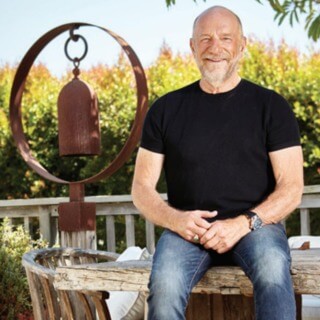
You are listening to episode 30 with Rabbi Ben-Sion Kaleitzka.
Today is March 30th and we are living in unprecedented times.
In an effort to contain the COVID-19 virus,
Increasingly people around the globe are being quarantined in their homes.
As a mother of young children and teens,
I'm seeing that the situation as a whole can present some very serious stress for parents,
For families,
For single people,
For really anyone who is staying at home currently.
We can look at this as staying safe at home and feeling protected at home.
And no matter how we look at it,
We're dealing with two sides of a coin.
We're dealing with the stresses,
We're dealing with the inconveniences and we're also dealing with uncertainty and the hope,
The prayer that those who are suffering will recover.
We're also able to look at this like anything else that happens in our lives as an opportunity for growth.
Spending extra amounts of time in our home,
In solitude or with the people in our families can be an opportunity to grow.
The backstory of this episode is that months ago I reached out to Rabbi Klaatzko and invited him on the podcast.
One thing led to another and we scheduled and we rescheduled and we ended up setting a date for the end of March 2020.
I had no idea that when Rabbi Klaatzko would come on the show that we would be dealing with this unique situation and this unique set of problems that this situation presents.
As it turns out,
Rabbi Klaatzko is really the perfect person to give advice to all of us about how to make the most of this time at home and how to infuse our homes with new and greater levels of spirituality.
Rabbi Klaatzko is the founder of a social network dedicated to spreading kindness.
The social network is the largest Jewish social network in the world and what's unique about the social network is that it's centered entirely around the home.
It's a fascinating concept what Shabbat.
Com does.
Shabbat.
Com matches complete and total strangers for home hospitality,
To share meals together and even to share sleeping accommodations in the homes of people that they have never met.
Shabbat.
Com also sets up singles as a dating service,
Also directly related to building homes,
Based in spirituality.
This idea,
The centrality of the home,
Is and always has been central to the Jewish.
As we will explore in this episode,
Anyone can infuse a home with spirituality starting right now.
As a rabbi,
A spiritual leader,
Someone who has served in the pulpit of synagogues and someone who has also been responsible for sharing uniquely Jewish form of spirituality with countless individuals.
Rabbi Klatzko is the person to consult with on this topic.
He has been described by US Congressman Bob Menendez during a 1997 session of the US House of Representatives as a distinguished gentleman making a difference to his community.
Well that was many years ago and a lot has happened since.
In 2014,
Jewish Forward magazine included him in their list of America's most inspiring rabbi.
I was privileged to meet Rabbi Klatzko in the year 2000 when I was beginning university.
Rabbi Klatzko presented me with a very unique take on Judaism that I had not yet been exposed to and he also offered me the opportunity to travel to the Jewish neighborhoods of New York to get a taste for my own tradition and my Jewish history and culture.
We speak a little bit about that in the episode.
On that trip we got a taste for home hospitality and I'll always remember the warmth with which we were greeted in the homes of people that we had never met.
Today in the interview I took the opportunity to ask Rabbi Klatzko for as much advice as I possibly could.
He has raised 11 children.
He is now a grandfather of several grandchildren as well.
And as he shares with me in the interview,
He speaks to every single one of his children every single day.
He has made it his life's work to infuse his home with spirituality and he has so much wisdom to share on this topic.
So I'm going to go ahead and bring him on and introduce him.
Before I do so,
I want to say that this episode has an extra measure of heroism from our guest because at the time that he was interviewed,
Rabbi Klatzko was actually sick with the COVID-19 virus.
I had offered him an opportunity to cancel or reschedule not knowing that he was affected,
Simply knowing about the general situation.
And he said no and he carried on and he showed up and he really shared so much inspiration with me.
So with nothing further,
It is my honor and my pleasure to introduce you to today's guest,
Rabbi Ben-Zion Klatzko.
The Temple is the home,
Exactly like you just said,
Within Torah Judaism.
The synagogue or the Temple is actually downplayed,
Meaning we go there and it's an important place we gather.
These are important things,
But the central place of spirituality is our home.
Our home is that temple and our bedrooms are the Holy of Holies.
Your bedroom is the Holy of Holies,
Where life is created.
And so how do you make a spiritual home?
So we all have something called an organizing factor.
It's the thing that wakes us up in the morning,
That animates us,
That inspires us,
And that we look forward to.
For some people,
Their organizing factor is money.
They live to make money.
All their thoughts are preoccupied with guilt.
For some people,
It's food.
They live from breakfast to lunch and lunch to dinner.
Food is what organize their lives.
In America,
For many people,
It's sports.
They have a job,
But they live from season to season.
The Torah way of life doesn't say ignore food or ignore money or even ignore sports.
The Torah just says,
Make me your organizing factor.
Make me the gravity that you use to give your life gravitas.
So when you eat,
Remember you're eating for a purpose.
And when you make money,
Remember there's charity to be given.
And even when you watch a movie or you follow sports,
At least tell yourself,
This is the diversion I need so that I can unwind,
So that I can be a better husband,
A better father,
A better friend.
How do you make your house?
In the Torah,
Like you have to make Hashem your organizing factor,
Which means that what you speak about in the home has to be more God-like than the other stuff.
If you want to know what a person's interested in,
Just have a conversation with them.
And very soon,
Their passion will come to the fore.
So if they love,
Love,
Love sports,
Within five minutes,
They're speaking about your team,
Their team.
Food the same way,
Money the same way.
God is your organizing factor,
If Torah is,
So that's got to be part of your conversation.
Your kids will hear those conversations and they'll pick up the cues,
What's important,
What's not important.
So I would say on a broad strokes,
As a broad strokes idea,
Broad strokes,
Your conversation,
What you think about,
What you talk about,
What you discuss,
What you're passionate about.
I was once in a shul in Atlanta and the Atlanta Braves were in the World Series and it was the end of Yom Kippur and Rabbi Feldman got up at the podium right after the very last prayer and he got up and he said to the congregation,
I know that the game is on tonight and I know that the Braves are in the World Series and I know that you're itching to get back home,
Break your fast,
Turn on the television and watch the Braves.
But you're going to be giving a message to your children if that's the first thing you do.
So pause five,
Ten minutes,
Eat and speak about the experience of Yom Kippur.
Discuss what resolutions are you making for next year and after you decompressed,
After you processed Yom Kippur,
Then turn on the game.
And maybe that's sort of the number one idea.
What do you talk about?
What's on your lips?
The paradigm that you are sharing is so powerful that it's okay to like sports and it's okay to enjoy food and yet we can look at those things as means rather than as ends.
Exactly.
It's a really beautiful idea and this idea of taking a pause and reflecting rather than rushing off to whatever those diversions are,
Really just taking a pause,
Even if it's a short one,
Which is so practical.
So I'm curious to hear a little bit more about conversations and the home and you raised a large family and you have grandchildren and I'm curious in terms of the ways in which you relate to your wife and your kids and the types of conversations that go on in your home,
How do you stay connected to your family members within this context of spirituality and also daily practical life,
Just kind of getting things done and doing all the normal things that everyone does and families do?
Great question.
I have 11 kids,
Thank God,
And I'm very proud of the fact that I speak to each one of them almost every day and it sounds bizarre,
Like some of them live in different countries,
But I learned early on that relationships are investments and you've got to put in to the relationship a good,
Good size investment if you want it to pay off.
And a lot of our kids have told us one of the things they've noticed and they've learned from is the fact that we don't rush them on the phone and some have a lot to say or they can't get it out that quickly or they're just meandering and I've got stuff to do and some kids I know get on the phone,
It's going to be half an hour,
45 minutes an hour easy each time,
But it's my investment in the relationship and the fact that I'm a good listener means that they're going to want to call me and I'll be part of their lives.
So I would say that's number one.
Invest in the relationships.
Don't wait until the kids are older and then it's too late and they say,
I wish,
I wish I could do it over again.
Rabbi Klatzko,
This is such amazing advice and as I'm listening,
I still have young kids at home and I'd love to hear more about what it looks like to be a good listener when your kids are young and with your spouse.
How do you go about doing that?
I think the number one way of going about doing that is to be genuinely interested in what they're saying.
I've seen parents who look like they're good listeners and the kid will say,
Oh,
I had a play in school and this and that and at the end of that whole explanation,
The parent will say,
Oh,
That's nice.
That's not enough.
You have to listen and give feedback.
Oh,
So you wanted to have the main part,
But you didn't.
How did that make you feel?
Oh,
It make,
Oh,
That must've been so disappointing.
If you turn to your child and say,
Hey,
Would you like pizza?
And the child says,
No,
I don't like pizza.
I chose you're not a listener because you have offered pizza in the past.
And he said,
No.
So what are you offering it again?
Our kids know whether we are in tune to them or whether we're just being this parental figure who's humoring our three,
Four,
Five,
Six year old.
Kids don't want to be humored.
They want to be heard.
They want to be understood.
Kids don't want to be humored.
They want to be heard.
That's true.
And it's not easy because sometimes kids take a long time to get out what they're saying.
And I'm in the middle of doing something.
Usually I am.
The kids come in and I'm one of my kids,
Delicious kid.
He loves telling me stories and I got work to do.
And some of my work is just not pleasant to sit down and do it.
It just,
It's got to get done.
So I push it off.
I push it off.
And then finally,
No today,
Today's the day I just like got my coffee,
Got my computer,
Got the work ready to do it.
It's tedious,
But I'm going to do it.
I'm not going to get up until this is done.
And what do you know,
Five minutes after I begin my storytelling kid,
Now they want to tell you the story.
Like,
No momentum,
Bad time.
No,
Tell me your story.
And I'll be honest,
Sometimes my momentum is dead and I got to find new momentum,
But my kid knows that I am a good listener and that I am there for them.
And that's a great investment because then they're going to tell me when something's on their mind and they're going to tell me when there's,
When they're sad or when they're being bullied.
And I'm going to know,
And I'm not going to be an oblivious parent who gets blindsided when things have gotten really bad because I'm listening and I'm listening between the lines.
So it's a really good investment,
But it's not easy.
It's like anything.
And if that's true with children,
How much more so is that true with a spouse?
And the spouses,
You know,
They're more mature than children,
Hopefully.
So maybe the conversation goes easier because they're older,
More intellectual.
But on the other hand,
It's a little bit the same old,
Same old,
Because you know,
Your spouse,
You know where they're coming from,
They're bothering you about this,
Or they want to get this done or that done.
And again,
You just began to do your work when they came in,
Or they want to show you something,
Like they always want to show you something right when you begin to do your work.
And you're,
You know,
You want to say,
You know what,
One moment,
Let me do this.
I want to give you my full attention,
But you may have broken that moment of excitement where they just wanted to tell you something or show you something.
So stop what you're doing and be totally laser focused on what they have to say.
Good investment,
Really,
Really good.
Let them get it off their chest.
Laugh.
And then the moment they're done,
Don't go right back to your work.
Pause another 10 seconds.
Just to show that you weren't waiting,
You weren't humoring them.
Yeah,
Wow.
Sit there like you're processing what they just said.
Yeah.
Okay.
Then they heard that you heard,
They feel good,
They feel heard,
They feel satisfied,
And then they leave the room and then you go back to your work.
It's a really clear way that you're making the people in your family feel as though they're the most important thing in your world.
Absolutely.
They should be.
With this coronavirus,
People are losing loved ones.
And we never want to say,
I wish.
We never want to say,
You know,
Oh wow,
This person was so unique and so special and you have to conjure up after a person passes during their eulogy and during the shiva.
They were so amazing.
Well,
They were so amazing,
Why didn't you treat them like they were so amazing when you had access to them,
When they wanted your time,
When they wanted to be part of your life?
It wasn't so easy then.
It's not so easy.
And I think it's so incredibly important what you're saying,
And it's not so easy.
What gets in our way of living aligned with our priorities and really being present for the most important parts of our lives and the people in our lives that matter?
Okay.
Well,
Before I do that,
I want to give you a compliment.
I've known you for many years.
We went on a trip together,
I think to New York many years ago.
And one of the things that struck me then,
And it hasn't changed,
Is you're always a really,
Really good listener,
Which is the number one way to connect to people,
How to win friends and influence people.
Be really present and you're really good at that.
You never lose that.
That's a gift.
Thank you.
So let me give you the things I want to share and I want to hear your answer,
But the first one is that on this trip to New York that we went on was 20 years ago,
And it was really my first foray into Torah observant Judaism.
And I remember feeling so inspired by it,
But wondering if I could really take on these big commitments and these big life changes.
And I just remember this one moment where we were on a bus and maybe we were driving from Muncie to Brooklyn and I shared with you some of these doubts I was having.
And you said,
I remember to this day,
You said,
I believe in you.
And I knew that you were speaking from your heart.
And it's something that I'll always remember.
And I think it really demonstrates the power of belief.
So that is a really special on it.
And I always say,
Even with such a seemingly small act,
The ripple effects of that act are infinite.
The way that we touch people in our lives with what you said,
You said a few words,
But it really went a long way.
Look at how many people you're touching.
I listened to your podcast.
I think it's amazing.
And you're reaching so many.
So your light should continue to shine really,
Really bright.
So kind.
Well,
You know,
Thank you for your inspiration.
And that is what we need so much is to stay inspired.
I think it's so easy to,
For me at least,
To lose inspiration and kind of have these dark moments,
Especially in difficult times.
And I think this is sharing inspiration.
It gives me so much fuel and hearing from you,
It inspires and that we should all continue to share these stories of inspiration when we see them.
Thank you for your kind words and the compliment.
I will say that my dad did give me a book by Dale Carnegie when I was 12.
And there's some good advice in there.
Thank God for that.
And back to you,
Rabbi Klatzko.
I really can't hear enough from you.
I had someone reach out to me a few hours ago and ask if I could share some advice on the show about how do we handle stress in this time with our spouses.
And I know you and your wife are this incredible couple.
So I would love to hear from you about that.
Absolutely.
Look,
We're a very human couple.
We have our disagreements.
And it doesn't always feel like roses and lilies.
But we know that the great goal is to get back on track sooner than later.
So in my mind,
Everything is sort of like a BuzzFeed.
So the number one way for a husband to really make his wife feel like number one and vice versa is through validation.
They have to feel valid.
We need to know that what we're doing is appreciated.
When things are difficult,
We're not making a big deal out of nothing.
It's a big deal because it is a big deal.
At least to me it is.
When I'm exhausted or when I had a tough day,
That's valid.
When I am concerned about something,
Don't dismiss my concerns.
Validate them.
Even if you have the solution to the concerns,
Make sure that I feel that.
And I'm connected to validation.
And by the way,
Use the word,
I validate you.
I use that word in a sentence.
So if my wife will say,
You know what,
We have tons of guests each week,
But I'm enjoying the break with the coronavirus that we're not having all these people over.
She said,
I'm embarrassed to say,
But I'm actually enjoying the break.
God bless your wife.
She is human.
She's human.
And I told her,
I validate you because it's really hard to have guests.
And her response was,
Thank you for validating me.
Now,
As it happens,
While this coronavirus is going on,
We happen to have construction going on in our house so we can fit another 10 guests each week.
But she's valid.
She's valid and her feelings are valid.
And then the second thing,
And this is a way of showing validation,
Is by showing your spouse that you appreciate them.
Now,
This is the ABCs of relationship,
But sometimes you get to be an old couple and you can be an old couple after a year or after 30,
Like our marriage,
But you get into that old couple routine and certain things are expected and we forget to appreciate the small things.
We'll say thank you for the big things,
But the small things,
Which may not be so small.
So I'll tell you something that we do.
We have a whiteboard in our bedroom,
Two whiteboards and one that I write on and one that my wife writes on.
And we write compliments to each other and we just leave them leaning against the mirror so that when the spouse comes into the bedroom,
They see it and they feel,
Oh,
That's so nice.
And so nice.
Yeah.
So I actually,
I brought it and I thought maybe you would want to see.
I would love to see this.
Yeah.
So here we have different color markers so that we know who wrote last.
So here is,
Not that you can be able to read it,
But here's my last one.
Dear Eshani,
I'm loving this new version of you.
So pleasant,
Happy,
Even in control and productive.
You mix everything such a pleasure.
I love you.
How excited would anyone be to get that note?
That is so beautiful.
Dearest Bensiam,
Thank you for going to appointments.
Thank you for being so understanding about the washing machine.
Thank you for working hard to reduce mortgage and get taxes info from the bank.
She's so specific and it's so clear.
And how does that make you feel when you read that?
It's great.
And then it's so easy because we just wipe it and put another three things on.
How often do you guys do this?
Well,
It's mostly every day.
Every day?
Yeah.
And you don't ever run out?
Oh no.
No,
Of course not.
There's so much to,
So many thank yous now.
Wow.
That takes gratitude journal idea to set a new level.
Yeah.
Wow.
Where did you get that idea?
Well originally we used to write notes to each other,
But then we thought this is easier,
Meaning we'll be more likely to do it.
It also feels better when you come and you see big bold letters,
Thank you for this or that.
And when the kids come in and they see it,
What does it tell them about their parents' marriage that my parents have a good marriage and that makes it a child feel secure and stable and protected.
These are very,
Very good lessons.
It's so incredible because you guys are really noticing what the other person is doing.
Do you remember when you started writing the notes?
She was a much better note writer than I was.
So she started really early on in the marriage.
Like a guy I wrote back much shorter than she wrote.
And did you notice any shifts in the way that you were thinking or what you were looking for?
Yeah.
The idea of gratitude is not to necessarily look at the obvious because the obvious is well known.
I bought my wife a car or she bought me a suit.
So yeah,
Thank you for the suit.
That's the obvious one.
But what about the fact that I recently,
We have something at home called special spice and it's a spice where all the common spice are mixed together.
So you don't have to run and get pepper and garlic powder and salt and onion powder.
We take it,
We mix it up together.
But recently I'm trying to cut down on salt and also like I don't like things over salted.
So after I guess the chalet de chabas I use special spice and the salt was really prominent and it became too salty for me to eat.
So I mentioned to my wife,
I said,
I think we should have a special spice without salt.
I think salt is sort of a standalone kind of a spice where,
You know,
Garlic a little more,
A little less wouldn't make a difference.
That night I went into the cupboard and already waiting was a new bottle with a special spice minus the salt all marked off.
And I noticed it was important to her.
That was,
That's what I want to say thank you for,
Thank you for making that special spice because you heard where I was coming from.
She did it right away.
So she not only heard you,
But she took action.
She really prioritized it.
As I'm listening to you,
I'm thinking,
Wow,
I'm going to go get another whiteboard because I only have one,
You know.
This is just such amazing advice and you know,
Understanding the way gratitude works,
I think really rewires our brains to look for things to appreciate.
I have a secret for you.
We have three whiteboards.
The third one the kids can't see.
Ah,
That is really good.
Yes,
That's the private whiteboard.
You know,
Some of our listeners are Jewish,
Others of our listeners are Christian or Noahide or Buddhist.
You know,
We have a wide range of listeners and it's so fascinating for me to speak to you as a rabbi and a really a leader in the Jewish world.
And think about how,
You know,
On one hand you spoke about talking about God in the home and at the same time you're speaking about these details of noticing the people in our homes.
Absolutely.
So I'm curious if you could speak for a moment about how do we living a spiritual life,
If we want to call it a godly life,
A God inspired life.
For people who perhaps aren't familiar even with what that means,
What does that mean in your perspective and what could that look like?
Beautiful.
Can I do it BuzzFeed style?
However you like.
Okay.
So number one,
Want to live a spiritual life?
Don't get angry.
There's nothing that chases godliness,
Spirituality,
The love that's supposed to pervade the universe more than someone who's angry.
And if you yell at your kids,
You yell at your spouse,
You chase all spiritual notion away.
I am proud that 32 years of marriage I've never once raised my voice.
32 years never once raised my voice.
My kids don't even know what I sound like loud.
And I could.
I once told my kids,
Why don't you hear what I sound like when I yell?
They said,
No,
No,
No.
They've never heard it.
It's not because I can't,
It's because it is the priority in my life to remain,
As we say in Hebrew,
Remain sababa.
Remain sababa,
Remain cool.
Everything chill,
Everything.
Nothing should shake us up if they remain unflappable in the face of difficulty.
And the kids will learn from there.
And you know what?
Your kids will be good spouses because your kids will learn from their parents not to yell at their spouse.
Not to get angry,
Not to yell.
So I'm wondering,
Like,
If you ever feel a little angry,
What do you do practically?
To not unleash.
So there's a difference between the word anger and upset.
And they're miles apart.
People use them interchangeably,
But they're not.
Upset is how I'm feeling.
Anger is what I throw on to you.
It's hard to be angry at a wolf.
Gotta be angry at somebody.
Gotta yell.
I've got to speak down.
I have to hurt.
Upset.
Of course I'm human.
Certain things upset me.
And if they upset me,
I try to communicate,
You know,
This bothered me or this hurt me or I didn't feel listened to.
But it never leads to yelling.
It never belittles the other person.
It just tells them that this has me feeling sad.
And I know you love me and you don't want me to feel sad.
And you probably don't even know that this bothered me as much as it did.
So I'm telling it to you.
And almost always,
The person will say,
Yeah,
Wow,
I didn't realize I'm so sorry.
And then we just move on.
And so you just don't let yourself yell.
Don't yell and don't hang on to things.
You clear it up.
Have a short memory.
Never bring up the past.
Never bring up the past.
Some people use past arguments as a weapon.
They stockpile this entire arsenal of past hurts to be pulled out by the next fight.
What marriage can withstand the weight of such negativity?
When somebody forgives,
We move on.
Never bring it up again.
Never bring it up.
And just keep writing the whiteboard.
I mean,
That is just keep focusing on the good,
Keep looking for the good.
That's incredible.
So number one for you about living a spiritual life is just don't get angry and forgive.
Number two,
Some people don't realize how important this is,
But it's huge.
Add music to your life.
God gave us music.
Music is spiritual.
You know,
Without music,
You're not allowed to bring a sacrifice in the temple.
That means in Judaism without music,
The holiest moment can't happen.
We need music in our lives.
Some people don't,
They don't understand how important music is in a home.
I know that sort of strange.
It's so incredible.
I'm not sure that everybody would necessarily guess that that would be your number two.
I'm not shocked because I know you just released a new song and I see you every single Saturday night after Shabbat broadcasting these musical celebrations and it's beautiful to hear that that's your number two.
As a matter of fact,
As soon as we finished,
We're in the middle of producing a new song,
A gorgeous song.
Each of my kids sing a verse.
So it's like a family heirloom song.
So all your kids were brought up playing instruments?
So honestly,
Our oldest kids,
We did not realize the importance of instruments.
They all compose like halfway through by kid number four decided he wanted to play drums.
We said,
OK,
Drums,
Great.
You know,
It'll be our first kid playing an instrument.
And then one of our kids said,
I want to play violin,
Like violin.
Why pick such a hard instrument?
It turned out that this kid had a tremendous gift for sound,
For music,
For harmony.
And he plays piano,
He self-taught.
And then the next kid did.
And then the next kid did.
I wish,
I regret not introducing it to the older kids,
But we still did lots and lots of singing.
And the kids walk around humming.
They hum tunes in the shower,
Walking around.
Everyone's humming music.
So that would be my number two.
I'm so inspired.
Keep going.
OK.
Number three,
Bedtime is golden.
I'll tell you what I mean.
Kids,
Especially the younger,
They don't like going to bed.
But if you could put on something for them to listen to,
Then they'll go to the lying bed and they'll listen to whatever it is that you put on.
Could you imagine if you put on something interesting that was also informative and spiritual and uplifting?
Could you imagine if you did that night after night after night and they go to sleep with the words of ennoblement,
Of inspiration?
Their dreams will be dreams of spirituality and divinity.
It's a game changer.
So my father was a very big children speaker.
His name is Rabbi Jarevel.
I don't know if you've heard of him before.
Yes.
Yeah.
So my kids start off with Rabbi Jarevel.
And then as they get older,
They move on to Rabbi Pesach Krohn and Rabbi Fischl Schachter.
And then they move on to Rabbi Avigdor Miller.
And they just,
At night,
They're grown so tremendously.
And you won't believe how years from now your kids develop these character traits and they don't even know where it comes from.
But it came from the lessons that they heard for years growing up.
So there are kids,
Cassettes or CDs with little nursery rhymes or kiddie stuff.
And sometimes we think,
Okay,
My kid likes that stuff.
Kids like almost whatever we put in front of them,
Especially if it's bedtime.
So let's give them meaning.
Let's give them inspiration.
So that would be my number three.
Strange one.
It makes so much sense because our brains are in a different state before we go to sleep.
And you're really taking your kids seriously.
I am.
It's in their bones.
Easy investment.
We say easy peasy.
How did you come up with that one?
I got a smart wife.
You have a smart wife.
You really do?
I got a smart wife.
Wow.
I remember hearing something about your wife that she never told a lie.
Right.
Right.
How did that work?
Yeah,
I don't know either.
She's a very,
Very holy person and she operates on a very different wavelength.
I understand her on a superficial level,
But on a deeper level,
It's hard because I'm not there.
I don't relate.
She lives with Hashem in a very unique way.
And that manifests itself in the way she is kind to other people,
In the way she spends time learning Torah with the kids.
One day when the book is written,
It'll be about her,
Not about me.
They're going to write the book about Rebbe Tsumkladska.
That is so incredible.
And you'll say I knew her.
You guys are really something else.
So before we get to number four,
I'm not sure that everyone listening understands how much the Torah values women,
But you really just tapped into that.
So I'm curious if you could share a little bit.
I mean,
You said that your wife is on this level,
And I'm not sure that everybody really knows how that works.
Okay.
One of my favorite topics.
Really?
Oh yeah,
I love speaking about Judaism and women.
And I'll tell you why I like to do it,
Because very often it will be a woman speaking about Judaism and women,
And those who are a little bit cynical could look at it like apologetics.
Like you're just apologizing for the men.
So in a certain way,
I rather be the guy to say,
No,
Fellas,
It's totally true.
That's how we look at women.
Laws are a product of attitudes.
It's a great insight into understanding how laws are formulated.
So if there was a law before there was women's suffrage,
So women were not allowed to vote,
That law is a product of an attitude that women are not as grounded or not as smart,
And therefore they shouldn't be allowed to decide who should be our next president.
The issue is,
Of course,
That they weren't allowed to vote,
But the issue is even larger because you're saying that they're not smart enough or they're not level headed enough,
And that hurts besides being untrue.
If we want to understand Judaism and how Judaism formulated its laws towards women,
All we need to do is look at the attitude that Judaism has towards women.
So let's take a good look at this,
Okay?
Throughout our biblical history,
When there was a husband and wife duo within the Torah and taught to boys and girls alike in school,
The women and their wisdom and their insight have come out on top.
Really quick.
Abraham and Sarah.
Abraham had a second wife,
Hagar.
Their child was Ishmael,
Not a great kid.
Sarah says,
Send her away and send the kid away.
And Abraham says,
Oh,
That's a cruel thing.
I can't do that.
God says,
Call Asher Tomar Elech HaSarash,
Sh'mab Echolah,
Anything that Sarah says,
Anything that Sarah says,
Listen to her.
She is smarter than you and she's a greater prophet.
Let's take the next duo.
Isaac and Rebecca.
Isaac and Rebecca.
Isaac,
Great patriarch.
They had two kids,
Jacob and Asav.
Who got it right?
Which of the kids was the kid who was righteous?
It wasn't Isaac.
Isaac gave all of the prestige to Asav,
Who ended up being a very wicked murderer.
Rebecca understood that the simpler,
Sweeter Jacob is the destiny of the Jewish people.
So here you have Isaac and Rebecca.
Rebecca came out on top.
Jacob and his wives,
Each of them understood,
Even though Rachel was supposed to marry Jacob,
She understood that for the destiny of the Jewish people and not to embarrass her sister,
Leah has to go on top.
Jacob would not have understood that.
You know,
When the Jewish people were in Egypt,
It's a fascinating story.
The head of the Jewish people,
His name was Amram.
Amram was the father of Moses and he was the leader of the Jewish people.
And when the Egyptians began to throw all the baby boys into the Nile,
Amram says,
Well,
We have to divorce our wives because our wives are going to have babies and those baby boys are going to be thrown into the Nile.
So Amram divorced his wife,
Yohebed,
To save the babies.
Well,
When people saw that the leader of the Jewish people divorced his wife,
They all began to divorce their wives.
Comes along Amram's daughter,
Miriam,
And Miriam says,
Daddy,
What you're doing is worse than Pharaoh because he just wanted to kill the boys.
And by you divorcing mommy,
You're making sure we don't have boys and we don't have girls.
Amram said,
You're right.
You're right.
And he remarried his wife.
Everyone else got remarried as well because they followed Amram's cue.
A boy was born,
His name is Moshe,
And he went and redeemed the Jewish people on and on throughout the Torah.
It was the women with their insight and their wisdom.
One more thing.
Every holiday in Judaism is either named after or celebrates Jewish womanhood.
Well,
We just passed Purim.
That was an easy one.
Esther,
Queen Esther,
Esther saved the Jewish people.
The hero was a lady named Ruth,
Ruth the Moabite.
Passover the hero,
It says in the Talmud,
Was the nashin tzidkaniyos.
It says because of the righteous women,
We were redeemed.
Rosh Chodesh is considered the holiday of female,
The holiday of fertility.
Chanukah.
Who was the hero of Chanukah?
People think it was Judah Maccabee,
But they don't teach that right.
Who was the real hero?
What was her name?
Jude Gith.
What did Judith do?
Who's Judith?
Oh,
Well,
Judith simply cut off the head of the Greek general in order for the Maccabees to do their thing.
She cut off Eliport and his head.
So Judith is the hero of the story of Chanukah.
And that's not Johnny come lately philosophy.
There's a law that while the candles are burning on Chanukah,
Women are not supposed to do any work.
They're supposed to sit down,
Put their feet up,
And their husbands are supposed to give their feet a foot rub.
Did you know that?
Did you know that in every Jewish holiday?
It's a law that every Jewish holiday,
A husband has to go out and buy his wife an extravagant gift.
That's a law in Judaism.
So on and on,
Our laws are based on our attitude.
And our attitude is that women are the culmination,
The crown jewel of creation.
They're the very last creation.
The Talmud says that God created the universe from least holy to the most holy.
And as the animals were created,
You've got the creepy,
Crawly little insects.
And then you have the more developed animals.
And then eventually you have humans.
And Adam is the very last of the animals that were created.
But he wasn't the last creation.
Last creation was Eve.
Eve is the crown jewel of creation.
Because of that,
We look at women as something incredibly valuable.
They are our most important asset.
As a matter of fact,
The Torah says a home is the wife.
The wife directs and guides like a captain of a ship.
As the wife goes spiritually,
So goes the home.
What a beautiful metaphor.
It's just so much inspiration in one place,
Rabbi Klatzko,
It is such a pleasure having you join me.
And I have gotten so much inspiration out of this conversation.
I have a list now of all of these practices I'm going to implement in my home,
Thanks to you.
So thank you for being here.
We got up to like number three.
So you are invited back.
Number four.
We got up to number four.
Number four.
Can we review?
Review.
Okay,
Let's this is my listening test.
Number one was don't get angry.
And always make sure to forgive.
Let the past be in the past.
Number two was music in the home.
Sing with your kids,
Play instruments,
Play beautiful music.
Number three is to take advantage of this bedtime magic.
Infuse your home and your children's ears with stories of spirituality and inspiration and God.
And we talked about the women.
And what a beautiful way to end and to be continued.
And I really want you to feel better.
You are in my prayers now.
Thank you.
A complete recovery for you,
For your whole family,
For everyone in New York and New Jersey and United States and North America and Asia and all over the world here in Israel,
Throughout the globe,
Really.
We should all have a complete and speedy recovery,
A physical recovery,
A spiritual recovery and really enter into a new era together after this is behind us.
Amen.
Thank you for having me on.
Wish all the listeners good health.
And if anyone wants to reach out to me,
I always give my phone number.
Well,
I do that because sometimes people need a rabbi who picks up a phone and I pick up my phone.
So I have a really easy number.
It's 212 Shabbat.
So 212 and then the word Shabbat.
So that's S-H-A-B-B-A-T.
That's your phone number.
And if you need the actual numbers,
That's 212-742-2228.
OK,
Excellent.
And your platform,
Shabbat.
Com.
Yeah.
So the platform is kindness.
We want to connect all people in the Jewish world.
And even those who are not Jewish but want to learn about the beauty of the Jewish Shabbat,
They can go on to Shabbat.
Com.
And it's sort of Facebook-ish meets JDate meets CountSurfing meets LinkedIn.
It's so incredible this idea that you had.
And when I saw it,
When it came out 10 years ago,
It was like,
What you're doing is so amazing.
And for people who are unfamiliar with Shabbat,
There is an idea of opening our homes any day of the week,
But especially on this 25-hour Sabbath,
And Shabbat.
Com is a place where people are inviting those that they have never met into their homes for meals and to sleep.
And this is going on for 10 years.
Ten years.
Nine years ago,
We added the dating.
So there's dating as well.
And two of my kids found their wives on the site.
So yeah,
You got dating and jobs.
We're rebuilding the whole site.
We got a really good,
Very prestigious investor to help us.
And we should be going live.
It's going to be next January.
So we still have a while.
But when we do,
We want to create a world of kindness like the book I've ever seen.
You're making so many meaningful connections around the world.
And it is such an inspiration.
It's just incredible.
You're giving people a place to go,
A place to connect for a meal,
For real conversation,
For community.
And I want to encourage all of our listeners to have a look at the site and see what Shabbat.
Com is all about.
And for those of you who are not Jewish and who are interested in Judaism,
Have a look.
And even if you're not interested in Judaism and you just want to see an example of how to bring people together in meaningful ways,
This is also something for you to see.
So thank you so much for that.
You're welcome.
Thank you all so much for joining me here for this interview.
Rabbi Klatzko is truly a giant in the Jewish world internationally.
He is so focused around kindness,
His organizing factor,
As he likes to call it.
I believe is kindness.
And we all need so much of that.
We all want to spread it.
We all want to live it and we all want to tap into it.
And you are doing exactly that by being here and by listening and by staying reminded of what's important.
You know,
I think it's one thing to get inspired,
But to stay inspired.
I had no idea that in starting to create this podcast 30 episodes ago,
That it would give me so much inspiration.
And I feel so blessed to be able to sit and listen to guests like today's guests and the guests I've had on the show to keep me inspired.
And even if it's like one idea or one thing that you implement in your day for a few seconds,
It's bringing more light into this world.
And notice it.
Notice it.
You're doing it.
You're living it.
You are changing.
The one thing I want to share with you before we go as well is this idea of change.
This morning I read something from one of our past guests,
Kaylee Zaytuny.
She was on the show and she shared today that we're all going through a lot of changes.
And in the process of going through changes,
Our brains are having to work a lot harder.
And this can be a source of stress,
Whether changes are for the good,
Changes are challenging or difficult,
It doesn't matter.
Change is change.
And if we can be kinder to ourselves,
We can be gentler to ourselves and compassionate and flexible with ourselves and with people around us,
I think it can really go so far in the long run so that when we look back upon this time,
It wasn't so much about what we accomplished,
But how we treated other people and how we treated ourselves.
So it is a work in progress for me.
And I will say that getting to listen to my guests really keeps me going.
Living close to nature is something that's really keeping me going.
Just getting outside and getting some fresh air and sunlight,
That's also really helpful.
Checking in with friends,
That's something that's been really helpful to me as well.
And also just putting things down and tuning in to my kids when they want to talk to me.
That's been tremendous.
And giving myself time to myself.
I think that because we're in this secluded space,
It's really like a microcosm of what we want to create in our lives.
And as we're learning about ourselves and our needs,
Hopefully we can grow so much self-awareness that we can really take that with us moving forward.
I want to share with you that our next guest on the show is also a rabbi.
He is a very special rabbi.
He's nearing 90 years of age and he is really a giant in the world of spirituality.
His name is Rabbi Abraham J.
Torski,
MD.
And Rabbi Torski is the author of over 80 books.
And when he spoke to me about his books,
He explained that he really only authored one book and it's all about self-esteem.
I think you're going to find this episode interesting,
Just like today's episode with Rabbi Klatzko,
In that Rabbi Torski takes spirituality and he makes it practical.
He brings it to the level of everyone who's reading,
Everyone who's listening,
And he makes it so tangible.
He talks a lot about self-esteem and the importance of self-esteem and really the spiritual component of self-esteem and how we can tap into it.
So please stay tuned.
Definitely subscribe if you haven't subscribed yet to the show.
Subscribe wherever you listen.
There's lots of new and special content coming out and actually more content coming out.
I'm trying to do a lot right now because I know that everyone's at home and I want to be a resource for you.
So I'm doing a lot.
I'm doing lives on Facebook now once a week at least.
And you can find me on Facebook doing my lives on my page.
It's called Within Us Podcast with Osriela Jankovic.
So if you just look up Within Us Podcast,
You should find the page.
And I'm going to be bringing on a parenting expert this week,
Talking about the importance of self-care and also how to move from reacting to responding.
So if you are a parent or you know someone who's a parent,
Definitely let them know about this opportunity to tune in on Facebook live on Thursday,
As well as to ask questions live we will be taking some Q&A.
So you can find me there and as always you can find me on my website.
It's www.
Drazi.
Co.
That's drazi.
Co.
Stay connected.
Stay safe.
And stay connected to one another.
To reach out to your family,
Reach out to your friends.
Share this episode with a friend.
It's really one of the greatest gifts that you can give to me if you like the show,
If you're benefiting from the show,
Share it with a friend.
It is a really great centerpiece for conversation and for growth and growth that can be done communally and among friends.
So please share this with someone in your family or a friend you think would appreciate it.
I thank you in advance.
And you can always rate and review the show if you're listening on a platform like iTunes that has reviews and ratings.
When you do the review and the rating,
It helps other people become exposed to this show.
It will be optimized in the podcast.
So I really appreciate that.
I really appreciate your being here.
I want to give a special shout out to my listener,
Donna.
Donna,
You know who you are.
Donna found me on the Insight Timer app and then she joined my Facebook group Circle of Insight.
And she has shared her stories with me.
She's been through a lot.
She currently is suffering from stage four cancer and her brother is unfortunately also suffering and because of today's current situation,
She and her brother are not allowed to meet in person because their immunities are compromised.
So I would like to send a special blessing to Donna and to Donna's brother for peace,
Peace of mind,
For wellness,
For healing.
And know that you are in my heart and now you are in the hearts of all of our listeners.
Wherever you are in the world,
Stay safe,
Stay strong,
And stay connected.
Abundant blessings until next time.