Welcome to With an S.
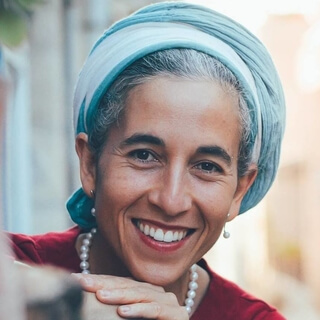
My name is Azrielle Jankovic and I'm your host.
With an S is here to further your well-being so that we can build a kinder world together.
It is my intention that the show will disseminate transformational tools,
Strategies to tap into spirituality,
Mindfulness,
And emotional awareness no matter where you are in the world.
You're listening to With an S episode 28.
Today is March 19th,
2020 and we're living in an unprecedented time.
Today we'll be cultivating calm and wellness in order to best rise to this circumstance that is providing challenges for so many of us.
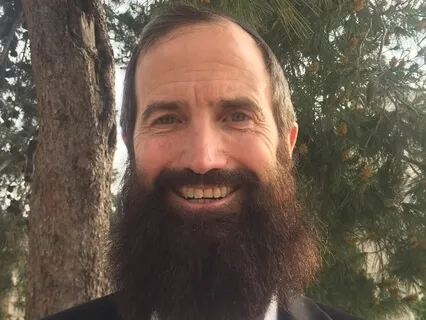
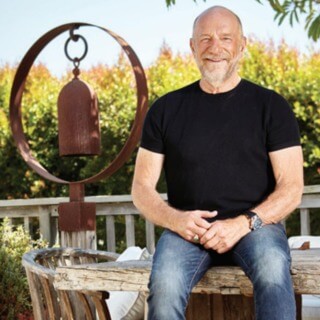
Today my guest is Dr.
Andrew David Schiller.
Dr.
Schiller explains that science is confirming and clarifying what traditional healing systems have known for centuries.
Our bodies and minds are intelligent,
Self-regulating,
And self-healing.
You can help yourself heal and recover by getting the right nutrition,
Removing metabolic toxins,
Doing right exercise,
Physical therapeutics,
And cultivating the right mindset.
Today we'll be speaking about mindset and wellness from an integrative mind,
Body,
And spirit approach.
Dr.
Schiller earned an MD at Duke University,
Went on to Harvard Medical School where he completed a double residency training in internal medicine and physical medicine rehabilitation since the 1990s.
He has devoted extensive time to studying and practicing natural healing and stress reducing complementary approaches including balance nutrition,
Hands-on healing,
Movement therapy,
And mind-body awareness.
He is an incredibly compassionate and empowering physician and educator who understands the interconnectivity of mind,
Body,
And spirit.
Welcome to With an S,
Dr.
Schiller.
Thank you,
Azriela.
It's good to be here.
It is really nice to have you here and we will start the show with a deep breath.
We can all use a deep breath right about now.
There's so much going on and it's all happened so quickly.
I think it's taking time to process change and I'm really looking forward to hearing from you from a medical perspective about what we can do in this time in order to cultivate calm and really to supercharge our own wellness so that we're able to rise to this challenge.
The challenge of the coronavirus and the pandemic and its effect on the world,
Right?
Exactly.
There's a lot to say obviously and I like to think about things kind of in layers,
Right?
There's obviously lots of things that people have to do that are practical,
Straightforward,
Concrete,
Protect yourself and your loved ones things right now.
When I look around the world and I see what people are writing,
I see the questions they're sending me.
I see the things that are going around on Facebook.
There's a lot of hysteria.
There's a lot of misinformation.
There's a lot of people who with faced with the rather stark measures that are being put in place by a lot of governments are freaking out.
I think the first thing is trying to understand what this is all about because a lot of people don't understand it.
What I mean by that is this,
That first of all,
We've got this idea that there's this plague going around the world and it can be terrifying.
The fact is that for the most part,
Most of the data coming out of places like China and Korea and even Italy is that most of the people who are getting really sick with corona are not average people.
Most of the people getting really sick are elderly and people who have cardiovascular disease or high blood pressure or diabetes and those people for sure need to be really careful.
Most of the people who are running around doing stuff aren't at risk of getting really sick.
Most of us,
Like if we get sick,
It's going to be like a cold or a flu and we might not even notice it.
We might feel crummy for several days,
But most people recover and it's very easy to think this is the zombie apocalypse or this is Ebola or this is some sort of horrible deadly thing.
For most people,
It's not.
It's just good to keep that in mind because when the government's locking down and saying you can't leave your house,
It's like I think the monster's outside my door.
The reason we're doing all of these measures is because we want to take care of the people who are vulnerable,
The elderly,
Our parents and grandparents,
People who have chronic illnesses.
Those are the ones who are really at risk of getting really sick with coronavirus.
So just starting with that as a mindset,
I think the way that my view as a Torah Jew is that there's good in everything and no matter what's happening,
Part of our potential and responsibility is actually to find out what's good in this.
It's really hard to find that now because it's such a complex and so full of uncertainty and so many different things going on.
But every aspect of it that seems challenging,
There's an opportunity to flip it.
For instance,
Those of us who are running around facing all kinds of inconvenience,
All kinds of fearful situations,
We see someone in the supermarket and I look around and people are kind of scared of each other.
What do we do about that?
We're not supposed to get closer than six feet or two meters.
But you know what?
When I'm six feet or two meters,
I can look the person in the eye and say,
Hey,
This is challenging,
Right?
We're not supposed to get closer than this,
But let's just acknowledge that we're both here.
And there's an acknowledgement of humanity that we could be doing to a greater degree.
The other aspect of it that I think is so important is- So essentially what I hear you saying is that in this time where everyone is adjusting,
There's a new mode of behavior that we can become accustomed to in order to connect with people,
Even though we may not be able to physically come near one another.
Yeah,
Exactly.
And I think the way that we frame the experience of completely changing our lives and restricting and losing all these different things that we normally love and appreciate and are comforted by,
The way we frame that is incredibly important.
If I frame it as a kind of,
I don't know what's happening and I feel like a victim and I'm frustrated and angry,
Then that creates a certain kind of biochemistry and a certain kind of sort of poison to ourselves by thinking that way.
And if I reframe that and I say,
Look,
This is an unprecedented reality.
This is where human beings have to get together and I'm doing this to protect my grandmother and my neighbor's grandfather and that man that lives down the street who I see every day.
I'm taking a sacrifice,
Which isn't life-threatening,
It's inconvenient,
But I'm potentially saving their lives.
And it's kind of heroic in a certain way.
All of the hard work we're doing to keep our distance,
To not have contact with other people,
It's an act of heroism and we're all being called to rise to a greater degree of expressing our goodness,
Expressing our capacity to care,
To be of service.
And those are really important ways to kind of reframe so that we don't feel victimized by the whole situation.
You know,
It's really interesting to hear you speak about this mind-body connection and the way that negative thoughts can create,
As you described,
A poison within us.
So I'm curious if you could speak a little bit about some of these negative thinking traps that are so easy to fall into right now.
And then perhaps we could contrast that with some alternatives that could be more affirming for our overall health.
Sure,
Sure.
Well,
I think one of the most important things that comes up is that we have something called negativity bias.
And that's a word that psychologists have come up with for the fact that human beings,
We can be looking towards positive things and we can be looking towards negative things.
Life itself is potentially fairly ambiguous.
Any situation you take a hundred people and you got a whole bunch of different ways of perceiving it.
There is a tendency,
Especially when we're under stress,
To look for the negative because it's protective.
If I'm going searching for food in the forest,
I need to be alert for the tiger.
Because if I don't see the tiger,
Lunch,
And I don't get to go looking for food tomorrow.
If I miss the mangoes,
Okay,
I can go looking tomorrow.
But if I miss the tiger,
Forget it,
Game over.
And so negativity bias means that in order to protect ourselves,
We tend to look for the bad stuff.
And to a certain extent,
We need that.
We need boundaries,
We need clarity,
We need vigilance.
But how can we take that vigilance and put it in a context that that's actually positive?
How can we intentionally choose to find what's good?
And so that's one thing I think is a negativity bias.
Yeah,
And I think it's a really interesting metaphor that you use in terms of being in the forest and being under stress.
We don't need to look for the mangoes,
As you said.
And at the same time,
If we are constantly scanning for threats and negativity,
We're going to miss the mangoes.
Exactly.
So in this particular time,
I think it's important to decide what are we looking for?
And when are we getting to the point where we need to stop scanning for those threats and just kind of shift our awareness?
Right,
Exactly.
And so my own experience,
And this has taken some time,
But at a certain point in life,
I started making an intentional practice of let me be looking for what's good.
Not that I'm oblivious to what's not good.
I'm a pretty careful person.
That's what I do.
I work with people around medical problems and illness.
But to see the good in another person,
To see the good in the situation,
It's an incredibly high thing to be doing.
It's an incredibly transformative thing to be doing,
Finding that good,
Just like you said.
And I think the next piece I'd bring up in answer to your question is if change is hard,
We don't like giving up what we're comfortable with.
There was a famous book some years ago about stress and it had a brilliant title.
It was called Who Moved My Cheese?
And the idea is that change,
We don't like it.
And the question is like this.
I've gotten a mental level of my reality and I'm going around thinking and planning and choosing and I've got an emotional level of my reality.
And most of us are walking around not so aware of the emotional level.
The emotional level of reality is part of what creates the physiology.
And so I can be in a physiology that is a positive,
Connected,
Purposeful physiology.
I can be in a physiology that is a fearful,
Negative,
Defensive,
Protective physiology.
And those are colored by various emotional tones.
So in other words,
If I'm in a fearful physiology and I feel helpless and out of control and I feel like what I'm doing is pointless,
That's going to intensify the biochemical signature of that.
And I'm spending most of my day in that reality.
That is going to weaken my immune system and my resistance to this virus.
On the other hand,
If I'm able to choose the positive emotional aspect of reality,
Then I'm going to be creating a different kind of biochemistry.
The reason why this seems so important is because if I'm not aware of my emotional state,
Then it's just running in the background and it's doing its work of generating biochemistry that's not so healthy.
If I can bring some awareness to my emotion and just notice,
When I feel physical tension,
What am I feeling emotionally?
And just giving a little bit of attention to,
Am I afraid?
Am I sad?
Am I angry?
Am I scared?
And being a little bit emotional and aware.
The sages of my tradition,
Of our tradition,
Are really big on saying that if we have something at the level of emotion,
That dynamic part inside of us,
And we give it lots of attention,
We amplify it.
If we give it a little bit of attention and we maintain a broad awareness and we give it a little bit of attention,
It tends to release and fade.
Deep trauma,
That's another really difficult experience.
That's another story.
That's another level of healing.
But I'm talking about the day-to-day things that come up that could create bumps and frustrations and irritations and fears.
Giving them a little bit of awareness and just letting it go is a powerful tool.
So in terms of the time that we're in right now,
What does it look like to become aware,
Someone who perhaps is not familiar with bringing an awareness to emotional experience,
What could that look like as a formal or even an informal practice?
Sure,
Sure.
In my experience,
Part of what's really easy for people to get started is just noticing their breathing,
Starting to just feel that,
You know what,
I'm breathing,
As opposed to living from my neck up.
A formal practice is to sit down and just be quiet.
It doesn't have to be like I'm sitting on a meditation cushion.
It could be just sitting in my office chair or sitting on the couch at home and just pausing and stopping and feeling breathing happening and being with an inhalation and being with the exhalation and just observing it and feeling it because feeling breathing is happening now.
Most of our fears are me imagining the future.
Most sadness and grief and frustration and anger is me going into the past.
When I'm breathing,
I'm here and now and I can actually more effectively contact whatever emotional tone might be there.
I typically suggest to my patients,
Start with five or 10 minutes of just noticing your breathing whenever you can,
In the morning,
Before the kids wake up,
At night,
After people go to sleep,
Sometime in the middle of the day when you get a break,
Stopping,
Scheduling it,
Putting a timer,
Making it important to stop and reconnect to quiet.
I love that idea of setting a timer to connect to the breathing.
Tell us a little bit about what's happening behind the scenes when we sit down to notice our breath and just tune into whatever it is that we're feeling physiologically,
Emotionally.
What's happening to our biochemistry at that point?
It's a pretty complex question.
It's a good one.
I mean,
Let's start with the simple piece that many people have heard,
But many people haven't,
Which is just that we have a biochemistry of stress.
We've got a biochemistry of relaxation and those are meant to be somewhat balanced.
So in other words,
I could go through my day and have a stressful experience,
Which could be a positive one or a negative one.
It could be playing basketball.
That's stress,
Right?
But it's a positive stress.
It's a pleasure related stress.
Or it could be I'm trying to find stuff in the supermarket and the shelves are empty and there's a crowd and I'm scared that people are going to breathe on me or whatever it is,
The stressful things that are happening these days in so many different ways.
That creates a biochemistry of stress that touches every cell in our body and depending on a person's genetics and their previous life experience,
That negative stress can be a really strong,
Powerful stimulus or it cannot be.
There are people who are stoic and solid in their business and they just do it.
They're not really thinking.
They're concrete,
Solid rock types.
And then there's people who are more delicate.
I think this kind of awareness can be really valuable for all types.
The kind of stoic type probably isn't going to be watching this podcast unless someone drags them along to it.
With this happening,
I think people are opening up a little bit.
Right.
I think you're right about that.
I think you're right.
And I think that's part of the positive view of that.
I'm sure we'll get to that at some point.
But that stress biochemistry over time is toxic and it affects our immune system.
It affects our intestinal function.
It affects cardiovascular function.
We have a lot of data showing that people who are under chronic mental emotional stress,
Psychological stress,
Tend to have all kinds of measures like decreased antibody and immune responses to various kinds of biological things like viruses and bacteria,
A tendency towards blood clotting,
A tendency towards high blood pressure.
A lot of different aspects of what happens when we're under chronic stress that are negative health outcomes that it's not so hard to see a connection with,
Wow,
There's a really contagious virus out here.
We have to do things to protect ourselves from contact,
But we also are wise if we do things to enhance our capacity to meet that and not get affected by it.
And that's what our immune system is for.
This is incredible.
So essentially what you're saying is that by taking certain proactive steps,
We can boost our own immunity and actually help ourselves to stay clear of this virus.
Potentially.
Yeah,
Absolutely.
And I think it's important to recognize that everybody's different and this is incredibly complex stuff.
The thing that we know most clearly from the research is that people who are under stress,
Who don't take measures to reduce stress,
Put themselves at risk of worse outcomes and very much potentially with infectious diseases because their immune system doesn't function as well.
So that's a pretty clear thing.
And that could show up as decreased immunity and inability to fight off a virus for sure.
So in terms of this day-to-day experience,
We brought up the example of being in the supermarket and noticing that certain supplies are gone or that we are feeling concerned about people becoming too close.
Are there actions that we can take in the moment in order to prevent stress?
Sure.
Yeah.
I mean,
I think the same process of pausing.
You know,
Like I teach meditation courses and one of the things we learn is the pause.
And what is the pause?
The pause means when I'm in any situation,
Especially a stressful situation,
Just stopping for a moment.
Because the thing about stress is that it kind of sneaks up on us,
Right?
Most stresses that we experience are not some horrible monstrous thing happening where a building's falling down in front of us.
Most stresses are small things that build up during the course of the day and they add up bit by bit.
And the pause means that when I notice that that's starting to happen,
When I learned to tune into the way stress shows up in my life,
Maybe it's my neck gets tense or my jaw gets tense or I notice I'm gripping the steering wheel when I'm driving or my back gets sore or whatever it is.
If I stop,
Even I could be standing in a grocery store aisle,
I stop and I feel my body.
I feel my feet on the floor.
I notice my physical sensations for a moment because that brings me into the here and now.
I notice my breathing.
It could just be for 10 seconds to notice my breathing.
Then I ask myself,
What are my emotions?
Oh yeah,
I'm feeling a little bit irritated at that person over there.
I notice what are my thoughts?
I'm judging him.
I'm thinking,
Oh my gosh,
I'm thinking,
And I notice that there's this spinning mind that's going on.
And I just say to myself,
Okay,
Let's just stop that for a second and start over.
I take another deep breath and I've released it a little bit.
Then I go on with my evening.
So if I do that periodically during the course of the day,
Rather than getting a stress contour that's building,
Building,
Going up slowly,
Slowly,
Higher,
Higher,
I'm just bringing myself back down.
I'm coming back down to baseline over and over.
Yeah.
It makes a lot of sense.
It's really practical.
I think it's really interesting.
It's really helpful to hear about this practical application of lowering stress that we can do in any moment.
And I've heard a little bit about the science of how this works.
Can you tell me a little bit about flexing the prefrontal cortex?
There are a number of different brain areas that are being studied as part of what regulate our attention and regulate our emotions.
And left prefrontal cortex is one of them.
This is really complex science that is,
You know,
At this point kind of gets away from the practical thing.
But I think that the take home message is that there are persistent areas of brain activity that seem to be more active in meditators and more active in people who develop mindfulness,
Who develop a capacity to be present to their emotions.
On a certain level,
What mindfulness is,
Is the ability to be aware.
It's the ability to hold experience.
And that experience can be emotional experience.
It can be physical sensate experience and thoughts.
And mindfulness is the viewer,
The listener,
The observer.
In the Torah language,
It's the self,
It's the soul,
The part who is aware,
Holding the experience.
And when a person regularly practices being present in that way,
And that presence strengthens,
Then a person starts to notice,
Oh,
This is me,
This is myself,
And the things that are happening in my awareness,
They're not me.
My emotions are not me.
My body is not me.
They're happening within me.
And that itself is an incredibly empowering stance.
And so that's why I'm encouraging people so often to ask the question,
What am I feeling?
Because the I is feeling something.
I'm not the emotion.
When I'm frustrated and irritated with that guy in the supermarket,
Or the circumstance,
Or the fact that the stores are closed,
Or I can't work,
I'm scared that I'm not going to have enough income,
I'm scared,
I'm freaking out because my kids are home all day when normally I was able to do work or do this or that at home,
I'm encountering some kind of threatening change.
And I'm having these emotions come up that are churning and creating such a disturbance,
Right?
If I can separate myself from those emotions and realize,
All right,
This is frustration.
This is irritation.
This is sadness.
This is fear.
Then I'm not ruled by those as much.
And then I have more free choice.
Because I think the real challenge is when a person has an emotional experience,
But they're not aware of it,
Or they're blended with it.
And they're blended with it so that it's driving them rather than them sort of driving their own bus or boat,
Whatever it is.
Right.
It makes a lot of sense to hear about the physiological process that we all have within us,
This programming essentially that we're up against and we're operating within.
And I think it's helpful to understand that in a moment of stress,
We can connect with breath,
Name an emotion,
And really shift out of a stress response,
Physiologically.
Right.
Right.
I think that's really helpful.
So you brought up the idea of soul.
And I think that's a perfect segue to the third component of dealing with this challenging time from a spiritual perspective.
And I'm curious if you could share with us a little bit about what that can look like and also how that can support our health as well.
You know,
My sense of it is that we live in a world that on some levels has lost spirit,
Where most of what's driving modern culture is not so much issues of real spirit.
But when you look at individuals in the world,
Americans and people in other countries are very God-centered.
There's a lot of God consciousness in the world.
And you know,
The G word,
Which I just used,
That's a word that's used a lot in more sort of traditional religious settings.
And then there's the S word,
The spirit word,
Which tends to be a bit more generic and a bit more universal.
And to me,
They're both valuable words and they're both meaningful words.
And my sense is that what spirit is or God is,
Is our sense of connection to that which is bigger than us.
And there's a lot of different levels of how that plays through this whole experience.
You were speaking a few moments ago about how we can contact with our breathing,
We contact our awareness,
And that creates a sense of stability and allows us to work with the challenges and difficult things.
Spirit also does that for us,
Right?
We talked about anchoring and breathing,
But there's also anchoring in spirit.
There's anchoring and a sense of connection to God.
And that's not a meaningful thing for a lot of people,
But for a lot of people,
It's very meaningful.
And they have a sense of connection to a presence that is bigger than their presence.
And that presence is really big and it's really stable and it's infinite in time and space.
And so someone who develops a connection to spirit that is great and bigger,
There is a stability there.
It's an anchor.
It's a way of saying,
Here's where I'm anchored.
And then all of this stuff is happening.
All this turbulent stuff is happening.
How can I be a chooser facing all this turbulent stuff?
How can I be a person who's bringing kindness and wisdom and clarity and generosity to the circumstances that I'm facing?
Yeah.
There's more layers to it,
But I think that's a good,
It's the first thing I would say about it.
I think it's so beautiful.
And I think it certainly brings us back to one of the first things you mentioned was that when an individual is feeling a sense of lack,
A lack of purpose,
That this lack of purpose in itself brings about stress and unwellness.
And I think that really ties in directly to the role of spirituality in our lives,
In our minds,
And a certain way of operating mentally in terms of integrating that spirituality.
I think one of the greatest examples of that,
And again,
We're going back a bunch of decades,
But Viktor Frankl came out of the hell of Auschwitz Nazi concentration camp.
And he was a psychiatrist who made lots of observations.
And he came up with a very clear perspective about what happened there because he saw people who were living through those horrible circumstances,
The ones who made it and the ones who didn't.
The ones who actually seemed to maintain a sense of who they were and their dignity as human beings and the people who kind of just swirled down and crumpled and died.
And the people who maintain their sense of dignity and purpose through generosity and acts of kindness to other people,
Through connection to their God as they know it.
Those are the people who actually made it through and did much better.
And so that's why his book that came out of that,
That every psychology student in the world reads is called Man's Search for Meaning,
Right?
Because we need meaning,
We need purpose.
It's one of those higher needs that elevates us out of our physicality.
We have this great metaphor in the Torah tradition that we have an animal soul.
We have a part of us that's our physical needs and drives and desires.
And we have a godly soul.
And it's not that one is bad and one is good.
They're both there to serve us in serving the greater good.
And we're meant to actually have that,
So to speak,
Godly soul be like the rider on the horse.
And the animal soul is the horse itself.
And the rider needs to take care of the horse,
But the rider is the one who steers the horse.
And the rider steers the horse because he or she is connected to this higher purpose and knows where he or she is going.
And to me,
That's potentially part of the incredible transformative potential of this whole crisis,
Which is that we've got a world where people are getting disconnected from so many different things that have been pulling them.
We live in a chaotic world,
And I think most sensitive,
Aware people will say,
Wow,
Even before coronavirus,
Things have become pretty rough in the world all over for a generation now.
What's going on?
What's happening to humanity?
There's so much violence.
There's so much destructivity.
In the States,
There's a sense of,
Yeah,
The fabric of our society is really breaking down to a certain sense.
And what is that about?
One aspect of what it's about is that we're losing a sense of collective.
We're losing a sense of caring about each other.
We're losing a sense of caring for the people who are vulnerable in our society.
And suddenly,
Here we are,
Where so many of the things that are distracting us are getting like stripped away.
So many of the things that we're busy with that take us away from those higher values,
Like there's nothing wrong with baseball and sports,
But sports is over right now,
All over the world.
There's no games anymore.
So what are the sports fans doing?
Where are they going to find meaning?
When you go to a stadium and you're cheering for your team and you're so full of excitement and power,
What is that?
You're connecting to something bigger.
It's the team.
And here are my fellow fans.
And yeah,
You guys,
And us guys,
Yeah,
Yeah,
Yeah.
And it's so exciting because you're fired up about the team.
That's a collective experience.
So we got a human collective experience where we have never been in a situation right now where almost everybody in the world is focused on the same problem.
Has that ever happened?
So the potential right now.
Yeah.
There's no better way to unite than against a common enemy.
And it looks like we're team human all of a sudden.
Right.
Right.
Wow.
Yeah.
And that can mean so many different things to different people.
There's all sorts of ways that can be manifest.
For some people,
It's manifest as getting out in the community and doing work somehow.
And for some people,
It's manifest as just like connecting with my friend and being an emotional support.
And for some people,
It's about prayer.
And for some people,
It's about writing an academic work.
You know,
There's kind of four worlds,
The physical and emotional,
Intellectual and spiritual.
And you have people who are rooted in those four kinds of reality.
And when I collect to a greater sense of purpose and consciousness,
I connect to a degree of personal authority and power and responsibility that can actually bring creativity.
And so,
You know,
There's so many different ways for a person to manifest this.
But my suggestion and my thinking about what can help people through this is to start asking that question of,
Okay,
All the things that I thought were meaningful,
A lot of them I don't have anymore.
So if I like let go of all of that,
And I go back inside into a quiet space,
And I ask myself what really matters to me,
Like what really matters?
And I start to think about that.
And I connect with that meaning and purpose,
Then,
Okay,
How do I manifest that?
I can't go to work.
I can't go to my sporting event.
I can't go to the gym.
I can't do all these things.
What can I do?
If I were starting my life over,
What would it be?
And if I were starting my life over,
I just want to pause there.
If I were starting my life over,
What would it be?
It's an unbelievable opportunity.
We've never had this opportunity to ask ourselves that question with so few distractions.
Dr.
Shiller,
As I'm listening to you,
I'm thinking,
You know,
I can run around all week long and I can,
You know,
We can all run to sports games,
And we can run to exercise class and carpool and work and socialization and restaurants,
And we can distract ourselves so many ways that it's easy to lose track of what's important.
And that's gone now.
I think it's,
The challenge though is for someone who's living in a state of fear,
Who doesn't know what the future is going to be,
Who's concerned about finance,
Who's concerned about illness,
Who might not be at risk themselves but has an elderly relative or a sick relative or someone they care about,
There's a lot of potential to be in the fearful space,
And that's a contracted space.
And in order to be creative,
In order to kind of move beyond ourselves and get to another level of who we are,
We need to be in an expansive space.
And so it kind of brings us back to the some sort of formal practice,
Whatever it is,
To move from a contracted space of mind and consciousness where I'm in my fear and I'm struggling to kind of control things and get things taken care of so everything will be okay,
And getting into an expansive space,
Which is a creative space.
And it's not that one is right and one other is wrong.
Like I spent a bunch of my time this evening getting food and getting rubber gloves and like hand solution for my office so I could be disinfecting everything.
And so those are important things to do.
But then the quiet time comes and that's where we have an opportunity to go inside.
I mean,
It's an unprecedented thing how inside everybody is.
And that itself can be powerful.
It can be challenging.
Somebody I know on break.
Yeah.
So,
You know,
Like we can romanticize,
Oh yeah,
No so many distractions,
Home,
Family time.
And if my family unit's a pleasant,
Sweet,
Beautiful experience,
Then yeah,
I'm kind of stuck with my beautiful,
Sweet family.
That's good.
That's a blessing.
I'm not out at work.
I'm not out here.
I'm with my kids.
I'm with my spouse.
Yay.
But you know,
Someone I'm very close to came from a very difficult background.
And he said,
Yeah,
But what if your family unit is dangerous or stressful or painful?
And so that also has to be acknowledged.
And I don't have an answer for that completely,
Except that,
Again,
It's an individual personal space.
100%.
100%.
You know,
It's interesting as I'm listening to you,
I'm reminded of an article I came across recently that essentially said that as humans,
When we are exposed to images of luxury items,
We feel more selfish.
We think more selfishly.
And I was considering how so often we are exposed to in social media and media in general,
These highlight reels of everyone else's lives,
Everyone else's businesses,
In a sense,
Those are like the luxury sort of manifestations,
If you will,
The highlight reels.
And I think very much that there is this process that becomes so easy to fall into selfishness or a victim mentality.
I don't have what they have.
Or I'm inadequate in some way,
In any way,
In my parenting or in my fitness or in my professional life or,
You know,
Fill in the blank.
But that mentality,
The way you're describing it is definitely not going to be empowering wellness.
No,
It's not.
Yeah,
I hear.
So I think the question here really is like,
How do we shift out of it?
And you've really given us some great tools in terms of taking the pause informally throughout the day,
Noticing the stress in,
You know,
As we're sensing it,
Rounding ourselves,
Taking up a meditation practice or taking a class.
Yeah.
And I suspect that,
You know,
There are a lot of opportunities that we don't even know about.
And I think recently you were describing an experience of going looking for wild asparagus with a friend.
Yes.
And the question is,
How do we see it?
And you brought that up earlier.
You know,
When we're walking in the world or we're in our home,
How do we keep our mind open to see the possibility that's potentially in front of us?
Because like I mentioned,
Stress mind is a small mind.
Stress mind is a protective mind and it's not necessarily about being open to possibilities.
And so our expectations are part of what create all of that stress.
And I think that's the other piece that I thought was worth mentioning is that it gets back to the who moved my cheese thing,
Right?
I expect my life to be a certain way.
And when it's not,
That's what triggers me and triggers my stress and my frustration and anger or fear or sadness.
And what if I were just open?
What if I were just waiting for the next moment to happen?
And I feel fortunate because I have a nine month old daughter who is completely in the space of open.
She has no preconceptions.
She knows when she's hungry and she knows when she's happy and she knows when it feels great and she's ready to smile and laugh at any moment.
She could be irritated and frustrated and then I pick her up and open my eyes wide and stare in her eyes and she goes,
And she starts to giggle because she's always ready.
She's always ready to laugh.
She's already ready to be stimulated by something in a fresh way that gives her delight.
And a lot of us lose that as we go through life.
We get busy with responsibility and we get full of expectations and conditions about how we want things to be.
We get full of strategies for controlling our reality so it fits our expectations.
And that is part of what kills the soul.
That's part of what takes away our capacity to be fresh and awake with a heart that's open to possibility.
And so it's just incredibly important to pay attention to that as well.
Like where do I have expectations?
Where am I trying to control?
Because we're living in a reality where our expectations have been shattered.
There's so many things that,
So many beliefs,
So many systems,
So many assumptions that we make in modern society about what makes it okay to be us.
What makes it safe?
What makes it good?
What makes it whatever?
And like a lot of that's just over.
We're starting over.
And so can we have beginner's mind?
Can we have a child's mind?
Can we have a heart that's open to say,
What today?
Do I wake up in the morning frowning?
Do I wake up with morning with a smile?
You know,
There's a sage,
Rebbe Nachman of Breslov,
Who said,
Every morning when you wake up,
Try to look at the blue sky and think about eternity.
Think about the potential of forever and let that guide you as you get out of bed.
Think about the potential.
Think about what could be,
Because it's really easy to get up with it.
So beautiful.
Think about what could be.
Think about what could be in such an open way.
And the opportunity that comes,
I think,
I think rather than being stuck on what we're losing,
The question is,
What could we be open to?
What possibilities could we be open to right now?
Can you hear my baby screaming?
I do.
Yeah.
It's cute.
To me,
It sounds cute.
I hear,
I hear,
Oh,
Child,
Sweet.
It's so cute.
You know,
It's so fun.
I'm thinking to myself,
Everyone in the world is working from home right now.
Right.
And,
And there's just a realness about it,
About,
You know,
We're all doing the same things here.
Right.
And being home,
I'm not used to being home with all of my kids,
But being home with my youngest,
Who mentioned your baby.
And he brings me back to the moment.
So often I find that what keeps him happy is like picking weeds in the garden.
And we just spent like 20,
You know,
20 minutes picking weeds and,
And,
And digging dirt and just doing the most basic down to earth things.
Yeah.
And it was so beautiful.
Sounds great.
Sounds great.
So I feel like wherever we can,
You know,
Tap into this,
Tap into this present moment and access this wellness and this health,
And we're going to do this.
Sounds good to me.
I really appreciate your optimism.
Sure.
And all of these insights today.
And I'm really looking forward to sharing this.
Great.
All right.
Well,
Thanks for having me.
It's a pleasure speaking.
Thank you so much for being here.
All right.
Thank you for being here.
Thank you for joining in and thank you for listening.
I hope that this was a source of comfort for you.
I know that Dr.
Schiller's insights are incredibly wise and moment by moment we can implement them and we are going to get through this together.
You can reach Dr.
Schiller at drshiller.
Com and his website will also be in the show notes.
You can connect with me at drazi.
Co.
That's drazi.
Co.
Stay safe.
You know,
I think for the first time in human history,
This is an opportunity to help all of humanity by staying home and just being rather than doing.
So let me know how you're doing.
Stay connected.
You can always reach out to me on my website or on Facebook in Circle of Insight.
That's my Facebook group.
And that's it for now.
So every blessing for a great week.
And it is my prayer that in a week from now we will be in a much better place.
We will keep on learning.
We'll keep helping one another keep growing and use this to elevate our world however we possibly can.