Hi,
This is DhyanSe and you are listening to DhyanSe Meditation Podcast.
In this session,
You will learn what is the fourth state of being and how to be a witness to your own mind.
This meditation session was held on 20th of August in Basel,
Switzerland.
A very warm welcome to all of you in this Monday evening meditation session with me,
DhyanSe,
Which is happening every Monday from 7 to 8 pm.
I welcome you all,
The ones that are coming regularly,
The ones that are new today.
Today is a special session.
It's an important session.
I've been waiting to give this session for quite some time.
In the previous sessions,
Whatever we did,
It was as a foundation to what we are going to do today.
So it has a special place in my meditation,
In my sharing of meditation on this journey with you all.
Those who have been regular,
For them it will be easier to relate to.
For those who are new,
It might be a bit overwhelming,
But please just follow the instructions.
Take whatever you can digest and what you cannot,
Do not worry about it,
Forget about it.
And just enjoy the session,
Enjoy the instructions,
Enjoy the concept of meditation.
Just like a Sherpa in the mountains,
He takes his group of climbers to the base camp and waits until all the climbers are acclimatized,
All the weather is good,
The conditions are good,
Before he or she decides to take them to the summit.
Just like that,
I have been waiting for this session to take you to the summit,
One of the peaks of meditation,
If not the highest,
At least one of the peaks.
In order to understand what this peak of meditation is,
There is a bit of a background to it.
In our life,
We take different stances.
We take one kind of stance,
Which is a positive stance,
Which is the stance of attraction.
What this means is,
We take the position in order to achieve something,
In order to desire something,
In order to wish something,
All the movements,
All the actions,
All the thoughts,
All the emotions that we have in this position,
In this stance,
Are positive,
Are attraction,
And that attraction is what drives us towards any goal,
Any action,
Any movement.
Then there is another stance,
Which is the negative stance,
Which is the stance of repulsion.
This stance is where we do things,
Where the movements,
Where the thoughts,
Where the feelings are arising out of fear,
Out of insecurity,
Out of not wanting a certain thing to happen in our life.
And as we all know,
We move from one stance to the other in our life.
When we are in the positive stance,
We are happy.
When we are in the negative stance,
We are unhappy,
We are sad.
When we are in the positive stance,
There is excitement.
When we are in the negative stance,
There is depression.
We keep on oscillating between these two different stances of the positive and the negative,
Of the attraction and of the repulsion.
Most of our time we spend in these two different stances.
What this stance means is our mind is taking that position,
Our mind is taking that stance,
Our body,
Mind,
Our whole system is taking that stance.
And now you might think that there is something in the middle as well,
Which is the neutral stance,
Which is the stance of indifference,
Which is the stance where you don't care,
Where your mind does not identify,
Does not care about the positive or about the negative,
About the attraction or about the repulsion.
As an example,
If the Indian team,
Hockey team is winning the second league championship,
Anybody cares in the room?
Nobody,
Right?
So that's a neutral stand.
That's where you don't care,
Where your mind,
Your energies are not concerned about it.
But suddenly,
If this was a football game and Switzerland or Germany or France was playing,
You would take the stance of the positive side or of the negative side.
So we move from these stances,
Stance number one,
The positive stance,
Stance number two,
The negative stance,
Stance number three,
The neutral stance.
We keep on moving in these three different stances,
Our mind keeps on oscillating between three different stances.
But as long as we are in this one stance,
Second stance,
Third stance,
We are still in the mind.
We are still in what in scriptures is known as samsara,
The wheel of life,
The miseries.
There is pleasure on one side,
There is pain on the other side.
There is a constant oscillation between this and that.
And meditation is the fourth.
It's neither a positive stance.
Meditation is not positive psychology,
Is not a positive outlook towards life.
Meditation is not a negative stance.
It's not renunciation of life.
It's not saying I do not want to live the materialistic life.
I will only live the spiritual life.
I will only aim for the highest.
It's not a negative stance towards life.
And the most misconception when you yourself would go through scriptures,
Would go through different content that is available across traditions,
Across different ways,
Different channels,
Is this neutral stance.
It appears that spirituality,
That meditation means a neutral stance.
It means a stance of indifference,
A stance where you do not care.
That is not true.
Because that stance is still in the realm of mind.
When you are in the neutral stance,
You still have evaluated the situation,
The context,
The object.
But meditation is when you are out of these three different stances and you're in a position of awareness.
Only awareness,
Only consciousness,
Only observing.
In this position,
In this position of meditation,
In this position of awareness,
You can observe stance number one.
You can observe stance number two.
You can observe stance number three.
And what happens when you observe your body,
Your mind in stance number one,
In the positive stance,
In the stance number two,
The negative stance,
Or in the neutral stance,
You slowly start to build a gap,
A separation between you and the stance number one,
The stance number two,
And the stance number three.
Because your mind,
Your body can take the stance one,
Stance two,
Stance three.
It cannot go out of it,
But you can.
Because you're not the body,
You're not the mind,
You're awareness,
And your awareness can distance itself,
Can separate itself from the body,
From the mind,
And take a distance from stance one,
Stance two,
And stance three.
And this,
Once achieved,
Once you get the taste of it,
Once you even see the peak,
Even see the summit,
Even a glimpse of it,
Is so blissful that once you get a taste of it,
You do not want to leave it.
Your entire life changes the moment you taste this pure awareness,
This taking the position of just awareness,
Just observation,
Just witnessing.
In different traditions,
Different people have come and talked about it,
And taught about it,
And gone.
To name it a few,
Krishnamurthy,
He used to call this choiceless awareness.
Osho,
He used to call it witnessing.
Gurjeev,
He used to call it self-remembering.
And in New Age meditation terminology,
It might be called as non-judgmental awareness,
Or non-judgmental observation.
Anything,
It does not matter how you name it.
If you understand what it means,
If you understand what is this position where you are observing the body,
Observing the mind,
Let the body and the mind take whatever stance it takes.
In meditation,
We do not try to stop the mind.
We do not try to change the mind from taking stance one or stance two.
We do not tell our mind why are you thinking negatively,
Now start thinking positively,
Or why are you thinking positively or negatively,
Now start thinking neutrally.
We do not interfere with the mind.
We let the mind decide what it wants to do.
We let the body and the mind be in the stance the way they are.
All you have to do is just remain aware in the position number four,
Which is to observe the stances that your mind and body are taking.
The more you do that,
Slowly the separation increases and you are becoming more and more awareness.
In a way,
You are becoming less and less your body,
Your mind.
You are becoming more and more just awareness.
The more you settle in it,
The more tastier it gets,
The more blissful it gets.
All descriptions about nirvana,
Moksha,
All spiritual jargons that are being utilized are nothing but a description of poetic descriptions of the state.
It's very simple if you get it.
It requires a bit of practice,
But just to have a glimpse of it,
Just to have a taste of it,
You can have it in this session as well.
I will explain this just very briefly what we are going to do,
This as a meditation technique before we do it as a meditation,
Where I will also guide you through the session.
How we are doing this as a meditation,
Which is known as witnessing or choiceless awareness,
Is the first thing you will do is you will become aware of your body and just see how you are feeling in the body.
What are the sensations in the body?
Is your body feeling pain?
Is your body feeling pleasure?
Is your body feeling something?
So we will try to just observe without analyzing it,
Without interfering with it,
Without trying to change it.
Once we have settled in the observation,
In the awareness,
In the witnessing of the body,
Then we will move on to the mind,
Where we will just observe,
Witness,
Become aware of what is happening in the mind.
Is the mind active?
Is it passive?
Is it too restless?
Is it at rest?
You do not interfere with it.
There is no judgment for it.
You would not say,
Well,
I am right now not feeling at rest.
So what does this mean?
You would not question anything.
You would not try to change anything.
You would not respond to anything that is happening in your mind.
You would only remain silent and aware in stance number four.
And let that sense of remaining aware in silence grow as much as possible.
Is it clear how we are going to do this session?
Any questions before?
If not,
We will start the meditation.
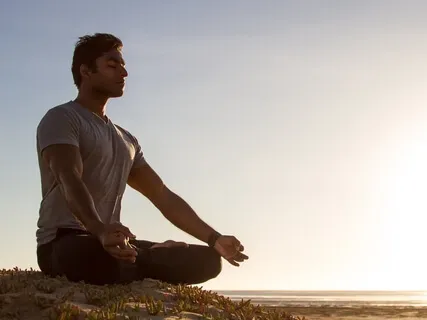
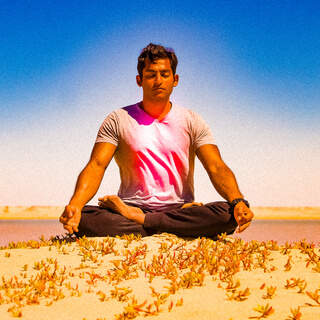
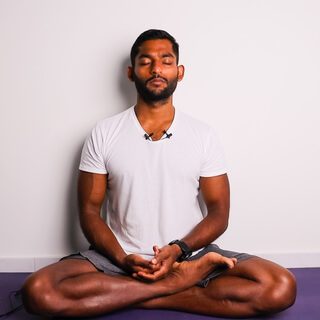
And I would request to those who cannot sit for 20 minutes in cross-legged posture,
You are most welcome to take a seat next to the wall with your back rested at the wall,
Head still away from the wall.
This will allow you to have a relaxed body.
Your body is not disturbing your meditation,
Your concentration,
Your awareness.
And most importantly,
We also try not to disturb others.
If there is an urge to move,
Silently move,
Quietly move,
Make sure that because of your movement,
The energy of the group,
The energy of others is not disturbed.
And we try to together create the ambience,
Create the silence,
Create the awareness for the next minutes.
Please close your eyes.
And take a nice deep breath.
Inhale from the nose.
And also exhale from the nose.
Inhale.
Make sure your back is straight,
Shoulders down,
And your head gently placed over your body.
And your entire body is at rest.
Take a deep breath in.
And out.
For the next minutes,
You will breathe as naturally and normally as you always do.
Allow your body to settle.
And take a posture which is comfortable to you.
And out.
And out.
And out.
And out.
Bring your awareness to the body.
Just observe your body.
Start from the feet.
Feel the sensations in your toes.
In your calves.
In your knees.
In your knees.
In your thighs.
In your legs.
Your entire legs.
Your entire body.
Just remain aware without trying to interfere.
Take your awareness to your abdomen.
Feel all the movements,
All the sensations in your abdomen.
Now take your awareness to your chest.
Observe your chest rising and falling as you breathe in and breathe out.
And out.
And out.
Become aware of your lower back.
The contact between your buttocks and the ground.
Your upper back.
Your shoulders.
Your arms.
Your arms.
Your forearms.
Your wrist.
Your palm.
Your fingers.
Until the tip of your fingers.
Just observe,
Remain aware.
Now take your awareness to your neck.
Your head.
The very top of your head.
Your forehead.
Your eyes.
Your nose.
Your mouth.
Your ears.
Your chin.
And your throat.
Observe your body as if you are separate from it.
Your body.
Observe your entire body as if you are just awareness.
Silently observing everything.
Your body still or moving.
You are not controlling it.
Let the body be on its own.
Can you simply observe your body?
Too fast.
Let the body settle on its own.
You simply remain aware and silent.
Now take your awareness to your mind.
Don't touch the thoughts.
Observe what all is going on in your mind.
Just observe if the mind is running fast or slowing down.
You are not the mind.
Your awareness that is observing the mind.
You are not the mind.
Let thoughts come and go.
Images come and go.
Or if they are staying,
Let them stay.
Just silently observe them.
You are not the mind.
You are not the mind.
Observe all the voices in your head.
Don't touch anything.
Simply remain aware.
Allow the mind to do whatever it wants to do.
You remain silent.
Keep on observing your mind.
Keep on observing your mind.
Allow the mind to settle on its own.
Remember that you are awareness.
Only awareness.
You are not the body.
You are not the body.
You are not the mind.
You are awareness.
Settle as awareness.
Remain silent as awareness.
Now even let go of the mind.
Let go of the mind.
Just remain as awareness for the next minutes.
Don't be touched by anything.
Just let go of the mind.
No more movement.
No more movement.
Slowly become aware of your body.
Feel the sensations in your body.
And bring your awareness back into the body.
Keep on breathing as naturally as you always do.
Maintain this silence,
This awareness,
This centeredness.
Very gently and slowly you may open your eyes.
Body immediately calls for stretching and all the pains.
It's not so easy to put what you just experienced into words.
Sometimes there is no feeling of sharing,
Of saying anything after this kind of a silence.
But if there is anything,
Still I ask to all of you before we leave the session,
If there is anything that is on your mind that came up during the meditation,
Questions,
Comments,
Anything that you want to discuss,
You want to share with others,
We do that now.
Otherwise I'll give you a homework.
Yes?
You mean focus for meditation or focus for something else?
The only ways that you let it grow,
No matter how hard you try,
You cannot increase your awareness.
It's not like you drink coffee and then you are like a machine working.
Similarly there is nothing for this aspect of awareness that we use within meditation,
That we allow it to emerge.
So if you are struggling with the focus,
Just see it,
Just observe it and it will slow down.
The more you practice,
This oscillation of going from here to here will slow down and will come to a center.
So it will happen,
Allow it to happen.
All you can do is sit down and practice.
I have been meditating for more than 20-25 years,
But still every morning,
Every evening I sit down.
Just because I don't live a life of a monk,
I live just like you,
All normal life,
Going to a job,
Coming back,
Dealing with hundreds of things.
So it's needed that we sit down so that our oscillations are getting smaller and smaller.
Our attention,
Awareness,
Which you are calling as focus,
It naturally settles down.
This is the best way.
If you force yourself to remain attentive,
Remain aware,
It's not going to help.
It's not going to really work out.
What we can maybe do,
Just as if there is something to be done,
Is to use some techniques that are for concentration.
We are doing that in some of our meditation sessions as well.
And I'll make sure that in the next couple of sessions we do one technique that is focused on concentration.
But then again,
It's not to increase the concentration,
But it's to utilize the concentration.
Anything else?
Yes.
I just want to say that I am very grateful for this experience today.
And that I couldn't have done it or have it a month ago.
It's for me personally a daily practice,
Mr.
King.
Sometimes it goes better,
Sometimes it goes.
.
.
.
.
.
Remediate,
Depending on your personal well-being.
But it's a daily practice that I begin to realize makes a difference.
Yes.
Thank you.
Time for homework.
This is the first time I am calling this a homework or asking you to do something.
What we did today is the foundation of what meditation is.
It's the core,
It's the gist,
It's the crux of what it is.
In order to remember what it is,
In order to bring this into your life,
In order to apply this,
Please for the next few days,
Just give yourself five minutes in a day,
Ten minutes in a day,
To just sit down and do what we did today.
It's just to observe what's happening in you.
Not judging,
Not trying to change it,
Not trying to evaluate what is this going to bring me.
Just do it just for a few days.
And if you don't have those five minutes,
Ten minutes during your day,
While you're doing other things,
While you're working in office,
While you're in the morning brushing your teeth,
While you're listening to your boss complaining about this or that,
Just take yourself out as an observer and observe that conversation happening or that monologue happening if it's not a conversation,
If it's not a dialogue.
Just observe any situation pick up in your life which is allowing you to put yourself aside and observe yourself,
Observe the situation without interfering with it.
You will be surprised that once you do that,
More often you will see that your body and mind are responding,
Are acting,
You are silent,
You are aware,
You are untouched.
That is what is called as bliss.
It's not a feeling of ecstasy,
It's not an experience which is generated out of pain,
Out of pleasure,
Out of any other emotion,
Out of any other components of the mind.
This state of bliss,
This state of pure silence,
Pure awareness is worth subjecting yourself into.
Try that out and if you don't like it,
Next session we will do something else.
We will practice some other kind of meditation.
Thank you very much.
Have a nice week.
Namaste.