The simple thing that I found very helpful has been to really notice when there's an urge.
Notice what it feels like in my body and there's this tipping point where it's like,
Come on,
You have to do it.
Welcome to the Art of Attention.
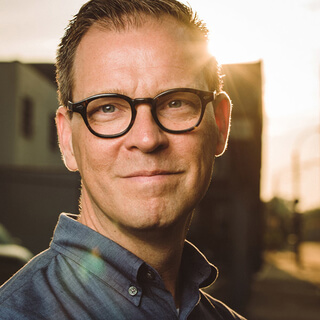
I'm Darren Larson.
I'm going to be talking to people who are exercising their attention in our increasingly distracting world.
There's been an explosion of research into how exercising our attention changes the structure and functioning of our brains,
But just as with physical exercise,
Knowing something is good for us doesn't really address the challenges of trying to establish habits that we feel better about,
Habits that can lead to feeling like we're living our lives more fully.
So while it's important to explore the science of attention,
It gets real when we compare notes about the art of attention.
My first guest is a great example of this blend.
Dr.
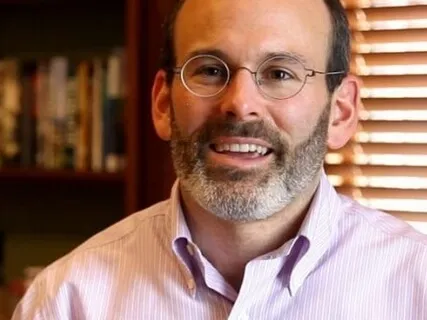
Judd Brewer is an addiction psychiatrist and neuroscientist.
He's a behavior change researcher who's been studying how and why habits form for over 20 years.
His book,
The Craving Mind,
Is about what he calls everyday addictions,
How we get hooked on everything from cigarettes to smartphones,
And how we can get better at quitting our bad habits.
He's the director of research and innovation at the Mindfulness Center at Brown University.
We talk about the amazing results he's getting from the app-based programs he's developed to help people stop smoking,
Eat more mindfully,
And to navigate their anxiety.
I hope you enjoy my conversation with Dr.
Judd Brewer.
Judd Brewer,
Welcome to the art of attention.
Thanks for having me.
What I see out there in the world as a mindfulness coach is that there seems to be a lot of interest in different ways of paying attention.
I think there's a lot of talk about how everyone feels so distracted.
I'd like to launch in to get your personal take on this before we go into your work.
When you think about in your own life,
In an effort to live your life fully,
We've run into these obstacles.
Would you say that the obstacles you tend to run into in general,
Do they tend to be more like external distractions,
Like the news and politics and the world and demands from the workplace?
Or are they more internal distractions,
Your own way you approach your thoughts and feelings?
I would say it's both.
Can I answer that way?
Yeah,
Definitely.
Yeah,
I would say it's both.
For example,
The news has been a big one for me.
I remember when I was first starting my career as an assistant professor,
I was really struggling with getting difficult papers that I would have to write.
I would find myself gravitating to the New York Times website over and over and over as if suddenly there was going to be some new news.
And then today,
I think with the news cycles being even shorter and with the availability of news on everybody's phone,
It's even more ubiquitous.
So there's an external one for me.
But even internally,
Things like self-judgment,
Judgment,
Frustration,
Things like that are also significant hurdles for me paying attention.
Yeah,
Sure.
And so when in your own personal life with those kinds of hurdles,
I guess both external and internal,
What would you say is one or a couple of things that are really small changes that you've made that have made the biggest impact on navigating this kind of challenge?
Yeah,
Let's use the news cycle as one because probably many folks can relate to that.
And if they're not news junkies,
This applies to things like social media or anything else that we can use as a weapon of mass distraction when we're stressed out or something.
The simple thing that I found very helpful has been to really notice when there's an urge to turn to a news page,
Notice what it feels like in my body and there's this tipping point where it's like,
Come on,
You have to do it.
And when I just bring some curious awareness to that and notice,
Oh,
There's that sensation and reflect back on,
Well,
What am I going to get from this where I actually feel guilty because I haven't actually done it,
The work that I need to get done and it just seems like I'm a little less connected after checking the news yet again.
Just turning toward my sensations and noticing that this is what an urge feels like and that I can actually just notice that urge and get curious about it and that I don't have to actually fill the cycle.
I don't have to go click on the New York Times or whatever in my news feed.
That's been tremendously liberating.
Right,
And it's like so much on autopilot,
Right,
This reflexive response.
And I think we're swimming in this kind of stimulation,
Which I guess it is a good example that the news is the external stimulation,
But so much of the habit starts to form on the inside.
And with the research you're doing,
Is that what you're finding?
Is this the kind of,
Is this where you're playing,
Where you're trying to find tools and insights and exercises that are helping people to navigate this challenge?
Is that fair to say?
Yes,
And as an addiction psychiatrist,
My work started a little more classically where I was trying to find different and new ways to help people overcome addictions.
So we started with alcohol and cocaine use dependence and then we moved to smoking,
Helping people overcome nicotine dependence.
And in that process,
Started realizing that this learning mechanism is really universal and then moved towards,
You know,
What are the universal habit mechanisms that are formed and how can we directly target those so that we can not only help people with classic addictions,
You know,
Like with our first smoking study,
We found that we could get five times the clip rate of gold standard treatment.
Then we moved to overeating because there were,
You know,
There was a similarity there when people were turning to food out of stress and anxiety instead of hunger and we're getting a 40% reduction in craving related eating with our Eat Right Now app,
Et cetera.
So that's where we were really zooming in on what can we understand mechanistically and then how can we design things that are specifically target those mechanisms.
Right.
Maybe we can kind of dig into that because I love this idea of everyday addiction,
But it's got its roots in classical addiction as well,
Right?
So it seems like a really rich place to play.
And if we can start getting the word out that people could respond differently to some of the stuff they're just doing automatically.
The reason I refer to your work so much in my own presentations and in my own coaching is that I hear something different that I don't hear in some of the talk about mindfulness.
I feel like the less people know about mindfulness,
The more they emphasize relaxation,
Pure breath awareness for its own sake.
But I do think we're missing an opportunity to dig into,
Like you were saying,
Body sensations that are behind some of these impulses we have.
Maybe it would help our listeners if you would talk about the mechanism,
What you mean by everyday addictions and what it is we're kind of up against.
Yeah,
I think that's a great place to start.
So we can think of everyday addictions as basically any habit that is causing us trouble.
I love the definition of addiction that I learned when I was in residency training,
Which is the simple phrase,
Which is continued use despite adverse consequences.
And so with that as a definition,
We can be going on YouTube and looking at cute pictures of puppies,
It used despite adverse consequences.
We can be checking our newsfeed,
Continued use despite adverse consequences.
We can be shopping online.
So that definition really helped bring it home in terms of all the different ways that we can be addicted.
It doesn't have to be cocaine.
It doesn't have to be heroin.
It doesn't have to be cigarettes.
It could be food.
It could be virtually anything,
Any behavior that leads to continued use by adverse consequences.
One of the things I noticed is how I decide in the morning I'm not going to open more tabs than it's humanly possible to manage.
So is this kind of what you're talking about?
It's like,
Okay,
Don't open a new tab,
Don't open a new tab,
Don't open a new tab.
And suddenly there's an explosion of several tabs.
I regret it and yet it kind of unfolds in a way that feels inevitable.
Is that kind of what you're talking about?
Absolutely.
Continued use despite adverse consequences.
And so there's this underlying mechanism that actually goes even deeper than classic addictions,
Which is ironically that this addiction mechanism was set up as a survival mechanism.
It was set up to help us remember where food is basically.
We can think of there are three basic elements where there's a trigger,
A behavior,
And a result.
If we saw food and we ate that food,
Then our stomach sent this dopamine signal to our brain that said,
Remember what you ate and where you found it.
So that three step process actually feeds back on itself.
That memory then sets us up to go and do the same behavior in the future when similar triggers arrive.
Right.
So set up to help us remember where food is,
Also set up to help us remember where danger is so we can avoid it.
Yet in modern day,
We don't have to remember where food is because we all have a refrigerator.
So our brain is still in survival mode and then starts using it to say,
Oh,
If you're stressed,
Why don't you eat some food and you'll feel better.
So there's that,
You know,
We see the food,
We eat the food,
But the result is a very different,
Quote unquote,
Reward.
It's not actually helping us survive because we're not hungry.
We're eating,
There's a new term that's come up called hedonic hunger,
Which is eating out of emotion rather than homeostatic hunger,
Which is eating because we're actually hungry.
So that can be applied to the new cycle.
That can be applied to the tabs on the internet and the internet's great at getting us addicted because the folks that are designing places to get us to click,
No wonder it's called click bait,
They know how this works.
They know how our brains work and they know how to,
Unfortunately,
They don't want to manipulate it.
So you end up opening a gazillion tabs,
For example.
And the payoff is so immediate,
Right?
So or at least the short term,
I guess when I start to think about regret,
Well,
Before there's regret,
There is a hit of at least short term satisfaction when we do the things that we habitually do.
Okay.
I'm going to,
Let's dive in there because I'm going to ask the question,
Is it really satisfying?
So what does it feel like in your experience?
Because I think,
Well,
Let me preface this by saying somewhere historically that dopamine hit which is actually there to get us off the couch into the kitchen or to the internet to buy something or to get something,
It's motivated behavior.
That is described classically and I say this in my own experience as well,
My patients describe this as well,
Describe this as restless,
As contracted,
As you know,
Like I have to do something,
Ants in my pants type of thing.
Oh yeah.
Which of those terms is actually satisfying?
Right.
It's like,
Maybe it's a substitute for satisfying,
But we're not looking at it very closely or we're not,
I guess it just becomes automatic.
I even think this about diet coke.
I think I crave it at certain times of the day and yet you're right.
When I pay close attention,
It's not about the flavor.
It's more about responding to some internal,
You're right.
It's like pushing me to go get up and do something.
Yep.
Totally.
And there might be a satisfaction in having done that thing.
Yep.
You know,
It's like,
Oh,
Here's an itch and when I scratch the itch,
I feel better.
Yep.
And then I'm actually just,
You know,
If it's poison ivy,
I'm just going to end up scratching it more because I'm going to spread the poison ivy.
Right.
We'll take a short term hit of calling off that pressure,
But the goading pressure returns and pretty quickly,
Right?
I think of a peanut M&Ms or chocolate chip cookie.
I feel yearning for those when my energy lull happens in the afternoon.
But what I'm aware of when I,
If I catch myself is that I'm not,
I definitely know I'm not hungry,
But there's something that I find in a situation like that.
I will do it anyway because there's a sense of not just the pressure,
But I guess maybe it's related.
I feel like I've deserved a treat.
I deserve something.
But then how I noticed that it's maybe in the category of your everyday addiction idea is that next thing I know,
I have an empty bag of M&Ms or I have a plate of crumbs.
I don't really recall enjoying those things.
Right?
Yeah.
So this is actually almost self-generated.
It's as though we're addicted to,
Let's just use cigarettes as an example.
Somebody's addicted to cigarettes and their nicotine levels get low and their body says,
It's got to smoke.
And so they smoke and it kind of gets them back up to baseline.
That's often what a lot of my patients talk about is they say,
I was really addicted to smoking.
I was really feeling that urge,
That craving,
And that smoking just got me to feel normal again.
And so we can have an urge for eating a bunch of cookies.
But it's often published because we're just driving that habit loop.
We're just perpetuating the process,
Just getting back to baseline.
This is what life's all about.
This is good.
This is a reward.
Right.
And actually,
In fact,
We're just keeping ourselves in jail.
I love this idea though.
It's like,
It is a lot of energy going into getting back to the starting line or getting back to the baseline.
Right?
And we kind of feel tired.
And I think sometimes we don't know how to maybe interpret where's that exhaustion come from.
Could it maybe be just maintaining that sense of getting back to baseline?
Makes me wonder,
There is that little payoff,
Right?
There's a little,
Some kind of payoff,
Even if it's not satisfaction.
And something about what you mentioned earlier,
How we are really surrounded,
Our basic needs are met for the most part.
And it allows us to kind of train ourselves using what I understand to be one of the most powerful reinforcers of behavior,
Which is an intermittent payoff.
Can you speak to that a little bit and what role that plays in keeping us stuck?
Yeah,
I'd be happy to.
So if there's that itch that we need to scratch,
That urge that says,
Oh,
Check your email just to see if somebody wrote you an email or there was something on your phone,
Was it somebody texting you or was it somebody like a tweet that you just posted or whatever.
Those urges don't come out of the blue.
We're basically being trained to do this.
And so this term that you bring up called intermittent reinforcement is actually the most well known and the kind of the stickiest type of learning known in science.
And it basically means that if we get a reward,
Let's just use Twitter or Facebook as an example,
Or Instagram,
We post something on social media and then we don't know when we're going to get a like.
Somebody likes our post and it's like,
Oh,
Wow,
We get this big dopamine hit.
This is,
Oh,
Somebody paid attention or somebody posted.
We don't know when that's going to happen.
From an evolutionary perspective,
That survival mechanism is set up to help us learn new things.
So if we are foraging around the savanna or whatever and we find a new food source,
Our brain says,
Damn,
You know,
It gives us a big dopamine hit that says,
Oh,
Remember this place.
Right.
But then when we,
You know,
We go back home and then our brain isn't firing when we go back there again,
It's firing in anticipation of going to get that reward again.
So it's firing ahead of the schedule.
So that dopamine firing and saying,
Go do this,
Go do this.
You know,
Let's say if the reward is consistent,
We don't get that same type of dopamine spread because it's not surprising.
We're not,
Our brain isn't learning something new.
So social media can actually hijack that system because,
You know,
It's not like we're learning a new food source.
It's just saying,
Oh,
Somebody liked your post.
There's actually quite a bit of research now.
People have done neuroimaging studies showing,
You know,
Getting a bunch of likes on Facebook versus very few likes on Facebook.
No,
Actually this is Instagram.
It not only activates the nucleus convicts,
Which is this downstream reward pathway where dopamine gets released,
But it's also activating things like self-referential brain networks that say,
Oh,
It's not just about getting a reward.
It's about me.
It's about me.
You know,
This relates to me.
And I think a lot of,
You know,
In modern day,
We see a lot more of the rewards or a lot more of the stimuli being directed towards self.
You know,
YouTube really should be called Me Too because,
You know,
There are all these social media things that are all about us.
You know,
It's like,
I'm going to post something about me on Facebook.
I'm going to post something about me on Instagram.
I'm going to post something about me on Twitter.
I'm going to post something about me on YouTube.
You know,
It's all about perpetuating that whole,
You know,
I don't want to say narcissistic tendency that we all have,
But something about,
You know,
Like,
Oh,
I'm relevant.
Someone admires me or likes me or loves me or,
Yeah,
I'm relevant,
Right?
Yeah.
They're just,
It could be as simple as they're paying attention to me.
Well,
And then how do we?
So if the underlying drive behind some of what we're talking about here is the importance of survival,
Right?
It seems like we've got this survival instinct that has now spread an influence and taking up a lot of these other things that are not about survival.
But what from your work are you finding?
We have this amazing capacity for survival,
But wouldn't you also say we have this capacity for resilience or for deciding how to act?
And are those two things in competition?
If we have some cognitive awareness that maybe checking Instagram less,
I'd feel happier,
But then yet we still don't do it.
Is it a kind of a battle between survival versus a maybe wiser capacity for behavior that has more satisfaction and less regret in it?
Is it a fair fight between those two impulses?
Yeah,
I don't.
I think there is a bit of a battle there.
There's this emphasis on self,
Like we've been talking about,
But there's also an emphasis on the self taking ourselves out of the hole that we've dug ourselves into.
And I think that's where we see a lot of things kind of in competition.
So when we're trying to change a behavior,
Whether it's a classic addiction or just trying to lose weight or just trying to create a healthy habit,
The overwhelmingly predominant notion is willpower.
Oh,
Just set a resolution and do it.
Sugar's resolutions are really big.
The problem with that is that willpower is more of a myth than muscle.
And I think that's where a lot of the competition and a lot of failure honestly comes is that we don't understand how our minds work and so we can't effectively work with them.
So we get frustrated,
We get exhausted.
Dieting,
For example,
Is now described as yo-yo dieting.
People they set this strong resolution,
I'm not going to eat junk food or I'm not going to eat snack late at night.
And then they see some progress,
They lose five or 10 pounds,
They feel good.
And then their body goes into starvation mode thinking there's a famine.
So it starts holding on to calories and then they start to really struggle and they gain that weight back and sometimes more.
And this just happens cyclically over and over and over until they just give up,
Frustrated and defeated because they don't know how their brains work.
The prefrontal cortex is now described as this associated with willpower and self-control.
Also,
The weakest part of the brain is the first that goes offline when we get stressed.
And so how can we possibly rely on something that is so weak?
We're not actually tapping into the strongest mechanisms.
These reward-based learning systems are much stronger,
Yet I don't think in modern day folks have actually tapped into their potential.
So ironically,
This is where some of the research that my lab has been doing and others have been doing is showing that you can actually use some of these old processes.
You can actually use the old brain to form new habits and it works much better and it doesn't take willpower.
Well,
I love it.
And I know that curiosity or bringing curious awareness into these loops.
Yeah,
I feel like we're heading in the direction of something optimistic here.
And I know this is a kind of a universal struggle.
Everyone has some struggle with something.
So what can you tell us about the findings from,
I don't know,
Which appeals to you more to talk about?
I'm always taken by the results you're getting with the smoking cessation.
What I tell people,
My understanding of what you're up to there is that you don't start by having people try to quit.
It's that you have them bring a kind of curious awareness to the whole experience of smoking,
Even the craving to smoke.
So maybe can you give us some idea of why you feel optimistic?
What have you seen people that they're able to change behavior in some of these really sticky places like smoking or emotional eating?
What are you seeing?
Yeah.
So let's use emotional eating as an example.
Or we could start with smoking,
We'll give an example of both.
Perfect.
In our studies,
And actually we now have an app-based mindfulness training program for smoking that we have an exercise that just literally walks people through what we saw in this first study,
Where somebody wants to quit smoking,
They open up our Craving to Quit app.
And what it does is it says,
Okay,
Ready?
You want to smoke?
Let's do this.
And it first has them basically walk through a mindful smoking exercise.
I love it.
And then what's it like when you inhale?
What's it taste like?
How hot is the smoke?
What does the smoke smell like?
And all of this stuff.
And they start to realize that smoking really doesn't taste very good.
I had a guy that had been smoking for 40 years.
I think he was smoking a lot.
He reinforced his learning pathway about 300,
000 times.
And he did this mindful smoking exercise.
How did I not notice this before?
Because he'd just been smoking eventually all these years.
And what that does is it helps our brain update how rewarding the behavior is.
Because reward-based learning isn't based on the behavior itself.
If it were,
We would just say,
Stop smoking,
We'd stop.
It's actually based on the reward.
And so if that reward is seen as not rewarding,
As in our brain gets accurate and updated information that says,
Wait a minute,
This is not very rewarding,
We become less excited to do the behavior.
So he started on the journey of quitting through that simple exercise.
And after people do that a few times,
We have them then go through an exercise.
When they haven't urged to smoke,
We give them an option.
Do you want to smoke?
Or how about let's just start by imagining the last time you smoked.
What was it like?
And what that does is it taps into what they've learned.
That updated information then can come in and they're like,
Well,
Usually what they describe is that the smoke is actually very hot when it goes into their lungs.
Often their throat feels constricted.
The smoke smells terrible.
They feel embarrassed,
Things like that.
When they recall that from their previous experience,
Then it actually helps them become less excited to smoke in that moment.
And over time,
That recollection can actually help them ride out cravings.
We can also give them some other mindfulness exercises.
But the recollection piece is really critical because what they're doing is they're seeing how disenchanted they are in that moment.
We did the same thing with our Eat Right Now program.
So with this eating app that we did a study,
We published in 2017,
A couple of years ago now,
Where we found that there was a 40% reduction in craving-related eating.
And we started looking at the mechanism,
Like what's actually happening there.
And it was helping people be with that urge.
And we do the exact same thing.
So if somebody wants to eat something,
It can either be a type of food or an amount of food.
We first have them imagine eating,
What was it like when you ate this the last time?
And then we have them rate how much they're craving right after they do that.
And if they're still craving,
That means they're not disenchanted yet.
So we have to go through mindful eating exercise.
And then if they eat a ton,
They can then rate,
Oh,
How satisfying was that?
Oh,
Not very satisfying.
Whereas if they didn't eat as much,
If they stopped and they were actually full,
Or when they got just enough to give themselves that little reward without overdoing it,
That actually feels more satisfying,
Then that can feed forward into the next time they have that urge to eat,
They can stop when they're full.
Or if it's junk food,
For example,
They might even become disenchanted.
I saw that in my own life,
Where I used to eat a whole bag of gummy worms at one time.
It went back to when I was in high school,
In junior high,
Actually,
I was racing BMX bikes,
And I learned that if I ate healthy food,
That I could actually maintain a sustained energy level to race,
Because we'd have to race three heats over the course of the day,
And I would have to actually keep my energy level up.
And if I ate a bunch of junk food,
I would crash after the first heat.
Not literally,
But I would energetically not have the energy to race the next heat.
And so I got really obsessed with eating healthy food in high school.
I ran cross country,
And I wrestled,
And I ran track.
I would basically deprive myself from eating any type of sweets at all.
And so after I finished high school,
I did a little bit of rowing in college,
And I was on the cycling team for a bit.
But after those athletic endeavors,
My brain was like,
Well,
Here's some ice cream,
Why don't you just have some ice cream?
And there wasn't any,
It's not like I did,
I was having a meat or a race that I had to worry about.
And my brain would be like,
Oh,
This is great,
Because I've been depriving myself for a long time.
And so it got to the point where I was like with gummy worms,
I just couldn't,
They were just so addictive,
I'd have to eat the whole bag.
And I knew that I'd feel really crappy afterwards,
But at least there wouldn't be any more gummy worms in the house the next day.
So I started paying attention.
Like,
What's this actually like when I eat a whole bag of gummy worms?
It's pretty crappy.
Especially when I started comparing it to things like blueberries.
Blueberries have this natural sweetness,
But they don't lead to that dopamine hit that says,
You know,
You got to eat the next one,
You got to eat the next one,
You got to eat the next one.
They're actually pretty satisfying just eating them in themselves.
Cherries,
Same thing.
Yeah,
And you never feel guilty of eating a whole bag of grapes,
Right?
That's not something we regret.
So then therefore,
You know,
It's a healthier option and we feel better.
And yet there's something about what you're saying that reminds me of what I'm often trying to point people towards,
Which is kind of redirecting your attention away from typically some default story or concern or worry and into a sensation is kind of the name of the game when it comes to mindfulness.
What I hear you saying is that redirecting people's energy or attention or curiosity to the,
Not the story of themselves as a smoker or as an overeater,
But really like more of a scientist investigating the raw data,
The sensory data that they can feel,
What they can feel in their body.
You're inviting nature to sort of sort things out if you're just curious enough to feel what you feel,
But notice it instead of just,
I guess that's where I think the game is played.
How do we convince people that something as natural as steering their curiosity towards sensation instead of trying to fight with themselves about changing and behavior,
Maybe this can set the stage for changing the way they relate to their habits and triggers and things.
I don't know.
I think it motivates people to be curious enough to investigate in this way.
Yeah,
I think two things there.
One is I absolutely agree that our body,
These urges in our bodies are what drive behavior.
It's not our thought.
If our thoughts were more powerful,
We would just tell ourselves to stop craving and we'd be done with it.
That's really where the action is.
If we don't,
And again,
This comes back to this,
I don't know if it was Descartes that really screwed us up or what,
Where we really privileged thinking over anything else.
We can just look to see what our track record is with changing behavior through thinking.
It's a pretty poor track record on the whole.
For most of us,
Unless we're Mr.
Spock where we just don't have emotions,
It's just not going to work out well.
It's not going to go well.
We can start by just looking,
Well,
What's my track record?
The other thing that really drives behavior is data.
People look in their own experience.
When folks in our programs actually are able to overcome some behavior that they've struggled with for 15 years,
And I get this all the time.
We have online communities as part of our app-based mindfulness training programs and people write journals so they can track themselves and we can also see how they're doing.
I've gotten this over and over where people are like,
I've struggled with anxiety for 10,
15 years.
I've struggled with overeating for 15 years and no program that I've ever tried has actually worked.
It's amazing how just bringing awareness and being curious about what's happening is actually helping me change my behavior.
It's that direct experience in their own lives is what convinces them.
I think of this as evidence-based faith.
We actually have a module in each of our apps later in each of the programs.
There are like 30 core modules.
In the last week,
We actually have a module where we describe evidence-based faith,
Which is a playoff of evidence-based medicine.
But basically,
We have to take a leap of faith when we try anything new.
We don't know if it's going to work,
But maybe somebody said it was going to work or there was a bunch of good ratings on the app store or whatever.
It's only over time after we see over and over and over that by bringing curious awareness to our own experience that we can actually work with our minds that way,
That it works.
That's where they've developed their own evidence-based.
They've got tons of data.
It's a great time to go back and reflect on that because that's what gives people confidence because they've developed wisdom.
They're like,
Oh yeah,
This is how my mind works.
I can actually do this.
Well,
It also reminds me,
Sometimes my coaching clients will say,
They say,
It sounds like you're asking me to be the scientist and the lab rat at the same time.
Right?
That's kind of what you're saying.
And we're kind of digging into subjective experience.
One of the things I love about your real-time is it fMRI experience?
The one what Anderson Cooper did on the 60 Minutes episode,
Right?
And I think it's so brilliant,
Not that we necessarily all have to have such a device because I know at least for now that'd be not realistic.
But what you're clarifying there,
And let me see if I'm getting this right,
Is what happens is when you tell people to be curious about their sensations,
They start drafting essays in their mind.
They start thinking,
They think they're in a therapy session or they think they have to describe it in great detail.
But what we're really asking with mindfulness is to literally rest their awareness in the sensation itself.
And you've been able to show that when people understand that distinction,
Then they're actually beginning to actually collect the kind of data that can change behavior as opposed to staying stuck and thinking about it and telling a story about it.
I guess that's my take.
Does that seem accurate?
That is absolutely it,
Yes.
And so then there's a lot of hope in there because I think if we're telling people you've tried willpower,
You've tried thinking your way out,
You've tried to diet,
But we're suggesting could you stay curious with just observing?
And I think something else you stress is let's pay,
Let's don't get so preoccupied with the behavior that we kind of feel embarrassed about,
But let's really turn our energy and our attention towards what reward am I actually getting in real time when I yield to this craving in the same old way,
Right?
Is that where the kind of encouragement or hope that you see,
Is that where it starts to turn around?
Absolutely.
And there's actually a shift and we're studying this right now in my lab.
So let's dive into this specifically because I think anybody can play with this.
They don't need a fancy FMRI machine or an EEG machine that gives them feedback.
They can actually just calibrate their own experience.
So I think there's a universal human experience and even a language that describes this really nicely.
What we've been seeing over and over and over is that when somebody is open to something,
When they're open to a new experience,
That actually feels better than when they're closed down,
When they're not open to something.
So for example,
When somebody is feeling threatened,
They're going to close down in fear or if they're in a meeting where their ideas are being challenged,
They're going to be defensive.
And so there's this close quality to experience that we can compare directly to an open quality to experience when we are curious,
When we're connected.
Or we even see this with kindness and when people are not being kind,
When somebody's not kind to us,
We feel closed down.
When somebody's being really kind,
We tend to open up.
So I think there's even a differential there in terms of reward value that's open.
And I'm not talking about the personality traits of openness.
I'm just talking about this simple description of literally feeling open,
Feels better than feeling closed and takes less energy.
Ah,
Right.
Right.
So we see this universally.
We see this in our anxiety program.
So we actually just finished a clinical study with anxious physicians and got a 57% reduction in these clinically validated anxiety scores with our own learning anxiety app.
And what we're seeing is that people can move from that closed down contracted quality of anxiety,
Of fear,
Of panic and actually replace that with the more rewarding open quality of curiosity.
I remember somebody writing in their journal,
They said,
You know,
I noticed a moment when I was,
I think a panic or something like that.
And she wrote that,
You know,
Her new automatic response was,
That's interesting.
Oh,
You're right.
She said that curiosity actually took the wing right out of that anxiety sail.
Totally.
Yeah.
Yeah.
It's like also makes me think,
Haven't we all trained ourselves?
I don't know if this is maybe too general,
Much of a generalization,
But it's almost like as if all the things we wish we didn't do,
The things we regret doing habitually,
We trained ourselves to do them in the first place.
I remember the first time I ever tasted coffee as a kid and I think I will,
I thought I will never,
I will never fall for that bitter taste.
But then I trained myself to at least get some perceived benefit from that.
So it's kind of the same mechanism,
But harnessing that same thing that has,
I like to say everyone is training their attention.
They just,
They haven't set up a program for it.
They're not doing it on purpose.
If something's uncomfortable,
They go to work thinking their way through it.
If something's comfortable,
They try to hold onto it,
Right?
Kind of what you're saying is,
Is leveraging the very mechanism that has led to the habitual behavior we regret by focusing on really investigating the sensations of the reward,
We're kind of unlearning or relearning and trying to actually calibrate that so that we get the reward we really want,
Which maybe we've always wanted those rewards.
We just have accepted a,
I guess I think of it as a substitute.
We've accepted these short-term substitutes.
We stopped asking,
Is this paying off?
And we just kind of tell the story that it is paying off.
Yes.
And I wouldn't even say that we've stopped tracking that.
I think for many of us,
We've just been societally trained through our lives that excitement is that highest level of happiness.
And in fact,
There was a book I read,
I think it was by a Burmese teacher,
Upan Dita,
Where he wrote that people mistake excitement of the mind for happiness.
Intensity instead,
Right?
Yeah.
So that excited quality is what we are trained.
Oh,
I'm about to get a kiss.
I'm going to get on the roller coaster.
Where did we learn that being terrified was the highest level of happiness?
Yet we'll get on the roller coaster and then make a beeline to do it again.
We've been trained that way to think that this is our highest level of happiness.
But in fact,
Happiness is just knocking on our door,
Just saying,
Look,
I'm here.
But we just don't,
We don't tap into it enough.
And I think especially we don't realize that this is something that we can tap into all the time and sustain.
It's almost like a mundane,
It's something extraordinary that's just lurking there,
Right?
Even questioning,
Is it intensity that we want or could there be some satisfaction in just bringing,
It doesn't sound dramatic,
But just bringing curious awareness to ordinary sensations and letting our nervous system,
Our body,
All the different mechanisms,
Let them kind of sort out.
Wow,
Actually,
This is,
Not only is this more satisfying,
It's readily available,
But I think that there's a social pressure to stay stuck in behavior because we have so much company.
Well,
There's two things.
We don't get to observe the internal,
The subjective side.
When someone makes a shift and they decide to be curious about a sensation,
That's a very private.
I can't see that as an outsider,
So I don't get to see it.
And also,
If someone else gets their act together in some way,
If they lose weight,
If they stop smoking,
It's sort of like it shifts their social world.
So I don't know,
Do you ever think that there's a role that social pressure plays that to stay locked in these habit loops because we're sort of navigating that by ourselves or that it's almost rude,
Like let's say if it's raining and everyone's complaining about the rain,
And if I'm finding some satisfaction in just listening to the sound of the rain,
If I share that with people,
I sound kind of self-righteous or haughty.
I don't know,
Does this kind of social stuff ever come up into the questions you're asking?
It does a lot.
So not only in perpetuating behaviors,
There was a fascinating study that was published a couple of years ago where researchers were able to link up people's social networks with obesity,
And that they found that basically that people who are obese tended to hang out with people who are obese,
And that was,
They were hypothesizing,
If I remember this correctly,
That it was contributing to the maintenance of that weight,
For example.
It's also critically important,
Or community is critically important,
For changing behaviors.
So for example,
With addiction recovery,
Having good networks is really important.
We even see this in our programs.
This is why we created online communities so that people could support each other in moving into new territory as compared to hanging out in old territory,
Where instead of hanging out with their smoking buddies or hanging out with folks that eat a bunch of junk food or hanging out with folks who are anxious,
Because that's what they're familiar with,
We can help them have communities that can help support them being in these new and often unfamiliar and therefore uncomfortable territory that they haven't seen anything at.
So I think that's a really critical piece to not only maintaining old habits,
But also helping to break them.
The opportunity there is now I feel awkward or embarrassed,
And maybe I can turn what I'm learning about my habit loops,
I could notice the sensations that I'm experiencing there,
Perhaps.
So I want to be respectful of your time.
I really,
I want to ask you one question about,
I read that you got,
You had some work that you were doing in Ohio,
Maybe a grant that you got in Ohio to see if there's an application for these insights directed towards the opioid problem.
Is that something I can ask about?
As an addiction psychiatrist,
Part of probably about half,
If not more of my clinic is a buprenorphine clinic where I help people with opioid use disorder to help them overcome addictions.
So that's been a dream of mine for a long time is to be able to develop an app-based digital therapeutic to help people overcome opioid use dependence.
So I had gotten an award for an idea phase of this Ohio Opioid Challenge.
But ultimately we haven't gotten full funding for that.
So we haven't been able to move that project forward yet.
But the idea is in place and I use mindfulness in my clinic as appropriate to help people work with things.
But one thing that we are able to do is a lot of folks with addictions have comorbid anxiety.
And so we're running several clinical trials now with our Unwinding Anxiety Program,
The digital therapeutic that is developed,
The one that we got close to 60% reduction in anxiety with physicians.
We're starting to work now with people with generalized anxiety disorder with people whose anxiety is interfering with their sleep.
And a lot of folks with opioid dependence have comorbid anxiety.
And so we can start there as a way to help them start working with their minds and learning how their minds work and then apply the same tools that they're learning in the Unwinding Anxiety Program to working with their cravings and their urges when they're struggling,
Whether heroin or opioids or what not.
I mean,
Obviously the challenge level might be different,
But it seems like it's the same mechanism you're trying to target there.
So I'm guessing you must be optimistic that there could be,
I don't know,
I'm always careful to say I don't think that applying mindfulness is the only thing we should be pursuing,
Obviously.
And I know that's the case for you too,
That you're using all the tools at your disposal,
The doctors and therapists and support groups and other interventions and treating other things that are going on.
But it is kind of interesting to think that maybe from having too many web page browsers open to compulsive shopping online or eating emotionally or smoking all the way up to classical addictions,
There could be a role in this really investigating the reward and seeing if there's some tweaking we can do there instead of just getting stuck trying to only have willpower to change those habitual responses.
So yeah,
Yes,
And I think at a basic level,
These are relatively simple concepts to the point where we struggle,
Especially health coaches and clinicians who are at the front lines just trying to help people overcome their everyday addictions,
Whether it's anxiety or eating or smoking.
So I actually put together a free healthcare provider course for folks to be able to just learn some of the basics of what we've been studying for the last 20 years in a way that can help them take these insights not only into their own lives,
But help their own patients be able to overcome some of their everyday addictions.
We've been through a couple of modules around clinician burnout and developing resilience that anybody can use those tools for,
But especially where we have an epidemic of clinician burnout.
We're good at epidemics in this country.
Well,
I think it's what an amazing place to target your activity or your research is.
I know that doctors have never felt more crunched for how much time they can spend with folks.
And I think you're identifying ways for healthcare professionals to be able to speak the language of habit loops and some tools about applying mindfulness into these problems.
And I think people just need those tools because they feel like they don't have time to unravel these things for their patients.
But I think you're showing that it doesn't necessarily have to be a huge time commitment to get people to start reassessing or realize that they could be recalibrating themselves.
So I don't know,
I feel like it's just beginning,
Right?
The potential is huge.
So it is just beginning.
It's a very exciting time.
It is very exciting time.
And what do you see is,
And I want to wrap this up here.
What do you see on the horizon?
As far as mindfulness,
I think we sort of struggle with it as if it's reached a peak and that it's like this buzzword and this thing we've kind of inherited from the hippies or something.
But I really think that there's evidence that this is the beginning of something,
Not the peak of something.
What do you think about the future of the applicability of mindfulness?
Yeah,
I think the field is maturing right now.
It's at a maturation stage where there's a lot of excitement,
A lot of hype,
A lot of people claiming all sorts of things like it's going to improve your focus at work and your sex life and you name it and we'll tell you something.
So those things will eventually go away because they won't have the depth and the actual core mechanism pieces to help people realize change.
So when they see it for what it is,
Those will not sustain.
Whereas the programs that really have research and evidence and science behind them will move into the mainstream as the whole digital therapeutic,
I don't know even what to call it.
It's like a whole new pathway in medicine that's emerging where people are realizing that you can actually deliver treatment effectively through an app.
And I think mindfulness is going to be one of the core pieces there because it can actually be delivered pretty effectively.
At least our app-based mindfulness training have all been clinically tested.
And so I'm sure there will be more like that.
I think the future is going to show a consolidation where the programs that can really get to the heart of it and help show clinically significant change will help a lot of people.
And I think that's where we're going to see the field move.
All right.
Well,
Thank you so much.
Thank you,
Dr.
Judd Brewer,
For all the work that you're doing.
It's very encouraging to think that something that causes so much suffering for so many people even at a really small scale,
These everyday addictions,
That you're really digging in taking them seriously and putting tools in people's hands that can be practiced immediately and you're getting such great results.
It's super encouraging.
And thank you so much for your time today and chatting with me about it.
That's my pleasure.
If you want to learn more about Dr.
Judd Brewer and his work,
Visit his website at drjudd.
Com.
From there,
You can check out his TED Talk about Breaking Bad Habits and get details about the behavior change apps we discussed.
You'll also find his free web-based video course about mindfulness designed for healthcare professionals.
You'll find links to all these resources in the show notes.
Look for our other episodes of the Art of Attention through the WCBE Podcast Experience at wcbe.
Org and wherever you get your podcasts.
You can email me at darren at attentionalfitness with feedback about this conversation or to suggest guests for future episodes.
Until next time,
Don't wait for the world to get less distracting.
Find ways to exercise your attention.
We'd love to hear about it.