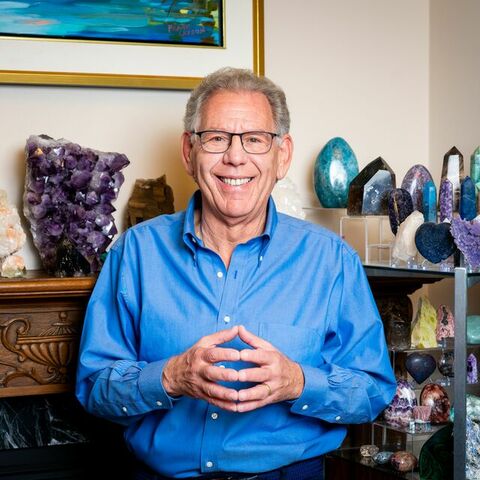
And welcome back to another episode of Dissecting the Wisdom of Shalt Azar with my good friend and collaborator Mark Lane.
Welcome back,
Mark.
Hi,
Jeffrey.
Thanks.
Good to be here.
Yeah,
It is good to be here.
And I guess we'll jump right in.
What's our topic of the week?
So the topic of the week is the proactive versus the reactive mindset.
And I'll explain— Well,
That one's sounding a little bit heavy,
My friend.
I'm sure there's more to that than just those words.
Tell me a bit about what brought that to mind and why you want to discuss that.
Sure.
So I was actually listening to a guided meditation that had some affirmations.
And one of the featured affirmations was,
I trust what the future holds for me.
And when I heard that,
It made me stop and say,
Hmm,
Do I really trust what the future holds for me?
And I think my answer has to be sometimes,
Maybe most of the time,
But not all the time.
And it got me kind of to thinking about,
You know,
When my mind is left to its own devices,
Where does it wander?
Does it wander into the past or does it wander into the future?
And I'm not much of a past dweller.
I don't place much attention or much value on the past.
It's gone.
And I tend to want to be moving forward.
But when left to its own devices,
My mind will drift into the future.
And I think that that's kind of a very typical trait of Western society,
Right?
I mean,
You and I both came from a business background.
And,
You know,
We've been taught that being reactive is a bad thing.
You know,
We're supposed to be proactive.
We're supposed to be getting ahead of things and anticipating what's going to come next.
And then strategizing potential solutions for those inevitabilities that we think are coming down the road for us.
And what kind of occurred to me is that in doing that,
Not only are we discounting our faith,
We're assuming that good things aren't in our future,
That there's going to be troubles and trials and tribulations out there,
And we're just waiting for them to show up.
But it pulls us out of the present moment and kind of thrusts our awareness into the future and gets us thinking thoughts that quite possibly are creating a future that we really don't want to attract.
And I guess that's kind of where I,
You know,
My kind of my jumping off point on this topic.
Yeah,
It's very interesting.
I think we've got a couple of issues.
One is,
What do we mean by reactive and proactive?
And then what do we mean by,
You know,
I'm going to be OK in the future?
I'm having a little trouble bringing those two together.
So let's talk about if reactive and proactive is past focus and reacting to sort of what comes your way versus proactive is taking a stand.
I'm going to vote for neither,
Which doesn't make a lot of sense because,
You know,
You either have to react or or proact.
But I think somewhere in the middle of that is flow.
And it's interesting.
One of my early coaches made the distinction between reaction and response.
She taught me that response is is really response able that you take the power to respond and react is more of that gut habitual response or reaction.
Proaction or being proactive tends to,
You know,
Make me think of the people that are driving ahead and have the plans and the goals and that doesn't sit that well with me either.
So somewhere in there,
I'm a believer of flow.
And you and I have talked about that a lot.
And how do we how do we get that flow?
How do we how do we find that happy balance between sometimes being reactive or being responding to what comes our way?
And then how do we become proactive?
That then,
I think,
Ties into that other part of of what you want to talk about.
And that is that,
You know,
Will I be OK in the future?
I think it is a combination of how we respond and how we take proactive action that is going to determine whether we're going to be OK.
Shultazar has taught me that that it is us that creates our own reality.
And so,
You know,
In this discussion,
Will I be OK?
You know,
One of the big ones for me is COVID.
Right.
Am I going to be OK in COVID?
And I choose not to ask that question.
The question that I tend to look at is,
Will I be able to handle whatever comes my way,
Whether I get COVID or not?
And that's the one that's more important to me.
So I think that we have to be careful and you represent,
I think,
A beautiful mindset that's out there that it's like,
Is it reactive?
Is it proactive?
Will I be OK?
Will I not be OK?
And I think what I would encourage listeners to do is is to take your power back and realize that your thoughts,
Your feelings,
Your actions,
Whatever it is you do,
Whether it's reactive or proactive,
Has a vibration.
And that's what's going to create your reality.
Does any of that make any sense,
Mark?
Yeah.
Yeah,
It makes a lot of sense that,
You know,
You brought up COVID.
That was one of the things I had kind of I was kind of thinking about in terms of in terms of this.
And when I'm using the word like proactive and reactive,
I guess I'm thinking of reactive as being I'm going to choose how I respond or choose how I react to whatever comes to me.
And I'm not going to go out and try to force a particular future or a particular next event to happen.
I'm going to surrender to basically surrender to what is.
And I think what would COVID we know one of the things that we call it one of the gifts of COVID is it's kind of teaching us to what I guess to stay present.
COVID has sort of erased the future from our consciousness.
Right.
Or from our from our from our society.
We don't you know,
We don't know what's going to happen.
You know,
We don't know what it's going to do.
We don't know if it's going to stay or go.
We don't know how you know,
We don't really know anymore.
We used to think we knew what the future looked like.
Now we really have no idea what the future looks like.
And I'm I have a sense that that's by design that that we're a percent.
Yeah.
You know,
We're being we're being shown that,
You know,
Get your get your thoughts out of the future.
You know,
Let's source like God take care of the future.
And you just you just stay right here right now and deal with,
You know,
The reality that comes to you moment by moment instead of trying to.
I hear you on that.
But I'm going to challenge you a little bit because because I've been challenged many times as well.
If we let God take care of the future,
Then then we're not in control of that that destiny.
So I still think we need a certain proaction.
But how do we how do we take action when we don't know what the future will bring?
And that's an interesting question.
I think we still have to take action,
But we're taking action not knowing what the future.
You know,
Is this going to go on forever?
Is it not?
But yet we're still we're still forced to take action.
Those those who are in charge of the institutions that are trying to navigate us through this,
You know,
This this situation still have to take action without knowing.
And so,
You know,
It's interesting in the news lately I'm hearing,
You know,
There's scenario one and scenario two and scenario three.
So I think it's important for us to continue to be proactive,
But let go of the control,
Which is what we talked about last week.
Let go of the control or the illusion that we can control the future,
But certainly still have a good mix between reacting or responding to what's happening in the moment.
At the same time,
Keeping an eye on your future.
And that's a little bit of the Abraham Hicks.
Would would Abraham be telling us not to have any rockets of desire right now?
I don't think so.
I think Abraham would be saying,
Yes,
You still have to have your rockets of desire,
But put your rockets of desire out into a world where the unknown is very strong,
Where the future is blurry.
Sure.
Yeah.
So I think it's important to be in the now,
But keep an eye on the future and let go more of the goals that we have for the future and set more intentions.
Right.
So which I think some of the governments are starting to do in plans for COVID.
If the second wave is this,
We'll handle it this way.
If it's that,
We'll handle it that way.
And so we kind of have to have contingency plans.
I know when I was in business,
You know,
We had that goal and there were smart goals,
Specific,
Measurable.
I can't even remember.
They weren't very smart,
In my opinion.
But they were all of these steps that that that assumed that you were in control.
And I don't think we're in control.
And so we certainly want,
I think,
Proactivity that has resilience,
That has adaptability,
That has flexibility,
That has spontaneity.
But I think it's important for people still to set those intentions.
Otherwise,
We can stagnate.
Right.
Right.
Yeah.
Well,
In the types of intentions we set,
I think sometimes can work against us,
Too.
You know,
You brought up Abraham.
The intentions that you hear Abraham discuss are kind of open ended and broad intentions,
Right?
It's not like I want to have,
You know.
Yeah,
If I could jump in.
It's not I want to have so much money in the bank.
I want to feel financial security.
Right.
Yeah.
I want to it talks a lot about the feelings.
You know,
I want to achieve this type of feeling.
I want to feel security.
I want to feel abundance.
I want to feel good health.
I want to feel fulfilled in my career.
Right.
Right.
And so those are intentions versus what you mentioned before.
Goals tend to be much more specific.
And I think in all these these gurus who talk about goal setting,
It kind of pigeonholes you or doesn't leave the universe much room to operate.
Sometimes it's too specific and too narrow focused.
Right.
Oh,
I agree.
One hundred percent.
One hundred percent.
And a goal you tend to either win or lose and winning kind of feels good,
But it just it can get you addicted to winning and then you become so stressed that you just keep shooting for the next the next win.
And losing can be very demoralizing.
And and I agree with you.
And I think we're we're coming to some consensus that our proactivity has to be a loosely crafted plan.
Like we're going to we're going to travel the world,
But we don't know whether we're going to start going north,
South,
East or west.
But we are going to cover the globe.
And I'm starting getting a sense of what you're talking about.
Underlying that,
It is important to have a certain faith or trust that I will be OK in the future.
Right.
Right.
In order to do so,
You have to have confidence in your your ability to respond to whatever comes your way.
Because now we have you know,
We have a world that navigating it is a lot more challenging.
The rules of the game are changing.
The rules of the games are changing.
And so in order for us to move towards that intention,
We have to have a flexibility,
A spontaneity,
A sense of of resilience,
Adaptability.
And so I think if we can convince ourselves that we're going to be OK,
No matter what,
Then I think we are able to have a greater blend of reactivity and proactivity.
Right.
Right.
Because I don't think it's one or the other,
Because because if it's all reactivity,
Then the world is going to determine what you get because you're never being proactive.
And if it's all proactive,
Then you don't know how to handle the curve that is going to get thrown at you if we have another lockdown or if covid extends too long,
Etc,
Etc.
So I don't think it's reactivity or proactivity.
I think it's it's some of both.
It's finding the balance.
And the other part of of of the premise that you wanted to talk about is,
You know,
That mantra.
And repeat it again for me so that I can I can get a sense of it.
I trust what the future holds for me.
Right.
Right.
And I think that's really,
Really,
Really important,
Because if you don't have that trust,
If you don't have that higher vibration of trust,
Then you're going to have a lower vibration of mistrust,
Of fear.
OK.
And I think that is going to derail your proactivity and your reactivity.
So so I guess I guess what I would say is that mantra is really your guiding light.
OK.
Are you going to be able to navigate the future?
And if you trust that you will,
Then I think the journey is a combination of reactivity and proactivity.
It's not it's not always going to the back of the ship and see where you've come from.
And it's not always spending the whole journey up at the front of the ship,
Because then you're going to kind of miss the pattern of what you've just come through.
So finding the balance between reactivity and proactivity while knowing that you will navigate this journey,
No matter what life throws at you.
Right.
That one feels OK to me.
Yeah.
Yeah.
Makes sense to you?
It does.
Yeah.
Yeah.
It's kind of like taking the mountaintop view.
Well,
Right.
That's exactly what Shaltazar has taught me to do.
And it's really important because because if you don't have faith and trust in the future,
You're going to be stuck with what for the future?
Uncertainty.
Yes.
And uncertainty can easily lead to fear,
Apprehension.
Right.
And so think think of the vibration of your overall journey plan.
Right.
OK.
It's like you go to the automobile club and you say,
OK,
You know,
In the old days,
They had something called a triptych.
And you'd say,
Well,
You know,
I wanted to tour a particular place.
I wanted to drive around California.
And they and they gave you a triptych.
Right.
But you you usually went into the person that was designing your triptych and you say,
You know,
I want to see nature.
I want to see cities.
I want to see country.
You know,
Could you imagine if you went in to the to the Automobile Association to say,
I want to see horror.
I want to see fear.
I want to really be on the edge.
I want you know,
I want it's like that.
Right.
You wouldn't design a trip that way.
Right.
So I think I think that looking at whether you are going to choose to see your future in this very unknown world through the lenses of trust and faith or through the lenses of uncertainty and fear.
And I think that's a big,
Big question.
I think shelter's are has has told us that this unknown is for a purpose.
We need to shake things up.
And so we need to learn to navigate this unknown and I'll take faith and trust any day over uncertainty and fear.
Yeah.
Agreed.
And then.
Right.
Right.
So so I think what you brought up was really,
Really kind of neat because there's there's sort of two aspects of that.
One is very,
Very forward thinking.
What's going to be your philosophy going forth in this unknown world?
One of that mantra,
Which is around faith and trust.
And as you and I have dissected,
We've realized that the opposite of that is probably not very beneficial to us,
Which is uncertainty and fear.
And then the other the other half of what you brought up,
I think,
Was was really brilliant and great.
And that's,
You know,
Do you want to be all reactive?
Do you want to be all proactive?
And if there's one thing that shelter's are has taught me,
It's all about balance.
So it's it's not about being too reactive and it's not about being too proactive.
It's about having some of both.
So a very balanced approach with lots of faith and trust.
Right.
Right.
Formula to get through these challenging times.
Exactly.
Wow.
That one now that that was a very interesting topic and it took some some interesting turns,
Which which again,
If you look at the energy of that,
It was both of us.
Yeah,
I'll even use the word,
Certainly me struggling to understand,
Well,
What's the insight here?
What's what you know,
What what what can we bring out of out of this topic that Mark has brought?
And we I think,
You know,
Maybe started far apart,
Came closer together and then at the end in total agreement.
And so that's,
You know,
To a sense,
A little bit of reactivity,
Proactivity and collaboration and cooperation.
And so,
You know,
A reminder to our listeners,
You don't have to be alone on this journey.
And Mark,
You and I have really enjoyed our camaraderie and our discussions and our bantering around things because I know they've helped me.
And I think they've helped you because we have we're able to talk about things on a level that is helpful in navigating the world that we're in and the life that that we are going through.
And so I think that that collaboration and cooperation is really important.
Find a buddy,
Find a community,
Find people to have these discussions.
I mean,
I think it's kind of neat that here we talk about proactivity,
Reactivity and our future outlook.
And we discussed it in a very mature,
Respectful way and came up with a conclusion that I think serves both of us.
So as opposed to the infighting and the blaming and complaining,
Let's get together and talk about these things where the resolution helps all parties.
Does that make sense?
Right.
Yeah,
I know that that's that's great advice.
Yeah,
I would I would echo what you said.
You know,
There's find somebody out there that whose ideas and thoughts and beliefs resonate with yours and and talk to each other and challenge each other and try to,
You know,
Deepen your understanding of some of these concepts,
Because I think that's what this is all supposed to be teaching us is that the old way of thinking and the old habits that we have are well past their time and we have to start,
You know,
Reimagining life in a different way.
Absolutely.
Absolutely.
And as you're talking,
I'm reflecting if if we go back and we will go back and listen to this,
We were probably little odds at the beginning.
It's like,
I don't know what he's talking about.
And I'm not sure I agree with reactive and proactive.
And I was a little bit combative.
And it's like,
You know,
And probably you felt that.
And we just kept talking it through and we came to some consensus.
And I think that's really important because I didn't get it at first.
I didn't get what we were going to talk about.
But I didn't get where we were going to where we were,
Quote unquote,
Supposed to go with it.
But we just kept talking.
And we came together.
And I think that's important.
And if listeners go back and listen to the beginning of this,
You'll probably find something that doesn't happen very often where where Mark and Jeffrey aren't really kind of in sync.
You know,
It's you had a thought.
I didn't quite get what it was,
What we were trying to drive at.
But yet we brought it together to that consensus.
And that's what I love about working with you.
That's what I love about our relationship is even when I wasn't quite sure where you were coming from,
Just our talking it through enabled us to come to something where there was that consensus and agreement.
And,
You know,
I think that's the beauty of these episodes that we do.
It's not necessarily what we say.
It's just paying attention to our energy and the bigger picture of it all.
So I think we we prove to people that and if you look on social media,
There is so much infighting and so much this and so much that and conspiracy.
And that's not how we're going to create the new world order.
We've got to create it by coming together,
Respecting each other's opinions,
Keep talking it through and move towards some sort of consensus.
I agree.
So thank you for that amazing experience,
My friend.
Oh,
Thank you.
Any final words?
No,
Sir.
Okay,
We did it all.
Thank you so much,
Mark.
We'll see you again next week.
Love and light to everyone.
Thanks for listening.