Hello,
Everyone,
And welcome.
Today we continue the Dharma and Justice Dialogue Series from the Thich Nhat Hanh Program for Engaged Buddhism.
My name is Piestuwesiji,
And I am the program manager for this program,
As well as Buddhism and Interreligious Engagement,
Where students are pursuing master's degrees here all within Union Theological Seminary in New York City.
So this evening,
The very Reverend Dr.
Kelly Brown Douglas,
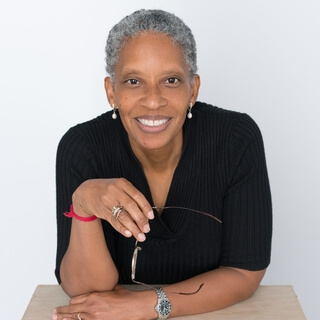
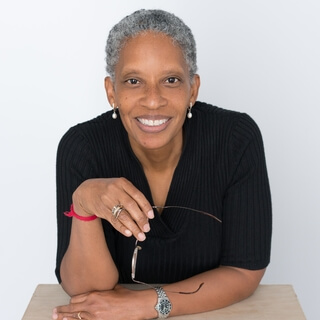
Dean of the Episcopal Divinity School and Bill and Judith Moyer's Chair in Theology here at Union will be in conversation with Dr.
Pamela Ayo-Yatunde,
Exploring Buddhist and Christian womanist theology as it relates to today's social realities.
Womanist theology reexamines a religion's practices,
Rituals,
Scriptural canon,
And its interpretation with a moral perspective that empowers and liberates Black women,
Their identities,
And arguably all in the wake of such a radical shift.
Such questions that might be explored this evening are how do Buddhist and Christian womanist liberation theologies relate to one another?
In our movements to support the liberation of all through a womanist lens,
How are we perhaps seeing things differently in important ways?
So let me tell you a little bit about the two people who will be in conversation this evening.
The very Reverend Dr.
Kelly Brown Douglas is Dean of the Episcopal Divinity School and Bill and Judith Moyer's Chair in Theology here at Union Theological Seminary,
And also serves as the Canon Theologian at the Washington National Cathedral and Theologian-in-Residence at Trinity Church Wall Street.
Some of Douglas's books include Sexuality and the Black Church,
A Womanist Perspective that was written in 1999,
Black Bodies and the Black Church,
A Blues Slant in 2012,
And Stand Your Ground,
Black Bodies and the Justice of God,
Written in 2015.
In addition,
Dean Douglas is the co-editor of Sexuality and the Sacred,
Sources for Theological Reflection,
Which was written in 2010.
She has been a pioneering and highly sought after voice in regard to addressing sexual issues in relation to the Black religious community.
And she has been very active in advocating for equal rights for LGBTQ persons.
And Dr.
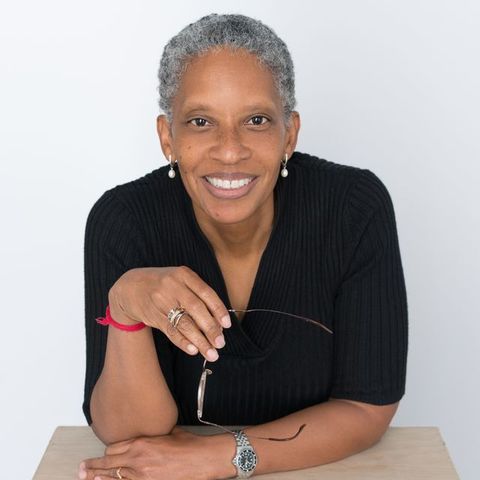
Pamela Ayo-Yatunde is the co-editor of Black and Buddhist,
What Buddhism Can Teach Us About Race,
Resilience,
And Transformation and Freedom,
That was released at the end of 2020.
She's also written Buddhist-Christian Dialogue,
US Law,
And Womanist Theology for Transgender Spiritual Care,
Also in 2020.
And Object Relations,
Buddhism and Relationality in Womanist Practical Theology.
She is the co-founder of Center of the Heart and founder of ADRI,
Spiritual Care for Women with Cancer.
Ayo also works as a pastoral counselor and chaplain.
We're really happy to have you here,
Ayo.
I would also like to say a quick thank you to Ian Rees,
Who is working hard behind the scenes to help this event run smoothly,
And also to Pam and Travis,
The ASL interpreters here tonight,
Allowing for a more accessible event.
And just before we get started,
I want to note that for those of you in the webinar here,
The Q&A box is open.
So feel free to drop in questions in the Q&A box that come up during the conversation this evening.
They easily get lost in the chat.
So if you want the questions to be addressed by our two speakers this evening,
Please put them in the Q&A box.
And for those of you streaming,
Ian will do his best to bring in questions from Facebook and YouTube as well.
And there will be time reserved at the end to respond to questions that you might have.
So again,
Welcome,
Everyone.
And now I'd like to hand it over to Dean Douglas and Dr.
Ayo Yatunde.
Thank you,
P.
So Kelly and I negotiated who would start and who would finish.
So I guess I want to start.
I have so much on my mind.
First of all,
I guess I want to express gratitude to the Thich Nhat Hanh program for inviting me to be a part of this conversation with you.
I have a lot of respect for you,
Kelly.
I've got your books right here.
I've quoted you in my dissertations.
So this is a real honor for me.
And yeah,
So.
Well I'm humbled by that.
And I'm honored to be in this conversation with you.
I've read your stuff and I know your work.
And so I am grateful for peace and the Thich Nhat Hanh to bring us together.
Thank you.
Because you know what?
We have so much work to do.
Yeah.
Oh my goodness.
Oh wow.
You know,
And I've never said it with so much joy.
I think the reason why is because I know,
I feel confident that I have a partner in you.
Now you don't know why yet,
But I'm going to tell you why.
Because you and I think alike.
We have the same concerns for Black people,
For justice,
For advocating for the oppressed,
Advocating LGBTQ people,
For teaching,
For spiritual leadership.
And we have those,
And writing.
Of course I don't write like,
I mean,
You're prolific.
Okay.
I can't keep up.
Orbis should be so proud of you.
But we have a lot in common.
And because of those things,
I think there are things we can do together.
So I want to start with the fact that I decided to read Exodus.
The last time I tried to read Exodus,
I was 21 years old.
And I was searching for answers.
I was facing the last year of college and being pulled somewhere between doing the right thing and doing the thing that was going to make me a lot of money.
Right.
I'll put it that way.
I decided to read the Bible for myself.
I grew up in the United Methodist Church.
I'm going to read the Bible for myself and the answers will be revealed.
By the time I got to the book of Exodus,
I had to close it because I said,
This is the violence.
The violence here.
I can't take it.
These are not the answers I'm looking for.
I will trust that the answers are in the Bible,
But I can't read.
I can't take it in.
So with that in mind,
Having just sat with reading it,
Reading it contemplatively,
Trying to feel my way through the characters and so on,
And given that we both have referenced Exodus and the importance of the Exodus story for Black people,
My question to you is,
Do you still think it should hold the place that it does for the next steps in our liberation path?
My goodness,
Ayo,
You're supposed to be nice.
I'm not.
I'm a Buddhist practitioner,
Of course.
But a good question.
Though,
Let me say that I do think that this is the beginning for us of work that we'll do together.
And because I really appreciate and am humbled by your speaking of the things that we hold in common.
And I think that as long as we hold in common this passion for a more just world,
Where everyone can flourish into the beings that they were meant to be and created to be.
And I know you have that passion and that spirit from your work,
From your writing,
Et cetera.
And so I am excited as you are for the work we have ahead of us to do together.
And I don't find the work that we have ahead of us in terms of trying to create a more just world.
I don't find that daunting.
I find that challenging and an opportunity.
But now to your easy question about the Exodus.
But it's a good question because you're right,
First let me begin by saying that that,
Which while the Exodus story is and has been central to the Black faith tradition,
As I'll talk about in a minute,
That's not what really opened up my own sort of Christian imagination and which bought me to sort of really affirmation of being Christian.
Because really for me,
And I've told this sort of story in other places,
I loved the church.
Obviously I'm Episcopalian.
And it was stories of Jesus and the story that really bought me there was not actually the crucifixion.
It was the story,
The myth of Jesus being born in a manger.
And I remember that I used to cry every time we would sing that song,
What is that song?
Baby Jesus born in a manger.
Now I can't think of the lyrics or the tune,
But that he was born in a manger because I always identified his reality of being born in a manger with those children who were trapped in manger like realities,
Even from when I was a kid.
So the Exodus story didn't really have any significance to my own sort of faith formation until I got older.
And until I began to listen to the songs and the spirituals that we sang and to understand how significant the Exodus story was to the black faith tradition and to the black faith story and one of the stories besides Jesus on the cross that bought the captive African and the enslaved African into Christianity.
So let me say,
Make this brief,
That which really captured their imagination was the fact that they began to see this God of the Exodus that heard the pleas of the Israelites.
They began to see that,
Wait a minute,
That God isn't like the God that their enslavers were telling them about,
Right?
This was the God that they recognized because I always say,
Even though their enslavers may have introduced them to Christianity,
They didn't introduce them to God.
And so this God sounded like the God,
Their great high God who created them in freedom,
To knew them in freedom and affirmed who they were as free beings.
So that's what drew them to this Exodus tradition,
To this Exodus God.
This was a God of freedom.
This was a God that affirmed that they were free and that acted against anything that would suggest that they weren't.
So that was the story initially that as I was introduced to sort of the centrality of that story as I grew in my own Black faith,
That's what was significant for me.
But you're right that we can't just stick with the Exodus event because that sort of God calling them into freedom because God also called them into a land,
Presumably God called them into a land that was inhabited.
And that and didn't call them to respect the people of that land.
That was promised them a land that was inhabited.
That sounds sort of like manifest destiny.
That sounds like what happened to Indigenous peoples in this country and was an excuse that some white Christians gave for exterminating the Indigenous peoples.
So it's problematic.
And so I say this to answer your question in brief,
That certain story,
One,
We have to broaden our understanding of the Exodus story.
So to understand that it also became a story that oppressed and that we have to begin to question that story.
And it can't hold,
And I do agree,
I think it can no longer hold the kind of sort of sacred authority that it is held in the Black faith tradition without there being further interrogation,
Without there being other stories.
And I think the thing that the Black faith tradition,
At least Black theological tradition has lost,
Is the prophetic voices that began to question.
The prophets emerged from the people who were given the quote unquote promised land and began to question those people who were beginning to act like those who had oppressed them.
And so I think that we can't just simply take over the Exodus story without questioning it and without bringing into account the prophetic voices that begins to hold us accountable to living into the freedom to which God calls all humanity.
And anytime we begin to act in such a way that stifles that freedom,
Then it becomes problematic in our relationship,
Not only to God,
But in relationship to who we are called to be.
But see,
But now I want to see,
So now I want to.
.
.
Okay,
Turn around,
Fair play.
Yeah,
But see,
Yeah.
But one,
I want to,
You know,
Sort of ask you as you ask me that question,
One,
What sort of leads to that.
And then I have been fascinated by one of your articles where you talk about Siddhartha and you begin to talk about sort of the five or so principles of Buddhism.
And I was,
What struck me because I think it's so,
And you said it so critically well that when we are called,
You know,
Siddhartha's recognition of suffering,
Right?
And how people suffer and suffering and it becomes sort of this thing that connects us to our humanity.
But how do you do that?
When we're talking about what we recognize in the myth and the legend of Siddhartha is that he's talking about the suffering that everyone experiences just because we're human beings and mortal.
But what becomes of the critique of the suffering that people experience,
Not simply because of their mortality,
But because of who they are,
The social,
Historical suffering that is racism,
That is sexism,
That is what I like to call LGBTQ terrorism.
What about,
How does Buddhism engage that suffering?
Oh,
So I see how you operate.
I ask you one little question and then you come back with two big questions.
Okay.
But that's good.
That's good.
I let me,
Kelly,
Let me tell you why I asked you the question about Exodus.
You know,
Recognizing,
You know,
Having read that section in Stand Your Ground and your book Stand Your Ground on Exodus,
It just reminded me that,
Oh,
Yes,
I had also briefly mentioned the centrality of Exodus for how we identify ourselves as African descended people on the path to freedom.
Like,
But,
You know,
Arguably,
Arguably,
We've been free for a long time.
And so if we keep going back to stories of our enslavement and identifying with that enslavement and then God bringing us out of enslavement,
You know,
Do we somehow miss the strength that comes out of having been free all these years?
Like,
What's the material of our freedom relative to being enslaved that can take us into the next phase,
Which I think is part of your work?
Trayvon Martin being killed in 2012,
George Floyd being killed in 2020,
And those in between and those who will be killed next.
Your argument in your book is that we need to change the law.
We need to change laws.
So can the Exodus story help animate us to be the prophetic voices for legal reform,
Or do we need something else that's going to help us do that?
Let me just quickly say this,
Because this also connects to this thing of suffering.
And that is to see,
I'm going to have to push back a little bit on this fact of,
You know,
That we were,
We've no longer enslaved people,
We're free.
And what the Exodus story is telling us,
Because I think that what the Exodus story is telling us is a story of a struggle to be free.
And that when we began to understand that,
And this becomes a problematic even in the story itself,
When the Israelites began to understand we're free,
And then they began to act as if their freedom was simply being free from the bondage of the Egyptians,
As opposed to their being freed from that bondage to live into what it means to be free,
Even as they struggle toward the freedom that God calls us all into.
In the moment that freedom becomes a sort of static reality of being freed from one situation of bondage and not recognizing that it is about more than that,
And that freedom,
This is what I like about womanism,
That it talks about not being,
Not a struggle for survival and freedom,
A struggle for survival and wholeness,
Right?
That's what God calls us into.
In the moment,
It was just this notion that,
Oh,
We're no longer enslaved by the Egyptians and we're free.
Free to do what?
And so then you're free to live into this covenant of freedom that God has called us into.
So it's always dynamic.
And we know if we talk about the Black struggle,
We aren't politically,
Socially,
Or culturally free and neither are we continue to live into the freedom of who God has called us to be as Black people.
And so I just think,
I just want to change the way in which we think of the Exodus story.
It's about a movement toward freedom.
And that's why I say in my book that God didn't choose a people.
God chose freedom.
He chose a people,
If the people were pleading and crying out against their oppression and crying out to be free,
God chose freedom.
God is on the,
God makes a preferential option for freedom.
And I even like to say that as opposed to a preferential option for the oppressed.
It is for the oppressed as they struggle toward freedom.
And so that we don't begin to think of ourselves as these chosen people who have a manifest destiny to take over somebody's land.
And that's so anyway.
Right.
Right.
See,
Now you're saying things.
I don't want to answer the previous questions that you asked me because,
Yeah,
And I don't even remember what it was had to do with Buddhism.
Okay,
You come back.
Okay.
I am taking in what it is like to be a theologian.
And I hope other people are taking that in as well for you to say that the story,
The X of the story is really about this and not about what it says it's about is the work of theology if people want to know.
And then what is life giving,
Right?
What is what can I take from this and blow my own blow air into it to give it life and for it to be life giving for others.
So I'm thinking about that and thinking about you thinking about what you're doing,
Thinking about your work and how you're thinking about the X of the story,
Which is so violent.
Supports genocide.
And I remember,
I remember as I was sitting with Exodus today,
I remember Mike Pompeo.
Yeah.
And his visit to the Middle East.
And I can't remember exactly where he was standing.
But he pointed to the West Bank area and said something like,
How can you not look at this and not see in essence that it belongs to these people,
Not the people who inhabit it,
But the people who will settle on it.
And so I think about how operative this is still in the lives of people today.
Okay.
But I want to change subjects for a moment.
Oh,
No,
No,
I won't do it.
Go,
Go.
No,
See,
And I do want you to change something,
But I just.
Yes.
The Exodus story is violent.
But the violence doesn't begin in the land of Canaan.
And the violence begins the moment that a people are dehumanized.
And so the enslavement of an Israelite people was violent.
And so what violence creates violence.
And so it is as if the Israelites are trapped in a sense in this cycle of violence,
We have to be freed from that cycle.
And so the original violence isn't what takes place in Canaan.
It's the fact that another people think that they could deny another people sacred humanity.
Right.
And so that so what does it mean for us to free ourselves from the web of violence that denies another person's sacredness?
That isn't simply structural and systemic violence.
That isn't simply sort of physical violence.
There's ideological violence in the way in which we take it in and the way in which we come trapped within it,
Emotionally,
Psychically,
Spiritually,
Let alone physically.
And so I'm so anyway,
I just what we when we talk about freedom,
We can talk about it in terms of being freed from violence and and what does it mean to be freed from violence and how are we to recognize the cycle and web of violence that we're caught in?
So I have no patience.
You know,
We talk about Black Lives Matter.
I have no patience when people talk about the violence of protesters.
Really?
No.
Or when people talk about the violence,
Like the architect of the Make America Great Again Vision,
Who always want to talk about the violence of the high rates of homicides,
Etc.
In urban centers where mostly people of color reside.
Well,
You know,
No,
That's the violence that violence created.
You know,
You've created a situation of violence that nurtures death,
Not life.
So don't be surprised when death is the outcome.
We have to change the realities of violence in which people are trapped that don't produce life and don't allow them to first.
So,
You know,
That to me,
Again,
Is all about the freedom that God calls us into freeing ourselves from the complex realities of violence into which we are trapped.
Mm hmm.
Freedom.
Freedom.
And I am coupling freedom with responsibility.
And thinking about what you talked about,
The freedom to be prophetic.
And I think I heard you say,
And you might want to correct my perception here,
That Black folks aren't really living into our freedom to be prophetic.
We just.
Do you think that's true?
Largely or not?
Look,
I,
I,
I,
I don't think that's true.
I don't think that's true.
OK.
And I didn't hear you.
I didn't hear you.
And in general,
I think that we have to lift up,
Say,
In the Black faith tradition,
That prophetic tradition.
But I don't think that's true.
I think because I think and it's any time that we have seen if we're going to talk about sort of this Black,
White in terms of racial justice,
Et cetera,
That any time we have seen progress in this nation toward this vision of what it claims it wants to be,
Where all people can live into the inalienable rights of life,
Liberty,
And happiness,
Any time we've seen that movement toward a more just society,
That movement has come from the underside.
That movement has come through the history of Black people struggling.
It is any if this this democracy,
Any time that we have moved toward a democracy,
Black people have perfected that democracy.
And and so in perfected it in the struggle and perfected in the prophetic voice.
And that's what Black Lives Matter is all about.
And so I I don't believe that.
Do I believe that the Black faith community and that the Black church sometimes betrays its prophetic voice?
Yes,
Indeed.
OK,
But that's what I was hearing.
Always been a Black witness,
A Black prophetic witness.
And that's why we're here.
Yep.
Good.
OK.
We don't have to have an argument about that.
And I'm glad of that because we're just now forming our relationship.
So I want to never have we will never have an argument about that,
Because we're both on where you're both trying to be on the arc that bends toward justice.
Right.
Right.
So it's not about an argument about because this is why I love our conversation and coming together,
Because it's about bringing together our different perspectives and and back and forth to commit it to the same thing and trying to figure out how to get there.
Right.
That's right.
So I'm going to make an offer from a Buddhist perspective.
Yeah.
To Christians,
To Christians who are,
As you put it,
Paying attention to the web of violence,
The web.
I think about the web.
Think about womanist wholeness.
I want to bring in Ida B.
Wells.
OK.
And I want to ask you this question.
As I've been thinking about.
The destruction that's taken place in this country over the last few years.
I think.
That from a legal perspective.
Christians could do a lot of work around strengthening good Samaritan laws.
They were crafted at a time.
Where we were more civil.
We are less civil now.
And so what would it take for and I'm coming from a Buddhist perspective around compassion.
What would it take for us who are who are on that arc to really look at these laws and advocate for strengthening them?
Let me give you an example.
A real case.
So Eric Garner.
George Floyd and many others died with witnesses.
Capturing the incident.
On their cameras.
Pleading to police officers to stop their.
Behavior because it was obviously going to end in death or potentially end in death.
And I've been thinking about.
What it must feel like for some people to have witnessed.
That kind of atrocity.
To have tried to intervene.
And to carry what I think is called what I'm calling it anyway.
Traumatic moral injury.
I was there.
I saw it.
I tried to help.
The police officer who's supposed to be here to protect us is killing us.
I failed.
I was not able to help.
I was able to help.
What does that do to the psyche of a person?
What is the injury?
And what is the remedy in law for that kind of injury?
What if a witness who has tried to intervene and who has suffered this kind of injury.
So I'm coming from your pastoral counseling,
Pastoral psychotherapy perspective.
Should they be able to bring a case against the state?
Saying that I tried to be a good Samaritan,
But the state wouldn't let me.
What do you think?
First,
I mean,
See,
You keep asking these like real simple questions,
Right?
Oh,
My goodness gracious.
We will be together doing our work together for a long time because just for me to learn to answer your questions.
Because they make me think.
And here's what let me say and keep pushing me if I don't get to all the things,
But I heard so much and what you've just asked your questions are in themselves insight in a lesson.
First to talk about the legacy of moral injury.
And the legacy we will of trauma.
We talk about the legacy that is slavery in many ways.
Most often we are talking about that legacy of slavery in terms of sort of structural systemic ways and sort of more material kind of artifacts,
If you will.
That is a legacy of slavery.
We talk about that in terms of wealth gaps and all of that.
But in doing that,
We also ignore other legacies.
And I don't I like to talk about the legacy of the white supremacist foundation of this nation and slavery is a part of that foundation.
It's a legacy of that.
But we fail to talk about as well the legacy that is the conceptual legacy.
The way in which we have this collective gaze of white knowing and can't see beyond.
You know,
Sort of the way in which a white culture has defined what knowledge is and knowing.
We don't talk about the conceptual legacy that has a grip on us.
We don't talk about the emotional legacy or the moral legacy,
The moral harm.
I like to talk about that even collectively as our moral imaginary has been trapped in this legacy of white supremacy.
So I appreciate that you talk about the moral harm.
And for to me this moral harm as I think through what you've just offered.
That we talk about it in different ways from the vantage point of those who have been harmed and those who do the harming.
Those on side of those who are trying to stop the harm of another that looked like them and the others who perpetuate the harm.
And that moral harm for the person who is trying to stop it,
That's the story of Black people,
Right?
And trying to stop the harm to ourselves and to our people and not being able to stop it because what we've seen that's happening in terms of the police lynchings is just another manifestation of the lynchings.
And so we haven't been able to stop them.
What does that do?
What is not the moral harm in terms of not knowing right from wrong and just from injustice because people who are on the underside of injustice,
We know what injustice looks like and what justice looks like.
But what does it do in terms of your expectation that a people can be moral and that a people can do right,
That a society can be moral?
You know,
Reinhold Niebuhr says that,
Well,
You know,
Once you get a collective together,
It's hard for society to be moral.
Moral man,
As he put it,
In a moral society.
What does that do to one's expectation?
I am reminded and,
You know,
My son,
For instance,
Who's now 28 said to me,
I cannot imagine a reason why I would ever call the police.
Now,
That is about more than simply distrust of the police.
But that's something about,
You know,
You can't expect people who are supposed to do right to do right.
So I so appreciate the profundity of your question that recognizes the legacy of moral harm.
The other thing we have to recognize,
You know,
Is that think of those pictures,
I owe,
Of people who were witnessing lynchings.
Yes.
Now,
First of all,
So let's just go back to the 1960s and those kids that were standing out there calling black people out of their name and all that kind of stuff,
Those kids are still living and they got kids.
And the people who witnessed lynching,
Their kids and their kids are still living.
And so we aren't talking even about some ethereal way in which your moral compass or lack of moral compass is transferred.
But think of that.
And so,
Yeah,
I we do have to address that.
The other thing and then I'll shut up and you can because I'm probably going to film.
The other thing you said,
Though,
When we talked about the police and the police supposed to do right,
We have to recognize this is where this country just needs to tell the truth.
The police policing in this country is functioning the way it was created to function.
It's doing its job.
Policing in this country emerged out of slave patrols.
Policing in this country was meant to police black bodies.
It is doing that.
So why are we surprised?
The system is functioning the way it was created to function.
So we have to shift our understanding.
We have to talk about not keeping people safe because it was always keep people safe from black people.
We have to talk about building safe communities.
And safe communities are just communities,
Communities that are not saturated in the violence that denies people's humanity.
And so it shifts.
We don't need policing in this country.
We can move toward what I like to call sort of community responders and all of those kind of we don't need to get into that.
But yet so the other critique is something that black people are crying out about.
Like why y'all keep policing us?
This force that you all call policing,
It is doing what it's supposed to do,
Which is killing black people.
And so I just think,
You know,
There's so the deeper question is what happens when a people speak a truth that will never get heard?
What's the harm there?
What happens to a dream deferred?
What happens to a dream deferred?
But what happens,
I mean,
And I'm serious,
This is what we talk about that freedom is about more than even being physically free from police beating you up just because you're black.
What happens and what do you see pastorally?
What happens inside,
Right?
You know,
Audre Lorde and we both like Audre Lorde.
Audre Lorde said that we have to help our children not to take in that piece of the not to get rid of that piece of the oppressor inside of them.
Yeah.
Right.
How do you do that?
It can be done.
So that's the first thing.
And it's going to I think it's different for everyone,
Because we are complex people.
And it takes time.
And it is it begins with the recognition that we're all part of a system of oppressive system that feeds on people believing in their inferiority.
And so there's so many cultural manifestations of that.
From a Buddhist perspective,
We would say that that that to explore those territories should be done gently.
That it's likely you're also when you make those explorations,
It's likely you're going to encounter self judgment,
Self pity,
Self shame,
Guilt,
And so on.
And so to just try to befriend those other aspects and and be patient with yourself.
And to know that it's not just you,
It's part of the system.
And then also to employ practices to practice living into the fullness,
The wholeness of yourself.
And that may be things like being in spaces where you know you're not welcome and staying or confronting someone who you think is going to,
I don't know,
Attack you,
But trying it anyway so that you're not stuffing.
So Audrey was also about not stuffing your voice,
Right?
To write it out,
To speak it out.
And after reflecting on cancer,
Having cancer the first time,
She's like,
For what was I ever afraid?
Why was she ever silent?
Yeah.
Yeah.
So if you all haven't read Audrey's essays and poems,
I highly recommend it.
Bibliotherapy,
That's another way.
I think Audrey Lord's writings have been a savior for a lot of people.
And obviously has been like,
I would say her writings are like scripture for Black Lives Matter movement.
Many leaders have been inspired by her writings.
So this is the work that we do in healing,
Right,
Providing spaces for living into our wholeness,
Recognizing our fractured or amputated selves,
As one of my Dharma brothers,
Dala Tarjan Phillips says,
Our amputated self,
How we have become separated from all of life,
Not just from each other as human beings,
All of life.
And then to do the long work,
The long-term work,
Lifelong work of reconnecting ourselves to the rest of existence.
And that can also begin with believing,
With recognizing the delusion of our separateness.
So let me ask you this then.
So I think of Audrey Lord and I think of,
Of course,
Even James Baldwin,
Who,
Especially in his letter to his 14-year-old nephew,
And he said,
Don't believe what your countrymen,
White countrymen say of you,
That you aren't them,
That indeed,
Their humanity is more at stake than your humanity,
In as much as that they would oppress you.
So my question is this.
So what is the message to those folk who are blessed with ivory grace that happen to look like white Americans?
And this is where I want to come back to your tale of Siddhartha,
Right?
Because as you try to re-envision,
Retell the story of Siddhartha,
That what happens when he goes out,
Right?
And what if he recognizes,
Well,
That there's racism and that he was protected from it.
To me,
That's a white story,
That Black people ain't never been protected from racism.
And the more- We try,
But we try.
We do try.
We do try.
Right?
But we've all,
Well,
Yeah,
And we,
As Baldwin- The talk,
The talk,
Right?
Right.
We can see sometimes that people come to the shock that they are Black and white America at a later date.
And sometimes it's catastrophe for them.
Yes,
I've seen it.
That's right.
We've seen it.
But I think that Baldwin's right.
There comes a time in every Black person's life that they recognize the shock that the country for which they have paid their loyalty is not loyal to them.
The flag to which they have pledged their allegiance is not,
Has not pledged allegiance to them.
The shock of what it means to be Black in America.
So you come to that shock,
You may come to it late.
Some people are coming to it late in life and they're like,
Whoa,
You know,
Why did that happen to me?
Hello.
But this,
The story,
You know,
The story that you tell of Siddhartha to try to,
Again,
As we all have to make our sort of religious myths,
How do they,
How do we translate those in contemporary times?
How do you translate that in the time of Black Lives Matter?
This tell of Siddhartha coming to recognition of racism.
To me,
That's the white people's story.
So is that,
Is Siddhartha,
That white person,
Coming to recognition about racism in the world?
And if that's the case,
How does the Siddhartha then empty themselves of their very whiteness in such a way that they can indeed have empathy and compassion for that George Floyd at the knee of that white police officer?
Because I declare that the thing blocks people's compassion,
As you talked about,
That blocks their moral awareness,
Particularly when it comes in relationship to Black people,
Is this notion of anti-Black.
They never see Black people as people.
So how does a Siddhartha,
As you tell the story,
Get freed to be able to live beyond whatever privileged reality he was living in so that he can see those other persons that are other as persons and empty himself of the privilege that didn't allow him to see it in the first place?
Hmm,
Okay,
I'm checking the time.
So as I was writing that article,
Buddhism in the Age of Black Lives Matters,
I actually started,
I was invited to consider writing something completely different based on the research that I did on African-descended Buddhist practitioners in the insight tradition,
Right?
Lesbians in particular.
But then I started writing,
And this is what came out.
So it had nothing to do with the research,
But it had to do with my frustration with white Buddhist sanghas.
Oh,
Well,
Yeah,
White Buddhist sanghas not being involved in justice-making.
And so I thought,
What is it?
What is that?
What is that about?
What is that about?
If we say that we're sitting with each other in contemplation,
Meditation,
Freeing our minds,
Resolving or transforming our suffering,
Practicing loving kindness and compassion,
Selflessness,
Generosity,
I mean,
The teachings are beautiful.
The practices are beautiful.
So why is it that largely,
And I will say largely Buddhist practitioners of many racial ethnic persuasions are not on the front lines,
Are not seen on the front lines of justice-making.
What is going on here?
So I said,
Let me look at the story.
Let me go to the root.
Let me go to the root of the story and see if there's something at the root of the story that kind of keeps us where we keep ourselves protected from the fight.
And so in my,
In their many Siddhartha stories,
So this particular one to me represents someone who was,
Whose parents,
Parental figures were really invested in him being a particular kind of person,
Invested in keeping him on the path of inheriting their wealth or his father's wealth,
Keep him on the path of having a harem,
Keep him on the path of,
According to Buddhist lore,
On the path of royalty and power.
And so that can be,
It can be a story for non-white people,
But really for me,
It's about how our parents try to make us be somebody they want us to be and protect us.
And many parents can probably understand this need to protect our children from the realities of life until we believe they are ready.
So according to the story,
Siddhartha slips out and boom,
Sees how life really is,
Goes into shock,
Flees into the forest for six years to do everything possible to avoid being human,
Experiencing the frailties of being human,
Realizes after six years and being near death that he can't do it,
Proclaims the middle way,
Middle way being away from rigidity towards something that's more doable,
To put it in shorthand,
And then practicing passion,
But God has,
The Hindu God,
Brahma,
Has to visit him first.
So and then he feels empowered to begin teaching the Dharma.
So I see that whiteness,
Because certainly there are poor people,
Poor white people in the United States,
Right,
Many,
Many poor people who are white,
Many working class white people in the United States.
And this is a critique of blues practitioners in the West,
That many are very well off,
Very well educated,
And have created a community that is not accessible to everyday folks.
I wouldn't say that's true of every community,
But there's a lot of truth in that.
So is there something about whiteness and affluence in the United States that when they see this Buddhist story,
They say,
I can relate to that because I was also set up to be privileged and to be protected against the reality of life.
So let me sit with that.
That's possible.
That's possible.
But from,
There are many Buddhist schools,
From a Mahayana,
Which is a newer form of Buddhism,
Relative to ancient Buddhism,
From a Mahayana Buddhist perspective,
We are all interconnected,
Right?
Thich Nhat Hanh,
Engaged Buddhism,
All interconnected.
We are one inter-being,
Inter-penetrating with all of reality.
And so there's no separation,
Conceptually going back to the words you used before,
Conceptually,
There's no separation between the rich and the poor,
The black and the white,
And so on and so forth.
But we know in reality,
Right,
That the separations exist.
So how do you go from being privileged to recognizing the reality of things,
To getting through the shock,
To wanting to run from it and do everything to avoid it,
To accepting the reality of our lives,
And then getting on the front lines,
If you will,
Supporting with your money or what have you,
For the well-being of us all,
All oppressed people.
The only way that I know to do that is through observing people in the act of courageous compassion.
So neuroscience tells us that because we are a species that mimics,
We mimic people doing good things,
We mimic people doing horrible things.
When we see someone courageously engaged in an act of compassion,
Something says,
I can do that too.
So we need to do more of this.
We need to,
Our acts of compassion need to be shared widely so that we can see who we can be.
I'm working on,
So my frustration has resulted in the creation of what we're calling the Buddhist justice reporter,
Because Buddhist practitioners in the United States largely have not been addressing police brutality.
And so this is the work that we're doing.
I live in Chicago now,
But I'm still part of the Twin Cities Buddhist communities there.
We're going to report on the George Floyd trials as a way of helping people understand how the system works with the hope that there will be some advocates who didn't have the capacity or didn't believe they had the capacity or the sophistication around constitutional literacy,
Let's say,
To be advocates for change.
You and I,
We may not see the kind of change that we want to see in our lifetimes,
But it seems to me that our objective really is to help prepare people to do the best that they can,
Because we know this is going to,
Police brutality is going to be a reality for decades to come.
But that's the only way,
If I knew,
Kelly,
If I knew the answer to that question,
We wouldn't be having this conversation.
Well,
And that's the truth.
But see,
Here's the thing.
The question becomes this,
What prevents people from living into their humanity?
Because to live in our humanity really is to live into the sacredness of who we are.
So I say it this way in Christian faith tradition,
In my tradition,
That we are all created in the image of God is a fact.
That we act like it,
Not a fact.
That we are all children of God,
That's a fact.
That we act like it,
Not a fact.
What is it that separates us and prevents us from living into the best of who we were created to be?
And this is where we have to begin to recognize and call out those constructs of privilege that function not simply in terms of the privilege way of being able to move through the world,
Systemically and socially and do what you want to do,
And stand your ground in so many ways,
But the privilege really of this kind of privilege that is internalized and begins to become the barrier,
If you will,
Between you and your soul,
You and the best that you can be.
And this is why I say,
And I always say,
You can't be white and Christian.
And I don't mean that just those people who happen to look like white Americans,
But you don't have to act like them.
And so you have to somehow empty yourself of this kind of privilege that separates you from being the very sacred creature that you were created to be.
Nothing more and nothing less.
In the words of one theologian,
Paul Tillich,
I borrow his words,
The courage to be,
You got to have the courage to be who you are.
And as my younger sister likes to say,
We all,
We are all just dressed up dirt and that's pretty darn good.
Right?
So that you have to be the courage simply to be the sacred creature you are.
The privilege of race privilege prevents people from doing that.
So how do we,
How do people empty themselves of that privilege?
And from the Christian faith tradition,
This is what to me it was all about for Jesus being on the cross.
He uttered it,
He entered into utter solidarity with the oppressed of his day.
That's what,
That's what that story of him being born in the manger is all about.
So when you talk about how do we move people to a place of compassion,
We do that by them they have to work every day,
Emptying themselves.
We call it theologically this kenosis,
Emptying yourself of that which would separate you from your very sacred humanity.
And if it does that,
It separates you from the sacredness of other people's humanity.
Oh,
Kelly,
You just said something that's so Zen.
Seriously,
We don't even have time to break it down because I know people want to engage.
I guess they do.
But you said something that's so Zen,
Which is,
Which has to do with that from,
From a Zen perspective,
It would be the emptying would be studying yourself and through meditation and other practices,
Releasing the ego,
Right?
Noticing the ego arising,
Noticing what it is clinging to,
What it's craving through meditation and observation,
Releasing that so that you actually return to your best self,
If you will,
Which some would say is no self,
Which I think is the emptying,
Which,
I mean,
We,
Oh,
So many,
So many things.
And James Baldwin says it this way.
He says,
In his book of essays that was published,
The price of the ticket.
And he asked the question,
What is the price of the ticket to be black and male in America?
He says,
We got to ask a prior question.
And that is the question.
What was the,
What is the price of the ticket to be white in America?
White people have to ask themselves,
What is the price of the ticket to be white in America and retrace the story and which that in which they became,
Because the price of the ticket to be white in America is to lose your daggone soul and to be separated from you,
Your humanity.
So you got to ask what the price of the ticket is,
And you got to trace the story of how you became there and let it go.
And,
And just,
And again,
I'm not talking about what you happen to look like.
I'm talking about what you live into and this tale that you tell,
See if it's of dartha,
You can live into this sort of dutiful ignorance of not recognizing the meaning of what,
Of white privilege.
You can just,
You don't move through life,
But,
And not do,
And not recognize that in the process of not recognizing that you have paid the price of the ticket of your very soul of your very humanity.
And I tell you,
I,
That is what prevents people from living into the compassionate beings to which we were all created to be,
To suffer with one another,
Suffer with one another in our common humanity.
But there's something about living into that race privilege of whiteness that even changes your gaze,
That it doesn't even allow you to see that that person that has been blessed with ebony grace is the person.
And so it is a person.
And so we got to,
You know,
I,
You know,
You got to speak.
It's not something just going on.
If there are esoteric,
We got to,
I'm like Baldwin,
Trace the steps.
He says,
Trace your steps and of becoming white.
And if you trace them,
You recognize that you lost your day going humanity.
Oh,
I'm going to check in with peace.
Yeah,
We got before I say,
Before I say something else,
Peace,
What do you,
What do we want to do?
Oh,
This is,
This is a wonderful conversation.
Yeah.
There are plenty of questions here if you engage and thank you both so much.
Yeah,
I feel your connection.
We got work to do.
We got work to do.
Yes.
And yeah,
So I just want to speak to those of you who might have questions,
You can put them into the Q and A box.
And if you would like to come on screen,
You can raise your hand by going to the bottom of your screen and there should be a raise hand button.
And then your video can come on screen and you can ask your question directly if that's what you would like to do.
But there are some questions here already.
So I'll start with one.
It'll be maybe a simple question first.
And this is for you,
Ayo.
The question is what stories from Buddhist literature or the narratives do you find inspiring and liberating?
Well,
I'm trying,
What,
My first answer is almost all of them,
But I will mention the ones that are the most challenging to me because they are probably the most inspiring to me.
And that would be the ones where someone is being physically attacked.
Like the monks are traveling and bandits arrive and the teachings around,
Even when protecting yourself,
If that's what you need to do,
Even when protecting yourself,
To try to remember that the person who is attacking you still has the capacity to awaken.
And if even as you are going down,
This is my interpretation,
Even if you're going down,
Like you're taking your last breath,
That last breath should not be with delusion about the person who's attacking you.
And so I think about that.
I think about,
Wow,
How can I transform my anger to such a degree that I can still see the wholeness of a person,
Even when they're at their worst,
Even when they are about to slit my throat,
If that's it.
How can I do that?
And so that's challenging and inspiring and also reminds me of the story of Angulimala,
Who killed many people,
Was about to kill the Buddha,
Chased after the Buddha,
Couldn't catch up with the Buddha.
But when the Buddha caught up with Angulimala,
The longer story is the Buddha invites Angulimala,
A mass murderer,
To come live in the monastery amongst other monks.
So anyway,
Read that story.
I don't want to give it away.
Read that story.
What inspires me about the story is about forgiveness,
About trust,
About not judging people based on their past,
About the ability to see someone's goodness and their ability to be transformed from their past aggressions.
So those are the stories that inspire me amongst others.
Thank you for that question.
Thank you.
Thank you for that.
I'm going to ask one more written question before inviting folks on screen.
And it's this.
It's for both of you.
It says,
How do you see the role of memory functioning alongside compassion and truth telling in the work of justice?
Yeah.
So,
Yeah,
There's so many ways in which one can talk about memory.
I want to talk about it in a particular way in terms of for my own faith tradition and the memory that Jesus calls us to.
In Christian faith tradition,
Of course,
The Eucharist communion is at the center of that tradition,
And in that sort of Last Supper scene,
Jesus says,
Do this in remembrance of me.
All right.
And that word,
That Greek word there is anamnesis.
Anamnesis.
I never pronounce it right,
But anamnesis.
And this is a memory of not simply recollection of the past and recollection of facts.
It's bringing the past into the present.
The past that Jesus is talking about,
Do this in remembrance of me,
That is to be brought into the present is the past that is Jesus.
The past that is Jesus' ministry of trying to move toward God's more just future from the vantage point of those who are oppressed.
So for my faith tradition,
Memory should function in such a way that we try to bring into our present those persons from our past who moved and worked and struggled to bring us to the past,
Toward the just future that God promises us all.
That is the memory that we need to carry forward deep in our very souls,
Even as we carry it forward into throughout our history.
Now that memory is often erased from our nation's story in our collective history.
That's what the 1619 project for instance is all about.
Recovering the memories that this country would rather forget.
So that one is what I think about that has to be carried forward.
And that is also a critique of the faith community that would be the Christian church.
We are called to recover and live into the memory that Jesus called us into.
And if we do that,
That's not about right belief in Jesus.
That is about believing and becoming a part of the movement that was Jesus toward a more just future.
So I'll just talk about it that way.
And then I want to add on just,
I thank you for sharing those stories.
And it reminded me of when you talked about anger and this will carry us into another conversation.
That Pauli Murray,
That Audre Lorde helped us to understand that there's nothing wrong with anger.
Anger is not violent.
Anger can be liberating.
Anger leads us to the truth.
And we often tell the people who are under the knee of the police officer,
Don't be angry.
We often tell the people who are under the knee of the police officer with their life being squeezed out of them,
Forgive your oppressor.
Oh,
Whoa,
Whoa,
Whoa,
Whoa,
Whoa.
Hold up.
Hold up.
We're calling them to be compassionate to the people who have their knee on their neck.
Now I believe in forgiveness,
But forgiveness is about,
Forgiveness is freeing.
It's freeing oneself from the sin of the oppressor.
So it's like,
I'm not gonna live trapped in your sin.
And anger is a part of that freeing process that you know that you have a right to be angry.
That's the only way,
But that got off of that question.
But I just had to,
Cause we both like Audre Lorde and I can't let the moment leave that said that anger is problematic.
You have a right to be angry and angry is a part of the protest and angry is a part of the recognition that you know what?
You are not respecting my humanity and that's not acceptable.
Yeah,
I don't wanna add anything to that question.
Cause I think there are other questions.
All right.
Thank you for that.
We'll invite someone on screen now.
Here we go.
So Yaki,
You can feel free to unmute yourself and turn on your video and ask your question.
Took me a moment to figure that out.
You never know.
You never know where Yaki is gonna be.
Hello,
Dr.
Ayio.
Good to see you.
Thank you for your example through all these years.
I work with a group of women mostly who for many reasons find themselves facing judicial abuse.
We find a lot of solidarity with organizations like the Innocence Project and have recently had conversations that show solidarity with Black Lives Matters.
When you speak of these systemic issues,
I'm reminded of a sign I'm sure you may have seen that says the system isn't broken.
It was born.
It was built this way.
It was created this way.
And so I just wanted to affirm to both of you that what you are doing is extending far beyond just the topic of racism in Buddhism and Christianity.
It's actually setting a tone for people to understand systemic abuses and the extended offshoots of this type of abuse.
I'm wondering if either of you could speak to the prophetic gift that is launching out from this movement even beyond racism.
Yeah,
I'll just say real briefly,
Yaki,
That so after being angry for a good year,
Like waking up with anger,
Anger throughout the day,
Anger in the evening,
Peppered with rage throughout the day,
One of the things that broke helped two things help break that anger.
One was visiting the George Floyd Memorial,
Which I did not want to go to.
But when I went and saw the people there and saw how he was honored and saw how art had been made out of things that had been destroyed,
I began something began to shift for me.
Hope came to me when I saw news reports of people across all of our differences,
Locked arm in arm,
Marching everywhere in the world against police brutality,
Not just against the killing and torture of George Floyd,
But against police brutality where they live.
And that's when I began to see a new world emerging.
I saw it emerging in Charlottesville,
Virginia,
But the coverage was very short.
But then I saw it after George Floyd was tortured or murdered.
And I said,
There's a new world that I want to be a part of and I fully support how we are moving forward.
Can I just say sort of amen to that?
It's funny.
We do have more connections because it was for me wasn't anger as much as despair and like,
Oh,
My gosh,
You know.
When will this end?
And I went down to the Black Lives Matter protests here in D.
C.
And it was in those protests and all those people gathered that hope emerged.
The protest was the hope.
As long as the people reflected,
The gathering of those people reflected the world we could be.
And as long as there are people that are protesting for a better way and reflecting that better way even in the protests,
There's hope.
And that's what lifted me.
Thank you,
Yaki,
For the work you're doing,
Too.
Thank you.
Yeah,
Thank you.
We'll invite another person on screen to ask their question.
Let's see if technology works out for us.
While we're doing that,
I need to tell Kelly that I attended an Episcopal church for four years.
Oh,
My goodness.
In Oakland,
California.
You know,
I was last square in Oakland,
Yeah.
St.
Augustine's or St.
Augustine's,
Depending on how you want to pronounce it.
Right,
Right.
Do my shout out.
I think there's someone on screen wanting to ask a question,
It looks like.
Yeah,
We'll see.
Maybe it was an accidental raised hand.
So as we're sorting this out,
I'll ask another written question.
I have a question for Kelly.
OK,
We're winding down toward the time.
So I know,
I know.
But hear me out.
Oh,
I got you.
Hear me out.
Do you think it's time for us Black folks in the United States to make some steps around resolving our ambivalence about this country as our home?
And the reason why I ask you that question is because I think I'm thinking about First Nations people and I'm thinking about our experience being in this country and how we got here and so on.
And I'm thinking so much of our ambivalence about this country.
And I see ambivalence as in what we decide we're going to invest in to make this country better.
That so much of our understanding of our country,
If we claim it as such,
Is based on our experience with white people,
But not with First Nations people.
What if we were to start engaging in dialogue with First Nations people and asking them about what they think about our presence on their land?
I know.
OK,
We've got two minutes.
You see what I'm getting at?
Well,
Here's what I think.
Yeah,
First of all,
I think that those of us who have been on the underside of white supremacy need to come together even more.
That's First Nations people that are that is also African-Americans,
Black people,
None of the Black people,
Have to come together even more to work together to free ourselves in this country from that and also recognize our commonalities so that we are not set over and against one another.
And I think that what I want to reverse that,
You see,
Because the burden,
Once again,
Is placed on the people who have been on the underside of the white supremacist foot.
What has to happen is this nation has to get over its ambivalence of who it's going to be because this nation is in constant war with itself.
On the one hand,
This nation was founded on a white supremacist foundation and identity,
That it is a white supremacist that make America great again,
Vision emerged.
That ain't no accident.
It was just the genie let out of the bottle.
And this will continue to happen until the nation decides who it wants to be and gets over its ambivalence between being a white supremacist nation or living into the vision that it perhaps accidentally gave birth to in the Declaration of Independence because in that very declaration,
It also sort of,
Well,
In that very declaration of independence,
It makes claims against the sacred humanity of First Nations people,
Right?
Right in the declaration where they're talking about this vision.
But it gave birth to this vision somehow.
And so the nation hasn't decided what kind of nation it wants to be.
Is it going to be this white supremacist nation or is it going to be this nation?
So African American people,
There you go.
I just keep this right here,
Right here.
Just,
Yep.
And in that constitution,
In that constitution is not only that Black people are three fifths people,
But there's a fugitive slave law in that constitution.
So in the constitution.
So here's the thing.
When you talk about Black people's ambivalence and about who we're going to be in this nation and how we're going to relate in this nation,
That's,
You know,
Black people,
The nation's ambivalent and we will make the decision,
We have to remain ambivalent as long as the nation is ambivalent about what kind of nation it wants to be.
And we have a right,
There's always,
We have a right to own our place in this nation.
We've always been the people trying to make the nation better anyway,
Oppressed people.
And so we have a right to make the decision of how we want to place ourselves here or not here.
And so,
And at the same time,
Yes,
Our natural alliance should be with First Nation peoples and who too have found themselves on the under,
Because of white supremacy that manifested itself as manifest destiny,
Exterminating them.
The rule was either they assimilate or they get exterminated.
That's how this nation treated First Nations people.
So that's our natural allegiance,
But I want to take the burden off of First Nations folk and the burden off of Black folk to decide who they want to be.
The nation needs to decide who it wants to be,
And then we'll decide how we're going to respond to the nation.
And what we're doing now is trying to call the nation to its better angels.
The Black Lives Matter movement,
If this nation could ever get to the place where it would say that affirmed that Black Lives Matter,
Then guess what?
The nation may have gotten to the place of living into its better angels.
So the Black Lives Matter movement,
It ain't just for Black people.
We keep trying to rescue the nation and trying to rescue the soul of the nation,
But that can't happen until the nation begins to treat those people that are on the underside of its so-called democracy better.
And as much as that's the case,
Then the nation will never be the democracy that it claims to be.
But First Nations folks and Black folks,
We just keep trying to save the nation.
And so hopefully the nation will decide if it wants to be saved.
But we are at the end.
I have no idea.
You know.
Look,
Anyway,
We are at the end.
And I think our deal was that you were going to begin.
And I was going to wrap up.
And I just want to wrap up by first saying that this is the beginning of our work together.
Yeah,
Thank you.
Dr.
Ayo,
Good day.
I mean,
And it is.
And I so appreciate your work,
Your presence,
And your spirit.
And that it is together and that we can,
You know,
Create some kind of change that makes,
I always say,
Even if it's just in our little garden of the corner of the world in which we have been blessed to inhabit,
To create a change that is more reflective of the kind of world that will allow all people to live into the sacredness of whom they were created to be.
And so,
You know,
I like to always sort of end with this.
And I take it even from your work and from the spirit of the ways in which we're connected.
You know,
You asked the question earlier about compassion and how do we move people toward compassion.
Every world religion has some version.
Not that I know every world religion,
But has some version of what we call in the Christian faith tradition,
The golden rule,
Right?
The do unto others as you would have them do unto you.
I like to think of that in the reverse.
And that is don't withhold from another that which you would not want withheld from yourself.
Do you want a decent place to live?
Then don't withhold it from another.
Do you want food,
Safe,
Clean water to drink?
Then don't withhold it from another.
Do you want healthcare?
Don't withhold it from another.
Do you want to be affirmed and valued as a sacred child of God?
Then don't withhold it from another.
I think if we can begin there and say to ourselves,
I will not withhold from another that which I would not want withheld from myself.
That's the beginning of compassion.
And then we move to create a world where we don't withhold from another at which we would not want withheld from ourselves.
So let's work together to do that.
And that I say.
In this conversation.
And thank you all for joining us.
Thank you.
Thank you,
Interpreters.
Thank you.
Thank you.
Thank you,
Charles.
Thank you.
Thank you,
Everyone,
For joining us.
And thank you for this beautiful,
Insightful conversation.
Thank you.
You are everyone.
Good night.