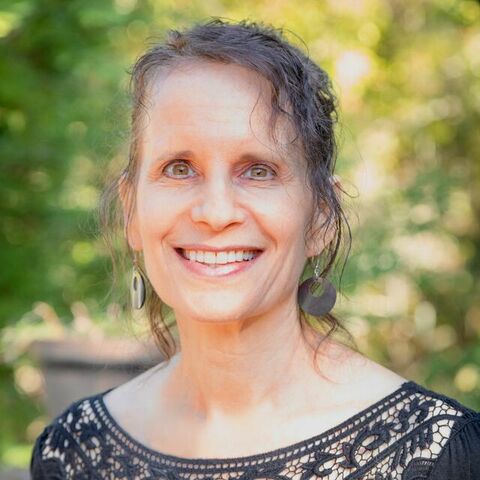
Hello,
My name is Andrea Wachter.
In the following interview,
Dr.
Laurie Santos,
Host of the Happiness Lab podcast,
Asks me how I overcame severe anxiety,
And we discuss the how-to's and benefits of having an anxiety relief toolkit.
I hope you find this talk helpful.
Welcome.
My name is Dr.
Laurie Santos.
I'm a professor of psychology at Yale and host of the Happiness Lab podcast.
And today,
I am so excited that you're joining me for this interview I have with honestly one of my heroes,
Andrea Wachter.
She has a fantastic new course on Insight Timer,
And I'm excited for her to tell you about it.
But first,
Andrea,
Why don't you introduce yourself and tell us a little bit about your experience with anxiety before we dive into the specifics of today's topic.
Absolutely.
I'm a psychotherapist,
An author,
And an Insight Timer teacher,
And my path to becoming a therapist and a teacher has been extremely rocky,
To say the least.
I battled alcohol and drug abuse for many years.
I had a life-threatening eating disorder for decades,
And I suffered severely with anxiety.
And I actually think it was the anxiety that fueled my addictions and my eating disorder,
Though I didn't know that at the time.
I really look back now,
And I think it was my innocent attempts to try to calm my system and quiet my mind.
So talk a little bit about how this all started.
When did you begin struggling with anxiety?
Well,
I actually have very few memories of not feeling anxious.
I think that being a sensitive breed often goes hand in hand with anxiety,
Although these days I'm hearing from people who are struggling with high levels of anxiety for the first time in their lives.
But for me,
It goes back as far as I can remember.
I was scared of life.
I was scared of people's anger.
I was scared of people's responses in general.
And I used to think that everybody was as sensitive as I was,
But that they were just better at hiding it or faking it.
But I've come to learn that we are all quite different.
We're all different breeds.
When I was a kid,
I didn't have a term for this.
I didn't have a shame-free term for sensitivity or being a sensitive breed or being anxious.
I just kind of thought I was weak and I should get it together or just be stronger or handle life better.
But as an adult,
I got help and I learned how to soothe anxiety and I learned how to quiet my anxiety-producing thoughts in ways that really worked.
And then I no longer needed drugs and alcohol or an eating disorder.
Yeah.
And so talk about how you kind of came to find that help because I think so many of us are suffering with anxiety and we might not be there yet.
And so what was it that really started helping for you?
Well,
There's kind of two main chapters,
I would say.
Originally,
The help that I sought for the eating disorder and addictions was more in the form of therapy and group support and a ton of self-help books.
And all of that definitely helped,
But I was still left with a lot of anxiety,
A lot of worrisome thoughts,
A lot of rumination,
And a lot of fight or flight feelings in my body.
And I was given the common suggestions that many of us are given and they helped some.
Things like meditation and taking lots of deep breaths and exercise and eliminate stimulants and medication.
Although for me,
It was a little bit ironic with medication because I was so sensitive,
I was too sensitive to handle the side effects of medication.
So I knew I needed to find other ways.
And I found that some of the tools helped,
Like meditation sometimes,
That was helpful and exercise for sure.
And I'm a big fan of deep breaths,
But I was still really plagued with anxiety.
So I decided to do some searching.
I knew there had to be more tools than kind of those basic ones,
As great as they are.
And I found that there were a lot of very practical tools.
And I found that some of the tools could help kind of quiet my mind and soothe my system enough for me to be able to meditate and reap the benefits.
And then other times I could meditate and then use these practical tools throughout the day after I meditated.
I also want to say that for many people,
Meditation really helps to quiet their anxiety.
I have several anxiety relief meditations on Insight Timer and I am a firm believer in meditation.
Myself,
It's the first thing I do every morning.
But a lot of students tell me that when their minds and their bodies are really keyed up and firing with fight or flight chemicals,
They have a hard time sitting down and meditating.
And that some of the more practical tools or hands-on tools or thought questioning tools help them to calm down and settle enough so that they then can meditate.
So it's different for everyone.
I think you're not alone.
I mean,
I have a friend who experiences incredible anxiety and sometimes she says,
I just don't want to be alone with my thoughts.
Like just the idea that I'm going to spend 15 minutes alone with my thoughts meditating makes me more anxious,
Right?
I think this is really a common problem.
So give me a little bit of a summary about the new tools that you came up with and the kind of thing that you're offering on Insight Timer.
Well,
Basically I sought tools for my mind and for my body.
And what I found was that some tools worked some of the time and others worked other times.
And that's why I really became passionate about the idea of having a toolkit,
A full toolkit with all kinds of options that people can pull from at any given time.
So what I researched and practiced for years and now have in my courses are tools like EFT tapping.
Some people call it psychological acupressure or self-havening,
Which if you don't know about is a really simple but very calming technique.
I learned an extremely life-changing tool called the work,
Which is a very simple but powerful process that helps you question your stressful thoughts that lead to anxiety rather than just becoming hijacked by our thoughts all day.
I teach a tool called channel changing and a very,
Very healing process called parts work that I learned many years ago.
And parts work can be really powerful.
So often when someone feels anxious,
It can feel like the anxiety is the only voice in town.
And when we do parts work,
We meet the anxiety,
Whether it's the sensation or the thoughts about the sensations,
We meet those with compassion and curiosity and tenderness,
Kind of like a loving parent would meet a child,
Hopefully.
And it becomes more of a compassionate conversation with anxiety rather than just an anxious monologue.
So those are just some of the tools.
And there are kind of two parts of this approach I love so much.
One is that you emphasize self-compassion.
This is something I talk a lot about on my podcast,
The happiness lab,
The importance of taking a compassionate approach and not beating ourselves up for kind of going through this experience that's already kind of unpleasant.
But the second thing I love so much is this idea of a toolkit,
Right?
There's not a one size fits all.
There are going to be lots of different strategies that might resonate with different people or that might work for you at different kind of points in your journey to kind of solving your anxiety.
And so talk about this idea of a toolkit.
What are these tools?
Are these the kinds of things that you're presenting in your courses here?
Well,
I basically took what I found to be the most effective anxiety relief tools and I put them together.
I added a few original tools.
I added some personal stories and tried to add a little bit of levity and created this menu or a toolkit.
And what I found is that when anxiety levels increase,
Our logical thinking tends to decrease.
And that makes it really hard to remember to turn to tools.
So often people just get caught in the spell of anxiety.
So what I recommend is that students go through these lessons and they try on each tool.
Just give it a try.
And I always assume that not every tool will work for every person every time,
Right?
We just want to go through,
Try them on.
And if someone finds a tool resonates for them or helps them feel a little bit of relief or they just like it,
Then that goes in their toolkit.
And I ask students to begin to compile a toolkit or a list or gather their favorite tools and keep it in a very accessible place.
This could be a note on your phone.
This could be on another favorite device.
It could be a special journal.
It could be a list you keep by your nightstand or on your computer,
Something that you're going to see every day.
And then I highly encourage people to set reminders because as I said,
When anxiety increases,
We often get taken over by these fight or flight sensations.
So having regular reminders set up to practice our tools so we remember to practice them,
We can break that spell of anxiety.
Oh yeah,
Here's my timer going off.
Oh yeah,
Here's my post-it reminding me,
Have I practiced my tools?
And then we practice and practice and practice because we get good at what we practice.
So if someone has been practicing,
Worrying and ruminating and obsessing on fight or flight sensations for a long time,
They're probably pretty good at it.
It's probably a very well-worn groove in their brain.
But if they keep practicing their new tools over and over,
Then healing and relief can't help that happen.
And so one of the ways you've been able to give all your fans and all the people you've worked with these tools is through these new courses on Insight Timer,
Right?
I think it's kind of fantastic that this isn't just a single meditation,
But it's actually a course where people are learning things.
You as a professor,
I totally relate to that.
But I also think that people who haven't taken these courses on Insight Timer might not understand kind of how it works as a course,
Like is there lots of homework and quizzes and things like that?
So give us a little bit of sense of how the course works and what people might learn.
Sure.
Well,
Both of my anxiety relief courses and all of Insight Timer courses are about 10 or 15 minutes each lesson.
They make them really user-friendly.
And these two courses are 10 lessons each.
So I hope that students will come away with a little handful or at least a few favorite tools to add to their toolkit.
And like I said,
I highly recommend reminders,
Regular friendly reminders to use the tools.
And people will learn a variety of tools from hands-on techniques to thought questioning techniques to breathing techniques to,
Like I mentioned earlier,
Parts work and some playful techniques,
Some movement techniques.
There's just a wide variety.
So hopefully every student will come away with at least a few favorites.
And especially since this is Insight Timer,
Which is so focused on the power of meditation,
I want to talk about the use of that as a tool.
As we talked about,
When you're an anxious breed,
Being alone with your thoughts can feel a little bit scary,
So people can have a difficult time meditating.
But you've also figured out that this can really be an important tool as well.
And so can you say a little bit more about that,
About how you include meditation in the course?
Absolutely.
Some of the tools themselves are meditative and some involve breath work.
Some of the lessons are visualizations.
Some are mindfulness meditations.
So I totally agree that meditation is a huge part of anxiety relief.
One more question before we wind down.
I've heard you speak before about the power of welcoming your anxiety rather than getting rid of it.
I mean,
The goal of courses like these is to allow people who struggle with anxiety to kind of come to terms with it and allow them to succeed in dealing with normal life without kind of being so fearful all the time.
But one of the techniques to dealing with your anxiety is actually not trying to fight it so much,
As counterintuitive as that is.
And so can you say a little bit more about that?
Yes,
It is very counterintuitive because anxiety is not a pleasant feeling.
I've never met anybody who liked their anxious feelings or sensations.
And because of that,
It's easy to want to get rid of them.
It's easy to hate anxiety and disapprove of it and just want it gone.
But ironically,
When we try to get rid of anxiety and we disapprove of the feelings,
They usually escalate.
All you have to do is tell an anxious child to knock it off and get over it to see that that is not an effective technique.
But when we meet anxiety with tenderness and compassion and soothing,
The same way we might speak to an anxious child,
It usually settles down.
And this is,
I think,
A technique that we can learn over time.
As you start to think about allowing your anxious sensations and being with them and treating them self-compassionately,
I think just the notion of that can be scary.
But when you take it in baby steps and realize,
I can hang out with this feeling for a minute or so,
Or I can kind of be compassionate with this,
I can use that approach,
Oftentimes you realize that it's a really powerful technique for kind of riding and surfing those waves and getting to the other side.
It really is,
And it's kind of ironic that most of us have been taught that happiness is the goal,
Right?
That we should just be happy all the time.
But I often tell people that it's like thinking that it should always be 70 degrees with a light breeze.
It's not the case here.
That's not the deal here.
And thinking we're supposed to just be happy actually makes a lot of people unhappy because it's a lot of pressure.
But what I found is that when we meet our feelings,
All of them,
Especially the more challenging ones like anxiety,
When we meet them with compassion and tenderness and love and kindness,
We usually end up ironically experiencing much more peace and happiness.
I hope that at least some of the folks listening to this now will maybe embrace this irony.
People try out this new toolkit for finding ways to be one with their anxious thoughts so that they can kind of get through these awful sensations.
Andrea,
Thanks so much for chatting with me about this.
I hope everyone listening checks out your courses.
Do you want to say more about what they're called just so people can find them on Insight Timer?
Sure.
So one is called Your Anxiety Relief Toolkit.
There's the toolkit in there.
And the other is called Practical Tools for Anxiety Relief.
And anyone who's interested can start with either one.
They're really meant to be taken as standalone courses or they're complementary to one another.
Awesome.
Thanks so much.
Thank you so much.