In regards to metta,
Which is goodwill,
Loving-kindness,
The Buddha gave metta for Dhamma practitioners to build.
Whether this is the monastics or the laity,
They should have metta,
Goodwill,
Or love.
And when we keep the five precepts,
Have sila,
We keep them well.
And this is coming from metta,
Because we have a heart of metta,
Compassion,
Appreciative joy,
And equanimity.
We have good mindfulness,
And we see the dangers of not keeping good precepts.
We see the benefit of having the precepts.
And so then this leads us to have peace and happiness to arise.
And this also,
Then this sila,
Is the foundation for us to see the Dhamma.
So we develop metta,
Just like a mother would take care of her only child in her womb,
That she would not let it have any harsh contact or be bumped very lovingly with this child in the womb.
And so we develop metta like this,
In the same way.
And when one does this,
Then one's mind can become peaceful.
And so there is this metta jato vimutti,
Which is the liberation of the mind through metta.
This is liberation through the power of metta,
And one's able to enter and see the Dhamma through one's samadhi,
Which is able to abandon the defilements,
And it abandons all forms of ill will and grudges in the mind.
And so there's a liberation there through the power of metta samadhi.
And this is something that we can train in.
We have many different types of meditation objects,
But the meditation of metta is very important,
And developing it helps,
Supports all the other meditation objects as well.
So if one tries to develop metta meditation all the way till very high levels of samadhi,
It may be difficult.
That's a very deep,
Refined type of metta,
All the way that one can gain the jhanas or arupa jhanas.
So we may not be able to develop it to that high level of samadhi,
But we still can train in having metta,
Or a mind of metta.
So we have metta,
We have compassion,
Appreciative joy,
And equanimity as a basis for our mind.
And we may then find that we go about our life,
And we may just be minding our own business,
And someone comes to harm us,
Maybe physically,
Through their body,
Or maybe through their speech,
They say some bad words or harsh words to us.
Without any cause,
We did nothing at all.
But we don't have any ill will come up for that person.
We can just think that this must be from a karma,
An action that we've done in the past.
And so there are examples of this from the time of the Buddha,
Lady Samawati,
Who was tricked by another woman to go into the palace hall,
And then she locked the door on Lady Samawati and her attendants,
And set the place on fire.
And from this,
Lady Samawati had no anger,
Or ill will,
Or hatred,
Or grudges at all,
To that other person,
The lady.
And she just,
With her attendants,
Developed her samadhi,
Her metta,
And they were able to attain to a higher level of noble attainments because of that meditation.
And even though they would be killed in that hall,
But they had developed metta,
And so from that attainment or development of metta,
They were able to be born as devas,
Divine beings.
So there are two types of ways that one can attain to liberation,
The freedom from suffering,
Is that ceto-imuti,
Which is through samadhi,
Having that basis of samadhi as a foundation,
And there's also panya-imuti,
Which is attaining through wisdom.
So one's able to attain all the way to arahantship through these attainments.
But the development of ceto-imuti,
Which is through samadhi,
Through the development of metta,
Is harder than the other.
But one still can train in developing and spreading metta,
Loving kindness,
Spread it to all living beings,
And it's a very pure love that you wish all living beings,
Whether they're ones that you love,
Are close to,
Or indifferent,
Or even have ill will towards,
You're able to develop a form of pure love that encompasses all living beings.
And so this type of metta doesn't have an attachment to anything,
It's a sublime abiding,
Or it's boundless,
It encompasses all living beings.
And so one can spread metta then in this way to the eight directions,
The front,
The back,
The top,
Bottom,
The sides,
All around,
One spreads metta,
All being with a mind free of ill will and sensual attachment or desire.
And one just has a pure metta,
And this is when the mind can have a mind of samadhi through metta.
And this is a very high level and something,
A very beautiful quality that all will give praise to.
And this anger and ill will is one of the mental hindrances which obstructs samadhi to arise.
So we may find that in the times that we meditate,
We have anger,
Ill will come up as a hindrance,
Maybe it's anger,
Ill will that we had from the past,
Past memories,
They come back to bother us.
Or maybe we're thinking and proliferating into the future with this anger and ill will.
And the result of this is that the mind in the present won't be peaceful,
It's all over the place,
Thinking to the past and future.
And so if we have this experience,
Then we should then bring up metta,
We should develop metta then.
And it is normal for us all to have these thoughts of ill will,
Thoughts like this.
And so we do need to develop and spread metta actively.
We can spread to all living beings.
And so then when we develop metta,
Well,
Maybe those living beings or animals or insects,
Beings that we previously found very scary or we we were scared of them,
Maybe the sort of beings and insects that we find look quite unattractive.
We can then with metta,
See them all as being very beautiful.
And they're not scary at all.
This is because and then we'll have sorry,
A mind of metta and compassion to all those living beings.
And this is the mind that has samadhi.
So metta,
Meditation or developing metta has a lot of benefit.
The Buddha said that one who develops this metta,
Ceto-imutti,
Liberating the mind through metta has great benefit.
It has,
The mind is well established.
And so there's 10 benefits that can be gained from the development of metta.
One sleeps well,
One wakes well,
One doesn't have bad dreams.
Because if one doesn't have metta through the day,
Then the things,
The ill will through the day may enter one's dreams and one may have nightmares and sleep unwell.
So if one who develops metta,
They won't have ill will and that will carry on to their sleep and their dreams.
One will be loved by human beings,
One will be loved by non-human beings.
The devas,
The deities will look after one.
If the mind is hot with ill will and anger,
This burns up the body and the mind.
And people don't want to become or come close to someone like this,
Whether it's a human,
A loved one or a non-human being like a deva.
One who develops metta,
They won't die or be harmed through poisons,
Weapons or animals.
Their mind will quickly establish samadhi,
Their mind and face and faculties will be very bright.
When they die,
They won't die with delusion and they'll have mindfulness there on the moment of their death.
And so they'll be reborn in a good heavenly realm.
And if one hasn't attained to the higher dhammas,
Then one will be reborn in the Brahma world or realms as a Brahma god.
So the Buddha told us to look after our minds and we have to do it in a way like the simile is that a thief,
A robber maybe catches us and he's going to cut off our limbs.
But we don't have a single thought of ill will towards him at all.
We develop metta,
Loving kindness.
The Buddha said that one who has a thought of ill will to that person even though they want to harm us.
They aren't a true son,
A true child of the Buddha.
And when I read this sutta,
I thought that it was very difficult to do this.
But we can develop metta and if we don't have metta to a high level,
Then it may sound difficult to do.
But we can train through our experiences,
Through day-to-day life.
Maybe a mosquito bites us and we don't react,
We have metta.
Maybe it's an animal that comes to harm us and we have metta to them,
We forgive them.
Maybe a dog comes to scratch us and we have metta.
Maybe it's even another fellow human who comes to harm us without any cause.
Maybe they slap us or say bad words.
And we can just think that that's from our karma and we just accept that.
We have no ill will at all in the mind,
No hate towards them.
And so we can set up this determination since the moment we wake up in the morning,
We open our eyes and we can determine that we'll have no ill will at all today.
We won't harm anyone,
We won't have any thoughts of hate or grudges to anyone.
And even though we may not be able to do it fully,
But we set up that intention from the beginning.
And then this is like we're bringing up mindfulness,
We're bringing up our determination.
And we can do this through the day as well,
Whether it's in the morning,
We determine this again.
At midday we determine again.
In the afternoon,
And then again before we sleep,
We determine to have these thoughts that are free of ill will,
Free of grudges and harm.
So this is a mind that has metta.
And it is that usually metta isn't there.
And so we do need to develop it.
And this is when we can develop metta as samadhi.
And our samadhi will also last long because we're developing metta or the causes for that samadhi.
So we have metta to all living beings,
We don't have any ill will towards them,
We wish that they're free from any dangers,
Harms,
Free from suffering,
May they have happiness and well-being and ease.
And we wish this to all animals,
Humans,
Non-humans,
All those that maybe we love that we're indifferent towards,
Or we have ill will towards,
We wish them equally in this way.
So we can also develop metta,
Wishing that they have no ill will or grudges,
Whether they're developed or not developed beings,
Whether they're human or devas,
All living beings,
May they be free from suffering.
And we can also spread metta each day to the ten locations,
Which is in front,
To the north,
To the south,
To all compass directions,
Northeast,
Etc.
,
And above and below,
Which is ten.
And we can do this every day and then our minds will become peaceful and cooled.
And people also will see our bright faculties because this is coming from the metta or metta dhamma.
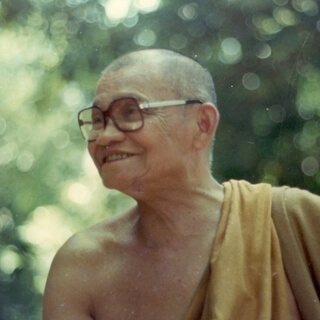
There was once when I paid respects to a venerable senior monk,
Lungpho Kamsang,
From Wat Suan Dok,
And I was very impressed with this venerable monk's metta.
And so when he gave the blessing,
Even from one meter around him,
You could feel the coolness or the power of this coolness,
This metta,
All the way around him.
And this was coming from his pure mind or his metta was very,
Very strong.
So we can train our metta until our mind becomes purified.
We can practice metta in our actions,
Our speech and our mind.
They're all imbued with metta.
And this is the dhammas or the causes that will lead to consideration of each other,
For friendliness of each other,
To be in harmony and to be of one heart and mind.
This is that our actions and speech and thoughts to each other are imbued with metta,
With goodwill.
We have good thoughts for each other.
What requisites,
Possessions we have,
We share them to help and support others equally.
We have an equal level of sila.
We have an equal level of views as well.
We'll find that if a husband and wife,
They don't have equal views,
Then it will be very difficult for them to stay together.
And even for dhamma practitioners who come together like this,
They also need to have equal views.
They come together,
They follow the same rules and regulations set up.
They come together at the right times.
They listen to dhamma together.
They do walking and sitting meditation together.
When they practice to go without sleep on that night,
Then they all do it together.
And in this way,
Then the mind has great joy and it's something that's very beautiful.
And so these are the six types of dhammas that lead to togetherness.
So we should develop metta consistently all the way until we're able to see and know the dhamma.