Hi friend,
Welcome to today's session.
Self-judgment and self-criticism are areas that we often need to work on throughout our lives.
Self-judgment and self-criticism can be very ingrained thought patterns,
So much so that we don't fully realize they are present.
Many of us have a lot of conditioning that negatively impacts our thoughts about ourselves.
Many of us are just starting to recognize how we talk to ourselves or how often we treat ourselves unkindly.
Much like improving our physical health,
It's important to first be aware of the ways in which we are suffering.
It's a result of self-judgment.
It's also important not to start judging ourselves for judging ourselves.
We have been doing our best,
And self-compassion is a skill that must be practiced like any other skill.
Today's practice supports us in identifying our self-judgment and bringing self-compassion to meet it.
Your breath puts you in contact with your body,
So we will have some longer pauses today during our session to really bring awareness to your body.
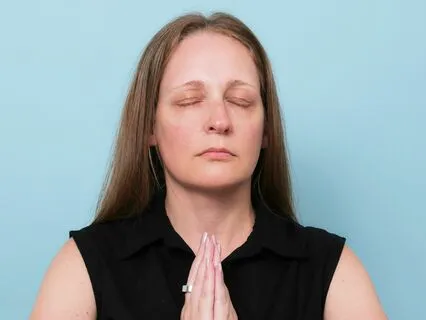
So when you are ready,
Get settled in for today's session.
Allow your eyes to do whatever they need for you to have the most awareness without being distracted by your surroundings.
For some of us,
That means allowing our eyelids to close.
For others,
It means letting them be half open,
Softening our gaze,
And letting our point of focus rest towards the earth.
Now tune into your breathing.
This will help you connect with how your body is feeling now and with the present moment.
The breath anchors us to the present because it is only ever happening now,
Not in the future or the past.
So just tune in and notice,
Where are you feeling your breath?
Is it more in the chest area or the throat or around your nostrils?
If your breathing feels a little shallow,
What does it feel like to allow yourself to deepen your breath,
Breathing right into the bottom of your lungs?
Explore this gently without force or expectation.
Are there any sensations or emotions that arise by doing this,
By deepening or feeling your breath?
Just take note of them,
Knowing there is nothing to change or fix.
All our sensations,
Emotions,
And experiences are welcome in this practice.
If it feels good,
Allow your breath to deepen even further right into your belly.
Again,
Notice how your body responds to this.
Notice if anything is coming into your consciousness that wasn't there before.
If any thoughts are coming up,
Observe them.
Note them as thoughts and allow them to dissolve.
As you allow your body to be still and rest,
You might note that certain ideas or concepts are floating to the surface.
You might notice messaging like,
I don't know how to do this right,
Or I can't stop thinking about,
And fill in the blank.
You might also notice emotions arising,
Which is very normal.
When we slow down and are still,
We create space for things to arise.
It's like we're taking our feelings off mute,
And now we can hear them.
Conversely,
You might feel nothing at all,
Which is equally normal.
Many of us,
Once we start paying attention to what's happening in our minds and hearts,
Experience a sort of numbness.
Feeling nothing is still feeling something.
So if you feel nothing,
Just allow yourself to have that experience too.
Whatever it is that you're experiencing,
It's a natural process.
Whatever it is that you're experiencing,
See if you can just watch it,
And note whether there are any voices of self-blame,
Self-shame,
Or self-criticism coming up.
Are you telling yourself you should be feeling differently?
Are you perhaps resisting this experience and telling yourself you shouldn't be?
Is there anxiety?
About the future?
Or a sense that this is a waste of time,
And you should be getting things done?
Whatever the critical voice is saying,
You're just letting it speak for now.
You're just tuning into the radio in your mind.
If this becomes too difficult at any point,
Ground back into your breath or notice your connection with the earth beneath you.
Do whatever you need to do to care for yourself.
Once you know what message your brain sends,
Sink back into your body.
Notice if any physical experiences are coming up.
You might notice a tightness in your shoulders,
A holding in your stomach,
A fluttering in your throat,
Or a sense of numbness throughout.
There might be something entirely different.
Whatever you're experiencing,
Just witness it.
If our thoughts are like the part of the iceberg we can see above the water,
Our emotions are the much larger part beneath the surface.
We often have to witness a thought before understanding that a larger emotion is holding it up beneath the surface.
Feelings that come up around self-criticism can be anything from anxiety to varying levels of fear,
Grief,
Or anger.
See if you can notice and label what emotions are swirling around in your heart,
Your throat area,
And your stomach.
Can you recognize that any sensation attached to self-judgment is suffering?
Are you having a hard time with something?
Are you struggling and suffering?
Struggling and suffering are part of the human experience.
They're part of being a person who is alive.
See if you can try,
Just in this practice,
To let go of the thought above the surface and sink into your body.
Offer some compassion towards the emotions or feelings you are having.
You can try placing a hand over your heart,
Stomach,
Or collarbone area,
And then placing your other hand on top of the first.
Just experience the warmth and the sensation of care and compassion that comes with the touch.
You can allow your breath to deepen again,
Breathing into that sense of care and concern.
Can you say to that emotion,
To this experience,
It's okay?
Can you allow it to be in your body while offering it some kindness?
You can also deliver the message to your whole being.
It's okay.
It's not your fault.
You're doing your best.
I'm here for you.
Whatever feels right,
Whatever you might say to an upset child or pet,
It's okay.
Whatever you might say to an upset child or pet,
See what it feels like to say that to yourself,
To the parts of you that are suffering.
You can also try placing a hand on your cheek or arm and gently stroking it carefully.
Anywhere that feels right.
We are all trying our best in this life.
While thinking critical thoughts about ourselves where our actions can seem like a motivating thing to do,
Or a way to prevent us from getting hurt,
Being critical and judgmental of ourselves actually causes more suffering.
Paying attention to how we talk to ourselves can be a key to unlocking our thinking patterns.
Then showing care and concern for the parts of us that are struggling can help us transform our relationship with ourselves positively.
The more often we practice this,
The sooner we can recognize self-critical thoughts.
Upon this recognition,
We can remind ourselves that we are perfectly imperfect humans doing our best and that no matter what,
We are worthy of love,
Acceptance,
And encouragement.
So take just a few more loving breaths into and out of your body.
Reconnect with the surface beneath you.
Thank yourself for caring for yourself.
And slowly open your eyes whenever you're ready.
If you would like,
Feel free to share with me how this practice has made you feel.
I hope this self-compassion and self-critical practice has helped you feel better.
I hope this self-compassion exercise has helped you today.