I want to propose a small hypothesis to you.
Every religion can't be correct,
Because some religions exclude others.
If this one is true,
All others are false.
And yet people are believing a variety of different religions simultaneously,
And they're all getting benefits from the practice.
So what's going on here?
They can't all be correct.
And yet people regularly report benefits of the practice.
You know,
We don't do things that don't provide a benefit to us.
That's not how humans work.
So what's going on here,
And how can we leverage that to benefit ourselves?
I've got a hypothesis,
And my hypothesis is this.
There's a commonality in the practices of devotion,
In the practices of spirituality,
That itself provides the benefits.
Because of the theological,
The miraculous,
The woo-woo,
Whatever you want to call the things that aren't being done,
The impact of God,
All of that sort of stuff.
Let's remove all of that from the discussion for the moment.
It doesn't detract from it,
If you believe.
You can add that to what I'm about to say.
But what I want to do is just remove all of that,
And just look at what everyone is doing,
Or the similarities between practices across religions.
Across the Abrahamic religions,
Across the Eastern religions,
Across the spirituality,
All of these things,
And see what the similarities are.
Because I have a hypothesis,
And it's this.
A lot of the practices people do are variations of mindfulness.
Yeah,
Let's break into this,
Because if the things and the ways people are practicing their religion is getting them to do a mindfulness practice,
Then if we practice mindfulness,
We're going to get those benefits without the theology.
It doesn't matter which religion we choose,
Or we're born into,
Or that we've learned about.
If we can do the mindfulness practice,
We get those benefits.
Let's have a look.
A lot of religions do a form of prayer that is basically a mantra repetition.
The Jesus prayer,
The recitation of the names of Allah,
The Buddhist chanting of,
Om Man Ne Padme Hum,
These sort of repetitions of a word,
Or a phrase,
Or a prayer over and over and over again.
The way that most religions do this,
Most spiritual practices do this,
Is that you pick your mantra,
You pick your phrase,
You pick your prayer,
And you hold that in your mind,
And you say it to yourself over and over and over again.
You repeat it over and over and over again.
Your mind wanders,
You bring it back to the mantra,
To the prayer,
And you get into that state.
You lose yourself in it.
That,
To me,
Sounds like mindfulness.
Rather than choosing the feelings of the sensation of the breath,
Or an external stimulus,
You're choosing to repeat a phrase,
And be mindful in the repetition of that phrase.
By that logic,
The phrase doesn't matter.
What you choose doesn't matter.
If you have a religion or a tradition that you've been brought up in,
And it feels right,
Use those words.
Use the words of the Buddhist practice you've been raised in.
Use the words of the Christian or the Jewish faith that you've been raised in.
Use the words of the Islamic faith.
It doesn't matter.
What matters is that you repeat the words that work for you over and over again,
To the exclusion of all else.
Your mind wanders,
You bring it back to the recitation of the words.
Does that make sense?
An addition to the mantra practice that can be used separately,
Or as well,
Is the use of prayer beads,
Or mala beads.
You see the traditional spiritual practice of people wearing different beads.
Now,
What the beads are made of will be different depending on the religion that you're in.
That is fine.
Once again,
You hold a bead in your hand,
You focus on the bead,
And then you move to the next bead,
And the next,
And the next,
And the next.
You might add the mantra or the prayer to each recitation of the bead,
And that's fine.
Once again,
What are we doing here?
We're mindfully feeling the bead.
We're mindfully reciting the mantra and combining those two together.
That feels like a meditation practice to me.
That feels like something that most,
Not most,
A lot of religions are doing.
Makes sense.
Let's go to the actual act of praying.
What are we doing when we're praying?
We're getting quiet.
We're reciting some words.
We're connecting to a feeling,
And we're excluding all else.
This could be the equivalent of a metta,
A loving-kindness practice.
I pray for this,
I pray for that.
Sounds very similar to a metta practice that goes hand-in-hand with a mindfulness practice.
Once again,
You focus,
You exclude all else your mind wanted,
You bring it back to the prayer.
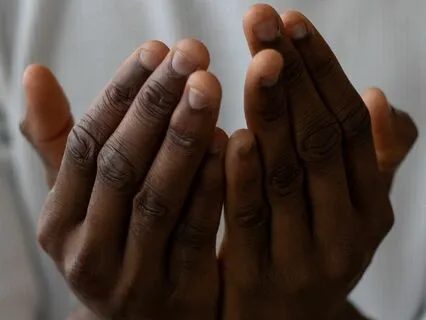
Some religions have a physical addition to the prayer.
In the Islamic faith,
There will be physical body movements,
Prostrations.
Those prostrations are replicated or,
They're not the same,
But they are seen in other religions.
For example,
The Christian religions may cross themselves,
And some orthodoxies will make it quite a bit more extravagant.
They bring themselves onto their knees,
Onto the ground.
These same sort of prostrations,
These same sort of bodily actions are found time and time again in other religions.
Once again,
Rather than reciting a mantra or using the beads or anything like this,
They're using their body.
Their mind wanders,
They bring it back.
It's a physical representation of a practice.
I mean,
Even Tai Chi,
The physical movement of the body,
You're mindfully watching your body move as you do the movement,
That you've done it again and again and again.
All of these practices are very similar.
They're dressed differently,
They look differently,
But they seem to be,
At their core,
Very similar.
Now,
Obviously someone that is a devout,
Hardcore believer will say,
No,
At the core is God.
At the core is my God,
And these other practices don't align with that.
Fair enough.
I'm not talking to that person.
I'm talking to the people who maybe have a faith,
Maybe don't,
But are curious as to why everyone's getting benefits from these practices,
Despite some religions being exclusory to others.
You believe in this one,
By definition,
These other ones are not true,
And yet everyone's getting benefits.
That's why we're doing the practice.
Let's extend it further.
What do you get from a church?
A church or a synagogue or a,
You know,
Ashram or,
You know,
Any of these,
A mosque,
Any of these sort of places where you come together,
Not only are you getting guidance from elders,
You are getting effectively like a psychology session.
You know,
You bring your problems to your priest.
This person listens to your problems and gives you advice.
That's early form psychology,
Right?
It's community.
It's connection.
All of these things can be found.
Why are we going to practice?
We're doing it because they give us these benefits.
Once again,
If you come together with someone in a practice of mindfulness meditation,
You're getting that guidance.
You're getting that community.
You're getting that connection to one another.
Does that make sense?
I'm not saying any of this to dissuade religion.
What I'm actually doing is trying to sort of extend it and give it to more people,
Particularly to the atheists that don't believe.
It's like,
Why are people getting benefits?
They're getting benefits because there are benefits to be found.
Does that make sense?
So,
I suggest,
Or I would just want to leave you with the idea of considering the benefits of the practice that you see in religions and go,
Well,
How does this apply as a mindfulness practice?
Because there will be benefits there.
Regardless,
Have a great day.