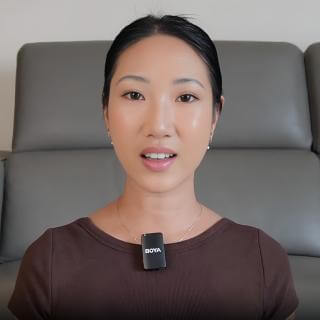
Hi,
I'm Dr.
Kim.
If you've ever felt like your gut has a mind of its own,
Unpredictable,
Uncomfortable or downright confusing,
You're not imagining things.
Bloating,
Constipation,
IBS,
Feeling heavy or crampy after meals,
These aren't just random symptoms,
They're actually ways your body is trying to tell you something.
You see,
Digestion is not just about what you eat,
It's about the state of your nervous system while you eat,
After you eat and even before you eat.
Let me explain.
Your brain and your gut are constantly in conversation,
They're like close friends texting back and forth all day.
That conversation happens through something called the gut-brain axis and one of the main messages is a nerve called the vagus nerve.
It connects your brain to most of your digestive organs,
Stomach,
Intestines,
Liver,
Even your pancreas.
Now here's the important part,
This whole system runs best when your body feels safe.
When you're relaxed,
Your body enters what's called rest and digest mode.
This is your parasympathetic nervous system doing its job.
In this state,
Your stomach produces the right acids,
Your intestines move food along smoothly and everything just flows.
But most of us?
We spend a lot of time in fight or flight mode.
This is the stress response,
Your body's survival system.
It's designed to help you outrun a predator,
Not digest a sandwich.
Blood gets redirected away from your stomach,
Your muscle tension increases and your digestion slows or even stops.
Because in that moment,
Your digestion isn't a priority,
Survival is.
The problem is,
In modern life,
We're not being chased by lions but our body still reacts like we are,
To emails,
Traffic,
Overthinking,
Lack of rest or just constantly doing,
Doing,
Doing.
So if your digestion feels off,
It may not be your food,
Although that does play a role.
It may actually be the state you're in when you eat or live.
Let's talk about some common symptoms and how stress can be behind them.
Bloating.
Ever notice your belly puffing up even when you've eaten something safe?
Stress slows down motility,
The wave-like movements that move food through your system.
If food lingers,
It ferments and gas builds up.
That's your bloat.
Constipation.
In stress mode,
Your body pulls blood and energy away from the gut.
Your intestines can become sluggish,
Leading to fewer or incomplete bowel movements.
This is what I dealt with for many years.
I used to live in this fight or flight mode.
I was only having a bowel movement every three days.
When you think about it,
That is nine meals backed up inside me.
Not good and not comfortable.
IBS.
Irritable bowel syndrome isn't just about food intolerances.
It's actually often a nervous system condition.
Many people with IBS have hypersensitive guts.
That means the communication between the brain and gut is dialed way up.
Minor digestive shifts feel major,
And stress often triggers or worsens flare-ups.
Cramping or urgency.
If you get anxious and immediately need the bathroom,
That's your gut-brain access in real time.
The nervous system can trigger spasms in the gut,
Making things move too fast or painfully.
Food sensitivities.
Stress can weaken your gut lining,
Affecting stomach acid levels,
And reduce enzyme output.
All of which can lead to food reactions,
Even to things you used to tolerate just fine.
On top of all of this,
There's a huge emotional piece.
You've all heard phrases like gut feeling,
Nervous stomach,
Or sick to my stomach.
That's because emotions live in the body,
Especially in the belly.
The gut is a place we often store unprocessed feelings,
Fear,
Sadness,
Anger,
Grief.
If you've been holding in a lot,
Physically or emotionally,
Your digestive system might be carrying that load too.
You might feel like you're digesting life just as much as digesting food.
So what does good digestion actually look and feel like?
When your digestive system is happy,
You tend to feel light,
Clear,
And energized after eating,
Not sluggish,
Heavy,
Or bloated.
Your appetite is steady and predictable.
You're hungry when it's time to eat,
And satisfied when you've had enough.
And yes,
Let's talk about poop.
A healthy bowel movement ideally happens once or twice a day,
Usually in the morning.
It should feel complete and easy to pass.
No straining,
No urgency,
No skipping days.
In terms of consistency,
Think smooth and soft,
Like a banana.
Not too hard,
Not too loose,
No undigested food floating around,
And ideally there's minimal to moderate smell.
If it's super stinky,
Your gut might be having trouble breaking things down fully.
Gas?
Totally normal,
But it shouldn't be painful,
Excessive,
Or overly foul.
Also,
Good digestion shows up in how you feel overall.
Steady energy,
Clear skin,
Better sleep,
And even a brighter mood.
After all,
Around 90% of your serotonin,
Which is your feel-good hormone,
Is made in your gut.
So what can you do?
It begins with awareness,
Understanding that your gut isn't broken and that it may not be the food you're eating.
Your gut is intelligent,
It's listening,
And it's likely doing its best in the environment it's been given.
You don't need to control your gut,
You need to support it,
And often that means creating more moments of calm,
Ease,
And connection to your body.
If this track has resonated with you,
I've created a course right here on Insight Timer called Mind-Gut Connection,
Improve Your Digestion Naturally.
In it,
I go deeper into everything I've shared here,
With simple,
Gentle tools to help your nervous system calm down and your gut start to function more naturally.
We cover how posture and breath affect digestion,
How to release tension in the diaphragm,
How to massage your belly to improve motility,
And how to let go of emotional weight that might be stuck in your system.
No diets,
No pressure,
Just compassionate support and education for the part of you that's been carrying a lot.
You can find the course on my profile if you feel called to explore it.
Thank you so much for listening,
And remember,
Your digestion isn't just about food,
It's about how you feel.
Be kind to your gut,
And it will respond.
Happy healing.
See you tomorrow.