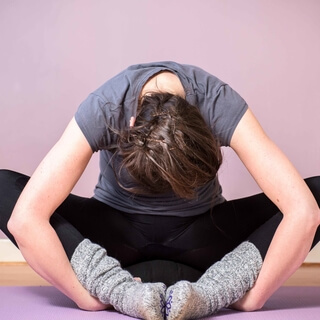
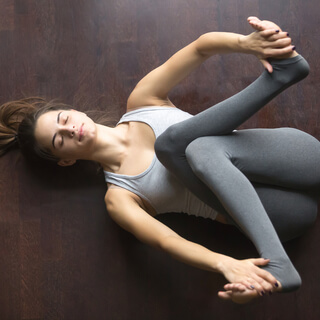
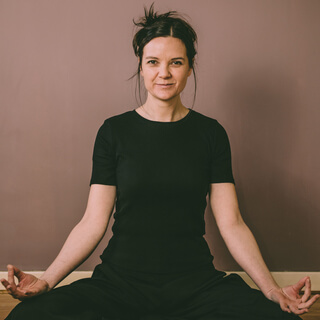
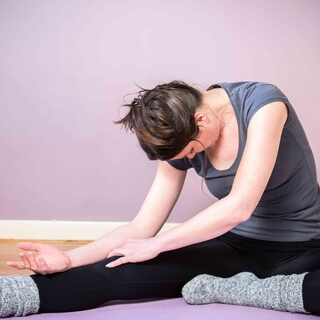
I'm Vicky from Rachele Yoga and today we're going to be doing a Yin Yoga session for when you're feeling a bit or a lot down in the dumps.
So as we enter the colder months,
This can be a time for some to feel sadness,
Grief,
Anxiety,
Depression,
Feelings of unhappiness ultimately.
And this can be related to many things of course,
But one reason may be seasonal.
So for example,
A lot of light,
Of heat,
The days are shorter,
We're staying inside,
It's colder and this can bring for some a feeling of loss,
Making you perhaps feel a bit sad or emotional.
So what we're going to do today is work in an energetic sense on particular areas of the body,
Namely the upper body,
The neck,
The shoulders,
The upper back.
And according to the principles of traditional Chinese medicine,
It's said that if we stimulate these areas,
Encouraging a smooth even flow of energy of cheetah,
Then this may help us with our emotional state of feeling down.
It's worth a try at least,
Right?
As well as the upper body,
We're also going to be working the arms,
So the fronts of the arms,
The backs of the arms,
Going into the hands,
The front and the back,
And also the wrists.
As always,
I'm obviously not able to see what you're doing,
So please do take care and listen to your body in this practice.
We want to feel stimulation in particular areas of the body.
I'll tell you what those are at the start of each pose.
But as this is yin yoga,
We don't want to be actively pushing,
But allowing ourselves to relax into the shapes that we're making.
This is a passive practice,
Where I encourage you to really focus on your experience,
Feel what's going on in your body,
And see if you can be present to it.
If you ever feel pain,
Or if it gets too intense in some way,
Then try some of the adjustments I've offered.
Coming to a lesser edge,
Or coming out completely and going into a neutral position,
Child's pose or lying down for example.
Please don't think you've failed in some way if you need to do this.
Personally,
I'd actually consider this a success if you've listened to the signals your body has given you and taken action.
So,
Saying that,
Let's move today directly into the poses.
First,
I want you to sit in whatever way is comfortable.
For me,
Kneeling is comfortable,
But that doesn't mean that's your most suitable seated position.
We're all different.
So you can kneel,
Cross your legs,
Or sit up on something with your legs straight out if you want.
We're going to start with a finger stretch.
Please put the hands on the floor,
Or on your legs if they don't reach the floor,
And then turn them round so that the fingers are pointing in the opposite direction,
And separate the fingers.
Ideally,
What we want to feel is a stretch in the palm and the fingers on that side of the hands.
So you might feel that you need to raise the palms up a bit to feel that stretch,
Or perhaps rotate the wrists somewhat,
And the hands,
So that the fingers are pointing in a different direction.
Bear in mind that we're looking for a finger stretch rather than a wrist stretch to start with.
Your hands can be wherever is comfortable for you,
By your sides,
Or in front of you,
On your legs,
As long as you aren't straining,
And you're able to feel the stretch.
Not too much,
But not too little either.
The right amount that you can stay in without being in pain,
Definitely without being in pain,
But definitely feeling a stimulation,
For around two minutes now.
Bear in mind that you can also play with the body weight,
So perhaps bringing the body forward so that you've got more weight on the hands,
Or backwards for less.
Remember we don't want to feel pain anywhere,
So if the stretch feels too much,
Or you're experiencing too much compression in the fronts of the fingers or wrists,
Then do adjust your position.
And now close your eyes.
Bring your attention,
Your awareness to your hands,
And notice,
Are these hands relaxed?
Are the muscles in the hands relaxed?
If you feel that you're tensing the muscles,
If you feel like you're holding them,
Then you might want to change the position of the hands,
The position of the fingers.
In yin yoga,
What we want to do is come into a pose,
Adjust the pose so it suits our bodies,
And then see if you can release,
Soften,
Relax the muscles,
So that we can get deeper,
We can get past the muscles,
Into the deep connective tissue of the body.
Now,
Very gently,
Move the hands away from the floor or legs,
And we're going to have a short rebound,
Which for those of you who don't know,
Is a period of time where we feel what's happened in the body.
So simply rest the hands on your legs,
And don't move the fingers yet.
You may well notice that the hands are a different colour.
Mine are red for example,
But they might be white.
That's normal,
That's fine.
We've put quite an intense stretch on them for a couple of minutes,
So it's not surprising.
Also,
See how it feels in the fingers.
Do they feel a bit hot,
Maybe cool,
Tingling,
What other sensations can you feel?
So now I want to go directly into a wrist stretch.
So just wiggle the fingers a bit beforehand if you want to,
That's fine.
We're going to move them a bit more in a few minutes.
Here you can change your seat if you want to,
That's fine.
And we're going to start with the same position of the hands.
So as before,
Place your hands on the floor or the legs,
Separate the fingers,
And rotate the arms so that the fingers are facing the opposite direction.
This time,
We're going for a stretch on the wrists.
And I definitely suggest playing with your weight to achieve what is the right amount for you here.
If you want more stretch for example,
Put the hands a bit further forward this time and move your body,
Your weight,
A little bit backwards to encourage more stretch in the inside wrist and even going into the arm.
Again,
Play with the position of the hands as well.
Then once more,
Allow yourself to relax into the pose.
One more stay for two minutes,
Closing the eyes,
Noticing how those wrists feel.
All right.
This may feel different from left and right.
This is often the case.
But if you do,
As many of us do,
Spend a lot of time on the computer,
Spend a lot of time sitting using a keyboard,
Then you may well find that your dominant hand has more tension,
Not surprisingly.
Okay,
So let's bring the hands up and again,
Rest them.
You can have your palms facing up,
You can have your palms facing down.
Close your eyes,
Don't move the hands yet,
And simply notice how they feel.
Note any sensations that come to mind.
When you bring your attention to the body,
In this case the hands,
The wrists,
Often your automatic reaction is to move.
But one thing that we're trying to cultivate in yin yoga,
Which is very similar to mindfulness meditation,
Is to not automatically react,
To wait,
To pause,
To feel and to experience,
And then respond after consideration appropriately from a deeper place rather than an automatic reaction.
Now we're going to make very small movements with the fingers as a counter pose.
They may very well be feeling fragile,
Feeling tender.
We've been stressing the deep connective tissue of the body and when you do that,
Quite often,
You feel the effect immediately.
And like with muscle,
Which happens later on,
24 hours,
48 hours.
So now start making these finger movements bigger and bigger,
Making fists perhaps,
And opening up the fingers.
Now stretch the arms out in front of you with the hands in fists.
Then flex and extend the wrists.
So basically like you're on a chopper,
A Harley Davidson,
Because we're all on Harley's all the time,
Right?
Then you can also circle the wrists one way and circle them the other way as well.
Deep connective tissue,
By the way,
For anybody who doesn't know what I'm talking about,
Covers so many parts of the body as it's basically tissue that connects.
So for example,
The tissue in and around the joints,
The ligaments,
The tendons,
The fascia of the body,
Which is a massive spider web of tissue that connects,
Binds,
Supports,
Organs,
Muscles,
Everything within the body actually.
And this is what we're stressing in yin yoga,
Let's sew the muscle.
Now let's move on to the next pose.
We've done the inside wrists and lower part of the inside arms.
So now what we're going to do is sit on the floor with the knees bent,
Put the feet on the floor about hip distance apart to start with,
And then we're going to move into a wrist stretch on the backs of the arms.
So next flex the wrists and place the backs of the hands on the rib cage somewhere.
Now bring the outside of the elbows to the inside of the knees so that you start to feel a stretch in the back of the shoulders.
For some of you,
This can be really quite a strain.
So if that's the case,
Open the legs as wide as you need to and play with the position of the legs.
Bear in mind that the knees and feet don't need to be parallel.
So as long as you don't put too much pressure on the knees,
Then you might prefer the feet to be wider or alternatively,
The knees to be wider than the feet.
Either is fine.
Our target area here is the backs of the shoulders,
The backs of the arms,
And the backs of the wrists.
One,
Two,
Or all of these areas.
And what we're doing with the legs is actually making them a little bit more active,
A little bit yang.
Putting a little bit of pressure by pushing against the elbows just a bit so that it's giving some stretch on the backs of the arms and the backs of the shoulders.
We want our target area,
All areas,
To be passive,
But sometimes it can be useful to use another part of the body,
The legs in this instance,
To increase the stress in the target area.
The hands we started on the rib cage,
But by all means,
Move them if they're not comfortable or it's restricting your breathing.
You can bring them more towards the back if there's too much stretch on the wrist,
For example,
Or you're pressing into the lungs,
Or moving them up or down your sides.
As long as we've got the stretch in that target area or areas,
Then it doesn't matter where the hands are.
Play with the possibilities.
Find where you're getting the best stretch and we'll be here for another minute or so.
Keep the body relaxed and notice if you're tensing or clenching any muscles.
And if you are,
See if you can release them.
Relax the body.
Never overdo these poses.
We'll never go to the full range of motion in yin yoga,
But more our natural stopping point where we can relax the body and be passive.
Alright,
So then let's move out of this pose.
Slowly let those arms come out of the legs and move into whatever seated position is comfortable for you.
A neutral position without moving,
Yet another one of the most important.
Now,
Let's move on to the next pose.
We're going to do a little bit of a little bit of a little bit of a little bit of a little bit of a little bit of a little bit of a� enjoying the rebound or the resonance where you can notice the areas that you've stretched and see what the effects are.
I'll be silent for a random minute here,
Just notice those sensations.
And then,
When you feel any sensations pass,
You can bring some yang movement in,
So rolling the shoulders back a few times,
And then rolling them forwards.
Perhaps you might want to stretch your arms out,
Maybe drop to one side and feel the stretch on the side of the body,
And then dropping to the other side as well.
Something that can be nice is bringing the hands together at the back and then bringing them up a bit,
So we're opening the chest and the shoulder blades are coming closer together.
Perhaps you might even want to fold forward a bit,
Doesn't matter how far you fold.
Perhaps bringing the hands up a little bit more,
Using the muscles,
Yang activity.
And then taking them back down and coming back to the centre.
The last pose that we're going to do today is anahatasana,
Melting heart.
I'm going to give you two different options of doing this.
One is the standard form of the pose on the floor,
And the other using the wall,
Either standing or sitting.
So you choose if you prefer to stay where you are on the floor,
Or if you'd like to move to the wall.
I'll start by giving you the standard floor version.
So for this,
We start on hands and knees,
Perhaps moving a little bit further back on the mat.
Now keeping the hips in the air,
The legs can do whatever's comfortable.
Walk the hands forward and let the chest drop down.
Do keep the hips in the air.
What we're looking for here is an opening in the chest and a stretch on the inside of the arms.
Now it's very common here for people to be feeling a pinching sensation in one or both shoulders.
If that's the case,
Then first of all you can try opening the arms wider,
As wide as you need to,
Or perhaps opening one arm out,
Bending the other arm,
And maybe resting your head on that arm.
Either option is fine,
As long as you're feeling the opening in the front and stretch in the arms.
And for those of you who've chosen this option,
You'll stay for around 3 minutes,
And I'll tell you if you're doing the one arm version when to change.
So that's the first option.
The other option is using the wall,
So we're doing the same thing but against the wall.
So for this,
You can either stand or sit at a distance from the wall,
Then place the hands against it.
You can then move backwards or forwards to where you need to be,
And allow the head and chest to drop between the arms so there is an arch in the upper back,
And again of course a stretch in the arms and opening in the chest.
Once more,
Separate the arms if you need to,
Keeping the hands on the wall and using your weight and gravity to drop down to feel that stretch.
For those of you who are doing the one armed anahatasana on the floor,
Then you can now switch arms and rest your head on the opposite bent arm.
According to ancient Chinese Taoist ideas,
The philosophy behind traditional Chinese medicine,
Acupuncture for example,
If the energy that we're stimulating the arms and the shoulders and the upper back is not functioning so well,
Then this can lead sometimes to emotions such as sadness,
To grief,
Sometimes depression.
And so what we're trying to do by stimulating this energy is help it to flow smoothly,
Evenly and in theory this may help if you're feeling these emotions.
So if you're in anahatasana on the floor,
Either one or two armed,
Then please make your way slowly into a seated position,
A neutral pose for a final rebound.
Notice how the arms feel,
Front and back shoulders,
Chest.
And if you're on the wall,
Then you can also start to move out of the pose.
But I suggest moving into your final rebound position,
Your shavasana.
So that can be seated,
That's fine.
Or in a more traditional shavasana you can lie down on your back.
As long as it's neutral,
As long as you can relax.
Just notice for everybody what's going on in these areas,
How do they feel?
And if you haven't yet moved into your shavasana,
Then please make your way now.
So now we're not stressing anything anymore,
So just make sure you're comfortable,
That's key.
Close your eyes,
And whatever position you're in,
Feel that contact with the floor,
With the mat,
Or on the blanket,
The carpet,
Or whatever you're on.
Feel the connection,
Notice where the body touches the floor,
Which parts of the body touch the floor.
And see perhaps if you can feel or imagine that there's no border between you and the floor,
Like you're melting into the ground,
And that you and the ground are in fact not separate.
And I'm going to leave you now for around 4 minutes of shavasana,
And I'll be silent during this time.
.
.
.
.
.
.
.
.
.
.
.
.
.
.
.
.
.
.
.
.
.
.
.
.
.
.
.
.
.
.
.
.
.
.
.
.
You you you So if you'd like to start bringing some small movements in Moving the fingers Moving the toes Stretching the body Perhaps bending the knees Not rushing Gradually In your own way Make your way up to a seated position if you're not sitting already I'll give you some moments to do this so don't rush Then when you're in your seated position take a moment to feel See if you feel any different or maybe you feel the same Just notice that And once again,
Thank you so much for joining me today I do hope you have a wonderful day today or a wonderful day tomorrow if you're going to bed now Thanks again dear friends Namaste