Hello everyone,
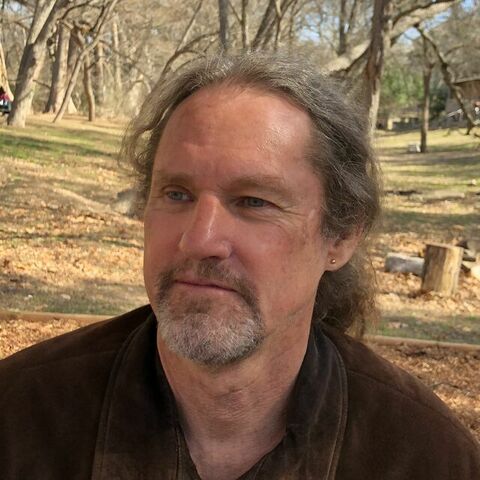
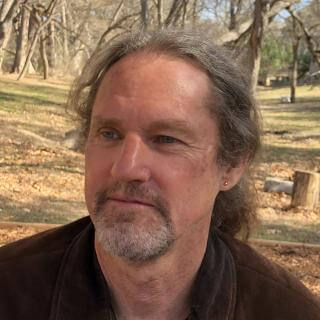
This is William Cooper.
Welcome to Awakening Together,
Relaxing into Happiness.
I trust you're doing well.
Since meditation is one of the most effective tools in your path to awakening,
I thought I would do a short series on different types of meditations to acquaint you with them.
This series will be especially valuable for those people who are just getting started,
But may be a good review for others as well.
In this series,
We're going to talk about Transcendental Meditation today and Energy-Based Meditations in future podcasts,
As well as our Awakening Meditation.
Each one of these podcasts will be fairly short and we'll just talk about some basics,
Particular to each of these meditations,
And then we'll do them together for a short while,
Just to get you started off so that you can do them on your own and they will make more sense to you,
Perhaps.
Back in around 1973,
I was trying to meditate.
I had gotten a book and tried to meditate out of a book and it was just hard.
I really wasn't doing it properly.
It was painful.
I had high discipline,
But I really didn't get a lot out of it and I didn't know what to expect anyway.
There weren't too many people back then explaining how meditation worked and how to do it.
In 1973,
I was lucky because I think I'd gotten a pamphlet or something about Transcendental Meditation and back then it was very new.
It was given by the Maharishi Mahesh Yogi,
Who lived in Europe.
And so there were many teaching centers around the United States and I went to one of those and was initiated in Transcendental Meditation,
Which I did for years.
I found it to be one of the most basic and powerful meditations that I ever ran across,
Especially for somebody who's starting out.
My friend Bob always used to say,
The first step to awakening is to get out of the pounding surf.
Don't be slammed around so much that you can't even concentrate because then how can you focus to do the things that you would like to do in order to awaken?
I think that the Transcendental Meditation is one of the most effective ways to get you out of the pounding surf.
Let me explain just for a moment.
I hope you've listened to maybe all of the past podcasts,
But if you haven't,
Maybe at least the introduction and the first few.
But if you haven't done that,
It's fine.
We'll just start working with Transcendental Meditation today regardless.
But I'm going to refer back to some of those earlier podcasts.
What causes us lots of inner turmoil and therefore throws us into the pounding surf is our thoughts and our emotions when they're just running habitually and they've been formed because of hurt,
Fear,
Or anger,
Which is most of the personal thoughts and feelings that we've that we've constructed and habitually continued.
Our awareness,
The part of us that watches thoughts or experiences emotions,
Is doing just fine.
If an emotion disappeared or a thought disappeared,
Say you went to therapy and you let some things go or for whatever reason you just let things go,
They would be gone.
You would still be here and you would be fine.
In fact,
That's the point of most therapy is to let things that are troubling you go.
And what remains is your healthy self.
That's called awakening in the deepest sense.
When you've let go of all that troubles you and all that remains is you.
There are other levels of awakening,
Which are you staying centered in yourself,
Even though you still have problems,
You aren't captivated by the problems.
What happens to most of us though,
Is we are addicted to our thoughts and our emotions and therefore our problems.
Because when we shine the light of our awareness through our thoughts and emotions,
We experience what those thoughts and emotions portray.
And often when they're formed out of hurt,
Fear,
Or anger,
They portray hurt,
Fear,
Or anger.
And that projected onto the screen of our life is called problems.
So,
We automatically gravitate to look through the lenses of our thoughts and our emotions because we,
Especially when we're starting out on our spiritual path,
Don't know the difference,
Don't know what else to do.
So,
How can we extract ourselves from looking through the kaleidoscope of our thoughts and emotions and simply reside in the ground of our being,
Which is radiant and expresses the qualities of our being,
Peace,
Love,
Wellness,
Health,
Joy,
Bliss,
All the things that we want to experience.
How do we stay there and not get diffracted into a thousand different voices and thoughts that reside in our mind?
How do we do that?
Well,
Meditation is a good start.
Transcendental meditation is a good starting meditation among all the other meditations that we'll talk about.
So,
Let's talk about why it's powerful.
Transcendental meditation is powerful because it gives us a pathway not to jump into our thoughts,
Not to jump into our emotions,
And therefore stay and experience the qualities of our being deeper and deeper and deeper.
How does it do that?
It does it through the use of a mantra.
Transcendental meditation uses a mantra or a sound that does not mean anything.
It's just a random sound.
For our practice,
I'll use a transcendental meditation sound that would be assigned to somebody.
And typically they assign different sounds based on your age and your gender.
So,
That may have changed now.
I'm not sure,
But that's what they did.
So,
There are just a lot of random sounds.
I'll pick one and that sound is EM or M.
It's spelled EM and it's pronounced M.
So,
Just the sound M.
The reason why it's valuable to have a sound that doesn't mean anything is that way you can't start thinking about it.
You can't start wondering about it,
Thinking about it,
Trying to feel it,
Trying to make it mean something.
You can't do any of that.
It's just a sound,
A meaningless random sound.
So,
The mechanics of TM are this.
You sit in a relaxed position,
You close your eyes,
You just breathe normally.
And as a beginning,
You chant your mantra M,
Just to center yourself or acquaint yourself,
Reacquaint yourself with your mantra M.
And then you just continue to sit quietly.
If a thought comes up,
Rather than jumping into the thought and trying to look through life through the lens of that thought,
You simply say the mantra M.
And then you let them both go.
If another thought comes up,
You say your mantra silently to yourself M.
And you let both the mantra and the thought go.
Just easily,
Gently,
You let them go.
You do this process for maybe in the beginning,
You just try five minutes and then you work your way up to 10.
And then as you've meditated longer,
More days or weeks and you feel comfortable,
You work your way up to 15 minutes and then 20 minutes.
And the traditional TM practice has you meditating 20 minutes in the morning and if possible,
Another 20 minutes in the afternoon.
They prefer you to have two 20 minute meditations during the day.
That begins to train you to just relax in your being and not be so prone to jumping into your thoughts,
Even during your regular waking day when you're not meditating.
Because you're not jumping into these tumultuous thoughts and emotions,
You start to settle down and instead you begin to feel the qualities of your being,
Peace,
Love,
Well-being,
Joy,
Happiness,
And that starts to permeate through your body.
So after a while,
You begin to enjoy and be informed by the qualities of your being,
Rather than the reactions that come from a separated life that has built a personality around hurt,
Fear,
And anger,
As we've described in detail in earlier podcasts.
So this is a quick way to begin to short circuit the addiction of jumping into a thought,
Because before you can jump into the thought,
You simply say your mantra,
And you let both the thought and the mantra go.
So you haven't jumped into the thought or the emotion,
You've let them go and all that remains is your being.
Because you're not getting all stressed out by jumping into your thoughts,
At least for the 20-minute meditation,
Deep relaxation begins to flow after a time through your body and your mind.
Stress begins to dissolve and you approach life in a more relaxed way.
That gets you out of the pounding surf.
So after a while,
You retrain yourself in a sense from the old addictive personality that most of us have,
That's addicted and doesn't even know it's addicted.
We jump into our thoughts,
We live through our thoughts,
We live through our emotions because we think that's the way to be.
In a past podcast,
I've described it as being born with pink sunglasses on.
We're wearing them,
But we don't even know that they exist.
We're so used to them.
And the whole world looks pink,
We just think automatically that the world is pink and we don't know that it's not pink until we can take those sunglasses off.
Transcendental meditation by the use of this mantra doesn't allow us to put the sunglasses on.
We can't even start looking through them because in this analogy or metaphor,
The sunglasses represent our thoughts and emotions looking through our life,
Through our thoughts and our emotions.
We can't do that with this meditation because we say,
And we let the sunglasses go or the thoughts or emotions go.
So we can't look through them.
What we're left with is looking through our clear eyes.
And after a while,
Our system reorients to clarity.
In meditation,
After all,
What happens is we sit still and we let all the silt and the debris settle out of the clear water,
Which is us.
And it starts to settle out and then we're clear again.
Instead of being muddy water,
The mud settles out and life looks clear because when we're clear on the inside,
We can see clearly on the outside.
When we're looking through muddy water,
We can't see anything.
But when we're clear on the inside and our water is clear and clean,
We can see clearly all that's going on on the outside.
And then because we're radiating clear and clean energy,
Our outer environment begins to revolve around us in a clear and cleaner way.
So good begets good.
So transcendental meditation is a very powerful meditation and it is an excellent way to get you out of the pounding surf.
It's also a great meditation for those of you that have been meditating for a while as well.
If you would like to see what some of the other transcendental meditation mantras are,
You can Google transcendental meditation mantras and with a little looking,
You'll find a list of them on the internet.
There is also a book called the Relaxation Response by Dr.
Herbert Benson that goes through how to do the transcendental meditation as well as he's done many studies on the effectiveness of transcendental meditation and it is very effective.
A Christian version of transcendental meditation is called Centering Prayer.
You can Google that and get instruction on how to do Centering Prayer.
Also,
There are many teaching centers around the United States and the world on how to do transcendental meditation in an authorized way.
So for all of the above,
We have the Maharishi Meha Shoghi to thank and I'd like to just say thank you.
So although the transcendental meditation is a very easy meditation,
Let's do it together for a couple minutes or so just to make sure you're doing it properly and then you can do it on your own.
As we discussed before,
Sit in a relaxed position,
Sit any way that's comfortable to you,
In a chair or on the floor,
But any way that is comfortable to you.
Close your eyes,
Breathe normally and you chant your mantra inside of you.
We're using the mantra M.
So you chant M.
Now if your mind wanders,
Whenever it does wander,
You chant the mantra M.
M silently to yourself and you let both the mantra and the thought or emotion go and just continue to let go and relax.
Breathe normally and feel how good that feels.
And if a thought or emotion comes up,
Instead of jumping into the thought or emotion,
You simply chant your mantra M and let them both go.
M and let there be an openness for everything to go.
And I say let there be an openness because what if an emotion comes up and it's just there for a long time?
That's okay.
Just let it continue.
But every so often,
Instead of getting involved in it,
You chant the mantra M and let the mantra go and let the emotion,
If it doesn't go,
If it's too big for it just to release,
It just seems to be sitting there,
Let it be open to breathing in or enjoying the good feeling that's going on around it.
You don't think about it.
You don't think about it.
You just are in an open posture and before,
Or instead of getting involved with the next thought or emotion,
As it comes up,
You say M and let everything go that can go just on its own gently.
And if something's not ready to go,
Let it open.
You don't jump into it.
And because you're saying your mantra M,
The qualities of your being,
The light of your being,
The joy,
The happiness,
The peace,
The qualities of your being are any or all of those things.
As any of them come up,
The emotion can breathe that in if it still is there because it's open and you're not jumping into it and being captured by it.
It will continue to be there until it just releases.
And it might release today or it might release tomorrow or the next day.
Either way,
It doesn't matter because you're not jumping into it.
You're just letting it exist.
M.
And you let everything go.
M.
You remain in your openness.
In your openness,
Your being flows and your being,
The qualities of your being are light,
Wellness,
Peace,
Joy,
Happiness.
Perhaps you feel all of those,
Or you feel some of those,
Or at least one of those.
And rather than to exchange your attention from being with the qualities of your being and jumping into your emotion or thought,
Rather than do that,
You say your mantra when a thought comes up and it's trying to get you to jump into it,
To look at life through it,
You simply say your mantra M instead and let them both go.
M.
And let them all go and feel how good that feels.
M.
M.
Your pace will be your own.
The amount of time or when you chant your mantra will simply be based on your thoughts when they appear,
Your emotions when they appear.
M.
So,
As we talked about,
If there's a long persistent emotion or group of thoughts that just sort of stay,
They don't release,
You say your mantra M when you feel like it.
And that is right before you get sucked into the thoughts.
In other words,
Rather than being sucked into the thoughts or emotion,
You say the mantra M.
M.
You go to the mantra instead of going into the thoughts or emotions.
And if they're persistent and they're there for a long period of time,
You can just watch them as you enjoy the qualities of your being.
And when you feel your energy beginning to want to jump into the thoughts or the emotions before that,
You just say your mantra M.
M.
In whatever cadence or spacing or timing that feels good to you.
It's very intuitive.
It's not based on any time schedule.
You're staying with your being and you're not jumping into thoughts or emotions.
And that's the point.
And your mantra M helps you not do that.
You stay present to yourself instead.
And enjoy yourself.
Peace feels good.
So soak it up.
That's called deepening relaxation.
Joy feels good.
So soak that up.
That just feels good.
Well-being.
It's healthy.
M.
And perhaps you set a timer so you know when your 5 or 10 or 15 or 20 minutes is finished.
And when it is,
You gently open your eyes.
You take a deep breath.
When you're ready,
You look around the room and just notice you feel good.
And meditation has a cumulative effect.
You can take the centeredness that you're feeling deeper and deeper.
You can take that throughout your day,
Even when you're not technically meditating.
And you can take these skills with you rather than jumping into thoughts that aren't necessary.
You can just let them go and stay centered in your being as you go through the day.
Each day feeling better and better than the days before,
Because you've deepened and you've become good at staying centered as you practice your transcendental meditation.
Okay.
Thank you so much.
I hope you found this helpful.
And in future podcasts,
We'll talk about other kinds of meditation.
If you would like,
You can practice transcendental meditation this week.
Okay.
Take care.
I look forward to talking to you again next week.
Bye.