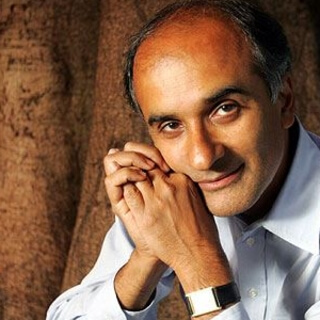
Hello and welcome to Tricycle Talks.
I'm James Shaheen,
Editor and Publisher of Tricycle the Buddhist Review.
A lot of the convert Buddhists I know turned to the Dharma initially because they were dissatisfied with the prevailing ideologies of our time.
But as the Dharma moved west,
Some feared that it would be hijacked by the status quo.
Our guest for this episode,
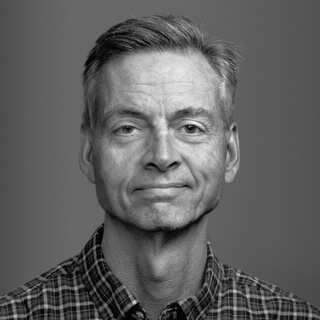
Ronald Purser,
Says that's exactly what's happened.
Ron is a professor of management at San Francisco State University and a long-time Buddhist practitioner.
He popularized the term McMindfulness in a piece he wrote for the Huffington Post a few years back.
In that article,
He argued that mindfulness practice has become commercialized.
It's been reduced,
He says,
To a mere self-help technique.
His new book,
McMindfulness,
How Mindfulness Became the New Capitalist Spirituality,
Offers a critique of the growing mindfulness movement.
Ron says the corporations have embraced mindfulness in order to advance a neoliberal agenda.
While his book is decidedly polemical,
In person Ron is quite balanced when it comes to discussing the good and bad of the mindfulness movement.
He explains what he means by the catch-all term McMindfulness and presents his view that mindfulness has an untapped potential to bring about real social change.
Ron Purser,
Welcome to Tricycle Talks.
Oh,
Thank you,
James.
Glad to be here.
Yeah,
It's good to have you.
I'd like to start very basic.
What is McMindfulness and why is it a problem?
McMindfulness,
Yeah,
It's an interesting term.
Actually,
It was coined by Miles O'Neill.
And I think it stands for how mindfulness has become a fashionable and marketable commodity.
It sort of signals how mindfulness could be seen as a spiritual quick fix that can be easily consumed.
And I think that's kind of the broad brush.
But I think McMindfulness has also been marketed as a universal panacea or kind of an elixir.
And it's been stripped down.
It's seen as kind of a do-it-yourself self-help technique.
And I think part of the appeal is that it really appeals to our highly individualistic and entrepreneurial ethos in our society.
And our culture is thriving on this individualism and narcissism.
So I think that's why it's been so successful.
And I characterize it as the latest capitalist spirituality.
I see it as sort of part of the whole wellness industry,
Which has now become a $4 billion industry.
And mindfulness is estimated to be a $1 billion industry.
But part of the critique has been that it lacks an ethical and moral framework.
So it can be easily co-opted and employed for instrumental aims,
Whether it be productivity or improving productivity,
Career success.
Even hedge fund managers now on Wall Street are using mindfulness.
It creates better test takers in school and even better sharpshooters in the military.
So I think that's all part of it.
I think the issue is that it's become so easily accommodated to the dictates of the marketplace.
And I think that's what should give us pause.
It just seems like it's become a lubricant for capitalism.
And that's been the major thrust of my critique.
Michael Hiltzik You know,
So many tools are used toward those aims that you find objectionable.
Mindfulness in particular,
Why is that something that really concerns you?
Michael Hiltzik Well,
Part of the critique is that it seems like it's become complicit with neoliberal culture.
And I don't think that's intentional.
I think it's just that it's such a strong current in our culture that it's been easily co-opted for that purpose.
Michael Hiltzik Yeah,
Just to define terms for a moment,
You do define neoliberalism in the book.
It's used in so many ways by so many people,
It's just become a blanket term for bad.
But you understand it in a very specific way.
Could you just help us with that one term neoliberalism or neoliberal establishment?
Michael Hiltzik Yeah,
It is a very overused term.
And I kind of like Pierre Bordeaux's definition,
Which goes something like,
The intention is really to destroy collective structures,
Anything that will impede pure market logic.
But it's really a broader social philosophy of radical autonomy.
And it really kind of reduces human beings to become entrepreneurs of themselves in order to enhance their mental capital so they could be more competitive in the marketplace.
But it really denigrates,
It downplays the role of society and culture.
And it claims that the individual is entirely free to be self-responsible for their own health and well-being.
I think it also reduces citizens to nothing more than consumers.
So it promotes a really privatized and highly individualistic worldview.
And it's also infused with the moral rhetoric of free choice.
And that is sort of the trend that we see,
Not just with mindfulness,
But with other types of self-optimization and brain hacking,
Whatever you want to call it.
But it really kind of comes back to rendering the individual as being more self-governable through self-discipline.
And that's sort of part of what I think is problematic.
It really has a framing effect.
And essentially,
I think it depoliticizes mindfulness in that respect.
And by doing that,
I think it forecloses other training curricula that could foster a more radical critique of the causes and conditions of social suffering,
Which are implicated in the power structures of our economic systems and capitalist society.
But I think the mindfulness movement adheres to this ideology,
Maybe unwittingly,
Maybe not consciously,
Because it does promote the image of the individual who needs to learn to adapt to conditions.
You know,
You used a word depoliticize.
You felt that mindfulness had been depoliticized.
We can get into this a little bit more later,
But to what extent was it politicized to begin with or used as a political tool or thought to have some political or social resonance?
Mindfulness itself?
Yeah.
I believe you said it's been depoliticized.
Yeah.
Well,
That's a good question.
I'm not so sure that mindfulness has ever been politicized.
Right.
And that goes back to,
I think,
If even if we look back,
You know,
If we want to look at the Buddhist tradition,
I don't think it has that much to offer in terms of political and social engagement for numerous reasons.
So maybe what I'm really trying to say is that we do need to politicize mindfulness.
I see.
To expand its scope,
To expand its potential influence,
To take into account more of a collective framework for social change.
Yeah.
I'm getting a little bit ahead of myself,
Perhaps,
But are you thinking more in terms of developing a social and political critique that's rooted in Buddhist teachings and practice?
Is that what is happening here?
I'm not so sure.
I'm not so sure.
Like David Loy,
I don't know if there are adequate resources even from drawing from the Buddhist tradition.
But I do think there are radical notions of change in the Buddhist tradition,
Such as the notion of no-self,
The notions of interdependence.
These can be tapped for that purpose.
And I don't think the mindfulness movement or therapeutic clinical forms of mindfulness,
They weren't designed to do that.
So to be fair,
They really weren't designed for that purpose.
So I think I'm really being optimistic that there will be a new wave of innovators that will take mindfulness to the next level and turn it into a more civic or social form of mindfulness.
It's interesting that you mentioned David Loy,
Because that's precisely his point,
That there's not a lot there,
But there's a lot to be developed.
Yeah.
And I think it's up to us.
The trope that you always hear is that Buddhism always changes as it moves from one culture to another.
And we're in the very early stages of that cultural translation,
Our cultural articulation.
And so I think we have a remarkable opportunity to take some of the root transformative Buddhist philosophical notions and practice,
For that matter,
And expand them in a new direction to deal with our collective spiritual crisis.
And so I think mindfulness does have the potential to be wedded to progressive activism,
But not in its current ethically neutral,
Isolationist,
Individualistic form.
And I think that's where the edge is for the next wave.
Well,
You do say that mindfulness can be helpful to people in some cases,
I mean,
As it's practiced today in its more popular form,
I think.
So when can mindfulness be beneficial and when does it cross the line to be something that's counterproductive?
I try to make the point in the book that my message,
My critique is not to throw the baby out with the bathwater in terms of the therapeutic benefits of mindfulness.
In fact,
You know,
We could argue,
Of course,
That mindfulness does work.
It does provide a lot of relief for chronic pain and stress and anxiety.
On the other hand,
The problem is because it works,
We have to ask in the service of whom and whose interest.
So I don't think there's anything wrong with applying therapeutic mindfulness,
But the problem is more at the macro level in terms of corporate interest and market interest,
Just like we saw how the pharmaceutical industry has basically taken over the whole field of psychiatry and mental health.
So I think one of the issues is when it becomes co-opted in such a way that it is actually serving as a means of enhancing,
For example,
Greed in the corporate world or applying it in the military,
Which is really counter to,
You know,
The values and ethics of non-harming and compassion.
That's really where I think I draw the line.
But I think we're in a different epic than pre-modern Tibet and early Buddhism.
And I think even if you look at the classic teachings on mindfulness,
It was also not just mindfulness of the interior,
But also mindfulness of the external world.
And I think what's happened is the balance has swung way over to the inward internal focus,
And we've lost touch with more of the external scope of mindfulness.
So I think that may be one way of looking at it.
Yeah,
I've noticed that there are different tendencies.
I mean,
Some people say,
Oh,
It's awesome,
Sorry,
And they're relying entirely on themselves and holding themselves solely responsible for their own peace of mind.
And then there are,
Of course,
The very engaged Buddhists who think engaging socially and politically is indispensable to liberation.
People are somewhere usually in the middle,
Or what do you think?
Yeah,
Yeah,
It's not an either-or problem or choice.
And I think where the gap is,
Is that somehow there is not a clear dialectical or interdependent connection between the pursuit of personal well-being or self-liberation and the wider collective social and ecological need for liberation,
Even in the wider social and collective spheres.
Right.
One of the things I think you're pointing to is that in a culture that is radically individualistic,
This notion of self-reliance is only feeding our worst tendencies.
So there isn't the balance of a strong sense of being,
Of existing within a communal structure.
That's right.
I think that's really what is missing.
Because of the neoliberal social philosophy,
Neoliberalism really despises any kind of communal or collective or forming bonds of solidarity and so forth.
So,
Yeah,
I mean,
This is one of the issues.
When you embed and recontextualize a practice such as mindfulness smack dead center into capitalist culture,
Then we're struggling with how do we tap mindfulness in a way that doesn't become just a handmaiden of capitalism.
I think that's one of the issues that I'm really concerned about.
You know,
One of the things I'm thinking of is an interview that our features editor,
Andrew Cooper,
Did with Robert Bellah,
The late sociologist.
He taught at the University of California,
Berkeley.
He took as an example the notion of leaving home and going off on a mountaintop and meditating in medieval Japan,
Say,
And the risk that one took when leaving the society was great.
One didn't know when one came back whether one had a place.
It was a real risk that these people took.
But the notion here of leaving home and going off on a mountaintop just plays into our worst tendencies again.
It's isolation.
There isn't really a community to leave in many senses of the word.
Right.
The sense of isolation and loneliness is quite prevalent,
Especially with the destruction of a lot of social support mechanisms in our society,
Too.
You know,
I wonder,
Listening to you,
If it's accurate to say that you don't lament so much the absence of any Buddhist content,
But rather the absence of any social or political content.
Is that fair?
I think that is fair.
And I tried in the book to not really come at the critique from a Buddhist point of view.
I really think the critique is much more social and political.
And I think that's healthy.
I think that's a good standing ground.
Yet you are a Buddhist.
Do you want to say something about your Buddhist background?
I think you started in Tibetan Buddhism.
Is that right?
Yes and no.
I was an undergraduate and took a few courses on Asian philosophy,
Eastern Asian Buddhism.
I actually had a minor in religious studies as an undergraduate.
And then when I moved to California,
I actually had a book called Time,
Space,
And Knowledge,
A New Vision of Reality by Tar-Thang Tooku,
Who was one of the early Tibetans to come to the U.
S.
He established a center in Berkeley,
California called the Tibetan Nigma Institute.
But I actually started taking courses on this very unusual teaching that he said it was a gift to the West because he said it's not Buddhist,
It's actually quite secular.
And he avoided Buddhist terminology and everything in the book.
And that's actually been my root practice for 35,
40 years,
Although I certainly have done a lot of other sorts of Tibetan Buddhist studies with Alan Wallace and some of the Nigma and Kagyu lamas and Dzogchen tradition.
And then when I went to graduate school,
I had to move to Cleveland,
Ohio.
There wasn't much going on there except there was a Buddhist Churches of America there and the teacher there,
A Japanese teacher,
In the evenings he would teach Soto Zen to Western students.
So that was the way I was able to continue having a Sangha at that time.
And recently I participated and went through a training in Korean Taigo Zen.
So I also have that affiliation.
Is that an affiliation that's current or are you still practicing in that tradition?
It's still current.
My teacher is in Anaheim,
California,
Although he has stepped down as the bishop of the European American parish.
I'd just like to ask you a little bit about mindfulness itself because I recently interviewed Kennedy Gunther Brown,
Whose work you're aware of.
And the question I have is,
Do you consider mindfulness taken out of its Buddhist context to be value neutral or do you think it contains within it,
Inherently,
Buddhist values and views?
Boy,
That is a.
.
.
I did listen to that interview with Kennedy and I'm actually reading her new book right now.
It's impressive,
Isn't it?
It is.
It is.
She is quite a scholar.
I've known her for a few years now.
Well,
Let's take the case of mindfulness in the military.
Maybe that's an extreme case.
But if you look at what's being taught there and they're calling it mindfulness,
I think it's the farthest thing from Buddhism or anything related to Buddhism.
It's a performance and tension control,
A tension enhancement technique.
And there's lots of ways of enhancing intention.
We don't need Buddhism for that.
So I find it kind of troubling that.
.
.
Well,
Not troubling,
But misleading,
Maybe,
To call it mindfulness.
But I guess you could because now that the term itself has become so vague and overused and elastic that it could be applied to just virtually any purpose.
I guess in a certain way what I'm getting at is,
You know,
You're aware of the single practice traditions Zen,
Say,
Nichiren,
Pure Land,
You know,
Single practice that's elevated above all others and becomes the focus of a particular school like Zen or again Nichiren or Pure Land.
Is it possible that this is becoming a similar such single practice tradition?
I just wonder about that because it was not so much lifted out of the tradition just in the West,
But if you consider Vipassana,
Which is close,
It really came out of post-colonial Burma as a means to preserve the tradition for different reasons from what happened in Kamakura,
Japan.
I'm just wondering if you see any possibility there of it's eventually evolving into its own single practice tradition.
Or is that just too optimistic?
Yeah,
I think there's a lot of parallels like that.
I think Robert Scharf brought that up in some of his writings in China.
I think that the same thing happened where there was kind of a divergence and they were offering a practice that was a single practice that offered quick and immediate benefits.
And so I guess historically that's not unusual that that's happened.
But I'm not so sure if it's sufficient.
You know,
Mindfulness is,
Richard King actually talks about the mindfulness only school.
And maybe that's what you're referring to.
It could be.
What I'm thinking is there's a lot of criticism of the mindfulness movement and sometimes for very good reasons.
I mean,
You point out many of them.
But I wonder if we underestimate its power outside of its original context and whether it has enough behind it to actually become something beneficial or something that contains a Buddhist view and Buddhist teachings.
Now,
I'm not arguing that that's the case.
I just know that people argue that.
How do you think of that?
I mean,
Candy Brown argues that it's both secular and religious and therefore there should be an opt-in model before bringing it into public institutions.
But she does feel that it contains within it and the way it's taught,
Let's say MBSR or other forms of mindfulness that are taught now,
Contains within it values and ideas that are in fact religious.
Right.
You know,
When I look at the MBSR program and I know there's been a lot of rhetoric about how it's as robust as the entire Buddhist tradition.
Everything in MBSR,
It's almost like a one-stop shop for the whole Buddha Dharma.
Right.
Coextensive with the Dharma,
I think is the term.
Coextensive.
And,
You know,
I sat in an MBSR course and I didn't feel that at all.
Right.
So I think the external rhetoric doesn't really match what's actually going on in the program.
And people like Ted Miser,
Who's a big proponent of MBSR and secular Buddhism,
He says,
No,
They're two separate things.
And so there's a lot of contradictions and even within the MBSR world.
Right.
I mean,
That seems to exist,
That kind of contradiction or schizophrenia across the board.
There's in the south a Theravadin center that basically advertised its meditation teachings as secular.
So the state of Alabama,
I believe it was,
Said,
Well,
Since it's secular,
You don't receive the religious exemption.
And they argued that when they do it,
It's religious.
When they teach it to the laity or to secular society,
It's in fact secular.
So that desire to have it both ways is something that you address in the book as well.
Yeah,
Absolutely.
I call that the Buddhist on and the Buddhist off positioning.
I think Candy Gunther Brown calls it code switching.
Right.
So if you're speaking to people who are sympathetic to Buddhism,
You turn the Buddhist switch on and you basically say that mindfulness is the essence of the Dharma.
And if you are speaking to funding agencies or school administrators,
Then you turn the Buddhist switch off and say it's completely secular.
So that's a strategy.
But,
You know,
It is interesting that people like Menindra and Goenka and others considered it to contain the complete Dharma.
So there is within Asian Buddhism this idea,
In fact,
That it is coextensa with the Dharma.
I mean,
I don't know how you feel about that,
But it does present,
You know,
A pretty confusing problem for public institutions.
Right.
Yeah,
Goenka and even people before that.
But it's long been part of the rhetoric of Buddhist modernism,
Right?
But I also think that there's history behind Westerners having to proclaim that we have the true meaning of the Dharma and making all these reductive assertions about its natural compatibility with science.
But,
You know,
I think also this idea of the universal Dharma has connotations or basically it appeals to perennial philosophy,
Which can strip meditative practice from its cultural context.
And that this sort of notion of the universal having access to the universal Dharma,
It sort of assumes you have privileged access to some pure awareness that's free of culture and history and also the primacy of experience as the primary source of truth and authority.
So I think it's led a lot of people to believe that they do have some private access to the essence and so the Dharma independent of our own cultural values.
And I think that's what is sort of strange.
I mean,
That we don't see our own cultural values as part of this contextual influence on mindfulness practice.
Right.
You've been so critical of what you refer to as mindfulness and I'm wondering if you could give us some of the most egregious examples and why they're particularly harmful.
I think I've already kind of spoken to that with the adoption of mindfulness in the military.
I think there was a recent application of mindfulness in the military to special operation forces.
Basically,
They're kind of coaching it as optimizing warrior performance prior to combat deployment training.
So it's sort of presented as a way of enhancing cognitive performance.
Yeah,
It was special operations forces,
I think,
Who were trained in a very,
Very stripped down,
Very short,
I think,
Eight to 10 hours of mindfulness practice.
And this is what,
You know,
I think it's ridiculous to call it mindfulness.
It's really attention training.
One of the defenses of that that I've heard is that the soldiers have a greater capacity to pause or to consider before taking action and it gives them the ability to respond as opposed to simply react.
I think they were talking primarily about Iraq when I spoke with these people and the anxiety and the stress and the tension that a soldier might feel could be alleviated so that they could make a decision that might spare of life.
How do you respond to that?
Yeah,
They refer to that as a form of harm reduction,
I think,
Because it improves,
I think,
Memory and emotional self-regulation.
So I've heard that as well.
And that's good.
I mean,
It's obvious better not to be shooting children and civilians.
But I think that the larger question is,
The broader question is,
How it shifts attention away from the broader ethics and politics of mindfulness.
You mean,
In other words,
Why are we there at all?
Well,
That's part of it.
But if we're still associating mindfulness with Buddhism,
Then I think that the deployment of this practice is counter to anything that you could find within Buddhism around non-harming and compassion.
Yes,
Okay,
It stops.
It may stop.
We don't know what the research is on that.
We've heard only anecdotal evidence about soldiers avoiding snap judgments.
And maybe in military ethics,
Maybe in the world of military ethics,
That's a big breakthrough.
But I still think it's a very technocratic way of conceptualizing mindfulness.
I think that's it.
Now,
Let's return to James Shaheen In Conversation with Ronald Persert.
Ron,
You make a comparison between Jon Kabat-Zinn and Kroc,
The founder of McDonald's.
Is that a fair comparison,
Or is that a little bit tongue-in-cheek?
It's a bit tongue-in-cheek in a way.
But I think there may be some parallels there.
Okay,
Like what?
I think there's a theory of the McDonaldization of society.
And I think that it points,
You know,
Maybe you see this more in meditation apps.
I think meditation apps are more,
I would say,
Symbolic of McDonaldization in terms of how they're used for quantification,
Scalability,
Kind of mass production.
So yeah,
It may probably be a bit tongue-in-cheek.
That's pretty extreme,
Ron.
But you know,
My intention with the book was really,
It is polemic,
It is a polemic,
More of as a public intervention to open up the discourse and move beyond the individual level of conceptualization of mindfulness.
Can you give me,
Ron,
A few examples of where you think the application of mindfulness practice in a corporate setting would be especially egregious?
That's a whole area that is of interest to me.
Well,
I mean,
I could give you hypothetical examples,
But I think the issue is,
Let's say that a mindfulness program is brought into a company which is manufacturing products which are known to be carcinogenic,
Or even,
We can even take the example of Google for that matter.
I mean,
Google has many,
Many egregious ethical violations and lawsuits against their lack of privacy.
And they're,
Like many other tech companies,
Are exporters of addictive digital distraction.
In other words,
Their products are designed for addiction and digital distraction.
So mindfulness is beneficial to individual employees,
And that's what my friend and colleague Kevin Healy talks about.
He says,
Look,
Mindfulness,
When it's brought into companies,
Creates these small bubbles of what he calls integrity bubbles that offer a small group of employees some stress relief and so on.
But they're just performing their task even better,
Maybe more,
Even more productive.
But they're producing things that are destructive to society.
They're producing externalities,
Which ironically,
We're talking about mass producers of digital distraction.
So they're becoming ever more efficient in exporting these technologies.
And there's no call to action,
There's no connection between individual level stress reduction in the larger corporate environment,
Not only the internal corporate culture,
Which is a source of stress,
And many stressors in the workplace that have nothing to do with people not paying attention.
And then the larger export of corporate products,
Which are not called into question either by mindfulness programs.
And this is where I think there's a great opportunity that's been missed,
Is to go beyond just the individual to make a curriculum where people can then say,
Hey,
You know,
Working 70 hours a week or just,
You know,
We got to do something about that.
My workload's too heavy.
But I don't know how well received a program like that would be in selling that to corporate sponsors.
You mean taking it beyond treating the individual for their stress and applying it more broadly with its ethical base to the whole corporate structure or the way things work?
That's right.
And I'm not so sure whether that would be well received,
Because once you start calling into question some of the basic fundamental tenets of the corporation,
Which is intent to serve Wall Street,
Intent to provide the maximum profits to Wall Street,
When you start calling into question things that will reduce productivity or maybe even challenge the notion of the type of products and services that they're offering,
I'm not so sure that would be well received.
So I think what is underappreciated in corporations is that employee stress is not self-imposed.
And I think it's often been presented that way.
And there's been some very interesting studies that have been done on workplace stressors where some of the major workplace stressors are like lack of health insurance or job insecurity,
Not having enough discretion or autonomy in their decision-making,
Long work hours,
All these sorts of things.
And these are systemic and structural problems that can't be solved at the individual level of mindfulness.
So they require more collective attention on these factors.
And maybe it's possible to develop a program that would be effective in corporations.
I think that's an open question.
Right.
You know,
You talk about sometimes meditation being a palliative or something that pacifies the employee or makes them less likely to engage politically or socially.
But frankly,
My experience,
Very anecdotally,
This is not hard evidence,
Most of the people who are practicing it seem to be socially and politically engaged.
Why would it necessarily make them quiescent in a corporate setting,
Say?
And Google,
Of course,
Is a place where people are mostly there by choice,
Or at least most of them.
So I'm talking about a situation where people are far less empowered than the employees of Google.
Well,
That may be the case.
But I think my criticism is,
Why don't we take it beyond step one?
If that's the case,
Then how do we move from enhanced awareness to action?
So in other words,
It's not so much an issue that mindfulness has been introduced to this setting,
But the ethics that we normally associate with it are ignored or not advanced.
Right.
As far as I can see it,
Then that's true.
You know,
I'm sure you've heard people say that you ask whom does it serve?
Well,
The corporations are employing this because they think it may increase productivity or have a more harmonious,
Productive workforce.
But is it possible that this is going to backfire?
In other words,
Mindfulness may,
In fact,
Make people question more or sort of wake up to the situation.
Well,
It's possible.
I'd like to see the articles on that in the media when that happens.
I haven't seen them yet.
It's speculative.
And that's basically the Trojan Horse claim.
Right,
Right.
I've heard it before.
I'm sure you have.
I just wonder,
Though,
Is there really evidence,
Though,
That it has the reverse effect,
That it makes them less likely to engage politically,
Socially or even in the workplace to improve their life?
I don't think we have the research on that.
Right.
OK.
Because mindfulness,
For all of its benefits that people tout,
I guess it remains to be seen what sort of effect it has on a person's social or political life.
Or do you have a strong opinion about that?
It's hard to say.
I don't think mindfulness,
Like yoga,
Is going to move people to the right or the left.
I don't think it really has some sort of inherent political effect on people in terms of their political views.
Right.
So in other words,
If they're not socially or politically engaged,
Mindfulness isn't necessarily going to make them so.
And likewise,
If they are engaged,
Mindfulness is not going to make them necessarily drop out.
So I wonder,
What exactly is the issue there?
I mean,
I know what you would like to see,
But is mindfulness itself and the way it's taught in a corporate setting?
Well,
You know,
The way it's taught in a corporate setting right now is its individual level therapeutic training.
And so long as it stays within that realm,
Then I would be surprised that it would turn into some sort of transformative process that transforms corporations if it stays at that level.
But I think that I think you raise a good point that if your values are already leaning towards progressive activism or social and political change,
Then mindfulness would probably enhance those capacities.
In other words,
It could make them more effective as a social or political activist.
We know of plenty of organizations that are engaged that do practice mindfulness as a way of staying centered in a very difficult environment.
Right.
Yeah,
Absolutely.
Yeah,
I think we have a lot of good examples of light,
Like at the East Bay Meditation Center and the Buddhist Peace Fellowship,
People that are combining activism with self-care.
And I think that's really the potential that we have to expand upon.
And so it can be wedded to progressive activism.
What would you like to see?
I mean,
How would you like to see mindfulness used,
If at all,
In the broader culture?
And what would you like to see happen?
What would be the alternative to this individual focused therapeutic model of mindfulness?
What would be the alternative?
What would you like to see happen?
I would like to see mindfulness used to turn critique outwards,
Is the way I like to put it,
Towards our social political institutions,
The interlinking systems of power,
All of the apparatuses that have exasperated human suffering and our collective stress.
And I'd also like to see it find a way to severe its ties to the marketplace.
And I think by doing that,
It can help facilitate more critical reflection and then move in a direction which helps people in communal settings and groups to look at how their own personal stress,
Their own anxieties have been de-linked and disassociated from these larger institutional,
Systemic,
And structural forces.
But I think that requires new curricula and new explanatory narratives which can expand the boundaries of individual level focus,
Which has been primarily situated in a more of a biomedical paradigm.
And I think another political potential is this notion of solidarity.
It hasn't been realized,
I think,
In the mindfulness movement.
And like you said,
Both traditional Buddhism and mindfulness have focused on individual salvation.
So I believe that mindfulness could be wedded to progressive activism,
But it has to move beyond its currently isolationist and individualistic form.
And like the issue of climate change,
Which you brought up earlier with David Loy,
And I can take that as an example that climate change isn't just a matter of reducing carbon emissions,
It's a collective spiritual crisis.
In a way,
We could see it as a breakdown in our modern worldview of separation and domination of nature.
And so I think we still can draw on Buddhist resources because individual well-being is really inseparable from collective and ecological well-being.
But on the other hand,
If you look at activism or social activism,
Which is devoid of wisdom or compassion,
And if it's stuck in dualism,
Which a lot of social activists can lead to burnout,
Can lead to trauma,
And even reproducing the same problems it's trying to solve.
So I'm hoping that we can move in a new direction towards a more embodied practice of civic mindfulness.
Yeah,
You know,
I was asking myself as you were talking,
What exactly does that look like?
You know,
There's a new book coming out by Rhonda McGee,
She's a lawyer who uses mindfulness to surface unconscious bias,
Racism,
More specifically.
Is that the sort of thing you have in mind in terms of a more civic version of mindfulness?
I think there'll be many strands,
And that's one strand.
I think it's really trying to see Wright Mills talked about the sociological imagination,
And it's connecting our personal troubles with public issues,
And racism is a structural public issue.
But if mindfulness can help people connect the dots and expose unconscious bias and racism,
Then all the other strands will be linked.
But I think there are many other strands that perhaps are not in the foreground yet,
But I think they will be.
I think they will be.
The reason I asked is that I'm trying to get a sense of what you mean by a more civic-minded mindfulness.
Can you give me an example,
Aside from the one that I just cited,
I mean,
With regards,
Say,
To global warming,
How does mindfulness,
A practice like mindfulness,
Address that,
As opposed to individual therapeutic benefit?
So,
My colleague in the United Kingdom is doing some really interesting work,
And she's not limiting her eight-week program,
I think it's an eight-week program,
To the typical clinical therapeutic modules that we find in like MBSR.
So,
She's pulling into her curriculum an analysis.
People actually engage in critical analysis of the causes of socioeconomic and environmental problems,
And she's trying to help people connect their personal wellbeing with active political struggle.
Now,
What that looks like on the ground,
I don't know,
But I'm going to meet her in a few months when I go to the UK to learn a lot more about what she's actually doing.
I'd like to ask one more question.
I was actually thinking of you at one point when I was rereading Christopher Lasch's The Culture of Narcissism,
And in it he points out that the right has pretty much owned,
This is in the 1970s,
Pretty much owns the religious discourse,
Or they have,
And he said as long as the left doesn't look inward they will have very little to say about the spiritual dimension of social crisis.
Do you see your work as sort of a move to bring one's spiritual life into the social and political arena,
Or use it as a motivator?
Yes,
I do.
And,
You know,
Historically you can see that in other social movements,
Right?
Where the religious impulse was really key,
Like Gandhi.
The civil rights movement is a great example of that.
In the last several decades we've heard mostly from the right with regard to spiritual or religious matters.
It may be time for the left to start speaking a language that makes sense to it.
Yeah,
Yeah,
I think that's right.
And then I think we're moving to the point where our whole society will reach a point of critical pain threshold with the climate emergency.
I think that's going to trigger,
I mean Paul Hawken already talks about in his book,
There's almost like two million organizations that don't know each other,
But they're all kind of motivated by this impulse.
Right,
Right.
His view is very optimistic.
It is,
And then,
You know,
That's good.
Yeah,
I think it's a good thing too.
We need a little bit of that.
Ron Purser,
Thank you so much for joining us.
I appreciate it,
And we'll look forward to your book.
Thank you for having me,
James.
You've been listening to Ronald Purser discuss his new book,
McMindfulness,
How Mindfulness Became the New Capitalist Spirituality,
On Tricycle Togs.
For more episodes,
Visit us at tricycle.
Org slash podcast.
We'd love to hear your thoughts about the podcast.
Write us at feedback at tricycle.
Org or leave us a review on your podcast player.
Tricycle Togs is produced by Paul Ruest at Argo Studios in New York City.
I'm James Shaheen,
Editor and publisher of Tricycle the Buddhist Review.
Thanks for listening.