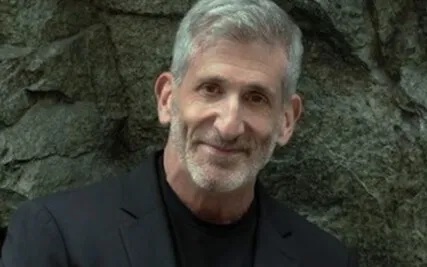
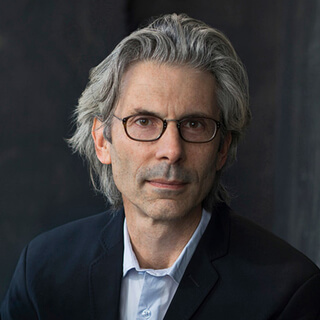
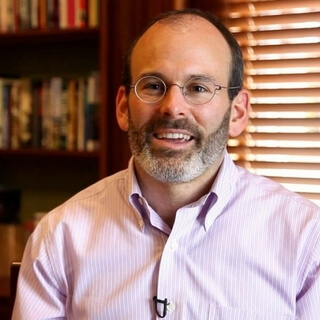
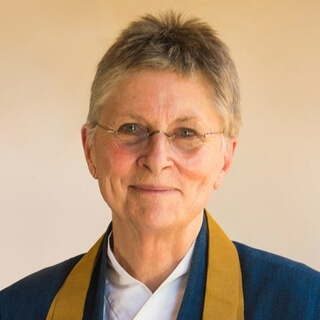
Hello and welcome to Tricycle Talks.
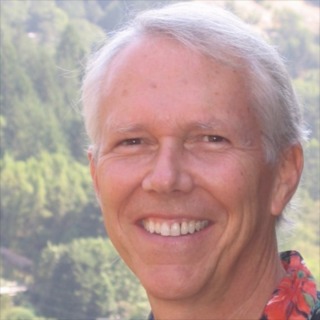
I'm James Shaheen,
Editor-in-Chief of Tricycle The Buddhist Review.
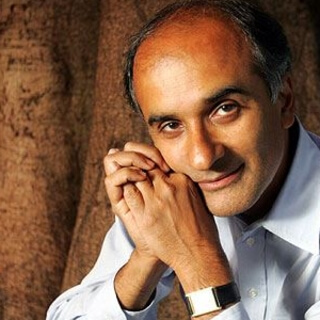
Neil Thies is a professor of pathology at the NYU Grossman School of Medicine and a practicing Zen Buddhist.
For the past 20 years,
He has been fascinated by the science of complex systems from the infinitesimal level of quantum foam to the vastness of our entire universe.
In his new book,
Notes on Complexity,
A scientific theory of connection,
Consciousness,
And being,
Thies provides a comprehensive introduction to complexity theory,
Outlining its synergies with Buddhist principles and teachings.
In today's episode of Tricycle Talks,
I sit down with Neil to discuss his journey to Buddhism,
Different understandings of consciousness,
And how complexity theory can help us navigate the unpredictability of our everyday lives.
Okay,
So I'm here with Neil Thies,
Professor of Pathology at the NYU Grossman School of Medicine.
Hi Neil,
It's great to be with you.
Hi James,
Great to see you again.
That's been a while.
It has.
So Neil,
We're here to talk about your new book,
Notes on Complexity,
A scientific theory of connection,
Consciousness,
And being.
So to start,
Can you tell us a little bit about the book and what inspired you to write it?
Sure.
Well,
I've been giving talks on this material for about 20 years.
In fact,
The very first published version of this stuff was published by Tricycle in 2006.
I think you might have heard me giving a Zendo talk back then at the Village Zendo,
Perhaps.
Right.
So I'm a physician-scientist,
So I do a lot of clinical work that has me sitting at the microscope all day long.
I'm a pathologist,
So I'm looking at slides of human tissues a lot.
Through that,
I encountered this artist named Jane Prophet.
We were part of an art-science dialogue thing sponsored by the Wellcome Trust in England to see how an artist and a scientist might talk,
How they might speak to each other and understand.
And in telling her about stem cells and how they move through the body potentially and interact with other cells to become tissues and organs,
She observed that that was like what's described in complexity theory of how ants self-organize into colonies and such things.
And I said,
What's complexity theory?
She explained it to me.
And working with her and a few other people that became this team of interdisciplinary collaborators,
I came to understand how complexity theory itself was actually very simple and very powerful.
It's sort of the main theory that came out of the 20th century other than quantum physics and relativity.
I think its importance is on a par with those,
Except obviously those are extremely well-known and there are thousands of books written about each of them.
There are very few books written for a general audience about complexity theory.
So what exactly is complexity theory?
What complexity theory describes is sort of everything that lies between the infinitesimal world described by quantum mechanics and the vast infinite world described by relativity.
It covers what lies between them,
Our everyday world,
Our bodies,
The cities around us,
The flocks of birds that go by as we're walking down the street,
Ecosystems,
How bodies are made of cells.
So all these different things,
Most of which we consider to be living things.
So complexity is really the science of life,
But it goes beyond that too.
And as I say in the title of the book,
And this is partly why I started giving talks about it at the Zendo,
It's not only a theory of life,
But I think it's a theory of being,
How things come into existence,
What's the meaning of existence,
What the functions of existence are.
Back in the early days,
I was thinking about stem cells all the time and about how stem cells self-organize according to complexity theory rules into the body,
Thereby making it a living,
Adaptive thing.
And it became very much like a co-op.
In fact,
The first article I published in Tricycle was in 2003 called Science as Co-op and discussed this.
I was walking down the street in Manhattan,
19th Street,
Coming to the intersection at Park Avenue.
I was so deep in this idea of stem cells forming bodies and I was starting to realize that I might study this in slides from patients or might study it in a laboratory.
I started to realize that the thing I was studying was myself and it became this self-referential thing and very co-online.
And I was standing there contemplating this and the light changed.
People next to me moved across the street and I couldn't move my leg because my leg had sort of become a flock of cells.
And I didn't know how to direct them.
And so that was quite a moment.
And then the moment passed and I continued to walk.
So this idea is something,
A thing,
My body,
Which I feel like I'm in control of,
Or is it a phenomenon arising from the smaller things,
The cells,
Which I apparently was not in control of,
Becomes a question.
So I was sitting in the Zendo one morning.
I was opening the Zendo and it was a Thursday morning and no one happened to show up that particular morning.
It was me in the altar and I was sitting there and instead of following my breath,
Stem cells,
Stem cells,
The cells moving around my body,
I just could not stop thinking about it.
And there was a moment where I was sort of deep in this and looked up at the altar opposite across the room and the stick of incense turning into smoke.
And is it the stick or the smoke?
Is it the body or the cells?
Is it the thing or the phenomenon?
And at that moment,
I was suddenly like,
Oh,
Is this what they mean by emptiness of inherent existence?
And I took it into interview,
Doka-san,
With my teacher,
Enki Orochi,
And I said,
Is this emptiness?
And she said,
Yeah.
And I said,
That's all?
And she said,
Well,
It's not easy,
But no one ever said it wasn't simple.
CB.
Right.
MG.
So that sort of led me down a path of,
Well,
Then are cells a thing?
Do they dissolve at a lower level of scale into smaller things?
And of course they do.
Cells are nothing but self-organizing molecules,
Biomolecules floating in water that self-organize into what looks like a cell,
The way cells self-organize and look like a body,
The way bodies self-organize and look like people walking down the street.
There's this flow that's happening.
There's no one directing the flow.
And yet somehow on a crowded New York City street in the morning,
None of us are bumping into each other.
Even though we're worried about our days,
Listening to our cell phones,
Et cetera,
Our bodies are self-organizing into this stream.
So this idea of thing versus phenomenon started to unfold.
So what about molecules?
Are they a fundamental thing?
No,
They're just self-organizing atoms.
Well,
Those are just self-organizing subatomic particles.
And we go a couple of steps down and what's in those steps physicists will argue about.
But what they don't argue about is that at the bottom,
It's not turtles all the way down.
It's not an infinite regress to smaller and smaller things.
You get to something called the Planck level,
The smallest possible units of space and time.
And at that level,
You're talking about the fabric of space-time itself.
And space-time is an energy-rich field,
Which is constantly popping up into subatomic particles or strings or whatever it is at that lowest level,
Which usually self-annihilate because they're anti-matter-matter pairings,
Like an electron and a positron and they just go poof.
But sometimes they don't self-annihilate and that leaves them to meet each other and interact.
And out of those interactions,
You get larger subatomic particles,
You get atoms,
You get molecules,
You get the entire universe.
So suddenly the entire universe at different levels of scale looks like it's made of things,
But in fact,
There is no thing anywhere to be found.
And this is really the emptiness of inherent existence because the entire universe is a complex system that looked at from one side,
One might say,
The view of samsara or the relative.
It looks like we have all these things that are separate from each other.
But at the quantum scale,
At the level of space-time,
Now you're reaching down towards the absolute in which there are no separations and everything is merely processed,
There are no things.
And from there,
A lot of other parts of Buddhist metaphysics start to unfold and that became the talk that you first heard.
Dave And now a book.
I have to say that in 171 pages,
You certainly packed a lot in.
It's also very,
Very readable and a layperson like me could certainly understand it.
Alan That's the best thing I could hear.
Dave Before we get back to the substance of the book,
How did you come to Buddhism?
How did you come to Zen practice?
Alan So this goes back to when I was a kid.
I'm Jewish,
My parents European,
My father was born in Germany,
His parents were killed in the Holocaust.
We lost lots of family members.
And my community growing up was a German synagogue in West Hartford,
Connecticut,
That was really entirely made up of survivors,
At least when I was youngest.
So living in the shadow of the Holocaust,
There was this persistent question about how could this happen?
And religious practice in our household was very warm,
Very welcoming.
I enjoyed it.
It wasn't a burden.
It wasn't something my parents imposed on us.
So I was left with this tension of this devotional practice in a Jewish tradition where I feel like I have this close relationship to a God who cares,
And yet this happened.
And I didn't really know how to resolve that until someone gave me,
Of all things,
A copy of The Source by James Michener,
Who wrote many novels back in the day where he would pick one time and then each chapter would be a different era,
Maybe over the course of a couple of thousand years.
And in this book,
The Source,
It was about the land of the State of Israel and the region around it.
There was a chapter about the mystics in the 15th and 16th centuries.
That was the first hint I ever had of mystical religion,
Mystical practice.
And it opened the idea in my head that,
Oh,
There was a way to achieve some kind of unity with the divine that allowed you to see things from the divine perspective.
So that was the impulse towards mystical practice.
When I got to college,
I mean,
This was always sort of in the back of my mind.
I have two degrees.
One of them was in religious studies,
But a friend in college gave me a copy of Roshi Philip Kaplow's Three Pillars of Zen.
And reading the accounts of awakening experiences,
Enlightenment experiences,
Quote unquote,
That are included in the book,
I thought,
This sounds like the stuff I was reading about in medieval Jewish mysticism.
And I thought,
Okay,
Zen is kind of non-theistic,
It seemed to me at the time.
Maybe that's safe to go train in mystical practice that way and it won't conflict with the Jewish stuff.
So that's how I came to Zen.
It was through The Three Pillars of Zen.
I was so enthusiastic about that book.
I was giving it to people and they started to call it The Throw Pillows of Zen because I was just tossing it around so much.
Well,
You started,
As you said,
In religious studies as an undergraduate and you described your decision to go into medicine as a way to link your scientific interests to your spiritual imperatives,
A way to practice tukun olam or healing the world.
Can you say more about how medicine brought together these aspects of your life?
Part of this was growing up gay.
In the 70s and 80s,
It seemed to me that I did not have a social future because of that.
I couldn't imagine meeting anyone.
I was very deeply in the closet until well into medical school.
And I thought,
I'll never get married,
I'll never have kids.
Where will I find meaning if I'm just like an old biblical scholar?
I imagined myself leading a very isolated life.
And medicine seemed a really straightforward,
Really clear,
Really powerful way to find connection to people when my view of myself said that I would not have personal connection.
But what brought me to that sense that medicine could have meaning,
That my scientific practice,
My academic practice could have meaning,
Was a religious view.
As you said,
The Hebrew term is tukun olam,
To repair the world.
I saw this as a way to give meaning to my life when I feared that I wouldn't have other options.
When I first asked you what brought you to write the book,
You anticipated a lot of my questions with an answer that more or less described complexity theory.
But one thing I wanted to ask you about is that a distinguishing feature of life's complexity is that the whole is greater than the sum of its parts,
Which is a central tenet of complexity theory.
And interactions give rise to emergent properties.
Can you say more about this?
What do you mean by emergence?
David Emergence is a technical term,
Although it's,
Again,
Fairly simple.
An example might be what I mentioned before about how people walking down the street through unconscious processes of perceiving people that are around them,
That are headed their way,
And you make these unconscious shifts to where your shoulders are,
How your feet are moving.
So somehow,
Out of every individual just reacting to the other people around them,
Very local,
If you were to take a drone up above and look at it,
You would see streams of people.
Those streams are an emergent phenomenon arising out of the local interactions.
None of us are thinking about how do we form an efficient stream of pedestrian flow down the sidewalk.
None of us have an idea of that.
And yet,
When you look above,
There's this beautiful,
Efficient flow.
I remember when I was in a garden in Kyoto,
Sitting quietly,
And there was this very thick branch of some wisteria that was rising up.
And I noticed something moving.
When I looked in closer,
There were two rows of ants walking up the branch and one row of ants walking down the branch.
So food lines of ants,
Like this,
For example,
Are another form of emergence.
The ants are just paying attention to each other's pheromones and maybe some interactions with the physical environment,
But no ant is planning a food line.
The food line emerges from those local interactions.
And then I came home and got off the subway at Delancey and Essex,
And there's a stairway there that's a bit broader than most subway stairs.
And it was rush hour.
And what I saw were two lines of people going up the outside and one line of people coming down the middle.
And this highlights,
Again,
This is human emergence,
But one of the wonders of complexity theory for me is that the simple math that explains how that all happens applies to any group of interacting parts.
So cells follow this,
Ants follow this,
Humans follow this,
Molecules follow these rules and give rise to emergence in the same way.
The mathematics is the same.
It doesn't matter what we're talking about.
CB1 When I was reading the book,
I thought for a moment of city planners and city planning and how often they fail.
It's a top-down proposition,
So it needs to be done lightly,
And there needs to be some feedback along the way.
Because if you look at a city like Washington,
D.
C.
,
It was planned in a certain way,
And it's going to be very different from older,
More emergent phenomena at our cities.
DR.
KELTNER Yes.
Cities are a really nice example because you can get tremendous order without planning.
So the examples I use because I'm old,
I don't know what the new examples are in New York City,
But back in our day,
There were all these Indian restaurants on 6th Street.
CB1 I remember that.
And you brought your own wine.
DR.
KELTNER Right,
Right,
Exactly.
And why were they there?
No one planned it.
There was no city planning that says 6th Street will be for Indian restaurants.
I think there still is a flower market on 6th Avenue in the 20s.
Why is that there?
That was an emergent phenomenon that rose out of how the sellers of flowers or the owners of Indian restaurants were behaving.
And so complexity theory has been used to look at,
For example,
How businesses interacting with each other,
Both supporting each other and in competition with each other,
Doesn't matter what the business is.
If it's location-based,
They tend to cluster.
It enhances the ability of all the businesses to make money.
So that's just a natural phenomenon,
An emergent behavior that arises out of human businesspeople behavior.
DR.
KELTNER So you describe complex systems from the smallest scale to the vastest as existing on the,
Quote,
Edge of chaos,
Rife with unpredictability and unable to be described by a set of predictive equations.
So can you say more about what it means to exist on the edge of chaos?
And how can complex systems teach us how to adapt to the uncertainty and precarity we face in our everyday lives?
DR.
KELTNER So everything in science,
Up until the invention of the computer,
You could describe how things behaved in terms of usually geometry or simple equations.
An example I use in the book is water.
You can explain the structure of an ice cube by very simple geometric relations of water molecules that are frozen in next to each other.
An ice cube takes its form because of how the molecules geometrically relate to each other.
It gets a little more complicated if you have flowing water,
But we know that water through a narrow channel flows very fast and water through a wide channel flows very slow.
And you even see this going up different subway system stairs,
Narrow stairs,
People are moving quickly.
Wider stairs,
People are moving slowly.
So it's not just water molecules.
And you can describe that in terms of an equation.
Somewhere in the 1970s,
I think something that people probably have heard of,
Even if they might not know what it is,
Is chaos theory.
For that,
You needed a special kind of geometry called fractals.
And that turned out to explain the repetitive shapes of things like the fluffiness of clouds or the branching of trees or rivers or blood vessels in our bodies.
These are structures that no matter how far away you look or how close in you get,
It looks exactly the same.
You go closer and closer and you just see the same thing happening over and over again.
People have probably heard of fractals or would recognize fractals,
These elaborate filigreed shapes that as you go in,
If you have a computer program that takes you through it,
It always looks the same.
There's no sense of scale because it repeats itself.
It turns out that was mathematics that was really good for explaining things like the nature of hurricanes and tornadoes and the shapes of trees,
How lightning happens.
Electrical conduction in the heart is a chaotic system.
Computers allowed us to view that because you could describe it with a running program.
There's no single equation.
It's never static.
It's always moving.
So it required a computer program that could model it over time.
Studying that and studying how that interfaced mathematically with pure order,
Like the other things I described,
Ice cubes and flow of water,
Et cetera,
It turned out that between fractal chaos and perfect order,
There was this very narrow zone where something else happened completely different.
That's the zone of complexity.
That's why it's been referred to life at the edge of chaos.
And what they discovered is mathematically,
If you do a computer diagram,
You get things that look like living structures.
They look biological.
And it turns out the math that describes that zone is the math that describes life and how life emerges and adapts and evolves.
So complexity really acts as sort of the final stage of mathematical understanding of the existence of the world we see around us,
Of the everyday.
I'd be curious,
How is studying complexity theory changed how you pay attention to and participate in the world around you?
How has that changed how you relate?
A bunch of things.
So first off,
Walking down the street,
There's simply the wonder of it all.
You see a tree and you can think of it as this object,
Which is a tree.
Or equally true,
You can think of it as these atoms and molecules and little packets of energy of air,
Water,
And sunlight,
And earth that are spinning themselves up into what to me looks like a tree.
But at the atomic level,
It's so much more than a tree.
It's just this extraordinary dynamic thing.
And that highlights another aspect of the complexity analysis that I emphasize in the book.
At this level of scale,
You are you and I am me and we're separate and each of us is bounded by our skin.
But at the cellular level,
You're constantly shedding cells off into the environment.
That's a lot of what the dust of our rooms is.
It's the dead cells from the top of your skin.
But also,
We know that we have a microbiome,
Equal number of non-human cells that compose our body,
Without which we wouldn't be alive.
We can't be living humans without the bacteria that line our skin and all of the spaces inside our body.
They are all necessary for us to maintain a healthy living human body.
And when we turn a doorknob,
We leave some of that behind.
When we shake hands with someone or kiss them or hug them,
We leave some of us behind and they in turn leave some of them behind.
And it's so real that if you study a household with several people and a cat and a dog,
In fact,
There's a single microbiome that everybody shares.
So is it a space that holds this huge microbiome,
Which sort of condenses on human cat and dog islands?
Or is it a bunch of people in a household?
It's both,
Obviously.
There's always this duality.
Is it a thing or phenomenon,
As I said before?
At the cellular level,
Our boundaries are at least as wide as the homes we occupy,
The spaces we move through in the day.
The tree at the atomic level,
Us at the atomic level,
There's no atom that we haven't breathed,
Drunk,
Or eaten from the planet.
So on the one hand,
You can see us as these beings that view ourselves as separate,
Walking on the surface of this rock we call Earth.
Or you can think of us as the Earth's atoms taking three and a half billion years to interact with each other to give rise to an aspect of itself.
We're walking,
Talking Earth.
We're not separate.
We are the Earth that has figured out how to communicate with itself.
So when you get down to the quantum scale,
Where we famously now know there are no boundaries,
Non-locality,
Everything is within,
Nothing is separate,
Then at the quantum level,
Our boundary is the whole universe,
And we're simply differentiated aspects within the universe.
So complexity reminds me of this.
And this is basic Zen insights,
Right?
These are basic Buddhist insights that we are part of a seamless whole.
So I'm a science geek of the 21st century.
So when I hear these concepts being discussed or brought forth in Dharma talks or in Buddhist texts,
For example,
Or in Jewish mystical texts,
I remind myself of this.
For me,
This is useful to understand them.
I find myself able sometimes to interpret Dogen when I turn on my complexity brain in ways I can't understand him when I turn off my complexity brain.
And this sense of connection that comes from this means that people die,
Living things die,
Cities die,
Cultures die,
Mass extinction events.
It's another aspect I talk in the book.
Dave It's the darker side of the unpredictability of complexity.
Possibility of extinction.
Christopher Exactly.
So because the way things self-organize,
You can predict that there will be emergence,
But you can't predict the nature of that emergence because there's always a little low-level randomness in the system.
When you look at a food line of ants,
There's always a few ants not following the line.
If you didn't have them,
The colony would have a problem because when that food source runs out,
There'd be no ants looking for the new food source.
So that low-level randomness is what allows adaptation,
What allows you to be truly alive.
But that means also because of that randomness,
Mathematically,
You will sometimes stagger out of that zone of complexity,
Either into chaos or to rigid order,
And the system collapses.
So the thing that makes us able to be adaptive and alive is the thing that guarantees that eventually the system will collapse.
So I keep mentioning the simple rules of complexity.
This low-level randomness is one of those rules.
If you have too little randomness in the system,
You just get a rigid machine-like behavior.
There's no opportunity to change if the environment changes.
If you have too much randomness in the system,
Then you can't get self-organization.
You just have complete disorder.
So this little low-level randomness is the key to being able to adapt and change in response to a changing environment.
It's the nature of living things to do this.
How they will adapt is unpredictable.
That they will adapt is predictable.
But because of that low-level randomness,
We talked about complexity at the edge of chaos,
Life at the edge of chaos.
Mathematically,
With enough time,
Eventually there will be a random movement that takes you out of that zone of complexity,
Either into rigid order or complete,
Chaotic,
Fractal disorder.
And at that point,
There's a mass extinction event.
The thing that makes us alive also means that we will die.
There's no separation of those two things.
And so I find that in part consoling.
It teaches me to have flexibility of view.
The end of the book and the afterward,
There's a little bit right just before I end,
Which is an answer to a young friend of ours who's just perpetually angry at my generation for having messed up the world in the way we have.
And he lives with this anger and fear all the time in the face of politics,
Climate change,
Etc.
But I've lived or been related to at least two major mass extinctions,
The Holocaust,
As I mentioned,
And growing up as a gay man in New York City during the AIDS crisis.
And what I saw is that while everyone experienced the same tragedy,
There were those who were able to experience it with greater resilience and weren't broken by the experience.
Complexity theory gives me the tools to foster my resilience.
I find it useful that way.
It's a way of surviving things that we're going through.
Paul It's easy for people to mistake what you're saying for it's okay.
So I want to put that aside and clearly that's not what you're saying.
But I'm just thinking about during the 80s,
Early 90s,
Somebody very,
Very close to me was dying of AIDS.
And he said,
People keep thinking something went wrong and nothing went wrong.
This is it.
Richard Right.
This is the nature of the world.
There is no escaping it.
So if there's no escaping it,
Then can't we look for other means?
The other imperatives from complexity theory,
What we haven't discussed is consciousness,
Which is half the book.
Because of the structure of the book,
I leave the Buddhist stuff and the Jewish mystical stuff and also Hindu mysticism and Kashmiri Shaivism till the very end.
But where we wind up is the universe,
The world is a seamless whole that we are both incredibly unimportant,
Minute pieces of.
And at the same time,
Because of the rules,
Complexity,
Everything is local.
Any slight thing one of us does can change everything.
Dave You do talk about complexity theory in terms of a non-hierarchical organization of the world and you refer to it as holarchical.
What is holarchy?
Richard The opposite of hierarchy.
So we think of a hierarchy where one thing is above another.
And because of the limits of our language,
I have to move through the book as I did speaking to you.
We can go from cities to people to cells and that's a hierarchy.
But the fact is that we are each of those levels equally simultaneously.
What we see is how we choose to see it,
What perspective we pick to see it.
But the body as a quantum field,
The body as an organization of cells,
The body as the part of a city,
The body as a single unitary thing,
Those are all equal and equivalent and happening all the time.
The whole is present in all the parts and the parts are present in the entire whole.
There's no one above the other.
Dave Yeah,
Before you came on we were saying it's an everything everywhere all at one situation.
You say from this standpoint,
Every action we take,
Every decision we make,
Every thought we have is not truly our own.
It is also an integral part of the whole holarchical universe.
In this sense,
When I raise a glass of water to drink,
It is the universe that raises the glass of water.
How does this change how we might live our lives?
I mean,
It's very Buddhist to me,
Pointing to the notion of non-self.
Of course it is.
These concepts will teach no one anything useful because concepts don't usually change our behavior.
But these concepts prove to me as a 20th century science nerd that contemplative practice,
For example,
As one type of spiritual practice is a way of coming to experience these things,
Not simply know them as factoids.
I can recite this stuff,
But how do I actually experience this stuff?
And where that happens to me,
For me personally,
Is either in devotional practice or these days more properly in contemplative practice.
So it goads me to find the ways that suit me to experience the ideas rather than simply understand them.
A logical scientific understanding of these principles,
Ultimately when you're in the teeth of a mass extinction event,
Whether it's your own illness or the illness or troubles of someone you care about or a pandemic,
They're not very helpful.
But modes of life that lead you to experience these things are helpful.
And knowing that this is the way the world is structured,
Wouldn't we want to be able to experience it that way rather than simply know it's that way?
Let's take a quick break and we'll be right back.
For the past 32 years,
Tricycle The Buddhist Review has been a leading source of Buddhist news,
Culture,
And conversation.
When you become a Tricycle subscriber,
You'll enjoy quarterly issues of the print and digital magazine,
Plus so much more,
Including monthly Dharma Talk videos,
Film club screenings,
Virtual events,
Online course discounts,
And access to our 32-year archive.
Subscribe today for as little as $6.
99 per month at tricycle.
Org slash subscribe.
That's tricycle.
Org slash subscribe.
Now let's get back to our conversation with Neil Theis.
You mentioned consciousness and since that is really where the book is headed,
I'd just like to ask you about that.
And maybe the simplest way I can think of to try to get it in a nutshell is that you say that consciousness is not an epiphenomenon of the brain.
It is not emergent.
It doesn't emerge from the brain.
Rather,
The brain functions more like a transducer,
Like a radio receiving radio waves.
Can you say something about that?
Neil When we say the brain makes our minds,
It's like you could look at the brain,
Let's say with really sophisticated scanning,
And you could see our mind arising within it.
There's a bunch of practical reasons why we can't do that.
And the people who study the brain,
Trying to explain mind as an emergent phenomenon of the brain,
They do lots of imaging studies of the brain and show that different patterns of imaging correlate with different experiences,
Like seeing something or thinking something or dreaming or etc.
Etc.
They're never able to say these point to consciousness.
They always have to restrict themselves and say they are neural correlates of consciousness,
Because all you can say is you have this conscious state and the brain does this at the same time.
So saying the brain makes mind to me is like thinking you can open up a radio and you'll see the Beatles playing a song,
And we know that's not the case.
So if that's not the case for the brain,
What's an alternate?
And there's a logical way we move through this in the book,
But where I land is the view that in fact consciousness is the foundation that underlies existence.
There is something below space-time itself and that is consciousness,
Non-dual awareness in Hindu or Buddhist terms.
And out of this pure awareness,
As it becomes aware of itself,
Sort of shimmies into a subject-object split.
There's no subject and object.
There's no thing viewing another thing in pure awareness.
There's just the awareness.
Through that development of subject and object within that awareness,
That implies that there has to be separation,
And separation happens in dimensions,
In space and time and maybe others.
And so suddenly you have space-time,
And then you have everything that arises,
Emanates from space-time as we described into the known universe along complexity principles.
And this matches very well with Buddhist metaphysics,
That mind is what creates the world,
In which case the brain is sampling that larger universal mind,
That fundamental awareness,
The way a radio samples radio waves and turns it into a Neil or a James specific consciousness.
But that's about how our brain is an antenna for the universe and samples it and then puts it through some algorithm to come out as a Beatles song or a light show in the case of something you do on your laptop,
Or in our cases,
You or me.
CB So it's fair to say then that consciousness is primary or fundamental.
RB Yes.
CB It's what it all comes down to from your point of view.
Is that right?
That's what I got in the book.
RB Yes.
And in our culture,
We see that as impossible because we live in a materialist worldview that everything arises from matter.
We've already seen that no,
There's no material,
There's no matter there that is irreducible.
It all turns into process and movement and interaction.
I say in one of my talks,
Everything only looks like a thing.
And part of the book is the historical reasons we think that way and the scientific and mathematical reasons why,
According to contemporary math and science,
That is not the case.
It just isn't.
So this materialist view that the brain makes mind in this case is a holdover and is more prejudice and I'd even say a form of superstition than it is scientifically logical.
CB It sounded to me like you were having fun describing upsetting the Vienna School and pushing it aside once and for all,
But not once and for all because it tends to be the view,
The Vienna School tends to be the view that prevailed.
Why don't you explain what the Vienna School and its ideas that we have adopted actually was and why it survived?
RB Around the 19th to the 20th century,
The Industrial Revolution,
World War I,
The structures that people believed in and that helped support and structure European society were falling apart,
In particular the churches,
But not only.
So there was already this idea that the universe could be described as a machine coming from starting with Copernicus,
Newton,
Etc.
And at the same time,
The collapse of all these medieval church ideas was happening.
And so there was a sense of movement in the turn of the century and certainly past World War I that maybe there was a different view that metaphysical things could be dismissed.
The Vienna Circle were a group of philosophers and scientists and mathematicians and sociologists wanted to say that the only stuff that one could study were things that could be demonstrated by empirical science,
Meaning a subject,
A scientist,
Is examining an object,
Whatever it is they're studying,
And there's separation there,
And that mathematics could describe the structure of the universe and be proven to do so in a complete and consistent way.
This is the world we live in.
What's the ultimate source of truth in our modern society?
Even people who are religious,
If you don't ask them in a religious context,
They'll say,
Well,
Math and science are how you describe reality.
But that turns out not to be the case.
Quantum physics completely shattered the idea that you could separate subject and object.
We know at the quantum level that how you study something like light,
Is light a wave or particles,
Depends on how you view it,
How you study it.
What the founding members of quantum physics were clear about is that the conscious observation is what determined the nature of existence in the moment you were studying it.
So that eliminates empirical science as being able to separate things out rigidly in terms of subject and object.
And work I've done and many other people shows that that happens in biology even more powerfully,
That mathematics could never explain everything and mathematics could never be proven to explain everything.
There were mathematical truths that are true but could not be proven.
And if that's the case,
How do you know that they're truths?
Through some kind of intuition.
And that intuition opens the door to understanding the world through perceptions that are not mathematically derived and are not based in empirical science.
He himself said he expected this to be useful to religion.
It wasn't something he particularly wanted to explore but he talked about it.
But what he also said was he had thought that this kind of exploration,
He's the greatest logician of all time,
Basically.
And it disappointed him that knowing these things,
Proving these things,
Did not relieve his suffering.
And he was best friends with Einstein and clearly Einstein's profound understandings of the universe not only did not prevent his suffering but did not prevent him causing the suffering in the people around him like his wives and his children.
The knowledge of these things isn't enough.
And Godel talked about people he saw in the past who he thinks had a profound experience like that that changed them and he longed for that and never experienced it.
So again,
It comes back to he could have profound intuitions about the realm of mathematics.
That were beyond the world,
Like nobody else ever had been able to do.
But he wasn't able to transcend in this way to have intuitions about what the implications of this are for who we are as people,
Who we are as part of a planet,
Our cultures,
Our social systems,
Etc.
So through him I'm able to then open the door to say,
Well,
What does Buddhism have to say about this?
Insights from contemplative practice.
What about Shaivism?
What about Hindu mysticism?
What about Luriana Kabbalah?
That allows that door to be open thanks to Godel.
And it can be brought into how we model how the universe is structured.
Okay,
Well here's something you come to,
And I'll quote you,
Looking at these different traditions together,
You arrive at a theory of,
Quote,
A holarchical,
Self-organizing universe that is alive and conscious because it is born from consciousness itself,
From non-dual pure awareness.
Can you walk us through this non-dual pure awareness?
What is it,
And how does it give rise to the theory of the universe you describe?
Tibetan Buddhists talk about the mind of clear light.
When our minds are stilled and focused in Buddhist practice,
We can experience that our minds are part of a larger mind.
We can have a direct experience of this.
Some people will refer to this as the absolute.
I like the mind of clear light that they describe.
What's common amongst all the contemplative methods that I've explored,
They all talk about its luminosity.
This is very prominent in Zen practice,
That the universal mind is luminous.
And it's non-dual,
Meaning there are no distinctions.
There's no up or down.
There's no black or white.
There's no alive or dead.
Technically,
It means there's no separation of subject and object.
But somehow,
Out of this luminous,
Non-dual awareness,
And people who come in contact with it through the contemplative practice often describe it as mind or consciousness or awareness,
But it's the awareness without a subject,
Without an object.
It's just the awareness.
I'm aware of you,
And so there's an awareness here,
But there's also me,
And there's also you.
What if we were able to reach that space where there's just the awareness itself?
That's the non-dual.
As I said,
When that gives rise to duality,
When awareness starts to become aware of itself,
To explore itself,
To be curious about itself,
Immediately separation happens.
And that means that there's got to be space and time,
If not separation in other dimensions,
And that gives you space-time.
And then our description of the universe as a complex system in which every level of scale is equivalent to every other level of scale,
Not in a hierarchy,
But all simultaneously,
The whole universe springs into existence.
So that's what I mean by a complex,
Holarchical universe.
And if everything is made of mind,
Then everything is consciousness.
And if the universe is a complex system,
Then it is also alive,
And so the universe is alive and conscious.
Ben Medley Just to clarify,
Are you saying that awareness is possible without an object?
Christopher Renstrom Sure.
Ben Medley Okay.
So then you say,
We ourselves are pure awareness.
What does this mean on both a scientific and a spiritual level?
Christopher Renstrom So,
Like everything I've been talking about,
The word we haven't mentioned is complementarity,
Which is important in the book.
So is light,
Waves,
Or particles?
It's a complementarity.
Is a tree atoms or a tree?
It's a complementarity.
The image I use in the book to explain this is the classic two faces in profile looking at each other,
And the space between them looks like a vase.
Is it two faces or a vase?
Well,
It's one or the other,
But you need both for a complete explanation,
For a complete understanding.
So on the one hand,
We are these separate beings.
This is real.
Samsara is real.
Separation is real.
Objects exist.
But that's not a complete view of things.
The complete view says,
No,
We are also pure awareness,
Out of which all of this stuff that looks material arose.
So is that it?
Are we pure awareness?
Is this all nirvana?
Is it all perfectly perfect?
Yes,
That's true.
But it's like the faces and the vase.
Both things are true.
I think what Buddhist practice for me,
And also this complexity theory study for me,
Has taught me to toggle between those.
The dance between those things is where I live a more resilient and richer life.
It's not one or the other.
Neil Thies,
It's been a pleasure.
For our listeners,
Be sure to pick up a copy of Neil's new book,
Notes on Complexity,
Available now.
Neil,
Thanks so much.
Thank you.
You've been listening to Tricycle Talks with Neil Thies.
We'd love to hear your thoughts about the podcast,
So write us at feedback at tricycle.
Org to let us know what you think.
If you enjoyed this episode,
Please consider leaving a review on Apple Podcasts.
To keep up with the show,
You can follow Tricycle Talks wherever you listen to podcasts.
Tricycle Talks is produced by As It Should Be Productions and Sarah Fleming.
I'm James Shaheen,
Editor-in-Chief of Tricycle The Buddhist Review.
Thanks for listening.