Welcome to another session of Conscious Living Collective,
A place where we all explore those practical ideas about more conscious,
More empowered and more fulfilled living.
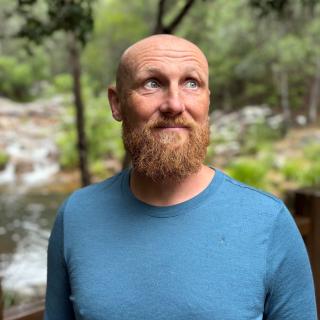
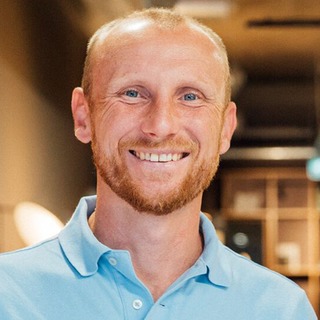
My name is Tomek,
I am a teacher here on InsideTimer,
A scientist,
But most importantly,
Like yourself,
A seeker,
An explorer,
Always interested in those,
Exploring those ideas and thinking,
Talking about the ways to live better,
To feel better and to be better.
Emphasis on the word be.
I am,
After all,
A human being,
Not human doing,
I really like this phrase.
So how are you today?
I'd like to tune in and check the comments.
Oh we have such a wonderful company already.
Hello Leslie,
Hello Monica,
Vicky from Melbourne,
Janet from Toronto,
Sandy,
Nancy,
Very good to see you.
Nancy is my recent patron,
Thank you Nancy for supporting me.
Hi Ronan,
Good to see you.
Diane,
Very happy to see you and to see you and that you are here.
Liz,
Katie,
Charlotte,
Thank you Charlotte for taking your time,
I know it's very late in Europe,
I really appreciate that you stay late to be with all of us.
Oh Caroline,
I'm bringing sunshine from Sunshine Coast,
Very good to see you.
As always,
A couple of my regulars and I'm sure there are a few of you who are here for the first time,
So please raise your hand and say yes I'm here for the first time.
My particular welcome to you joining me for the first time and I hope that you enjoy this session.
Eugene,
Angela,
Susan,
Katie's here,
Beautiful.
Katie says it's pouring here,
Has been for weeks.
Sydney,
Very much indeed,
Has been like that,
Particularly yesterday.
Very,
Very heavy rain and wind and cold.
We are coming into winter here,
So it is normal.
Lisa,
First time,
Fantastic,
Welcome.
For those of you who are here for the first time,
Conscious Living Collective is,
As the name indicates,
About conscious living and I do not have all the answers,
Quite frankly,
What a conscious living is.
I'm still discovering for myself and quite frankly,
Even though I organize those sessions,
I'm very much interested about your opinions,
What a conscious living is for you and through your comments,
Your contribute to this collective.
Collective,
By definition,
Is definitely more than two people,
So I certainly cannot create a collective just or be a collective by myself,
So I appreciate your help.
I appreciate your presence here,
Your contribution.
Good to see you.
I want to thank you.
Thank you to those who also support me on this journey and click that donate button on the top.
That helps me very much as a teacher here on Insight Timer to create this content.
It is simply a work of heart but obviously the financial support matters.
We live in the world where we use money as a form of exchange and energy and that's how I operate as well.
I'm not saying money is not important,
I'm just trying to give it value the way it is.
Don't give it overemphasis on it or under emphasis.
So I do appreciate when you click that donate button and donate money to me.
Seth,
Good to see you.
Oh,
Nima,
Fantastic.
We have a very nice company here today and kind of a tough topic but before you get into it,
For those who are here for the first time,
That's how it goes.
We comment,
We talk and then we meditate because meditation as a practical part of each session is where the rubber hits the road,
Where we can put all those ideas from the realm of intellect and thought into our inner sense and how it feels and that's exactly what we are going to do.
Eugene,
Carline,
Guys,
You are the best.
Carline,
I have to really bow to you because you consistently have been supporting me for years now and I want to acknowledge that in front of all of you.
Thank you Carline for your presence,
For your radiance and for your financial support.
Katie,
Thank you so much.
Anthony,
Perfect time for your live session,
Just finished morning flow.
Good,
Fantastic.
So topic today is inner critic and what is inner critic?
I asked you at the beginning of the session,
I posted a question that it's kind of tough.
I asked you what you often worry about or feel guilty of and I want to start off by explaining what I am guilty of and what I worry about on a daily basis because the reason why I bring on the topic of inner critic is that it's very close to my heart,
Particularly now when times are tough or certainly tougher because of us coming out of pandemic,
Now we start traveling,
The situation,
Economical situation in the world is very uncertain and unstable and all together there's a lot of fear and fear is the substance that feeds the inner critic and what is inner critic?
Let me start by explaining it from a bit of scientific point of view.
So inner critic,
As I call it,
Is a metaphor for a subroutine in our,
Let's call it brain,
But it's entirely the way we learn,
We are bringing.
It's the way we learn to protect ourselves from danger.
Inner critic is there to say don't do it,
You're not good enough,
You're not gonna make it and this is a evolutionary adaptation that evolved literally from reptiles throughout all the lines of evolution to protect us and the most,
The part of our brain where inner critic sits,
It's called default neural network.
It's a big part of our brain that is responsible for processing all the stimuli coming from inside and externally that potentially warns us about nature and that neural network is,
For lack of better words,
Responsible for mulling about all those thoughts,
All those emotions that has a potential of being dangerous.
However,
What most people do not recognize is not a conscious process.
As I said,
It comes as a evolutionary adaptation that is part of us that in the past served its purpose,
Right?
When we're living as a hunter and gatherers,
Our main concerns were survival.
That's what plays an important role to keep us safe.
However,
It's not always,
It's not always as beneficial these days as it was in the past because we simply live in different times.
But just because we live in different times,
It doesn't mean that our brain can catch up with this process of evolution.
As a matter of fact,
The process of evolution as you know,
It's a process that is very slow.
And what we observe these days,
On the contrary,
Is very fast.
The learning curve is very,
Very steep.
So for us to catch up,
So to speak,
With the process of evolution and upgrade our brain,
We have to use different methods.
And meditation,
It's one of the tools of upgrading your brain.
So the purpose,
Thank you so much,
Charlotte,
That's so very kind of you.
So we need to upgrade our brain.
And a way of upgrading is those neural pathways that again,
Act as an antenna for all the stimuli that comes through our eyes,
Through our ears,
Through our skin,
Is to first of all,
Put the layer of understanding.
I think,
And that's my role as a scientist here,
For you,
To bring and give you that layer of understanding why some of those things that we receive unconsciously,
When you feel guilty about something,
When you worry about something,
It's hardly ever a conscious thing.
You just do or you just are worrying.
And then you realize,
You ask yourself a question,
Why am I worrying about it?
And very often you may find that there's not really good reason for it.
And the worry started on its own.
We are not conscious of it.
And that's how brain very often works.
Our brain is not necessarily,
For a good reason,
Interested in what we really want as a we and what we want on a level of being,
Right?
If your brain would constantly ask you for a feedback about your blood circulation,
Digestion,
How to run your nervous system,
How to run all the organs,
Most likely you wouldn't survive in one second.
This is a very important thing.
So this adaptation comes in the package,
So to speak,
Right?
And your brain does a wonderful job in doing so.
However,
We must recognize and for me personally,
The sense of guilt,
The sense of worry that,
Well,
The session is not going to be good enough,
That I don't gather enough support from you,
That you won't listen,
That I won't come across,
That I don't publish enough meditations.
And the list goes on and on and on and on.
It's because we grew up in an environment that stimulated us or has been stimulating us in a very certain way.
And our brain unconsciously processes this information and adapts.
Adapts in a way that is,
Once again,
Not necessarily beneficial towards the way we want to live.
It is not necessarily beneficial towards conscious living.
I find very often that even though the ball is in my court very often,
I do not blame anyone for how I feel,
What I think.
I,
Going out,
I feel or I sense that the stimulation that I receive,
It's not always positive.
You're going to feel a lot of heaviness.
Again,
I mentioned in the beginning,
Coming out of pandemic,
There is a high level of fear and uncertainty.
This comes from all those adaptations that we've taken on unconsciously through our life,
Through our upbringing,
The expectations.
And now your brain,
Again,
Your brain doesn't think.
This is a very important thing.
Your brain is not responsible for thinking.
Your brain processes this information that comes from outside and spits out worries,
Fears,
Guilt,
Shame,
All those things that,
Again,
In the past could serve its purpose,
Keep us safe,
Stay in the cave,
So to speak.
But right now we do not want,
We do not live in cave,
First of all.
For most of us,
If you are here,
It is very unlikely that your main concern is what to put on the table in the morning,
Right?
Your worries and concerns are different.
You want to elevate and go beyond that very primitive construct of inner critic,
Again,
Putting it into neurological terms,
Default mode network that is in your brain that guides that unconscious behavior,
Right?
So we know for a fact,
And most of you already recognize as seasoned meditators,
That those thoughts just keep coming,
Right?
We will sit in a meditation soon and you'll see that even though you do not want it or you never decided or choose to have those thoughts,
Those thoughts will keep coming,
Keep coming because of that conditioning,
Before our past experience,
Before the nature of the brain that anticipates the future.
And I mentioned that many times,
The negativity bias,
As we call it,
Or tendency of your brain to focus on the negative,
Again,
And other evolutionary adaptations,
Every time you think will bring mostly the negative thoughts.
Our brain,
Another wonderful,
I borrowed from Rick Hansen,
That your brain is like a Velcro towards all the negative thoughts and negative stimuli,
And like a Teflon to all the good things.
So that's why we use all those gratitude practices in the evening and the morning to remind yourself that,
Yes,
So many wonderful things happened to you throughout the day,
Yesterday,
And there's so many wonderful things to look forward to.
Because otherwise,
If you leave it just to your brain and to the unconscious mind,
Most likely,
Inner critic will be the most dominant part of it,
Tells you,
No,
Yeah,
You're not good enough,
You're not this,
You're not that,
You can't make it,
You are not worthy,
You are not enough.
So now we're coming back to,
Now we're coming back to a very important part,
That you are not your thoughts and you are not your emotions,
And you are quite frankly not your brain.
Many times during those sessions,
I invite you during the practical part of the session to connect with the inner self,
And the inner self represents that level of existence that is beyond thoughts,
Emotions,
And bodily sensations.
And this is something that is extremely difficult to do,
Because again,
We train very hard unconsciously that part of our brain that is actually responsible and designed to worry,
To send you a feedback that will keep you safe.
So how do you feel about it?
I think I spoke enough.
I want to look for your comments.
Thank you very much,
Seth.
Again,
Guys,
I really appreciate that support from you.
This is really,
Really fantastic that you clicked that donate button.
And through that,
You also support Insight Timer.
You also support Apple,
Most likely,
Or Google,
Because the part chunk of the money goes to them.
But I think many people benefit from your generous contribution.
Okay,
Beautiful.
I can see Nima says,
My inner critic says,
I have failed as a mother.
Nima,
This is,
Again,
I can say with confidence,
What your inner critic says is not true.
Is not true.
I say that with confidence.
I'm sure you are a wonderful mother.
But again,
The conversation that you have with the inner critic,
The part of your brain that is so strong,
I'm not good enough,
I can't make it,
Will keep feeding you that information.
And the reason why we meditate is to disidentify or have a direct experience.
And that requires quite a bit of sitting to realize that we are not our thoughts.
I can say that a million times,
We are not our thoughts.
But unless you sit,
And you have a direct experience of feeling actually,
And disidentifying yourself from those thoughts,
This will keep happening.
And coming back using this very example,
This is why we sit to meditate and use it as a tool to again,
Gain a different perspective on who we are,
And how we live.
And my contribution to it is once again,
As I said,
To add a layer of understanding,
Maybe a bit of scientific jargon to help you,
To help your brain,
To bring your brain on board and says,
Oh,
That's how it works.
And that knowledge combined with direct experience,
We know that's the recipe for wisdom.
You learn,
That's how you learn,
You evolve about the primitive instincts that still,
Still guide us very often through our life.
Most of us,
Including me,
Are unconscious.
I've heard that by the way,
The voice of inner critic,
I hear it on a daily basis.
I dare say I hear it on a minute to minute basis.
And I very often succumb to its whispering.
Yeah,
This is going to be tough,
You shouldn't do it.
And every time I succumb to those inner thoughts,
It brings me down.
On the level of being,
There's something inadequate.
And that in it for maybe imbalance,
I cannot pronounce the word inadequacy.
Sorry,
Correct me.
But I hope you know what I mean.
That sense of imbalance comes from there's on the level of being,
There's something that pulling you towards being.
And on the level of your behavior,
And ego personality,
And limiting belief system,
There's something pulls you that way too.
And the discomfort and suffering comes from that discrepancy.
You're being pulled apart by two parts.
One want to be yourself,
And one want to satisfy what,
Say,
Maybe society wants from you.
What the expectations are.
Again,
Expectations that we all created.
These are expectations that are not real.
As Nima says,
Something tells me I'm not a good mother.
I know for a fact,
Nima,
We had on Patreon,
We had a couple of sessions.
I know for a fact you were a good mother.
But that doesn't stop your inner critic from telling you so.
And in the moments like that,
Actually my teacher,
A technique that I use,
In the moments where that happens,
I use a four-step technique.
First of all,
I recognize and give a name to it.
Oh,
There you go,
Inner critic.
For those of you who listen to me,
I have a couple of different names for different traits in me.
There's the professor,
There's an inner critic,
And they keep whispering different things.
But the first step of my routine starts with awareness.
It starts with recognizing.
Oh yeah,
There you go.
Sometimes I put a little bit of humor on it.
Like,
Oh yeah,
We've been there.
I've heard you a million times.
And now,
Oh yeah,
You are there.
I'm not trying to switch it off.
I'm not trying to reject.
I just recognize that thought.
I put a little smile myself,
Recognize this happened a million times before.
And the second part of it is to step aside.
And again,
Awareness kind of connects with it.
Yeah,
Okay,
I've heard that thought.
I've heard that thought.
And now I step aside.
And if the emotions that coming out of the inner critic are very strong,
I try to feel them in my body.
I did a somatic work.
It's a nice word to describe what do I do.
So I disconnect from my thoughts,
Bring myself to the level of bodily sensations.
And usually I can feel it in my stomach.
I can feel connection with my throat.
There's a bit of tightness.
But already on the level of sensations,
There's no much room left for thinking,
Again,
To feeding that inner critic.
And now I've become very proficient with it.
So I only can feel the emotions.
And I only feel the bodily sensation.
And this way,
It's much easier actually to be.
Bodily sensations,
The intellectual connotation is not that strong.
And obviously,
The inner critic comes back and starts feeding me the thoughts.
But I already am in a state of awareness.
And that awareness dissolves that connection between thoughts,
Bodily sensations.
Also,
If that state is very strong,
If I'm angry,
Upset,
In a state of high anxiety,
Which I know you experience because you're listening to my SOS,
Help for Stress and Anxiety,
One of the most listened meditations I created.
I know when you're in this time,
In your situation like that,
It is not always enough just to close your eyes.
And so I suggest 4-7-8 breathing technique.
I think so many meditations that I publish include that technique because it's very useful.
It downregulates that part of your nervous system that feeds that inner critic and works hand in hand with it.
And then once you start breathing,
And then the connections,
The body sensations are stronger than you within your body.
And then when your nervous system comes down,
Again,
You instruct your nervous system through this 4-7-8.
Okay,
It's time to relax,
To come back to balance.
And only then,
When you're,
Again,
The high emotional thinking is switched off more,
You can kind of recognize what happened.
And like,
Yeah,
And integrate the experience and learn from it.
Okay,
I did not listen this time.
I took actions and steps,
Used that four-step protocol.
Awareness,
Which is recognize,
Step aside,
Use either come back to your body,
Either through breathing or simply awareness,
And then reconcile the whole experience and and put a different spin on it.
All right,
It was just an inner critic,
It's not me.
I can see Janet says,
I'm going through a very difficult marriage separation.
And my inner critic,
It's so,
So on overdrive,
Especially on guilt,
Because of the effects on my teenage kids.
Thank you,
Janet,
For sharing this difficult experience.
And first of all,
I obviously,
I'm very sorry that it happens.
And this is maybe important lesson for us.
We are not alone in experiencing the works of inner critic.
And it is very important to share those experiences,
Because I'm sure you are not alone.
There are many mothers that experience the very same sense of guilt going through a difficult time.
And being in a collective like this one,
Where I can already see wonderful comments of support.
It is important.
It is important.
And then only then maybe when you experience the sense of support that you're gaining from all of us,
It's time to,
Again,
Put those thoughts into perspective.
So that protocol I introduce you to is a way of putting perspective on things,
Right?
I am not my thoughts.
I am not my emotions.
I recognize I am a good mother.
I did a good job.
And I make amends.
And now I'm letting go of that.
Okay.
And that,
By the way,
Everything I talk about,
It takes practice.
And imagine that I'm training my inner critic a couple of hours every day.
And then I sit in 20 minutes meditation and have that expectation that the 20 minutes meditation will amend all the time I spent training my critic for years and years and hours per day.
That's simply unrealistic.
That's why I suggest to myself and to you to include those meditative practices on a moment-to-moment basis.
Do not wait for your morning or evening meditation.
Recognize those thoughts,
Those toxic thoughts that inner critic feeds you with.
Recognize them moment-to-moment basis and put a stop to them.
You don't need to listen to them.
You are not your thoughts.
I'm going to say that again and again.
Put that as they start.
And when you learn to catch yourself,
It's a skill.
It's not something that you have.
It's a skill that you practice.
If you learn to catch yourself more often,
Catching the inner critic when it starts,
It's much easier to recover.
And you create an environment when again you cut the source of that toxic thoughts that pollute our mental environment.
And as a fact,
Makes us tired,
Bringing a lot of kind of the low vibrational energy to our life.
Liz,
To anyone in the community here who are going through difficult or sad feelings,
Emotions and thoughts,
I'm sending you a virtual hug and support.
Be kind to yourself and treat yourself well.
Also with self-compassion and self-love.
Know that you are strong and brilliant.
You are deserving of this.
And there are many emojis of love,
Rainbows and whatnot.
Thank you so much.
I think I'm jumping on board of those beautiful wishes from Liz.
And let me just explain that that's what this collective is about.
We live in times where even though we have technology that connects us,
The chances of connecting real life actually diminished.
And this is my way of connecting with you.
This is my way of trying to say,
Yeah,
Come on board every week.
I'm here every week for you to bring you together so you can feel a bit of relief,
Quite frankly.
It's not about hard work and talking about neuroscience and trying to understand,
But get a bit of relief from the sense of community and also from the sense of practice that we sit together and you can do that effort to bring yourself to your thoughts.
Let's talk to yourself as you do to someone you love.
Beautiful.
By the way,
I may have missed some of the comments that were streaming throughout this session.
So if you have any questions that you wanted to ask me,
Please direct them to our group,
Conscious Living Collective,
That you are welcome to join.
And I can answer them or I can answer them there.
Or you can send me a private message.
I'm always happy to answer those.
If you're really committed on your path to growth,
To self-development,
You can always book a session with me here on Insight Timer,
Mentoring sessions that I offer,
And work with me one-on-one.
This is quite frankly the fastest,
This is the fast track to take it to the next level.
We meditate together,
We put a personal spin on what you're going through and try to figure out all those things that sometimes it's difficult to do it on your own,
Even when you read a lot and understand a lot,
Have big knowledge.
So we're putting that into,
We're putting that hard sense connection in those mentoring sessions that again elevates us to the next level and bring that wisdom out of all the knowledge that we already possess.
Once again,
I want to thank you so much for your kind support.
Thank you so much for clicking that donate button.
If you find,
Do it only if you find those sessions beneficial.
If you find something,
You have a sense of relief,
Have a sense of heart connection,
If you understood something,
If you have an insight,
Then you're welcome to support me,
My work,
And all the teachers on Insight Timer through that donate button.
Thank you so much for that.
I already see so many of you chose this option.
Thank you so much.
Laverne,
I'm having to practice self-forgiveness like a medium.
I'm having to practice self-forgiveness like a medicine in order to work through some self-aversion and trauma.
Laverne,
Thank you very much for sharing that.
It is,
A meditation is a form of medicine and I'm saying that not in a esoteric way.
I'm saying that in a very practical way.
It is a known fact that when you meditate,
You engage that inner medicine cabinet in your body.
A lot of substances that we often take externally are being produced within our body at any given moment and this inner medicine machinery can be switched off by again directing your thoughts to the present moment,
Giving yourself loving-kindness,
Loving-kind,
Loving-friendliness,
And compassion.
All those things are there to support us and you produce these wonderful and powerful medicines internally in your body.
So there's a saying,
Kind of quirky,
That says one meditation,
Two meditations a day keep doctor away.
I think it is self-medication.
I call meditation self-medication because I know for as a scientist,
I know for a fact there are so many supportive substances,
These beautiful biomolecules that are being produced when you meditate that support our process of healing,
Rejuvenation,
Distressing,
And so on and so forth.
Most of the people are not aware of it.
Again,
The self-meditation as opposed to self-medication,
It is not always easy,
It requires effort,
But again this effort is very well invested and pays off in that very form.
James,
So so much,
Thank you so much for your support,
Beautiful.
Our body is incredible,
That built-in medicine cabinet is amazing.
Exactly,
Katie,
Thank you so much.
I'm glad too that so many of you actually have already that understanding and that awareness,
That's exactly what happens during those times.
Okay,
I think it is time to meditate and to connect once again.
The whole purpose of Collective is to have a sense of connection,
Sense of belonging,
Sense that you are not alone with what you experience and how you feel.
All right,
I want to invite all of you to really recognize that before you take your meditation to really recognize that before you take your meditation posture and before we get in or go in.
The saying I think during pandemic that become very famous,
If you cannot go outside,
Go inside,
And that's exactly what we are going to do.
We are going to,
First of all,
Engage that medicine machinery that supports our health and well-being by drawing attention in and being in the present moment.
Second of all,
We will recognize the inner critic that will inevitably come on board every time you try to do it because your inner critic will leave you alone just because you want it.
You will have to recognize him and simply recognize him for what it is and put him on the passenger seat.
The car that you're driving,
You are behind the steering wheel,
You are driving it,
And when it's inner critic,
In my case,
The professor,
I put him on the back seat or on the passenger seat.
He's like,
Yeah,
You can drive with me,
But you cannot get control of this car.
I'm driving it.
So you recognize that.
You're going to have first an experience of how it works and then go deeper and experience that sense of relief and what is possible during meditation practice.
Ah,
Victoria,
It's my first few minutes using Insight Timer ever.
It is an amazing platform.
Thank you,
Tomek.
Victoria,
You are an ultimate first timer.
I want to extend a very warm welcome the first few minutes of Insight Timer.
You found our session here of Conscious Living Collective.
We are meeting every week.
So please join us.
And for those of you who want to use my meditations that very often talk about inner critic,
I have quite a few meditations on the critic on Insight Timer.
Please feel free to do so.
Yes,
Our regular Charlotte already welcoming Victoria to our wonderful group.
I hope you can join us more often.
Good start.
So right now,
Without further ado,
Let us meditate and embrace everything that we spoke about.
Thich Nhat Hanh in his meditations and teachings talks about putting a gentle smile on you before you start meditating.
And I think in the spirit of self-compassion,
Self-awareness and self-love,
Let's do that.
Let's do that.
Like Thich Nhat Hanh put that little smile on you and recognize that in spite of what your thoughts,
Feelings,
Emotions are telling you,
You are loved,
You are worthy and you are enough.
And even if it doesn't seem like that on the level of thoughts,
Emotions and feelings,
We choose to travel deeper under the superficial layer of our ego personality,
Below the layer of our thoughts,
Below the layer of our emotions and feel empowered to make a conscious effort to come back to the center.
The center may be represented physically as some space in the middle of your chest or any other place in your body that you choose that you can come back to.
And however you feel,
Whatever are your circumstances,
This is a great place to start.
Remember that practice of awareness coming to the present moment does not apply only to the moment where you feel either very happy or very sad,
But it applies to any moment.
You do not try to change how you feel,
You simply apply your awareness and attention to the current state and allow the awareness to do the transformation.
Very simple but not always easy.
It is however easier because we are together and feeling supported in this way makes everything easy or easier.
I want you to recognize that.
And then,
If you wish,
You may support this process with conscious breathing,
Or like me,
To recognize and release any tension that may have been hiding.
You may take a deeper breath at any point of this meditation,
And within the stillness of this present moment,
Recognize any thoughts,
Emotions,
Or sensations that may try to take you away from this present moment,
Try to take you back to your mind.
That's the inner critic at work,
That's the overstimulated default neural network in your brain,
Always there trying to control,
Trying to be dominant.
But because you are at ease,
You are supported by our group,
It is going to be easier to say no to this primitive adaptation and say,
I am not my thoughts,
I am not my emotions,
I am not my feelings.
You are not angry,
Sad,
Or anxious.
You are experiencing emotions of sadness,
Anxiety,
Stepping aside,
And connecting with the deeper layer of being.
And very often the road within is bumpy,
It's interrupted,
Not necessarily smooth particularly at first,
But we choose to take it anyway because it is the guidance that we receive from within,
The pull towards true self,
The perspective from which we simply observe thoughts,
Emotions,
And sensations as opposed to being those emotions,
Thoughts,
And sensations.
A quality that you may want to take with you on this journey is patience.
According to the professor of neuroscience,
Jill Taylor,
It takes 11 minutes for those biomolecules of stress to be flushed out from our system.
So patience very often is important as we engage the inner medicine,
Positive biomolecules,
Or biomolecules that stimulate us in a positive way.
You must recognize there are still quite a few of those biomolecules that represent stress,
Anxiety,
Sense of alertness,
And recognize those in this meditation,
Patiently coming together below all those superficial layers.
And now to conclude this simple meditation,
Recognize that energy within you,
That potential that you can access throughout your day,
Recognize the possibility of being more yourself in any situation,
Not only during the meditation time.
And when you're ready,
Open your eyes and welcome back.
And welcome back.
I'd be curious to know how you feel right now.
Maybe put that in the comment section in one word.
I can put more than one word in this meditation and experience I had sitting with you here.
Expansion,
Joy,
Tingling,
Very,
I dare say,
High vibrational frequency.
Very high vibrations or high frequency.
Katie chilled.
I love it.
Sandy relaxed.
Victoria blessed.
Beautiful.
Janet relaxed.
Anima says,
Surely want to revisit as I got distracted by my dogs.
Charlotte feels uplifted.
I share that feeling.
Yeah,
That's a beautiful way of putting it.
I also feel very uplifted through this meditation.
Eugene feels at peace.
That's so good.
Okay.
Anami feels more in tune with herself at this very moment.
Take it all in.
Feel it in a very tangible and practical way.
I always invite you to,
At the end of each meditation,
Take a mental note.
There are many teachers that teach journaling here on Insight Timer.
You may use the advice and just scribble something on a piece of paper in a positive,
Reinforcing,
Empowering way.
Every time you finish meditation,
That's how you create,
Not create,
Reinforce those neural pathways that take you away from the inner critic.
Again,
Those neural pathways,
They take you in the opposite direction to inner critic,
And reinforce those connections as well.
Be more sensitive towards the positive and not only towards negative.
We're almost on the 50 minute of the session,
And I want to thank you for your support.
I can see the hearts.
I can see you clicking the hearts,
And they keep floating.
I hardly ever pay attention to it,
But it looks actually so nice.
I also send you my warm feelings and my heart,
So to speak,
In this session.
I hope it was beneficial to you as much as it was to me.
I must say I had a lot of joy sitting with you and listening to your stories,
Seeing your comments and your contribution.
I really have felt that sense of support from you,
And even though you're very far away physically,
Emotionally,
Mentally,
We were all together in this session.
So once again,
I want to remind you,
If you found something beneficial during this session,
If you wish to support me and my work,
Please click this donate button.
It's a price of a coffee,
I guess.
You can shout me a coffee if you want to call it.
Through that,
You will support me,
Insight Timer,
And all the teachers here in the community.
It is very much appreciated,
So thank you for that.
For those of you,
Once again,
Who enjoyed the session,
We will gather next week talking about essential practice of awareness.
Pretty much every single session touches upon that,
Because it's the essence,
It's the most important tool that we use without which nothing happens.
But I will explain a bit more and we will practice more what is essential practice and how awareness,
What's the role of awareness there.
So,
Yeah,
I look forward to seeing you next week.
In the meantime,
You are welcome to use all the free meditations,
The library of almost 100 meditations that I have on Insight Timer,
Quite a few of them on the topic of Neocritic,
Help you to have the direct experience of it and work with it.
Again,
Recognize for what it is,
Put it in the driver's seat on a moment-to-moment basis.
Okay,
So for now,
Thank you,
Have a pleasant day or restful night wherever you are,
And please come to Insight Timer to see me there,
Follow me if you wish,
Click the notification button to receive all the recent notifications,
And otherwise,
I will see you next week,
The same time,
The same place.
Until then,
Bye-bye.