Fresh starts.
Do you believe in fresh starts,
Chris?
I do.
I've had multiple fresh starts in my life and always for the better after I got through them.
Yeah,
Those of us in recovery certainly believe in fresh starts because suddenly there's a day where it's like everything sort of changes,
Right?
14 years ago for me was the last drink.
So yeah,
We can make big changes.
I can also think back about seven years ago to kind of when I became a steady meditator and helping people find that fresh start and making those consistent long-term changes in their life is what I do in the One You Feed personal transformation program.
So if you're looking for a fresh start in 2021,
Go to EricZimmer.
Coach application and sign up for a 30-minute call with me and we'll talk about whether I can help you or not.
No pressure,
No hard sales,
Just an opportunity to talk about you and your life and see if we're a fit and I'll make sure that you get some information that's helpful to you either way.
That's EricZimmer.
Coach application.
If I think about it,
All of those spiritual traditions that I was so gleefully engaging over all those years were mostly ugly masculine paradigms.
The texts were written by men for men.
Welcome to the One You Feed.
Throughout time great thinkers have recognized the importance of the thoughts we have.
Quotes like garbage in,
Garbage out,
Or you are what you think ring true.
And yet for many of us our thoughts don't strengthen or empower us.
We tend toward negativity,
Self-pity,
Jealousy,
Or fear.
We see what we don't have instead of what we do.
We think things that hold us back and dampen our spirit.
But it's not just about thinking.
Our actions matter.
It takes conscious,
Consistent,
And creative effort to make a life worth living.
This podcast is about how other people keep themselves moving in the right direction.
How they feed their good wolf.
Thanks for joining us.
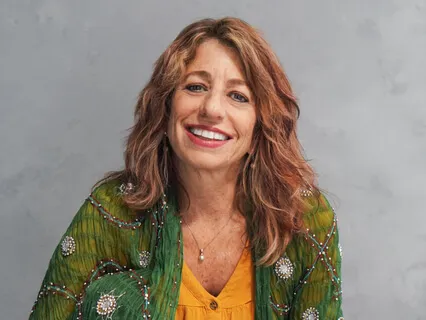
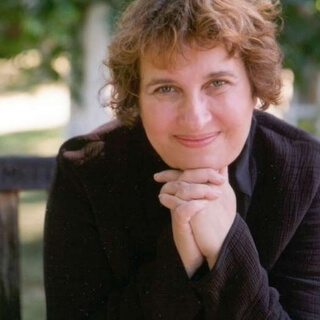
Our guest on this episode is Mirabai Starr,
An award-winning author of creative nonfiction and contemporary translations of sacred literature.
Mirabai taught philosophy and world religions at the University of New Mexico Taos for 20 years and now teaches and speaks internationally on contemplative practice and spiritual dialogue.
Her latest book is Wild Mercy Living the Fierce and Tender Wisdom of the Women Mystics.
Hi Mirabai,
Welcome to the show.
Thank you so much Eric.
It's wonderful to be with you.
Really,
Truly wonderful to be with you.
Well,
It's such a pleasure to have you back on.
We talked several years ago about your previous book to the one we're about to discuss and then you and I also got to talk in March as we headed into the coronavirus crisis.
Today we're going to discuss your most recent book called Wild Mercy Living the Fierce and Tender Wisdom of the Women Mystics.
But before we start,
Let's start like we always do with a parable.
There's a grandmother who's talking with her granddaughter and she says in life there are two wolves inside of us that are always at battle.
One is a good wolf which represents things like kindness and bravery and love and the other is a bad wolf which represents things like greed and hatred and fear and the granddaughter stops and she thinks about it for a second.
She looks up at her grandmother.
She says well grandmother,
Which one wins?
And the grandmother says the one you feed.
So I'd like to start off by asking you what that parable means to you in your life and in the work that you do.
First of all,
I love Eric that you made it a grandmother and a granddaughter.
Thank you for that for lifting up the feminine and I feel like it actually changes things that you did that because there are these kind of masculine values that we don't even notice that we buy into.
That courage for instance,
We often think of this sort of masculine warrior figure that's charging forth with this sword outstretched and that's bravery and a feminine version of this wolf parable would be much more aligned I think with lifting up values of cooperation and mutual empowerment and creativity and also even even values like kindness like loving kindness and tenderness and mercy would be not always sweet and mild but sometimes ferocious as the sacred feminine is.
You know,
She has those qualities of fierce truth-telling that cuts through illusion and doesn't put up with injustice or with unkindness or with hypocrisy.
So I guess what that parable does for me is it reminds me that my commitment to those values that I think of as feminine values of loving kindness and fierce truth-telling do not necessarily always mean that I have to go along and make everyone feel okay about what's happening.
It sometimes requires feeding the good wolf,
Sometimes requires being fierce and protective and wild.
Yeah,
I love the word fierce.
I think it's such a great word.
Particularly when you marry it with fierce and tender wisdom,
You know,
Wisdom being both fierce and tender.
I think wisdom needs both those qualities.
Right.
The classic Bodhisattva of Manjushri and his flaming sword,
Right?
He cuts away delusion and yet there's a tenderness that we have to have to this.
You've got a great line fairly early in the book.
You said,
I believe in the healing energy of the feminine as a fire that can melt the frozen heart of the world,
The artistry that will mend the tattered web of interconnection.
Thanks for pulling that line.
I remember very well writing it.
Yeah,
The tattered web of interconnection.
Thank you for that.
I thought maybe where we would go from here would be to have you tell us maybe a story or a little bit about one of your favorite women mystics.
I'll let you pick.
I'm not gonna choose.
But just tell us a little bit maybe about her life and what about her matters to you.
Because there's so many great ones in the book.
I thought we'd pull a couple of them out and bring their stories into the conversation.
Wonderful.
Well,
Just intuitively and spontaneously since I wasn't prepared for any particular questions,
I will talk for a moment about Rabia,
Rabia of Basra,
The 12th century Sufi mystic who lived in what's now called Iraq.
Actually,
I'm thinking,
I think she was actually 9th century.
I think Rabia was quite ancient,
9th century.
And she lived in a very poor family,
So poor that one by one it seems that her family members each died.
We don't know exactly what happened.
But somehow she ended up orphaned at a very young age like 12 just wandering the streets and begging and became an easy target for slave,
What would they be called,
Eric?
Traders?
Slave traders.
And she was scooped up and snatched and brought to live in some kind of household,
Possibly even a brothel.
We don't know for sure.
And she worked hard and endured much abuse for several years,
But had this deep sense as I think many of us do when we're young of spiritual connectedness and yearning.
And so she would work all day and then she would pray all night.
And one night the person,
The man who owned her heard some kind of sort of ethereal but also almost animal-like sounds emanating from the courtyard.
And he looked out of his upper story window and down into the courtyard.
And there he saw Rabia in prayer prostrate on the cobblestones of the courtyard.
And there were flames leaping from the top of her head.
And he listened to her cry out to Allah with all her heart and saw the fire increase in intensity with the power and passion of her prayer.
And he didn't know what to make of this.
And he grappled all night with what he had seen.
And in the morning he went to her and he said,
Rabia,
I realize that you are a great,
Powerful spiritual being.
And so I would like to offer you two choices.
You can either have your freedom and do whatever you need and want to do.
Or you can stay in our household and we will all take care of you and you can have students and disciples come and we'll take care of them too.
And this will be your house of worship.
And she chose to go.
And even though she was offered resources,
She didn't go to a nice house in the city.
She plunged into the desert and lived alone for many years in the desert.
Said that she had a brick as her pillow and she had one chipped vessel in which she received and carried and drank water.
And then the same vessel was used for food.
And people would bring her these things and visit her in the desert and everybody wanted to be her student.
But she refused to accept students because she didn't want to buy into the power of being an important teacher.
She just wanted a full-bodied,
Direct and personal relationship with her divine beloved.
Who was not a romantic figure like God is for other mystics that we could talk about.
God was this kind of uncompromising beloved who demanded no less than everything of us.
And so everyone who did come to learn from Rabia was subjected to that same rigor of spiritual communion with reality.
Direct experience of reality.
So Rabia is my favorite fierce,
Feminine mystic of the moment.
I was going to say I could see why you chose her given that we were talking about being fierce.
Yeah,
Yeah,
I think that's why.
And also she's just on my mind and heart these days with.
.
.
I mean I think what's required of us in these times is a certain kind of naked grappling with what is.
Like we can't just spiritually bypass our way out of the realities of the moment.
The COVID-19 pandemic,
The incredible divisiveness and gulf and chasm that separates the United States,
The country that you and I both live in.
Social unrest is intense and extreme as it should be right now.
And so a lot of the spiritual belief systems that many of us have subscribed to over the last 20 or 30 years are not holding up.
They're crumbling like so many structures are crumbling right now.
We can't just think our way into prosperity or just the power of positive thought is not enough to meet the power of this moment and what it requires of us.
That sort of manjusri or kali,
What I'm interested in right now is what seems to be required.
And yet I also adore the women mystics who were much more rooted in poetry and peacefulness.
Some of these spiritual belief structures that you feel like are not serving us well.
You elaborated just a little bit on one of them,
Which is sort of the idea of the power of positive thinking or the idea of manifesting.
I can just think about something and make it come true.
Are there other ones that you think that we've been living with for a while that are of less use in today's world?
So glad you asked that question,
Eric.
One of them that I find to be problematic now,
Even though philosophically I'm aligned with it,
Is non-duality.
So there's a very popular spiritual movement that I think is drawn from an ancient Indian tradition of Advaita Vedanta,
Advaita Vedanta,
The path of non-duality.
Where the understanding is that we are already one with the one.
There is no separation.
And so yearning for union,
Which is at the heart of all the mystics really,
Is this burning yearning for union with the beloved,
With God as love,
Is an illusion.
And so therefore devotional practices would also be in some sense delusional.
Or they would take us away from the truth of our not-to-ness,
Our non-duality,
Our essential unity with reality,
With divine reality.
The problem that I find with that,
To me that's a very masculine paradigm that is kind of predicated on this understanding that duality is an illusion.
And therefore our bodies and our sense of individuality is delusional.
And the temptation there,
I feel,
Is to then check out of the human condition.
We're all just one.
So for instance,
Black Lives Matter.
Like why are these people so angry,
You know,
About injustice?
Don't they realize we're all one?
People tell me all the time,
Because I emphasize,
You know,
Kind of waking up from the coma of white privilege whenever I get a chance.
And people say to me,
But we're all one.
You know,
I don't see color.
Color is just an illusion.
Race isn't even real biologically.
Yes,
I know.
Biologically speaking,
There is no such thing as race.
And in the real world of human society,
Not only is there such a real thing,
But people suffer terribly as a result of those false constructs.
And it's the same with masculine and feminine.
I can't tell you how many guys,
Usually white dudes,
Say to me when I talk about wild mercy.
There's always someone in an audience who says,
But God,
Mirabai,
They usually are mansplaining me.
God is beyond gender.
Maybe you don't know that,
Mirabai,
But actually God is beyond gender.
And it's just the same.
It's like,
I don't see color.
All lives matter.
It's the same bullshit.
It's the same thing that opens us up to thereby treating other beings as if their pain is not real and doesn't matter.
And not doing our work of mending the broken world,
You know,
In Judaism,
That beautiful term tikkun olam in Hebrew,
To mend the world.
Like,
That's what we were born for.
Even my beloved teacher Ramdas,
Who died almost a year ago now and whose death I'm still grieving,
Says yes,
In the big cosmic picture,
Everything is perfect.
All is one,
Sub ek,
Is what our guru Maharaj said,
Sub ek,
All is one.
And here in this fleeting human life where we are for just two seconds,
For a very short time,
There is suffering and our curriculum,
Ramdas says,
Is to alleviate it.
Yeah,
I think this is one of the biggest challenges to talk about well in spiritual life is exactly what you're saying.
That on one hand,
Yes,
Everything is perfect and one.
And at the exact same time and in equal measure,
We live in this world and there is suffering and that suffering is real.
And my experience has been,
And I think about this one a lot,
Particularly over the last year,
It seems that if people get too oriented to one side of that,
They can get lost.
We can get lost,
Right?
It's all one.
It's all fine.
No big deal.
You know,
Out beyond right and wrong,
You know.
There is a feel.
Yeah,
You know,
The roomy quote,
Right.
You know,
So that breeds callousness if taken too far.
And yet what I see in so many activists,
Who I respect immeasurably,
Is all that is seen is the problem.
And it seems so intensely and it seems that the people that can have both.
I look at people like a Martin Luther King or a Gandhi or other people,
Those people really seemed to live both those sides of it.
They really seem to say,
I do have a broader vision that the world is unified and there's this deeper sense and I'm fiercely committed to the problems of the world.
And I bring those two things together in some sort of blending that gives me the strength to do what I need to do.
Exactly.
Because otherwise it's soul sapping as you were referring to with the activists that you know and respect.
You know,
Just that burnout is such a real thing because when you get into that dualistic thinking of the victims and the perpetrators and that's all you see,
Then it just takes away your energy.
And it's so individualistic too.
Often it's a feeling of I have to do something instead of realizing that we can only do it together.
So yeah,
It's almost like I'm listening to you speak and I'm thinking that to be a non-dualist and a fierce advocate for humanity and the earth at the same time.
So it's not like the whole philosophy of non-duality is meaningless.
It's actually hugely helpful when we're stepping up to mend the world to be resting in that oneness.
But it needs to be I think a felt sense like an experience of oneness,
Not an idea.
That's where I think it gets dangerous when we just buy into these concepts without experiencing them in our bones.
Yeah,
That can be a hard one to feel and experience.
It makes me think of a couple of other ones,
Right?
One is that one of the things I love about Zen is form is emptiness,
Emptiness is form.
You can't separate the two.
And they'll say in Zen,
If you get stuck on one side of that,
You really need both.
And then I was also thinking about also some of it comes down to,
I think,
In classic Hindu texts,
This idea of these different types of yoga.
You know,
Raja yoga and Bhakti yoga and saying that,
You know,
For some people just being able to appreciate the divine is this formless thing that works for some people.
And for some other people,
That doesn't work.
We need to put it in the human form that can be loved.
So I think some of it's maybe not,
At least for me,
Some of it's not getting too far over to one side or the other,
The middle way.
And then the other is sort of knowing tendencies,
What tends to be more effective for me.
I love that you're bringing this up,
Eric.
I feel the same way.
And the yogas are a beautiful example of spiritual temperaments,
I think is what you're talking about.
Some of us have a more sort of intellectual contemplative temperament,
And some are more karma yogis and actives.
And those are the ones often that are the activists that are doing seva,
Loving selfless service.
And then Bhakti yoga is kind of the biggest basket,
You know,
That most people can relate to this heart centered desire for connection with God in a loving form or the supreme reality or whatever you might want to call it.
And other people are more drawn,
Like you said,
Like Raja yoga.
I call it the spiritual fireworks,
You know,
To altered states and exalted states of consciousness and so on or even just the asanas to physical postures.
That's a kind of temperament.
Yogas are all paths to union.
They're all yolks that connect us with the divine and we're and I love that about Hinduism,
How generous it is that we're all different.
Yeah,
And it all counts and all the other religions have their medicine for us Hinduism is probably the most tolerant.
The other Hindu idea that I've always loved since we're talking about them is this idea that as you move through your life,
There are different activities that are appropriate to certain phases of life.
You know,
I've just always thought that was really interesting because it sort of says like,
Well,
You know,
When you're in your 30s,
As an example,
Taking care of your family and creating a living,
That's part of your spiritual life at that time.
You know,
And then as you get older,
You you have more time to devote to more of a spiritual life.
And I think it frames it all under the context of it's all a way of being of service to God,
But it doesn't make it sound like there's something wrong with being engaged in the world.
Yes,
Exactly householder yoga.
Sounds like you and I love the same dude,
Houston Smith.
Am I right?
Yes,
Yes.
That book is such a masterwork.
Nothing else has been written like it.
I tried I wrote a book called God of Love,
A guide to the heart of Judaism,
Christianity and Islam,
Just the three Abrahamic faiths anyway.
And I tried to follow in Houston Smith's footsteps,
But they're too big.
You did a lovely job.
I am just wrapping up a 18 month interfaith spiritual direction training program.
You are?
I am.
And your book,
God of Love was one of the texts.
Oh,
That makes me so happy.
Wow,
You're just wrapping up.
Can you say more about it?
It's through something called the spiritual guidance training Institute and it's inter spiritual interfaith spiritual direction.
It's been a good program.
It's been interesting because my instructors are going to hear this and roll over.
I'm going to get a phone call in like 20 minutes.
But on one hand,
I would say I did not learn very much.
If I interpret learning as cramming more things into this brain.
Yeah.
Because I've been reading about and studying this stuff.
And for a long time,
I've interviewed 350 some people.
I mean,
I just,
It would be hard for there to be something like,
Oh,
I never heard that before.
So in that way,
Did I learn?
But if I if I interpret learning as going deeper into things,
I would say it's been a very powerful program.
Yes,
Beautiful.
Yeah,
I'm sure it will enrich many people.
But you're doing this.
Yeah,
It's been interesting.
You know,
Most of the work I do with people is one on one work I've done up till now is coaching work and spiritual directions,
A different type of work.
And so I've done some of that I've got a program called spiritual habits that we've run a couple times.
And I always am sort of in a mindset of like,
I want to get better at what I do.
And this just seemed like another very interesting avenue to pursue.
Beautiful.
All right,
We were talking about Raj yoga,
Hinduism,
I want to circle back to another of the favorite things that you've ever expressed that I've heard is this idea of inter spiritual,
Right?
I use the word interfaith and inter spiritual.
They're not the same thing.
Exactly.
But we're not going to go into that right now,
Because I just don't think the distinctions that important given our limited time.
But there are people who move around through the different traditions.
A lot and they take practices here and they take practices there.
And oftentimes that's thought of as not being ideal,
Whether it's from a really extreme not ideal,
Like you're going to hell for that.
Or it's more of a you need to go deeper in one area.
The analogy that's often used is that going around and trying lots of different practices or traditions is like digging a lot of different wells and only getting 10 feet deep in each of them.
But you sort of took that analogy and spun it on its head.
Tell me a little bit more about kind of how you took that analogy and your thoughts on all of this.
I have so much to say about this.
And it's so alive for me right now,
That it's going to be challenging to distill it.
First,
I will say that I feel like that drawing from many different spiritual traditions is like trying to get to water by digging many shallow wells that that charge is,
Is not only not true,
Has been weaponized to harm people like me,
Or people like many of you who are listening right now in this campfire circle that we're gathered around,
Who have an inter-spiritual temperament,
That you are more like I,
I would almost say naturally or innately suited to like a bee draw nectar from all the flowers of the human spirit.
And that it is almost a violence against your soul to pick one tradition to the exclusion of any of the others almost feels like a,
Like a violation of a covenant with God.
Like,
I'm going to exclude you,
Beloved from all these other places and only pay attention to you in this one.
So that's how I feel.
And I've heard beautiful analogies,
Like inter-spirituality is more like cross training where you're,
You know,
You're using all the different parts of your body to develop a robust life,
Or what else?
You're digging one well with many different tools.
I love that one.
Yeah,
That's a good one.
So all of that resonates much more with me,
You know,
From a very early age,
Young teenager,
I was exposed to many different spiritual traditions,
Particularly Hinduism,
All the different schools of Buddhism from Zen to Tibetan to Vipassana,
Three different Sufi orders,
Native American traditions from my home of Taos,
New Mexico,
Where I still live,
And Jewish mysticism,
Christian mysticism,
And they all felt equally true to me.
And I still on a daily basis,
In my own practices,
Engage many of them,
If not all of them,
Or certainly on a weekly basis.
However,
Eric,
I am feeling right now that my lifelong inter-spiritual proclivities are rooted in white privilege,
And that I have the luxury or the privilege of drawing from these different spiritual traditions that are rooted in other cultures that come from other cultures,
Without necessarily honoring the spiritual traditions.
I think that I am,
But am I?
So that's what I meant by this is a very living question for me right now.
It's very alive for me in light of kind of thank God collective awakening around white privilege and unconscious white supremacy.
Like,
Wow,
I've been not only living an inter-spiritual life for decades,
But teaching about it and telling people that this is your birthright to draw from all of these different spiritual traditions.
And now I'm wondering,
Have I just in many ways been diminishing my own humanity by ignoring the,
I don't know,
The sanctity of like,
Where does appreciation veer into appropriation?
And I don't know if I'm doing that or not.
And I don't know if I'm teaching that or not.
But what I do know is I'm making the question public.
And I'm doing that with you in this moment.
Yeah,
And I think sometimes that's the best we can do.
I often wonder about that question,
Appreciation versus appropriation in various areas.
I think it's a tricky question,
You know,
I think,
By some of the definitions I've heard of the difference,
It would seem to me you are in appreciation.
You're always very clear about where things are coming from.
You're very clear about the source,
You're very clear about,
You know,
Context within a certain point.
But again,
Everybody has to arrive on those things,
Kind of on their own.
This question for me has been alive over the last two years in a slightly different way,
Because as a lifelong inter spiritual practitioner,
Just like,
As long as I can remember,
I just it seemed completely self evident to me at 18.
Like,
I think they're all talking about the same thing.
And how would one of them be better than the other like the different traditions,
It just that seems sort of self evident to me at a very early age.
So I've always sort of dabbled,
But the last two years,
I've sort of honed in on Zen,
And picked Zen.
And listeners are like,
All right,
We've heard you say this 100 times.
But just because I felt like I'd sit down to meditate,
Or I'd sit down to say,
All right,
I have time for spiritual practice.
And I'd be like,
I don't even know what I'm doing.
Not in like,
I don't know,
I don't know how to do a whole lot of things,
But I don't know what to do.
Which of them am I going to do?
And what is there any rhyme or reason in what I'm doing?
And as somebody who can get very lost in intellect,
I could find all my time trying to figure that question out,
Instead of just practicing.
So for me,
It's been nice to sort of root myself somewhere for a while.
But again,
As we talked about that,
Sort of moving from one extreme to the other finding in between,
For me,
That's just been a correction to a lifelong,
You know,
And I don't think I'll ever not be inter spiritual in some sort of deep way,
Always interested reading,
You know,
But particularly with my job,
Right?
Every week,
I interview somebody different about something different.
I was like,
I need to at least in my own,
Like this little bit of time,
I could do it.
This little bit of time I carve out for my spiritual practice,
I want to I just felt the need to stabilize for a little while.
But who knows how long that will last?
Oh,
I hear it.
That's beautiful.
It sounds really right.
It sounds like a good move at this juncture.
At this point,
We should we shall see I'm back to a little bit of the maybe what I need to be doing is learning to do some of those Sufi dances or something.
I'm like,
No,
You said you're all right,
Till the end of ongo period,
You know,
To our hot so this winter,
You're staying here.
So I do think even though a second ago,
I was like,
Let's not talk too much about what inner spirituality is.
Let's have you do just a short reading on it.
Because I do think there are some nuances in there.
And I do know that a lot of our listeners are very interested in this sort of thing.
Sure.
This is from the very last chapter in Wild Mercy called Taking Refuge.
Each chapter opens with a kind of prose poem and then gets into the different mystics,
Right?
So this is this is an opening prose poem.
You follow the footprints of the beloved across manifold spiritual landscapes.
You catch the same ancient spicy aroma of love in Judaism that you have tasted in Islam.
Your attraction to the lush sensuality of Hinduism does not in any way preclude the way you rest in the intellectual purity of Buddhism.
Contemplating the Tao Te Ching strengthens what the Hopi elders have taught you,
That the earth is alive,
That she is your mother,
That she is the love of your life.
Institutionalized religious authorities discourage this kind of roaming.
They will call you a lost soul.
You lie down with the beloved in so many forms,
The purists will call you a slut.
The more open minded may still accuse you of hoping to get to water by digging many shallow wells,
As if you were a fool.
You are no fool.
You are in love,
And you will use every available means to reach the living waters of love itself,
Which you can't help but notice bubbling up from the altar of every sacred space you have ever entered,
Including,
And maybe especially,
The wild spaces of this earth.
You embrace your beloved through your friendship with Jesus alone,
Or through Jesus plus Buddha.
You walk one path,
Or three,
Or eleven different spiritual paths that all bring you home to the one love.
Maybe you say no thank you to any kind of organized religion,
And instead cultivate a direct relationship with the beloved in the temple of your own heart.
The singular true believers will advise you against all of this multiplicity,
Recommending that you pick a single tradition and go deep,
As if your polyamorous spiritual proclivities render you a dilettante.
They will mistakenly judge your way as superficial and undisciplined,
Rather than as the mind-blowingly,
Heart-openingly,
Soul-transfiguringly rigorous spiritual practice that it is.
You don't care that much what they think anyway.
You are not about to miss any opportunity to encounter your beloved and bow down and rise up and take refuge.
I would be curious,
How do you determine,
And this again might be more of an intellectual concept,
But what practices make up your spiritual practice?
How do you know if you are on the right path at any given moment?
And just how have you navigated that challenge over time?
Because the challenge is,
If you go to a particular path,
They tell you exactly what to do.
When we're juggling lots of different things,
We're figuring out what to do,
Which I,
In general,
Think is a healthier state of affairs to be our own authority.
But there is also something to following guidance.
So how have you figured that out?
Yeah,
Wonderful question,
Eric.
Well,
These days,
These last few years,
I've been really interested in reclaiming feminine wisdom teachings across the spiritual traditions.
So what I've woven,
Braided into my inter-spiritual life are these feminine wisdom teachings.
And they're often difficult to find,
You know,
To excavate because they've been so successfully and intentionally hidden across the landscape of the world's religions.
I mean,
If I think about it,
All of those spiritual traditions that I was so gleefully engaging over all those years were mostly masculine paradigms.
The texts were written by men for men.
Even the activists that you just mentioned,
Martin Luther King and Gandhi,
And the people we go to as the kind of prototypes of whatever spiritual or even political ideals we may hold are almost always men.
And so it takes great effort to find not only women,
But the face of the goddess,
The feminine face.
So,
For instance,
My morning practice for many years has been,
I do a couple of different things.
One is I do a kind of breathing visualization chakra meditation,
That it's kind of like house cleaning every morning,
You know,
Just clearing out to those energy centers in my body.
Ram Dass taught me this practice when I was,
I don't know,
15 maybe.
And he said at the time,
There are seven chakras,
Right?
It's better to start with the heart chakra,
Which is the fourth and go up,
You know,
To the throat,
Third eye,
Crown of the head.
And don't mess with the lower chakras,
The solar plexus,
The second chakra,
Which is the seat of sexuality,
The first chakra,
Which is the most basic primal chakra,
Like those will just get you in trouble.
So stick with the upper ones.
And so I have reclaimed the lower chakras in my morning meditation.
Same thing with japa.
I use prayer beads,
Either Sufi or Islamic tazbih with 99 beads for the 99 beautiful names of Allah,
Of God,
Or I use 108 prayer beads in the Hindu and Buddhist traditions.
So that's an inter-spiritual practice of mine,
Depending on how I'm feeling that day.
But now for my mantra,
I pick a feminine mantra.
I invoke a feminine energy,
Whether it's om tare tu tare ture soha in the Tibetan tradition of invoking Tara,
The Bodhisattva of compassion,
Or sita or radha in the Hindu tradition,
Or Sophia in the Christian tradition.
And I intentionally focus my spiritual practices around the feminine.
The last thing I'll say,
So I have a morning meditation,
And I rooted in what I've always known,
But I bathe it in the fragrance of the feminine.
And it infuses me for the rest of the day in such a way that I can show up for the challenges of this world and without getting too thrown.
My contemplative practice is my root.
The other practice is Shabbat.
So every Friday night,
I light the Sabbath candles in the Jewish tradition,
Which is my ancestral tradition,
So feels homey and cozy to me.
I light the candles for invoking the Sabbath,
Which carries over until sunset on Saturday.
But it's infused with the feminine because the Shekhinah,
Which is what you're calling on when you light the candles and welcome the Sabbath,
Is feminine.
She's the indwelling feminine presence of the divine.
And so I sit with the Shekhinah,
The feminine,
The imminence of the majestic,
Transcendent Holy One comes into my body and into my family and into my community and into my relationship with the earth for that 24-hour period in a very tangible way.
So I've reclaimed the feminine in my ancestral tradition.
And so these are the few practices that are really integrated as a meditation practice and the observing of Shabbat,
The keeping the Sabbath holy.
You're writing on the Shabbat and Sabbath and the book was lovely.
And I feel like inside me,
There's just this building.
I keep reading about that practice.
You know,
You quoted Heschel in the book,
And I have done a lot of his reading over the last year,
And he has got a whole book on the Sabbath.
So I feel like I'm nearing that point where it's like,
I think I'm ready to do it.
I think I'm ready to give a 24 hours that I'm gonna like each week,
I need to talk with my partner and get her on board,
Make sure that we're both kind of aligned in it.
But yours was sort of felt like another log on that fire that's building.
Yeah,
That's what happened to me too,
Eric.
There are numerous things over a few year period that pointed toward really taking this practice on and now I swear even though I felt like I couldn't possibly fit it in,
Now I can't live without it.
So blessings to you on that path.
I hope you get to do it.
It's so delicious.
Back to your morning practice with the beads,
You're repeating the mantra as you touch each of the beads and you work your way all the way through it,
Right?
Is that kind of the.
.
.
Right,
One direction.
Yep.
Yep.
And then reverse,
Then go back in the other direction.
And then after doing the chakra meditation,
Which is a kind of cleansing,
Centering,
And then doing this,
To me,
It's a devotional practice doing japa or dhikr,
Dhikr in the Sufi tradition,
Then I just sit for a few minutes and I feel settled.
But I need all those forms to be able to rest in the formless.
It's interesting,
The times that I've done practice using different beads of different sorts,
I found it really helpful.
There's something about maybe the tactile nature of it that gives me a little bit more focus.
Yeah,
That's true.
I love that.
I think it's embodied,
It's feminine.
And then afterwards,
I actually always play a little flute.
I have a bamboo flute that I got from J.
G.
Sachdev when I was 16,
And I will be 60 this year.
And I play a little flute every morning.
And I also do yoga asanas.
I do sun salutation.
So yeah,
It's embodied,
It's breath,
And it's stillness.
It's all of the things I love.
And I have a puja table,
An altar that has all my friends,
All the saints and masters and statues and pictures of the beings that have inspired me for so long.
A recent Instagram post of yours had who you call your spiritual father Ram Dass and a picture of your actual father.
It was lovely seeing those two together.
That was from my Day of the Dead altar.
I do an altar for Dia de los Muertos.
And we just finished that period.
And I just couldn't bear to dismantle the altar until very recently.
Yes,
You are in New Mexico,
Which is over the last few years become one of my favorite places in the country.
I'd never been until a couple years ago.
And I think I've been there like three times.
And I love it.
It's so magical.
The land of enchantment,
They call it for good reason.
Yeah,
We were gonna probably spend a month in New Mexico last May,
But obviously the Coronavirus sort of canceled all that,
But we may be back.
Oh,
I hope so.
We will be back.
But yeah.
Good,
Good.
I hope so.
Let's spend a couple minutes.
We're kind of near the end of our time.
But I always like to get this in if I can,
Which is to talk about the link between creativity and spirituality and mysticism.
You write very lovely things about it in the book.
I was wondering if you could just talk a little bit about for you what the link is and how they support each other.
Yeah,
I can't even remember a time in my life where they weren't interwoven creativity and spirituality.
Okay,
I actually can remember one time when I had a self-proclaimed white male teacher who told me that I needed to stop writing poetry and drawing in my journal.
I've always had this big blank book that I carried around and would write and draw in the book,
Because I needed to just read the texts and do the practices and that was too focused on me.
That was the implication.
And so I did try for a while to talk about it.
I did try for a while to disconnect from my creativity,
But it was absolutely impossible.
I grew up in an artistic family and an artistic agnostic family.
They didn't subscribe to any particular religious ideology and in fact,
Were very suspicious of religion.
But creativity was sacred and is in my family.
So I really have never been able to tease those strands apart.
But what I guess I'm really coming to in my life is that there is a wildness to the creative act,
Whether we're making visual art or writing or music or dance or any of the artistic expressions.
There is a way that we have to surrender to the process and let it take over us.
That feels sacred to me.
That's holy surrender.
That's allowing ourselves to become a conduit for the sacred in our lives and making ourselves available to the Holy One to use us as she will.
And so any chance to be able to do that,
For me is a cause for celebration and praise.
Yeah,
I agree so much.
I play guitar and make some other music.
And when the good stuff happens is when I'm able to sort of get out of the way.
Although it's this interesting,
It's similar to spiritual practice,
There's a certain amount of diligent practice that I do that that enables me to build up enough dexterity,
That's the wrong word,
But to be able to work with the instrument in enough of a way that I can actually vacate the premises.
Like if you suddenly gave me like a trumpet,
I don't think that I could just let it come through me because all my attention would be like,
What do I do?
I don't even know what to do with this thing.
But with guitar,
There's a certain amount of work that I do that then enables me to sort of,
When I'm lucky,
Take my hands off the wheel and see what happens.
Totally.
That's so beautifully said.
And I think in the book,
I write about haiku,
How I love the structure of a three line poem with five syllables,
Seven syllables,
Five syllables.
Inside that structure is this tremendous freedom that I don't know if I would be able to access without it.
One of the things that my inner spiritual training program did on a recent retreat was we wrote haiku together.
It was this fascinating thing.
One person would take a line and the next person would take a line.
And the next person would take a line and there were some actual prompts to sort of like,
It was almost I almost felt like was like mad lib,
Like spiritual mad libs for haiku.
But I couldn't believe what came out of it.
I was like,
That's pretty darn good.
It was really it was a really kind of cool process.
I love that you did it together.
That's that's what I'm talking about here is this,
This communal experience of spirituality that I think is feminine and needed by people of all genders.
Yes,
Absolutely.
Absolutely.
Well,
Thank you so much for taking the time to come on.
I could talk with you for far longer than we have time for but we are at the end.
So I love the book again.
It's called Wild Mercy Living the Fierce and Tender Wisdom of the Women Mystics and I know our listeners would love it.
There'll be links to it in the show notes as well as all the other places to find you.
So thank you so much Mirabai.
It's always a pleasure.
Oh,
It's just a joy to be with you,
My brother.
Take care everyone.
Okay.
It's our way of saying thank you for your support.
Now we are so grateful for the members of our community.
We wouldn't be able to do what we do without their support and we don't take a single dollar for granted.
To learn more,
Make a donation at any level and become a member of the One You Feed community.
Go to oneyoufeed.
Net slash join the One You Feed podcast would like to sincerely thank our sponsors for supporting the show.