Before we begin the meditation,
I have a quick discussion about the way trauma impacts the brain.
The amygdala is the part of our brain known as the fear center.
Its job is to detect danger in the environment.
After a traumatic experience,
The amygdala becomes overactive.
It tends to signal danger when there is none.
When this happens,
It turns on our fight or flight response via the nervous system and it sends out signals to different parts of the body to prepare for danger.
This is most often experienced as intense anxiety,
Panic attacks,
Extreme anger,
And stress.
But our nervous system is a two-way street.
Just as our brain sends out signals,
It also receives signals from various parts of the body.
Which brings us to today's meditation.
This meditation and breathing practice will reverse the fight or flight response by engaging our body's own built-in relaxation system.
This is also known as the parasympathetic nervous system.
Use this anytime you experience an overwhelming flood of emotion.
Several studies have shown this technique is effective for reducing stress and anxiety,
Increasing a person's quality of life,
Reducing blood pressure,
Improving self-regulation,
And even reducing inflammation in the body.
We are about to begin the meditation.
To learn this breathing practice,
It is very important that there is no space between your lower back and whatever surface you are resting against.
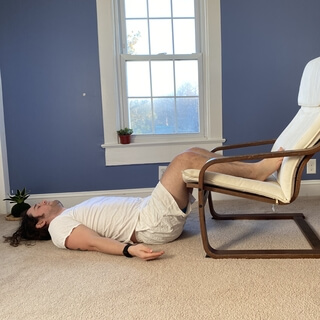
I recommend sitting in a chair with a back or lying down.
So take a moment to grab a pillow or a small blanket that you will place in the small of your back.
The goal of this practice is to breathe in through the nose and out through the mouth while forcing the breath into your stomach.
Start by resting your hands on your stomach.
As you begin to breathe in,
Use your breath to inflate your stomach like a balloon.
Feel your hands rise and fall.
Notice on the rise and fall of your stomach.
Notice it inflate and rise on the in-breath,
Then deflate and fall on the out-breath.
Breathe in and breathe out.
Breathe in and breathe out.
Start to slow down and lengthen your exhale.
See if you can make your exhale longer than your inhale.
During times of stress,
We tend to take short,
Shallow breaths into the chest,
But the next time you experience a shock of anxiety,
Just remember this practice.
Continue to breathe in through the nose,
Feeling the stomach rise,
And back out,
Noticing it fall.
Take note of the positive feelings you experience when you inhale,
And then the relaxation when you exhale.
Remember you can gauge this practice at any time.
Take a few more moments for yourself.
Over.
Begin to bring your awareness to your fingers and toes.
Give them a little wiggle,
And when you're ready,
Open your eyes.
To normalize the fight or flight response,
It is important to practice this regularly,
Meaning at least five minutes,
Five times a week.
It will be ideal to work yourself up to ten minutes.
The more often you practice,
The more powerful this practice becomes.