So the question I'm answering today in this little educational video is how to stop taking the emotional temperature of every room you walk in.
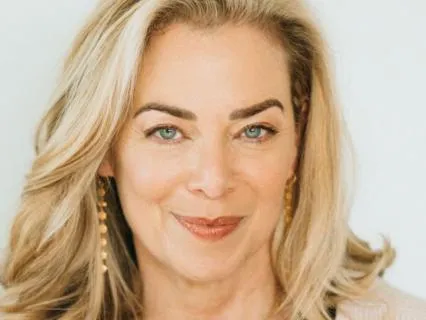
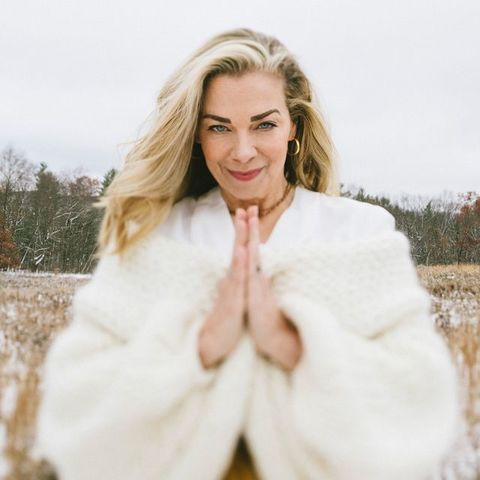
My name is Terry Cole.
I'm a licensed psychotherapist for the past almost 30 years.
I'm the author of Boundary Boss Too Much and Father Wound,
Coming out in October.
So if this resonates with you,
I can tell you this one hits close to home,
Which is why I'm covering it.
Do you ever walk into a room?
With people,
And before you even take your coat off,
You are ready tracking.
Where is their problem?
Who's got a frown on their face?
Who's going to need something from you?
Anybody?
Just naturally doing it.
It's like having super high.
Antennas.
So it's almost like we are chameleons and have super high antennas all at the same time.
Is it trying not to take up too much space?
Is it trying to make sure that nobody is having a problem?
Or preparing yourself to fix?
Because some people are sort of like the entertainment.
They'll come in and tell a funny story to break up the tension that they feel.
If any of this sounds familiar to you,
You may have spent years taking the emotional temperature of every room that you walk into,
Like I used to in my youth.
And while it might feel like empathy,
In reality,
It's not.
You have to be empathic to do it the way we do it,
But it's really hypervigilance.
So what is hypervigilance?
It's what happens in your body when your nervous system has learned that paying close attention to other people is a way to stay safe.
So many of us,
Nobody needs to tell us.
We don't need to get an inner office memo in childhood about how to become hypervigilant.
The homes that we grew up in trained us.
These are adaptive functionings that we learn all on our own.
Nobody has to tell us how to do it.
So you might have grown up in a home where the mood changed without warning,
Where people were volatile,
Where you needed to be dialed in.
For safety.
I grew up in a home with a father who never talked.
So if I heard his voice,
I was literally terrified,
Right?
So being dialed in and didn't talk simply because he was quiet,
But underneath there.
There was something else going on.
So I had to pay attention because I couldn't trust his words to tell me what was going on.
Maybe you learned.
To recognize the sound of someone's footsteps.
For me,
It was my father's voice,
Or the way that a door closed,
Or the tone of someone's voice,
Right?
Because it was all those little cues that made us know how to either become the peacekeeper,
Or how to overachieve,
Or how to become the helper,
The one who knew how to smooth things over.
And a lot of times,
We got so good at it,
We could stop conflict from even starting.
So over time,
What happens to your brain?
Your brain gets really good at reading the room.
And so good,
In fact,
That it just becomes an automatic thing that you do,
That you're not even trying to do.
It's just happening.
You notice the smallest shift?
In someone's energy or their micro-expression.
Shifts.
You might wonder if they're upset with you.
You might replay the conversation you had with them.
Thinking like,
I think they're upset,
I'm not sure.
But what's happening is we are carrying this tension.
That really is not ours.
To carry.
And the problem also is that people see us as highly empathic,
And we are.
But it's at the expense.
Of ourselves.
Right?
Your job is not to manage other people's feelings and emotions.
Your job is to manage your own.
We need to look at how much hypervigilance.
Creates exhaustion.
And I think that when you mix up hypervigilance and empathy and connection,
It gets very confusing.
When you're constantly monitoring other people's emotional states,
You don't usually have enough bandwidth to check in with yourself.
So there's a cost.
We become so focused on,
Is everyone else okay,
That we don't ask,
Am I okay?
And for me,
I used to think,
If they're okay,
I'm okay.
It wasn't even based on how I really felt.
It was like,
If I'm managing everything,
Then I'm okay.
And somewhere along the way,
We end up really losing sight and connection to our own needs,
Wants,
Desires.
So how do we shift it?
Healing doesn't mean that we become non-empathic,
Because that's not happening,
Because you are who you are.
It just means that we stop assuming.
That every emotion in every room we walk into is ours to take care of.
Right?
Other people's emotions are their own.
If someone is in a bad mood,
It isn't automatically your responsibility to change that.
And that silence isn't always a bad thing.
It doesn't always mean that someone's pissed off about something.
It could just mean they had a long day talking a lot and they're tired.
And that when you feel tension,
It isn't always yours.
To fix.
I like to say it this way.
We need to learn when we get healthy.
When it comes to managing other people.
We realize that we must let the chips fall where they may when they are not our chips.
And that means other people's emotions are not your chips.
Right?
We need to let other adults have their emotional experiences without making them our job.
And one practice that I often encourage to do this is the next time you walk into a room,
Notice yourself scanning everyone.
Pause for a moment.
Instead of asking,
How is everyone else feeling or doing?
Dial in!
What am I noticing in my body right now?
Do I actually feel unsafe or is my nervous system expecting danger because that's what it learned?
Right?
Stop and check in with you because it is that teeny moment of raising your awareness that creates a choice for you to stay on your own side of the street.
So if you've spent years reading every room and every face and every change in tone,
You're not alone,
Babe.
I see you,
Trust me.
And it makes sense that it happens automatically.
Your nervous system learned to do it for a reason.
We get it.
It was adaptive.
But you don't have to spend the rest of your life.
Carrying the emotional responsibility for other folks.
You really don't.
Healing is about,
Not about becoming less caring,
Really,
It's about becoming caring of yourself,
Learning that you can care deeply about people without abandoning yourself.
And over time,
Your nervous system can learn something new,
Right?
I don't have to monitor everyone else in order to be safe.
And this is how we create emotional freedom.
So I hope that this educational video added value to your life.
And as always,
Take care of you.