The world’s largest free audio library for everyday wellbeing
Lifestyle-Integrated
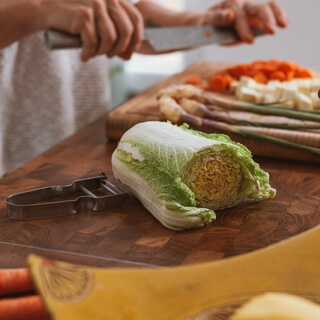
Mindful cooking is the practice of giving full sensory attention to preparing food, treating washing, chopping, stirring, and seasoning as meditation rather than a chore to finish (Belangi, 2024).
Last Updated
3 Jul 2026
We are still reviewing this page. Our research team checks every technique page for accuracy and evidence quality before final release. Details may change as that review completes. The evidence badge shows our current reading of the published research.
RECOMMENDED DOSE
No direct dose-response literature exists for this technique. These recommendations are based on general practice conventions for mindfulness-based activities and should be treated as starting points only. A short, focused segment of a single meal preparation — attending fully to chopping, aromas, and textures — is enough to begin.
No direct dose evidence; editorial synthesis. This step up reflects general mindfulness practice conventions, applying sustained non-judgemental attention across most of a meal's preparation on several days each week. Treat as a starting point only.
No direct dose-response literature exists for this technique. This maintenance-level range is an editorial synthesis based on general mindfulness practice conventions for building a durable daily habit, not on trial data. Treat as a starting point only.
Session length
Session length: 10–15 minutes
10
MIN
How long each individual practice session should last from start to finish.
Frequency
Frequency: 2–3 days
2
DAYS
The number of days per week to fit a session into your routine.
Session length
Session length: 20–30 minutes
20
MIN
How long each individual practice session should last from start to finish.
Frequency
Frequency: 3–4 days
3
DAYS
The number of days per week to fit a session into your routine.
Session length
Session length: 30–45 minutes
30
MIN
How long each individual practice session should last from start to finish.
Frequency
Frequency: 5–6 days
5
DAYS
The number of days per week to fit a session into your routine.
About this card. These recommendations are not a substitute for personalised guidance from a qualified practitioner. No direct dose-response literature exists for this technique, so all figures are conservative starting points drawn from general mindfulness practice conventions rather than trial evidence.
Quick answers to what people most often ask. Each card links to the deeper section below.
evidence
Two small 2024 community programs, not clinical trials, form the current evidence for mindful cooking. University students reported feeling calmer and less anxious, and seventeen mothers in Australia described less stress and greater connection. Neither used a comparison group, and no randomized trials, systematic reviews, or physiological measurements yet exist.
Read moregood for
Adults wanting a low-pressure way to steady everyday stress and stay present may find mindful cooking suits them, and it has been offered to university students and to mothers managing daily demands. Mindful cooking is a supportive everyday habit, not a substitute for professional care when anxiety, depression, trauma, or an eating concern is significant.
Read moresafety
Most healthy adults can practise mindful cooking safely, but because it happens around sharp knives, hot surfaces, and open flame, pleasant absorption should never override ordinary kitchen attention. People with disordered eating may find close focus on ingredients activating, and anyone whose coordination is affected by illness or medication should keep safety habits deliberate.
Read morehow it works
Mindful cooking works by giving attention a steady stream of concrete tasks, chopping, stirring, and watching a pot come to a simmer, that compete with worry and keep the mind present. The five senses stay busy with sights, sizzles, aromas, and textures, and this absorption is thought to steady stress, though inferred from one small program, not measured directly.
Read moreMindful cooking means giving full sensory attention, to sight, sound, smell, touch, and taste, while you prepare food, treating each step as meditation rather than a task to rush (Belangi, 2024).
Mindful cooking follows the whole arc of preparing food, from selecting ingredients through washing, chopping, stirring, monitoring heat, seasoning, and plating, with each step treated as a deliberate focal task rather than a means to a finished meal. Attention rests on the concrete details of the work: the weight of the knife, the sound of sizzling, the changing color and smell of the food. There is no fixed script or timer, and the structure comes from doing ordinary kitchen actions slowly and attentively from start to finish.
Mindful cooking is set apart from ordinary or recreational cooking by its explicit meditative intention: the goal is present-moment attention, not simply a finished dish. It also differs from mindful eating, which centers on the experience of consuming food, whereas mindful cooking stays with the transformative process of preparing it. It is a supportive wellbeing practice rather than a clinical treatment for any condition.
Not to be confused with
Everyday recreational cooking
Ordinary home cooking is aimed at producing a finished meal, often while multitasking or on autopilot. Mindful cooking is set apart by an explicit meditative intention: each step is treated as the point of the practice, not a task to get through.
Mindful eating
Mindful eating attends to the experience of consuming food; mindful cooking attends to the transformative work of preparing it. They are companion practices, but they engage different moments of the meal and should not be treated as the same thing.
Meal prep and batch cooking
Batch cooking and meal prep optimise for efficiency and output, the opposite of the slow, deliberate pace mindful cooking asks for. Speeding through preparation to stock the fridge is a productivity habit, not a contemplative one.
Mindful cooking works by giving attention a steady stream of concrete things to hold onto. Each task, chopping, stirring, watching a pot come up to a simmer, offers a shifting focal point, a form of attentional anchoring that quietly competes with worry and leaves many people with a calmer, more present head while they cook. At the same time the five senses stay busy with sights, sizzles, aromas, and textures, and this exteroceptive awareness, the reading of the outside world through the senses, is thought to be part of what makes the practice so absorbing (Belangi, 2024). These mechanisms are inferred from a single small program that used cooking to ease anxiety in university students rather than measured directly, so they are best read as plausible explanations rather than proven pathways.
Colors, sizzles, and aromas sharpen as cooking gives all five senses something concrete to track. That rich, shifting outward focus, called exteroceptive awareness, is thought to be one way the practice keeps attention resting in the present (Belangi, 2024).
Chopping, stirring, watching a pot come up to a simmer, each cooking task gives attention one clear thing to hold onto, so it stops sliding back to worries and open browser tabs. This is attentional anchoring, resting focus on a concrete, changing target rather than letting the mind spin, which many people experience as a quieter, more present head while they cook (Belangi, 2024).
With your hands busy stirring, kneading, and working over the heat, you may notice a steady stream of body signals, warmth on the skin, arm fatigue, the pull of hunger as aromas rise, and staying with them trains interoceptive awareness, the felt sense of what is happening inside your body (Belangi, 2024). People who cook this way often describe feeling more embodied and quicker to catch early tension before it builds.
No study has directly measured what mindful cooking does to the body, so this is better described as what the practice engages than what it changes. Standing over heat, stirring, and kneading generate a continuous flow of body signals, warmth on the skin, fatigue in the arms, the pull of hunger as aromas rise, and staying with them is thought to train interoceptive awareness, the felt sense of what is happening inside you (Belangi, 2024). In practice this may feel like becoming more embodied and quicker to catch early tension before it builds, though these are reports and inferences rather than measured physiological effects.
Emerging evidence points to lower self-reported anxiety and stress as the outcomes most often described. A community outreach session built around mindful cooking left 30 university students reporting less anxiety (Belangi, 2024), and a small program for mothers living in Australia reported less stress and a greater sense of connection (Yufiarti et al., 2024). Both were small, self-reported programs without comparison groups. What is not yet supported: randomized trials, long-term follow-up, measured physiological change, or any claim that mindful cooking treats a diagnosed condition.
The research on mindful cooking so far comes from two small 2024 community programs, not clinical trials. University students who brought full sensory attention to preparing food reported feeling calmer and less anxious (Belangi, 2024), and a group of 17 mothers living in Australia described feeling less stressed and more connected afterward (Yufiarti et al., 2024). Both simply asked small groups how they felt, with no comparison group to rule out other explanations, so they point to promise rather than proof. No randomized trials, systematic reviews, or meta-analyses of mindful cooking exist yet.
0
Meta-analyses
0
RCTs
0
Systematic reviews
0
Observational
2
Pilot
Studied populations
Outcomes measured
Sosialisasi Self-Healing Untuk Mengatasi Kecemasan Melalui Mindful Cooking Pada Mahasiswa Universitas Nurul Hasanah Kutacane
2024
Finding: In a small community outreach program with 30 university students, mindful cooking was taught as a simple self-healing practice for managing anxiety, guiding participants to bring attention to each of the five senses, sound, touch, sight, smell, and taste, as they handled and tasted ingredients one at a time. Students engaged with the sessions enthusiastically and interactively, and for someone curious about it, this suggests mindful cooking can be an accessible, low-effort way to anchor attention in the present during an everyday activity. That said, this was a descriptive report with no before-and-after measurements, no comparison group, and only a single small group of students, so it shows the practice was well received rather than proving it reduces anxiety.
See full citation in referencesSeries Talk Mindfulness Cooking untuk Meningkatkan Kesehatan Mental pada Ibu-Ibu yang Tinggal di Australia
2024
Finding: In this community program, 17 mothers living in Australia joined a series of online talks about mindful cooking and afterwards reported feeling less stressed and better in their mental health, along with a stronger sense of connection with family, more creativity in the kitchen, clearer nutrition knowledge, smoother time management, and less food waste. For someone considering the practice, this suggests mindful cooking can fit into a busy family routine and may bring a calmer, more connected feeling to daily meals. Keep in mind these are self-described impressions from a small webinar group, not measured clinical results, so treat them as encouraging early signals rather than proof.
See full citation in referencesMindful cooking descends from the Zen Buddhist role of the tenzo, the temple cook, described in Dogen's 13th-century Tenzo Kyokun, where preparing food is treated as one of the monastery's most important spiritual practices. Edward Espe Brown's cookbooks later carried meditative cooking to Western readers. These roots help explain the practice's form, the deliberate, attentive treatment of each preparatory step, not its clinical effects.
For most healthy adults, mindful cooking is a low-risk everyday practice, and a few situations simply call for a little care. Because it unfolds around sharp knives, hot surfaces, and open flame, the pleasant absorption that makes chopping and stirring feel meditative should never crowd out ordinary kitchen attention. That caution is practice-informed rather than a measured risk. And because the calming effects reported so far rest on only two small community programs (Belangi, 2024), (Yufiarti et al., 2024), mindful cooking is best treated as a supportive habit, not a treatment for anxiety, depression, trauma, or an eating concern.
A few groups should practise with extra deliberateness. Anyone whose attention, coordination, or energy is affected by a health condition or medication should keep kitchen-safety habits conscious rather than trusting that absorption will keep them safe, since the practice involves sharp tools and heat; this is a practice-informed caution. People working through a difficult relationship with food or disordered eating may find close, prolonged focus on ingredients activating, so gentler pacing or a clinician's guidance can help. And anyone turning to cooking for anxiety, depression, or trauma should use it alongside professional care, not in place of it.
Mindful cooking unfolds around sharp knives, hot surfaces, and open flame, so the pleasant absorption that makes chopping and stirring feel meditative should never crowd out ordinary kitchen attention. Treat knife work and heat as their own focal tasks, finish a cut before letting your attention widen to the aroma or sizzle, and keep sleeves and loose items away from burners. This is a practice-informed caution drawn from how the practice works, not a measured risk from any study.
| Technique | Best for | Use with care | Evidence strength | Distinction |
|---|---|---|---|---|
| Mindful eating | People who want to slow down their relationship with eating itself, or who notice they eat quickly or absent-mindedly. | For someone with a fraught relationship to eating, close attention to consumption can feel activating; preparation-focused practice may feel safer. | EVIDENCE | Mindful eating brings full attention to the act of consuming food, the taste, texture, and pace of each bite, and to hunger and fullness cues. Mindful cooking places that same quality of attention on the preparation process instead, chopping, stirring, and seasoning, so the practice unfolds before there is anything on the plate. They share a mindfulness mechanism but attach it to different moments in the meal. |
| Seated mindfulness meditation | Building a steady, transferable attention practice with a clear structure and a large body of research behind the broader method. |
It's different. Mindful cooking is set apart by an explicit meditative intention: each step of preparing food, washing, chopping, stirring, seasoning, is treated as the practice itself rather than a chore on the way to a meal (Belangi, 2024).
+
It's different, and the line is about intention rather than speed. Ordinary cooking aims at producing a finished meal, often on autopilot or while multitasking, whereas mindful cooking gives full sensory attention, sight, sound, smell, touch, and taste, to the preparation itself, treating each step as the point of the practice (Belangi, 2024). Slowing down usually follows from that attention, but the defining feature is deliberate, present-moment engagement, not a slower pace.
No. Mindful cooking asks for attention, not culinary skill, the point is bringing full sensory awareness to each step, not producing a flawless dish (Belangi, 2024).
+
No. Mindful cooking is about attentive engagement with washing, chopping, stirring, and seasoning rather than following a recipe perfectly or plating a polished result (Belangi, 2024). Starting with simple, low-stakes dishes and letting go of the pressure to perform tends to be where people describe feeling calmer and more present. Skill level is not what matters here; the quality of attention is.
Bringing full sensory attention, sight, sound, smell, touch, and taste, to the whole process of preparing food, from selecting ingredients through chopping, stirring, and seasoning, treating the preparation itself as the practice.
Resting attention on one clear, concrete target, such as the rhythm of chopping or a simmering pot, so it stops repeatedly drifting back to worries or distraction. It tends to feel like a quieter, more present head.
Focused attention (attentional selection): stabilising attention on a salient focal target to reduce mind-wandering; proposed here as an emerging mechanism rather than a measured outcome.
The felt sense of the outside world through the five senses, noticing colours, sizzles, aromas, and textures. In cooking it shows up as sights, sounds, and smells feeling more vivid and detailed.
Exteroception (environmental sensory perception): conscious attention to externally received stimuli across sensory modalities, distinct from interoception; offered as a mechanism hypothesis, not directly measured for this practice.
The ability to sense and read internal body signals such as warmth, muscular effort, tension, and hunger. Growing it often feels like being more embodied and catching early signs of stress before they build.
Interoception (visceral afferent processing): detection and interpretation of internal bodily states; proposed as an emerging mechanism, not measured directly in the supplied cooking programs.
Deliberately re-engaging conscious attention with actions normally done on autopilot, so a routine chore like chopping stops being mechanical and becomes something you are actually present for.
Deautomatization: interrupting habitual, procedural behaviour to restore volitional, prefrontally monitored engagement with routine actions.
Siska Putri Belangi (2024). Sosialisasi Self-Healing Untuk Mengatasi Kecemasan Melalui Mindful Cooking Pada Mahasiswa Universitas Nurul Hasanah Kutacane. https://doi.org/10.61132/natural.v2i1.239
Cited in: Benefits, How it works, Research, Use with care, What happens in the body, What it is
Explore guided sessions to deepen your Mindful Cooking technique.
The research is useful for setting expectations, but study methods and participant groups vary. Treat the findings as general guidance rather than a promise about any single session, and not a replacement for clinical care.
Because mindful cooking asks for sustained, detailed attention to ingredients, that close focus can feel activating when food is already a source of distress. Gentler pacing, shorter sessions, or a clinician's guidance can help, and when an eating concern is significant, mindful cooking should sit alongside professional care rather than replace it. No study has examined mindful cooking in people with disordered eating, so this guidance rests on how the practice works rather than direct evidence.
Anyone whose attention, coordination, or energy is affected by a health condition or medication should keep kitchen-safety habits conscious rather than trusting that absorption will keep them safe, since the practice involves sharp tools and heat. This is a practice-informed caution, not a measured risk.
The calming effects reported so far rest on only two small community programs, so mindful cooking is best treated as a supportive habit rather than a treatment for anxiety, depression, trauma, or an eating concern. Anyone turning to cooking for a significant condition should use it alongside qualified clinical care, not in place of it.
Mindful cooking is best approached as a calm layer sitting on top of ordinary kitchen care, never a replacement for it, since you are working around sharp tools, hot surfaces, and open flame. A sensible way in is a simple, low-stakes dish in a clear, uncluttered space, where you can settle into the rhythm without managing a demanding, time-pressured meal. If you are managing anxiety, depression, trauma, or a difficult relationship with food, let it be one gentle support alongside professional care rather than a treatment on its own.
Clear the counter, stabilise the cutting board with a damp cloth beneath it, and turn pan handles inward on the stove, so the slow, settled pace of the practice sits on top of a genuinely safe setup.
Treat knife work as its own focal task: watch your fingers, cut on a stable surface, and slow down rather than speed up. If your mind drifts to the aroma or the sizzle, finish the cut first, then let attention widen. This is a practice-informed safety habit, not an optional refinement.
Read the warmth rising from the pan and the sound of oil as real signals to stay alert, not just sensations to savour. Use dry cloths for hot handles, keep sleeves and loose items away from burners, and never leave open flame unattended while you settle into the rhythm of the work.
Choose recipes with few sharp or high-heat steps while you learn to hold attention this way, so you can practise presence without managing a demanding, time-pressured meal.
The aim is attentive engagement with each step, not a flawless plate. Releasing the pressure to perform is where people tend to describe feeling calmer and more present, and it keeps the practice from tipping into stress.
If you are managing anxiety, depression, trauma, or a fraught relationship with food, treat mindful cooking as a soothing habit that sits beside professional care, and reach out to a qualified clinician for the parts it cannot address.
This information is educational and is not medical advice. This practice is not a substitute for professional care and should not replace prescribed medication or treatment for any medical or mental-health condition. If you are managing a health condition or taking medication, talk with a qualified health professional before changing your practice. If you are in distress or crisis, seek professional support.
| Seated meditation trains attention on the breath or open awareness while the body is still and undistracted. Mindful cooking builds the same present-moment focus inside an active, multisensory task, giving restless attention a concrete, changing anchor rather than the subtle target of the breath. It suits people who find stillness hard to settle into but stay absorbed when their hands are busy. |
| Walking meditation | Weaving presence into daily movement, or for people who feel calmer and more grounded when gently active. | EVIDENCE | Walking meditation anchors attention in the rhythm of steps and the sensation of movement through space, while mindful cooking anchors it in the sensory flow of preparing food. Both are lifestyle-integrated ways to practise presence during an ordinary activity rather than in formal sitting, so the choice is mostly about which everyday routine you would rather turn into practice. |
| Culinary or cooking-based therapy | Structured, facilitated support where cooking is a vehicle for rehabilitation, skill-building, or connection. | If you are seeking treatment for a diagnosed condition, a facilitated program with a clinician is more appropriate than a solo habit. | EVIDENCE | Therapeutic cooking programs, often delivered in occupational therapy or group settings, use food preparation to build skills, confidence, and social connection, usually with a facilitator and a therapeutic goal. Mindful cooking is a self-directed contemplative practice: the aim is present-moment awareness during the task itself, not a supervised clinical objective. The two can overlap, but one is a guided intervention and the other is a personal habit. |

Possibly, but the evidence is early. Two small 2024 community programs found participants felt calmer, less anxious, and less stressed, though both relied on self-report with no comparison group (Belangi, 2024), (Yufiarti et al., 2024). Treat it as gentle everyday support, not a proven treatment.
+
Possibly, but the signal is suggestive rather than confirmed. One outreach session left 30 university students reporting less anxiety (Belangi, 2024), and a program for 17 mothers in Australia reported less stress and more connection (Yufiarti et al., 2024). Both were small, uncontrolled, and self-reported, so mindful cooking is best read as a supportive habit for ordinary stress, not a treatment for a diagnosed anxiety condition. If anxiety is significant, use it alongside professional care rather than in place of it.
Early and thin. The evidence rests on two small 2024 community programs (30 university students; 17 mothers) that were uncontrolled and relied on self-reported feelings, so it is promising rather than proven (Belangi, 2024), (Yufiarti et al., 2024).
+
Early and thin. Both supporting programs simply asked small groups how they felt afterward, with no comparison group, no randomized trials, no systematic reviews, and no measured physiological change. Participants reported feeling calmer and less anxious (Belangi, 2024), and mothers described feeling less stressed and more connected (Yufiarti et al., 2024), which suggests gentle everyday steadying but is not proof that mindful cooking treats any diagnosed condition. Treat it as a supportive habit, not an established intervention.
Likely because cooking gives attention a concrete, shifting anchor. Chopping, stirring, and watching a pot simmer hold a steady focal point that competes with mind-wandering, while the sights, sizzles, and smells keep the senses too busy for worry (Belangi, 2024). This is a plausible explanation drawn from small self-report programs, not a proven pathway.
+
Likely because cooking keeps attention busy with a stream of concrete, changing tasks. Each step, the rhythm of chopping, the sizzle in the pan, acts as an attentional anchor, a clear target that competes with mind-wandering, while the five senses stay occupied in what researchers call exteroceptive awareness, the felt reading of the outside world (Belangi, 2024). These mechanisms are inferred from a single small program that used cooking to ease anxiety in university students rather than measured directly, so read them as plausible explanations, not confirmed pathways, and treat mindful cooking as a supportive habit rather than a treatment for anxiety.
Yes, it can. The pleasant absorption that makes cooking feel meditative should never override ordinary kitchen attention. Keep knife work and heat as their own focal tasks, and finish a cut before letting your attention widen to the aroma or sizzle.
+
Yes, it can. Because mindful cooking unfolds around sharp knives, hot surfaces, and open flame, sinking into the sensations of chopping and stirring should never come at the expense of ordinary kitchen safety. Treat knife work and heat as their own focal tasks, slow down rather than speed up, and take extra care if a health condition or medication affects your attention or coordination. This is a practice-informed caution drawn from how the practice works, not a measured risk from any study.
Use care. For people with a difficult relationship with food or an eating disorder, close, prolonged focus on ingredients may feel activating, so gentler pacing and clinician guidance are wise, and mindful cooking should sit alongside professional care rather than replace it.
+
Use care. No study has looked at mindful cooking in people with disordered eating, so this guidance rests on how the practice works rather than direct evidence. Because mindful cooking asks for sustained, detailed attention to ingredients, that focus can feel activating when food is already a source of distress, so slower pacing, shorter sessions, or a clinician's guidance can help. When an eating concern is significant, treat mindful cooking as one supportive habit used alongside professional care, not a substitute for it.
Start small: clear a safe workspace, pick a simple dish, and treat one task at a time, chopping, stirring, watching a simmer, as the focal point instead of rushing to the finished meal. Give full sensory attention to the sight, sound, and smell of each step, and let go of needing a perfect plate (Belangi, 2024).
+
Begin by setting up a safe, uncluttered kitchen and choosing a low-stakes recipe with few sharp or high-heat steps, so you can practise presence without managing a demanding meal. Bring full sensory attention to one action at a time, the weight of the knife, the sizzle in the pan, the aroma rising, and when your mind drifts, gently return to the task in front of you (Belangi, 2024). Keep deliberate safety attention on knives, heat, and open flame rather than assuming absorption will keep you safe, and treat mindful cooking as a supportive everyday habit that sits alongside professional care for anxiety, depression, trauma, or an eating concern rather than replacing it.
The moment of attention. Mindful cooking brings full sensory attention to preparing food, chopping, stirring, and seasoning, while mindful eating attends to consuming it, the taste, texture, pace, and hunger cues (Belangi, 2024).
+
The difference is where attention rests, not the underlying skill. Both practices use the same present-moment awareness, but mindful cooking anchors it in the preparation process before food is plated, while mindful eating anchors it in the experience of the meal itself. They are companion practices for different moments, and no direct study has compared their effects, so choose the one that fits the part of the meal you want to slow down (Belangi, 2024).
No. Mindful cooking is a low-risk supportive habit that may offer gentle everyday steadying, but it cannot replace therapy or treatment for anxiety or depression. If you are managing a significant condition, use it alongside professional care, not in place of it (Belangi, 2024), (Yufiarti et al., 2024).
+
No. The calming reports so far come from only two small community programs that asked participants how they felt, with no comparison groups, so the evidence points to promise rather than proof and gives no basis for treating a diagnosed condition (Belangi, 2024), (Yufiarti et al., 2024). Some people do find the practice soothing for everyday anxiety, but that is gentle steadying, not treatment. Anyone working through significant anxiety, depression, or trauma should keep mindful cooking as one support beside qualified clinical care.
The coordinated coupling of intentional movement with sensory feedback, adjusting knife angle by feel or gauging heat by sound. It typically feels like movement becoming more precise, fluent, and confident.
Sensorimotor integration (motor cognition): coupling of motor commands with proprioceptive, vestibular, and visual feedback to refine movement.
The head cook in a Zen Buddhist monastery, a role treated as one of the most important and spiritually significant positions. Dogen's 13th-century 'Tenzo Kyokun' frames the tenzo's kitchen work as a form of practice in itself.
Cited in: Benefits, Research, Use with care
Editorially curated. Tracks are not themselves clinically studied; evidence on the page applies to Mindful Cooking as a technique.
Beginner content for Mindful Cooking

★ 4.8
·
Music
·
29 min
Kin Thiessen
How hard is Mindful Cooking?
Mindful Cooking should remain low and life-integrated, with light embodied effort acknowledged but not over-weighted.
2
Mental Effort
2 / 4
▾Emotional Depth
1 / 4
▾Physical Intensity
2 / 4
▾Prior Knowledge
2 / 4
▾