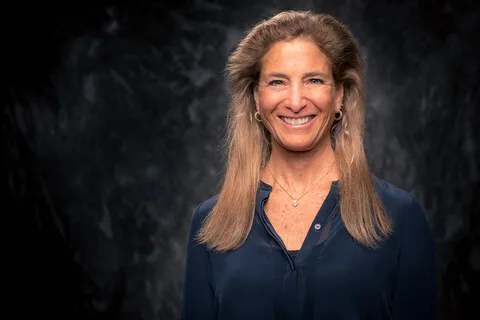
The following talk is given by Tara Brock,
Meditation teacher,
Psychologist and author.
Namaste and welcome.
Yesterday I was sent by a friend an article about a palliative caregiver who works with children who are dying in South Africa.
And he did a survey with them,
A kind of informal survey,
And the inquiry was really what makes life worth living.
And one of the main responses was,
Nobody wishes that they'd spend more time online.
That was the first thing.
The other one I want to name was,
Kindness Matters.
If you see this article,
It's quite beautiful,
Just registering that when we're really aware that we don't have that much time we don't want to be off in some virtual reality and we do want to be in our hearts.
And I wanted to start that way because this is the second of a three-part series on radical compassion.
It's based on the title of my new book which will be available December 29th.
This is my commercial moment.
The book and these talks is meant to give some guidance in using the RAIN meditation which is mindfulness and compassion in working with our inner life,
Whatever stuck places we have going on.
Tonight it will be relational.
How do we wake up more with each other?
And the next week extended relational,
How do we really be part of the healing in a pretty hurting world?
If you are live streaming and missed one of these you can also get it by going on at tarbrock.
Com where you can get any talk really and also it's a link to the book and so on.
So we begin with a holiday story that is really one of my favorite illustrations of you'll see what.
In this story an old man in Phoenix calls his son in New York and says,
I hate to ruin your day but your mother and I are divorcing,
You know,
Thirty years of misery are enough,
I can't handle it anymore.
The son screams at him,
What are you talking about,
Pop?
And he says,
We can't stand the sight of each other any longer.
We are sick and tired of each other so go call your sister in Chicago and tell her.
And he clicked,
He hangs up.
Okay,
So the son calls his sister and she is immediately when she hears it she says,
Okay,
I'll take care of it.
Then she calls her father in Phoenix.
She says,
You are not getting divorced.
Don't do a single thing until I get there.
I am calling my brother back.
We will both be there tomorrow.
She hangs up.
The old man hangs up his phone and turns to his wife.
Okay,
They are coming for the holidays and they are paying their own way.
So I start with this because so much is flying around for so many people around the holidays and what comes up is on some level we become… the light of awareness shines on where the different tensions are.
They may not be as extremely manipulative as that but we get the idea.
So in a little bit I'll have you do a reflection – and there is several in this talk – on just looking at your current relationships and in some way with that lens of,
You know,
How is this for me?
And one of the lenses we will use really is if I was at the end of my life looking back.
And I find it very powerful to use our life span as a lens.
I often quote another palliative caregiver who after sitting with thousands of people reported that the greatest regret of the dying was I didn't live true to myself.
I lived according to others' expectations,
Maybe according to my own internalized judgment,
But I didn't live aligned with my heart.
And then when there is a little bit of a deeper digging,
Like what does that mean,
Aligned with our heart?
It really means,
You know,
If we were at the end of our life looking back how would we want this relationship to be?
How would we want to be?
What kind of presence and connection would we want here?
Are we really embodying what matters to us?
And to me what's valuable is that this isn't just the dying that have regrets about their life.
You know,
I talk to a lot of people and I can sense right under the surface there is a disappointment that this life isn't really unfolding the way I want it to be.
I am not the way I want myself to be.
It's not just the dying,
That sense of being unaligned.
So how do we want to live?
And one of the ways I language what I find when I really explore with people is the language of radical compassion.
And what I mean by radical compassion is that we are embodied.
In other words,
We can't really be compassionate if it's this idea in our mind.
Like we hear about people out there that are having a hard time and we go,
Oh,
That's really too bad.
I feel… I am so sorry.
Is the kind of compassion when our hearts are tender and they are resonant and we are actually caring and we act or we want to act.
So radical compassion means we are embodied and the caring is active and radical compassion means that our hearts are all-inclusive.
It's not like we feel a whole lot of compassion for this person but this person doesn't deserve my care.
It's not like that.
It's a very open,
Inclusive quality of heart.
And I am spending a little time on the definition because I think we need to reclaim the word compassion.
It's floating out there.
It's a lot like love.
It's very mushy.
And yet if there is ever a time in the world's history that we need actively cultivate compassion and caring and stretch ourselves,
Widen the circles beyond where we are habitually we pay attention,
It's now.
It'll be what allows us to care enough to act for our earth that is suffering so much,
For those that are most vulnerable,
And live true to ourselves right in an immediate way tonight and tomorrow with the people that we are interacting with.
So we need to reclaim it.
And in that spirit let's reflect for a moment.
I invite you to sit comfortably.
Do a bit of a relationship scan and perhaps bringing to mind one,
Two or three people that matter to you and you want to live true to yourself.
Maybe start with just one and use the vantage point of at the end of your life looking back and see if you can do this without judging,
With real interest,
With curiosity and just sense what… am I aligned?
Am I feeling like I am living in that way where I am embodied and present and responsive and caring?
Sometimes the inquiry,
Well,
What's between me and loving fully?
Can be really helpful here.
Take your time with one,
Two or three people sensing if you are feeling you are living true to yourself.
And if there is some sort of a gap,
What's between me and loving fully?
Maybe in sensing a feeling of belonging or care or intimacy here.
As you reflect you might ask yourself,
Well,
Is there a gap because I am stressed and I get preoccupied and I am just not present?
And keeping your eyes closed,
If that one resonates just raise your hand.
Am I feeling a gap because I get stressed and preoccupied and I am just not as present as I want to be?
I am going to say it again.
Just raise your hand.
Yeah.
That got about a third.
Is there a gap between me and loving fully because I have some fear or anxiety that is just in my body?
You don't have to keep raising your hands anymore.
I am just going to throw out some.
Is it because I am just afraid?
I am afraid that if I open up the other person will in some way hurt me or I will be rejected.
Maybe that is between you and loving fully.
Or is it because there is some blame?
There is some anger or blame going on that there is some resentment you are carrying towards the person and that gets in the way?
Or is it maybe because you are in some sort of a depression and your energy is just not there?
Just sense what might be between you and really loving fully?
And you might consider as you are reflecting that when our own needs for safety,
Our love,
Our understanding are not met,
It puts us on a kind of survival brain functioning.
We go into fight-flight-freeze on some level and that actually blocks the more recently evolved capacities for compassion.
And I will say that again,
If you have unmet needs yourself for safety,
Love,
Understanding,
That can trigger your survival brain in a way that cuts off compassion.
It is not your fault.
It is just what happens.
So we will be returning to explore how you can wake up more of the heart with these people that you might have brought to mind.
But what we find for most of us – and it is really important to explore this and reflect without judgment because if you add judgment to it you are actually further blocking compassion and love for other people if you judge yourself – but what we do find is that what gets in the way is some version of what I am going to call our limbic controller.
There is some part of us that is,
You know,
Emotionally reactive and trying to control things.
And we have different ways of trying to control things.
One of the ways that we try to control things is we try to manage other people and get them to be a certain way.
And that always gets in the way.
If we want somebody to be different,
If we are managing them,
If we are trying to get them to be a certain way with us,
In those moments we are not letting them be who they are.
In one story a young man invited his mother over for dinner and during the meal his mother kept noticing how her son's roommate was really beautiful and she was suspicious that her son had a relationship going with this roommate and so she was really curious and she watched them interact over the evening and became even more convinced something was going on.
Her son read her mind and said,
Hey,
I just want to reassure you that Carrie and I are just roommates.
I just want to let you know that is how it is.
So a week later Carrie comes to John,
The son,
And says,
You know,
Ever since your mother was here for dinner I haven't been able to find that beautiful silver soup ladle.
Do you think she did something with it?
And he said,
Well,
I don't know but I will email her.
So he writes this.
He says,
Dear mother,
I am not saying you did or did not do anything with the soup ladle but it is odd that it disappeared after dinner.
Do you know anything about this?
So later he receives an email from his mother and it reads,
Dear son,
I am not saying that you do sleep with Carrie and I am not saying that you don't but the fact remains that if she was sleeping in her own bed she would have found the soup ladle by now.
Love your mother.
So this is what I mean by the limbic controller,
Just an example,
But that we… Every one of us has patterns in our relationships based on our survival brain that actually create distance.
And one of the most common – I am going to name some and I invite you to again just listen and sense what resonates for you – I will name them and just to know that if you become aware of them then you have choice as to whether or not you are living them out.
But if you are not aware of them you are identified with them.
You are the controller and you don't have a choice.
And this goes very much to what Viktor Frankl described when he said between the stimulus and the response there is a space and in that space is our power and our freedom.
That you will keep repeating the same relational patterns that block intimacy until you see your particular version of the limbic controller.
Does that make sense right now?
Okay.
So some of the versions of it.
One of them is that – and this is a bit of a kind of a freeze response – which is that we bury and don't show what is going on and we pretend,
We offer what we think is going to be most acceptable to others.
This is the person somebody else will like and approve.
It can be ways that we accommodate or whatever but we are burying the real feelings we have either about that person or about our life and pretending in some way.
And this is very much seen in a classic story of a woman who approaches her psychology professor and asks him,
You know,
What is a Freudian slip,
What do they mean by it?
And he is curious and he says,
Well,
What makes you ask?
And she says,
Well,
The other day I was having lunch with my mother and I meant to ask her to pass the salt but instead I said,
You damn bitch,
You ruined my life.
Now on purpose I am giving you kind of wacky examples but it is we all do this stuff,
All of us,
That is a very common one is we don't say what we mean and then it comes out sideways.
So it is just an example.
Another example is that is a limbic controller is grasping where we have our expectations or demands,
We in some way feel special or important and we very quickly get into feeling victimized,
Disappointed,
Let down,
We are the one that the other is not treating right.
And that is sometimes called the pursuer.
I want you,
I want you to be here,
I want you to be a certain way,
I want you to spend more time with me,
Okay,
So there is that one.
And of course pursuers always need avoiders.
We also have some of us whose limbic type is more of the avoidance.
It is like I need space,
Don't suffocate me,
Don't cross my boundaries,
Being unavailable,
Being guarded,
Being mistrusting,
Withholding,
Disinterested,
Defended.
A woman is in a job interview and the interviewer asks,
Tell me what do you think your biggest character defect would be?
And her reply is,
Honesty.
And the interviewer said,
Honesty?
I wouldn't consider that a defect.
And her reply is,
I don't care what the hell you think.
It is that.
It is like stay away,
Okay?
And then another major version of the limbic controller is aggression in the sense of blame.
And that is where the ongoing notion is you should be different.
You are not the way you should be.
And most of us have that as part of us,
That we have a judgment going on on how another should be different.
And when we do it creates a huge distance.
Ram Dass,
Many of you have heard of,
He is kind of an icon of the generation,
Spiritual icon of my generation in a way.
And he wrote this,
He said,
One of the greatest things that happened in my relationship with my father was when he was approaching death.
I finally allowed him to be who he was instead of trying to make him into who I thought he should be.
And he stopped trying to make me into who he thought I should be and we became friends.
And it is sad to say that we might have to get towards death to start getting the wisdom that knows that if we are interacting with someone and that is what is going on,
That you should be different,
Then we are creating that distance.
So you might have been listening and went,
Wow,
Check,
Check,
Check,
Check,
You know,
And have multi-talented controller there going.
And we all have some ways of trying to control in relationships.
I often describe it as we get born into a challenging world and to navigate we put on a space suit that in some way protects us and defends us and has ways of navigating to try to survive.
And the challenge is that we get identified with our strategies.
We become the blamer or we become the pursuer or we become the avoider and we forget who is really looking through the mask of the space suit.
We forget who is here and we forget who the other is.
They appear as an ego-space suit too.
So the inquiry here is how do we wake up from that identification and loosen the grip on our habitual strategies?
How do we do that?
And it takes real courage.
Each of them can be deconditioned.
And we are going to explore RAIN as kind of the solvent because RAIN is really mindfulness and compassion which helps us not to get rid of the strategy.
I mean you might still find blaming goes on or you might still find yourself always wanting to create some space but you won't be as identified.
There is more flexibility.
There is more creativity.
The first step though is what we are doing now which is slowing down and beginning to pay attention to notice the strategies.
So I would like to invite you to reflect again if you will.
And if you can bring to mind again one or two of the people you are reflecting on,
Start with one.
And begin this time with your sense of wanting to be awake,
The heart aspiration to wake up in relationship,
To live true to yourself.
And sense with this person as you did earlier that question,
You know,
What is between me and really being fully embodied and engaged and caring.
And you might sense where there is some of that limbic controller.
It is really the different kinds of fight,
Flight,
Freeze.
And again not to judge because to the degree you have a space suit activity going on it is because there is some unmet needs.
It is natural.
The beginning of RAIN is to recognize and allow so you might even sense a situation with one person and just recognize and allow what goes on inside you.
No judgment.
So for some you might be recognizing,
Okay,
So there is some grasping and some disappointment.
I feel let down.
I feel hurt.
And for another you might be recognizing and allowing that you feel a bit suffocated,
Too many demands,
That you need some space or for somebody else or maybe some blame,
Okay,
I feel some blame.
This person should be different.
They are hurting me.
They are not really living up to something.
Or you might feel that you are afraid if you really are who you are you will be rejected.
Recognize and allow.
That is the beginning of RAIN to just name or notice what you are experiencing.
Carl Jung says,
What is not brought into consciousness comes to us as fate.
This is the power of recognizing and allowing in a relationship that you begin to bring into consciousness what wants attention.
Now you can open your eyes when you are ready.
So the next steps with RAIN is the eye of RAIN which is investigate.
And I want to give you some examples because I am going to,
Of course,
Bring you back at the end to do the whole process.
The investigating is often misleading because when you are investigating what is going on it is not a conceptual mental process.
Investigating is primarily getting more somatic.
Investigating means that if you found that you felt hurt by somebody or felt blame you get into where you feel it in your body.
And then you can investigate in the sense,
You know,
What is the unmet need and so on.
I am going to give you an example because investigating,
If you really get into your body,
Then leads to the end of RAIN which is nurturing.
And once you have recognized and allowed and investigated and nurtured you will find that the sense of identity has shifted.
You are no longer organized around the limbic controller so much.
But I am getting ahead of myself.
So let me give you… I am going to actually share two stories.
And the first one is one that taught me the most about the power of RAIN in relationships.
And it was really early on.
This was when my son Narayan was a junior in high school.
And some of you might remember this somewhat because I have had this in radical acceptance but I am going to unpack it a little bit more now.
The set-up here is that he is a junior,
He is entirely unmotivated around academics,
He is a total party creature,
Smoking a lot of pot,
Video games and he is completely immersed in Magic the Gathering.
Some of you might be familiar… How many are familiar with Magic the Gathering?
Can I see my hands?
Okay.
My response to all of that,
I am perpetually judging him,
Angry… The limbic controller was the,
You know,
Aggressive,
You should be different,
I don't like this change kind of… That was where I was completely in that.
So I was really upset with him for not coming through as the disciplined son that I thought he should be.
And I had a kind of one of those moments I will never forget of being outside his bedroom hearing the sounds of one of the games that I couldn't stand because they were all totally violent video games and having this desire to take a huge boulder and go in there and just smash his video screen,
Computer screen with it and then realizing in a flash he is a junior,
He is going to be gone in a couple of years and then feeling my heart go,
Wow,
Am I going to be in this chronic standoff of the angry let down mother and the son who is kind of wanting to not have me too near him because I am angry at him a lot.
So that is when I started to do a lot more,
Okay,
Let me be with what is inside me.
The first step in bringing range to relationships is to bring it to your own reaction,
To whatever your own limbic controller is doing.
That is the first step.
So I brought it inside,
I recognized and allowed that I was angry and judging and then I started investigating which is where we left off here.
And the layers were I felt this squeeze in my heart and it was fear and the fear-place was afraid that his whole future would be sabotaged and so on and then underneath that I felt that hollow,
Achy place of shame,
It is my fault,
I was too lenient,
Too permissive,
Didn't set boundaries early enough – which may have been true – but he and I talk about that now that he is a parent.
So then I was feeling that shame of falling short,
Deficiency,
That achy,
Hollow place and then it went into grief,
This sense of just this crashing feeling of the grief of the distance that was,
You know,
Developing between us.
And I had this experience I sometimes call like a soul sadness which is just seeing the landscape of life and realizing how sorrowful it is to be caught in a pattern like this and distanced.
And so that is what led to nurture.
I had investigated in my body the layers and then after feeling that soul sadness I sensed I always ask the question – I invite you to use this as part of your investigating – So what does this hurting part inside me need?
And what I needed was to trust the goodness of my own love that I really loved him and to trust him,
To trust his goodness.
And that is really what I needed.
So I just sat there as I often do with my hands on my heart,
You know,
Just feeling how much I do love him and just reminding myself,
Do you love him and he is lovable and he is good and it is going to be okay,
You know,
That kind of thing.
And as I let that feeling spread through me of loving him and trusting that loving there was an opening and a tenderizing and more space and I was no longer inside the identity of the controlling mother.
I was in a more spacious place.
It didn't mean those tendencies were gone.
I had to redo this many,
Many times.
But it started shifting the identification so that when I started trying to speak with him I was able to bring in more of my basic appreciation for him,
You know,
For his sense of his mastery and his games that he played and his loyalty and love for his friends and whatever it was and set boundaries.
So this is an example of RAIN in relationship because I feel like it gave me back many moments with him before he graduated.
I am so glad I didn't stay stuck in that standoff.
And just to give you a kind of follow-up,
Now we are like twenty-some years later,
He is thirty-two or whatever,
Now it is like eighteen years later,
He is much more disciplined,
He has graduated from the program he was in,
He is working,
He is a father,
He is okay and he still plays Magic the Gathering.
So he is okay.
So this is an example of and what I want to emphasize is a shift in identity where the limbic patterns are there but they don't hijack.
It is possible when you do RAIN that they don't hijack.
But sometimes there is the kind of hurt or conflict that requires a really deep inner work and it takes time and it takes support.
It takes support from others and it takes many,
Many rounds.
And I want to share with you a story of a guy that I worked with some years ago where it wasn't like something like with my son who was being a,
You know,
Here is a typical teen.
This is a man who… Photojournalist – I actually went to college with him and heard from him years later after many years of not hearing from him – he,
African-American photojournalist who married a Caucasian woman,
White woman,
Her mother completely disapproved of the marriage,
You know,
You are too different,
You are going to ruin each other's lives and so on.
And when they would visit his mother would ignore him or else be rude and it was awful.
So he was increasingly feeling withdrawn and angry and hurt and it brought up this very old wound in him of I am invisible,
I am not okay,
I am not worthy,
You know,
He was the black man who was not good enough for her daughter was what he described it to me.
And his wife said,
We don't ever have to visit them again,
I don't want to put you through this.
But he actually wasn't willing to give up on the relationship partly because one of his teachers,
A Tibetan teacher,
One of his key teachings was never give up on anyone which I thought was interesting.
So he made it his practice and it was a hard practice but at home he would recognize and allow how angry and hurt he felt.
Then he would investigate and feel his body and felt where it went back to because he was,
You know,
In childhood he was very neglected,
A lot of losses,
A lot of feeling of being not okay.
So he felt this twist in his body when he would go into it of defective personhood,
That's what he got in touch with,
A twist in his body,
In his gut.
And then when he asked what he needed it was,
You are a value,
You are worthy.
And his way of doing it was he would,
You know,
Imagine some light kind of coming into him and he would just hear the words,
You know,
You are valuable,
You are a worthy being.
Over and over and over again this process until he found that sense of more space,
More openness,
More realizing he was not the self in the story that this mother was triggering or his old story he felt his value,
What I call the goal.
So the next holiday he went but he brought his camera because he needed a way to be more safe and the camera gave him a place to be one step removed but still there.
And so it was Thanksgiving and they took all sorts of photos.
And when they went again over the holidays,
The Christmas holidays,
There was a gift exchange.
And by the way each of these visits the mother was rude and distancing and didn't want to take them to a restaurant because she was afraid she would see her friends.
It was terrible.
So there they are having their exchange and this is what I want to tell you about the gift exchange.
The mother gives him socks which are the wrong size and a box of candy and he is a health nut so that didn't work so well.
He gave her some framed pictures that he had taken during Thanksgiving and one of them had captured a moment of affection with her husband and the other one she was cradling her new granddaughter.
She opens these pictures and I mean everybody is kind of watching her and she starts sobbing because he had seen her in a good way.
He had seen her goodness and captured it and something in that just… and he told me that as he was doing Reign for himself that inner process that he started looking at her and he could just see her as a fearful person but when he could really get that he didn't feel so angry at her and now he saw her in a good way.
So here is what happened.
A thaw began but it didn't happen quickly.
There was many rounds of him encountering her tightness and so on but he had a way to take care of himself and he had a way to see past her mask and that actually over time helped her to see past what she was seeing in him.
I am sharing this story because as much as our unmet needs are personal there is also a whole societal thing playing when we run into distance that we often don't compute the unseen biases that are playing between us,
The ways that different ones of us have felt devalued historically not just in our personal life but through the society.
So it takes a lot of attention to be able to bring Reign inwardly and then look through eyes that can start seeing those realities both on an individual and on a societal level.
So what we are exploring tonight are relationships that inevitably are torqued because of unmet needs.
And I am inviting you to pause and find that space where you can have more freedom and choice by seeing how your strategies are contributing to distancing.
The key piece here is that we need to do this in an incredibly non-judging way because every one of us plays out these strategies.
We also need to do it in a way where we are ongoingly practicing seeing the goodness behind the mask because our habit is not to see that.
Share a story I heard some years ago.
This is a physician described an elderly patient who came in each week but one week they had to switch the time and it was earlier in the day and he was very edgy,
He wanted to leave the appointment as quickly as he could and she asked,
How come?
And he said,
Well,
He had to go and visit his wife who was in a nursing home and he wanted to be there on time to eat breakfast with her.
And so the physician asked him some more questions and inquired about his wife's health and this man told the physician,
Well,
She has had Alzheimer's for a number of years and then the physician said,
Well,
Will she be upset if you are a bit late?
And he said,
No,
She doesn't really know… she doesn't any longer know who he is.
And then the physician was surprised and you still go every morning and she doesn't know who you are?
This is what she wrote,
He smiled as he patted my hand and said,
She doesn't know me but I still know who she is.
These practices of radical compassion are not something we do once in a while.
It's a daily way with the people you are with,
With whoever you were identifying,
To say,
Am I able to see past the mask?
Can I see the goodness that's there?
How am I in this moment creating distance?
That kind of honesty and then to be very,
Very kind towards what we see.
It's not our fault.
Scott McClanahan says,
One time a man left home.
He had argued with his mother and father the day before he left.
They spoke horrible words to one another and he left without saying goodbye.
He had been gone many years and even spent time in jail.
Years later he finally got out of jail and he wondered if his mother and father were even alive and if they were ashamed of what had been said and where he had wound up.
He wrote them and told them he would be coming home on a specific day the following week.
If they wanted to see him and were not ashamed they should put a blanket on a clothesline and he would know to come inside.
If the blanket was missing then he would know that he was not welcome,
He would know how to turn back.
He told them he hoped they were in good health.
The man arrived by rail the next week.
He was nervous when he stepped off the train.
There was no one there to meet him.
He walked up the worn path towards the home place and thought about the past,
He thought about the time in jail,
He thought about how ashamed his parents must have been,
He thought about the horrible words they spoke.
He was just about to turn around when he saw a blanket in a tree.
He kept walking and he saw another blanket.
He kept walking and he saw another blanket.
Then he turned towards home and the house was covered in blankets.
The yard was covered in blankets,
The clothesline was covered in blankets,
The path to the door was covered in blankets.
His parents were standing there and they were welcoming him inside.
So each of us has ways that we create walls to protect our heart when we are hurt.
And the path of radical compassion is to begin to shed or dissolve some of that armoring.
Umi writes,
Very little grows on jagged rock.
Be ground,
Be crumbled so wild flowers will come up where you are.
You've been stony too many years.
Try something different.
Surrender.
So we are going to close with a meditation that's a blankets rain meditation.
Guys really think about it.
What if we all were putting out blankets really in our lives,
You know,
Just in some way blankets for ourselves,
Forgiving ourselves for our strategies and our ways of navigating that are imperfect and certainly blankets for others because others too are doing the best they can and it's imperfect.
So we close with a brief meditation bringing rain into a relationship.
And as you… you might close your eyes and let yourself go inside a bit.
Take a few breaths and feel yourself right here.
Bringing a person to mind where you'd like to have… where you'd like to live more true to yourself,
Have more compassion,
More loving-kindness.
As you did before,
Feel that intention and let yourself recognize and allow what happens.
You might have a particular situation with that person where you can tell you just don't really show up,
Where you feel blame or resentment or hurt,
Distance.
Bringing that situation to mind.
Just take some moments to recognize and allow what's going on.
See the dance or the dynamic.
And for now just let it be as it is.
Allow doesn't mean you like it,
It just means that you're honestly acknowledging,
Okay,
This is… this is something that plays out.
You're creating a pause,
A space for it.
This is the beginning of bringing into consciousness,
As Jung says,
What otherwise creates our fate.
And begin to investigate it by sensing,
You know,
Really what's the worst part of it,
What really comes up for you,
And feeling it in your body,
Checking your throat,
Your chest,
Your belly.
If it's fear,
Anger,
Hurt,
Anxiety,
Just sense what's contracting you.
If you can feel your body you might put your hand where you feel it because as you begin to bring your hand to the throat or the chest,
To your heart,
You're actually beginning to deepen your contact with what's there and you're starting to nurture a bit at the same time.
It's very,
Very powerful.
So just sense what's going on inside you and gently place your hand on your heart or your throat or whatever feels connecting.
You might ask yourself how long this has been going on,
This feeling.
What's the most challenging part of it?
What is it you're most afraid of or what's most disturbing about it?
And ask yourself what this part of you most needs to relax,
To open,
To feel safer.
Is it forgiveness?
Is it love?
Does it need to feel reassured in some way?
You might sense what's the message that this part would most find healing.
Just experiment mentally whispering some words to that part of you that might be comforting.
It could be as simple as,
It's okay,
Sweetheart,
Or,
This belongs,
Or,
I'm here.
And maybe that part needs to hear those words from some greater source person that you trust or love or perhaps a spiritual figure.
You can imagine that too,
That words and light and energy is coming into your heart and into wherever you most need comfort.
And from this space of compassion and presence you might sense how the old strategy,
The reaction,
The defensiveness or the blame,
How it's not so personal.
It's kind of its Olympic strategy that you and many others have like waves in the ocean but you're more than that.
And sense not so identified,
Sense the larger sense of your being,
Who you really are.
And if you look through the eyes of your most awake heart you can begin to look at the other person now,
The person you want to be closer to.
And in the same way begin to recognize maybe what's going on for them.
What are you noticing?
What is their behavior like?
You might begin by recognizing and allowing whatever you're noticing about them.
Oh,
They seem tight or they seem withheld or they seem disappointed or hurt or angry or distracted,
Stressed.
So recognize and allow and you might deepen your attention and investigate and sense,
Well,
What might be really hard for them?
What's it like being this person?
Where does it hurt?
So you're beginning to see past the mask,
To see their fears,
Their unmet needs.
Is this person needing love,
Needing to be seen,
To be understood,
To feel forgiven,
To feel cared about?
And then the N of RAIN is to sense your own heart offering some care in whatever most resonates,
Whatever way most resonates right now.
Sending a message,
A mental whisper of a message to them that you care.
And perhaps imagining,
Sensing in some creative way how when you're together you might let them know you see their goodness and that you care about them.
And I bring your attention to your own heart right now and sense who are you when you're opening to caring,
When you're letting yourself love without holding back.
Who are you?
This class in Radical Compassion and the same themes in the book are all about deepening our intimacy with ourselves,
With each other and with our world.
And we close again with Rumi,
Very little grows on jagged rock.
Be ground,
Be crumbled so wild flowers will come up where you are.
You've been stony for too many years.
Try something different.
Surrender.
Namaste and blessings.
For more talks and meditations and to learn about my schedule or join my email list please visit tarabrak.
Com.